
The Ultimate Guide to China’s Automatic Hollow Block Machines: Quality, Cost & How to Choose
Introdução
The global construction industry is in a constant race against time and budget. As demand for affordable, durable housing and infrastructure surges worldwide, the pressure to deliver quality building materials efficiently has never been greater. Enter the automatic hollow block machine—a technological powerhouse that is fundamentally reshaping brick production, moving it from a labor-intensive craft to a streamlined, high-output industrial process. For entrepreneurs, construction companies, and government projects, investing in this equipment is a pivotal decision that can define business scalability and profitability.
This guide serves as your definitive resource. Drawing on deep industry analysis, engineering principles, and real-world procurement experience, we cut through the noise to provide actionable, trustworthy information. Whether you’re looking to start a block-making business or upgrade an existing plant, understanding the intricacies of sourcing a high-quality automatic hollow block machine from China is crucial. We’ll explore not just the “what” and “why,” but more importantly, the “how”—equipping you with the knowledge to make an informed, confident investment that delivers returns for years to come.
O que é uma Máquina Automática de Blocos Vazios?
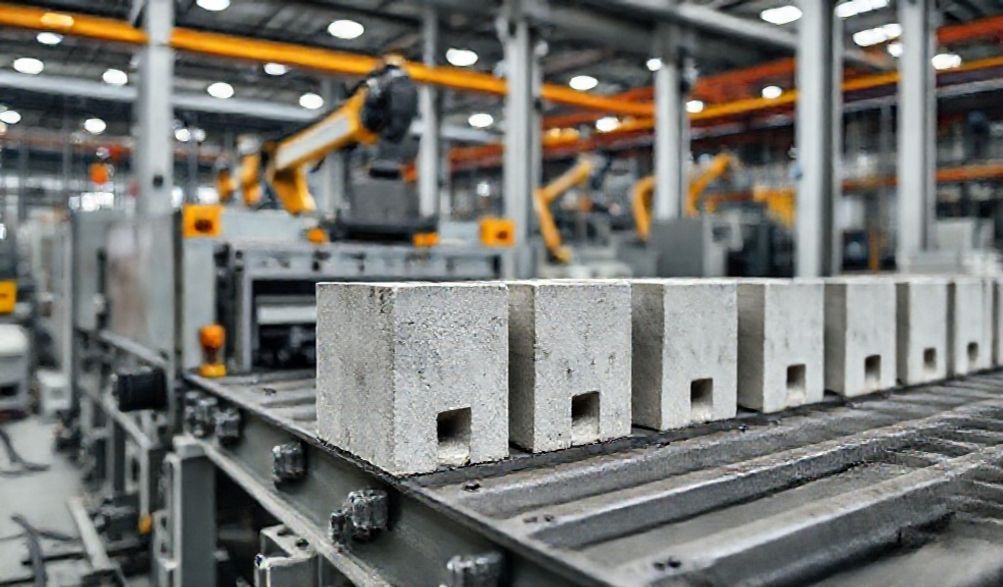
At its core, an automatic hollow block machine is a fully integrated manufacturing system designed to produce hollow concrete blocks with minimal human intervention. It transforms raw materials—primarily cement, aggregates (sand, gravel), and water—into precisely formed, high-density building blocks ready for curing and use.
Função Principal e Saída
These machines are engineered to produce hollow concrete blocks, a preferred material for non-load-bearing and load-bearing walls due to their excellent strength-to-weight ratio, thermal insulation, and material efficiency. The “automatic” designation means the entire process, from feeding raw materials to stacking finished blocks, is controlled by a programmable system, ensuring remarkable consistency and output.
Componentes Principais e Como Funciona
The automation follows a precise, cyclical sequence:
- Loteamento & Mistura: Pre-measured raw materials are conveyed into a mixer to create a homogeneous, semi-dry concrete mix.
- Moldagem: The mix is fed into a mold box on a vibrating table. A hydraulic press head descends to apply tremendous pressure.
- Vibrating: High-frequency, high-amplitude vibrations are applied simultaneously. This dual action of pressure and vibration is critical—it compacts the mix, removes air pockets, and gives the block its structural integrity and smooth finish.
- Ejeção e Paletização: The freshly formed block is ejected onto a pallet or steel plate.
- Cura e Empilhamento: An automatic stacker or cross conveyor organizes blocks for transport to a curing area (often a separate rack system). The empty pallet is returned to the start of the cycle.
Primary Advantages Over Manual/Semi-Automatic Models
- Velocidade de Produção Inigualável: Capable of producing hundreds to thousands of blocks per hour (BPH) non-stop.
- Consistent, Superior Quality: Every block is identical in dimensions, density, and strength, eliminating waste and ensuring building code compliance.
- Custos de Mão de Obra Dramaticamente Reduzidos: One or two operators can manage the entire production line, reducing long-term operational expenses and dependency on skilled labor.
- Higher Overall Efficiency: Continuous operation, faster cycle times, and integrated material handling lead to a significantly lower cost per block.
Why Source an Automatic Hollow Block Machine from China?
China has emerged as the global epicenter for manufacturing construction machinery, and for compelling reasons that extend far beyond just low cost.
Cost-Effectiveness and Value Proposition
The most apparent advantage is competitive pricing. China’s integrated supply chains and economies of scale allow manufacturers to offer advanced machinery at a fraction of the cost of European or American counterparts. This isn’t about “cheap” goods; it’s about exceptional valor—accessing high-level automation and technology that delivers a rapid return on investment (ROI) for small and medium enterprises.
Advanced Manufacturing Capability and Scale
China’s industrial ecosystem is unparalleled. From specialized steel foundries to precision hydraulic component suppliers, everything is within reach. This mature supply chain allows for efficient production, shorter lead times for custom parts, and the ability to manufacture complex machinery at a massive scale with consistent reliability.
Technological Innovation and R&D
Modern Chinese manufacturers are not just copycats. Leading companies invest heavily in R&D, incorporating:
* Advanced PLC (Controlador Lógico Programável) systems with intuitive touchscreen interfaces.
* Energy-efficient servo-hydraulic systems that reduce power consumption by up to 30%.
* IoT (Internet of Things) capabilities for remote monitoring and predictive maintenance.
Variety and Customization Options
Whether you need a compact stationary plant, a mobile block-making machine, or a fully integrated production line with robotic palletizers, Chinese suppliers offer an immense range. Crucially, they excel at customization—modifying machines to produce specific block sizes (e.g., 400x200x200mm, 440x215x100mm), shapes (solid, paver, interlocking), or to work with locally available raw materials.
Key Features to Evaluate in a Quality Machine
Looking beyond the brochure, these technical features separate exceptional machines from mediocre ones.
Capacidade de Produção & Especificações de Saída
- BPH (Blocks Per Hour): Match the machine’s output to your business plan. A machine rated for 2,000 BPH producing a standard 5-block mold is a realistic starting point for many businesses.
- Sistema de Moldagem: Evaluate how quickly and easily molds can be changed to produce different block types. A quick-change mold system maximizes operational flexibility.
Automation Level & Control System
The brain of the machine is its PLC. A quality system offers:
* A user-friendly, color touchscreen (often multilingual).
* The ability to store recipes for different block types.
* Real-time fault diagnostics and production data logging.
* Stability and reliability in dusty, humid, and high-vibration industrial environments.
Core Mechanical Components: Hydraulics, Vibration, and Structure
- Hidráulica: This is the heart. Look for machines using reputable international brand components (e.g., Bosch Rexroth, Kawasaki, Yuken) or certified high-quality Chinese equivalents. Check for oil cooling systems to ensure continuous operation.
- Sistema de Vibração: It should employ multiple high-power, forced synchronous vibration motors (e.g., 7.5kW x 2 or higher) mounted on an isolated vibrating table. The frequency and amplitude must be adjustable for optimal compaction with different mixes.
- Estrutura da Máquina: The frame must be fabricated from heavy-duty, reinforced steel plate (Q235 or better) with robotic welding. A flimsy frame will flex under pressure, leading to rapid wear, misalignment, and inconsistent block quality.
Energy Efficiency and Power Requirements
Total connected power can range from 30kW to over 100kW. While a more powerful machine isn’t always better, an energy-efficient design with well-matched components will significantly reduce your electricity costs—a major operational expense. Ask about specific energy-saving technologies in the hydraulic and control circuits.
After-Sales Support: Warranty, Spare Parts, and Technical Service
This is the most critical, non-negotiable feature. A low price is meaningless without support. A reputable supplier will offer:
* A comprehensive warranty (typically 12 months on core components).
* A detailed list of recommended spare parts to keep in stock.
* Access to clear parts manuals and electrical diagrams.
* Commitment to remote support via video call and the availability of engineers for on-site commissioning (often at the buyer’s cost, but arranged by the supplier).
Top Considerations When Choosing a Supplier in China
Your supplier is your long-term partner. Diligent vetting is essential for a successful partnership.
Verifying Manufacturer Credentials & Factory Audit
- Check the business license and years in operation.
- Verify export experience by asking for references in your region or country.
- Insist on a virtual factory tour via video call. A trustworthy supplier will proudly show you their workshop, assembly lines, and quality control stations.
Assessing Quality Control Processes
Ask specific questions:
* “What grade of steel do you use for the frame and mold?”
* “Can you show me your welding inspection report?”
* “Do you conduct a full running test with concrete before disassembly for shipping?”
* “How do you inspect incoming components like hydraulic cylinders?”
Understanding the Quotation: What’s Included?
A professional quotation should be transparent and itemized. Ensure you understand:
* Machine Price: For the base model.
* Custos de Moldes: Price for the standard mold set and any additional molds.
* Accessories: What’s included (e.g., pallets, feeding conveyor)? What’s optional (e.g., automatic color feeder, cement silo)?
* Shipping Terms: FOB (Livre a Bordo) means you own the goods once they’re on the ship, and you handle main shipping and insurance. CIF (Custo, Seguro e Frete) means the supplier arranges and pays for shipping to your nearest port. Understand the responsibilities and costs for each.
Communication and Project Management
Gauge their professionalism from the first contact.
* Are responses timely and detailed?
* Do they have English-speaking sales e technical engineers?
* Will they assign a dedicated project manager to handle your order from production to shipping?
Navigating the Procurement and Shipping Process
Understanding this workflow reduces stress and prevents costly mistakes.
From Inquiry to Order: A Step-by-Step Flow
- Initial Inquiry: Provide your required block type, output, and raw material details.
- Negotiation & Proforma Invoice (PI): Review the detailed PI, which acts as a formal offer and contract.
- Deposit Payment: Typically 30%-50% to commence production. Use secure payment methods like T/T (Bank Transfer) or Letter of Credit (L/C).
- Production & Updates: A good supplier will provide periodic updates, such as photos of the frame welding or assembly.
- Pre-Shipment Inspection (PSI): Highly Recommended.
- Balance Payment & Shipping: Pay the balance, after which the supplier releases the shipping documents.
- Shipping & Customs Clearance.
Inspection Services (Pre-Shipment Inspection – PSI)
Hiring an independent third-party inspection company (like SGS, BV, or a local agent) is arguably the best investment you can make. For a few hundred dollars, an inspector will:
* Verify the machine matches the agreed specifications.
* Check build quality and workmanship.
* Witness a running test with concrete.
* Provide a report with photos/videos, giving you leverage to request corrections before shipment.
Shipping, Logistics, and Customs Clearance
- Freight Forwarder: Engage a reliable forwarder in your country or use one recommended by your network. They will handle port logistics, customs clearance, and inland transportation.
- Key Documents: You will need the Commercial Invoice, Packing List, Bill of Lading,eCertificate of Origin from the supplier to clear customs.
Installation, Commissioning, and Operator Training
- Fundação The supplier must provide detailed foundation drawings with bolt positions and load specifications well in advance.
- Commissioning: Clarify if the supplier will send an engineer (at your cost) or provide comprehensive remote guidance via video call.
- Treinamento: Ensure they provide detailed operational and maintenance manuals (in English) and train your key personnel, either on-site or remotely.
Perguntas Frequentes (FAQ)
What is the typical price range for an automatic hollow block machine from China?
Prices vary dramatically based on automation, output, and component quality. A basic automatic model can start around $25,000 – $35,000. Mid-range, fully-featured machines typically fall between $45,000 – $70,000. High-output, fully integrated production lines with premium components can exceed $100,000. Remember, the cheapest upfront cost often leads to the highest long-term cost in repairs and downtime.
How do I ensure the machine quality without visiting the factory?
- Virtual Factory Tour: Demand a live video walkthrough.
- Machine Videos: Request videos of the exact model (or a very similar one) running in their factory, producing blocks.
- Client References: Ask for contact information for 2-3 previous clients in your region and actually call them.
- Mandate a PSI: A third-party inspection is your most powerful quality assurance tool.
What are the most common block sizes and types these machines can produce?
- Tamanhos Comuns: 400x200x200mm, 400x150x200mm, 440x215x100mm (UK standard), and various local standards.
- Tipos Comuns: Hollow blocks (4-inch, 6-inch, 8-inch), solid blocks, paving stones, kerbstones, and interlocking blocks for landscaping. Most machines allow for mold changes to produce multiple types.
What is the lead time from order to delivery?
Generally, allow 30 to 60 days for production after receiving your deposit. Shipping time then depends on your destination: 20-30 days to most major ports by sea. Total timeline from order to delivery at your site is typically 2 to 3 months.
Can the supplier provide help with foundation drawings and plant layout?
Yes, absolutely. Any reputable supplier will provide detailed, engineer-stamped foundation drawings specific to the machine model you purchase. Many also offer basic plant layout consultation to help you plan material flow, curing areas, and storage for optimal efficiency.
Conclusão
Sourcing an automatic hollow block machine from China presents a formidable opportunity to leverage advanced manufacturing technology and scale for business growth. The journey, however, hinges on a strategic focus on valor total—a calculated balance of machine quality, comprehensive after-sales support, and lifecycle cost, rather than a myopic pursuit of the lowest ticket price.
By using this guide as your framework—prioritizing robust mechanical components, vetting suppliers thoroughly, and protecting your investment with inspections—you transform from a hopeful buyer into an informed partner. You are now equipped to ask the right questions, demand the necessary proof, and build a relationship with a supplier that will support your success for the long haul.
Take this expert knowledge, prepare your detailed requirements, and approach your procurement with confidence. The right machine is not just a purchase; it’s the cornerstone of your future productivity and profitability.
Disclaimer Note: This guide is for informational purposes. Specifications, prices, and processes are subject to change. Always conduct due diligence and consult directly with manufacturers for your specific project requirements.
<