
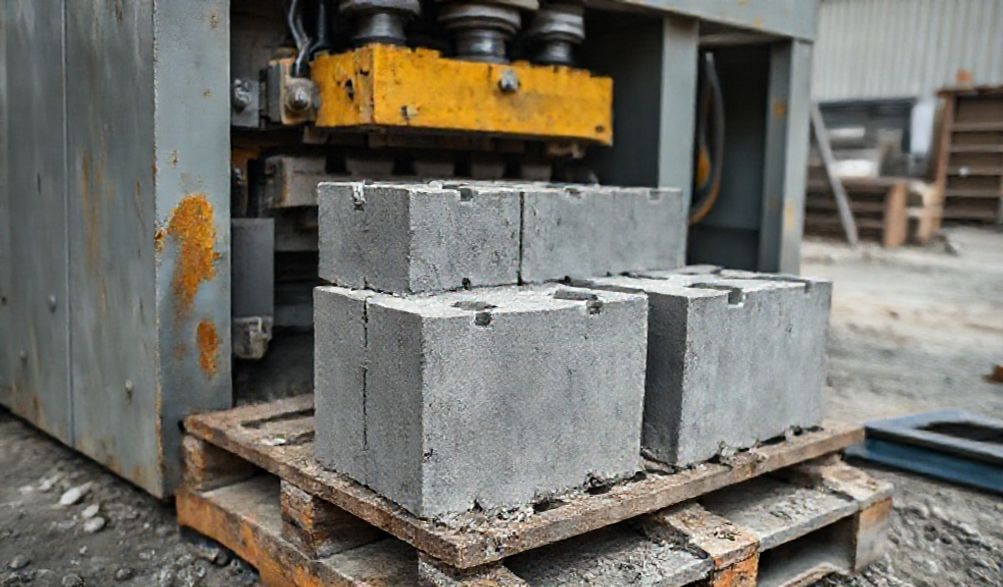
O Guia Definitivo para Máquinas de Fabricação de Blocos de Concreto: Tipos, Custos e Como Escolher
Para empresas de construção, empreiteiros ou empreendedores que desejam entrar no setor de materiais de construção, o custo e o fornecimento de blocos de concreto podem ser um grande obstáculo. E se você pudesse produzir blocos de alta qualidade sob demanda, controlar sua cadeia de suprimentos e desbloquear novas fontes de receita?
Este guia abrangente se baseia em décadas de experiência no setor para desmistificar as máquinas de fabricação de blocos de concreto. Vamos cortar o jargão de marketing e fornecer as informações práticas e confiáveis que você precisa para fazer um investimento bem fundamentado.
Você aprenderá sobre os diferentes tipos de máquinas (de manuais a totalmente automáticas), fatores-chave como capacidade de produção e tipos de blocos, análises realistas de custos e um passo a passo para selecionar a máquina perfeita para seu projeto específico ou objetivos de negócio.
Seja você que está pesquisandomáquinas para fazer blocos de concretopara uma pequena propriedade rural ou uma planta comercial em larga escala, este guia é o seu ponto de partida.
O que é uma Máquina para Fabricar Blocos de Concreto? Função Principal e Benefícios
Em sua essência, uma máquina de fazer blocos de concreto é um dispositivo que automatiza o processo de formar unidades de alvenaria consistentes e duráveis a partir de uma mistura de cimento e agregados. Na prática, o termo "bloco de cinzas" é frequentemente usado de forma intercambiável com "bloco de concreto", embora as cinzas tradicionais (cinzas volantes) sejam menos comuns hoje do que os agregados de pedra ou areia.
Entender como essas máquinas funcionam e seus benefícios é o primeiro passo para fazer uma compra inteligente.
O Princípio Básico de Funcionamento
O processo, embora varie de acordo com o nível de automação, segue um princípio mecânico consistente:
- Mistura:Cimento, agregados (como areia, cascalho ou pedra britada) e água são combinados para formar uma mistura de concreto semi-seco. A proporção precisa é crítica para a resistência.
- Moldagem:Essa mistura é alimentada em uma cavidade de molde, que define a forma do bloco (por exemplo, núcleo oco, maciço).
- Compactação (Vibração):A vibração de alta frequência é aplicada. Este é o passo crucial que remove bolsas de ar e comprime o material em uma forma densa e resistente dentro do molde.
- Desmoldagem e Cura:O bloco recém-formado, ou "verde", é ejetado do molde. Em seguida, ele passa por um processo de cura, onde ganha resistência ao longo de dias por meio de umidade e temperatura controladas, frequentemente em uma câmara ou prateleira de cura dedicada.
Principais Vantagens da Produção de Blocos no Local
Investir na sua própria capacidade de produção oferece benefícios tangíveis:
- Economias de Custos Significativas:Para projetos em grande escala, a produção de blocos internamente elimina as margens dos fornecedores e pode reduzir os custos de materiais em 30% a 50%, dependendo dos preços locais.
- Controle Completo da Cadeia de Suprimentos:Nunca enfrente atrasos no projeto devido à falta de fornecedores ou problemas de entrega. Produza exatamente o que você precisa, quando precisa.
- Flexibilidade de Personalização:Você pode criar tamanhos de blocos não padificados, integrar pigmentos especiais para blocos coloridos ou ajustar misturas para propriedades específicas de resistência ou isolamento.
- Redução de Resíduos de Materiais: Produce in batches aligned with your pace, minimizing waste from damaged deliveries or over-ordering. Some operations can even utilize on-site or local materials.
- A Clear Business Opportunity: A reliable machine can become a profit center itself, supplying blocks to other contractors, builders, or retailers in your area.
Types of Cinder Block Making Machines: From Manual to Fully Automatic
The market offers a spectrum of machines categorized by their level of automation, output, and investment. Choosing the right type is the most critical decision you’ll make.
Manual or Hand-Operated Machines
- Descrição: These are purely mechanical, lever-operated devices. All actions—filling the mold, compacting via a hand press, and demolding—are performed by human labor.
- Melhor Para: Extremely small-scale, low-budget projects like a personal garden wall, a small shed, or use in off-grid locations with no power access. They are not suitable for commercial production.
- Capacidade de Saída: Typically 100 to 500 blocks per day, heavily dependent on operator stamina.
- Visão Especializada: While low-cost, the physical labor is intense, and achieving consistent block density and quality is challenging. They serve a niche but important role.
Máquinas Semiautomáticas
- Descrição: This is the most popular category for small to medium businesses. They use an electric motor to power a vibration system for effective compaction. However, feeding raw materials and removing finished blocks are manual operations. Many feature a simple hydraulic system for mold movement.
- Melhor Para: Startup block manufacturing businesses, contractors undertaking several projects a year, and medium-scale housing developments. They offer an excellent balance of productivity and affordability.
- Capacidade de Saída: A robust semi-automatic machine can produce between 800 to 3,000+ standard blocks in an 8-hour shift, depending on model and crew efficiency.
- Visão Especializada: Based on operational data, this tier offers the best return on investment for new entrants. The key is to ensure the vibration motor and frame are robust enough for continuous use.
Máquinas Totalmente Automáticas
- Descrição: These are industrial production lines. They integrate computerized control panels, automatic material batching and feeding systems, conveyor belts, robotic stackers, and palletizers. Human intervention is primarily for monitoring and maintenance.
- Melhor Para: Large-scale commercial block manufacturing plants supplying regional markets, or major infrastructure projects with colossal, predictable demand.
- Capacidade de Saída: Production is measured in shifts, with outputs ranging from 10,000 to over 30,000 blocks per 8-hour shift.
- Visão Especializada: The capital investment is substantial, and they require significant space, stable high-power electrical connections, and skilled technicians. The payoff is unmatched volume and lower per-unit labor cost.
Máquinas de Blocos Móveis
- Descrição: These are production units (often semi- or fully-automatic) mounted on a trailer or truck bed. They can be towed directly to a large job site.
- Melhor Para: Massive infrastructure projects like dams, highways, or remote large-scale construction where transporting thousands of finished blocks would be logistically complex and expensive.
- Capacidade de Saída: Varies, but designed for high-volume on-site production.
- Visão Especializada: A common challenge we see is underestimating the site preparation needed—you still require a flat, stable base and access to bulk raw materials and power/water.
Fatores Críticos a Considerar Antes de Comprar
Beyond just the machine type, several technical and commercial factors will determine your long-term success. This is where due diligence separates a wise investment from an expensive mistake.
Capacidade de Produção & Requisitos de Produção
Don’t guess. Calculate.
1. Estimate your average daily or weekly block consumption based on project pipelines.
2. Add a 20-30% buffer for growth or unexpected demand.
3. Match this number to a machine’s realista output, not its theoretical maximum. A machine rated for 2000 blocks/day might average 1600 after accounting for breaks, maintenance, and material loading.
Block Types and Sizes
- Versatilidade: Can the machine produce hollow blocks, solid blocks, paving stones, and interlocking blocks with simple mold changes? Mold versatility future-proofs your business.
- Mold Changeover Time: How quickly and easily can molds be swapped? In semi-automatic machines, this process should take less than 30 minutes.
- Standard vs. Custom: Ensure the machine can produce blocks meeting relevant regional standards (e.g., ASTM in the US, IS in India) for commercial sales.
Machine Power Source and Specifications
- Electric vs. Diesel/Hydraulic: Electric is most common for stationary plants. Diesel/hydraulic options are vital for sites without grid power.
- Requisitos de Energia: A semi-automatic machine may require a robust 3-phase electrical connection. Verify your site’s capabilities before purchasing.
- Logistics: Consider the machine’s footprint, weight, and required ancillary space for raw material storage, mixing, and block curing.
Quality of Construction and Key Components
The machine’s build quality dictates its lifespan and uptime. Prioritize:
* Quadro: Heavy-duty steel welding that resists the constant stress of vibration.
* Sistema de Vibração: The heart of the machine. Look for reputable, branded vibration motors with adjustable frequency. Enclosed motors last longer in dusty environments.
* Moldes: Hardened, precision-machined steel molds produce smooth, dimensionally accurate blocks and resist wear.
* Warning Sign: Excessively thin steel, poor welds, unmounted or generic “no-name” vibration motors, and loosely fitting molds are red flags for imminent breakdowns.
After-Sales Support: The Deal-Breaker
This factor is non-negotiable. A machine without support is a paperweight.
* Peças de Reposição: Are wear-and-tear parts (mold liners, springs, bolts) readily available? What is the lead time?
* Suporte Técnico: Does the supplier offer installation guidance, troubleshooting, and operational training? Is there a service hotline?
* Documentação: Clear, illustrated operation and maintenance manuals in your language are essential.
Understanding the Costs: Investment, Operation, and ROI
Being trustworthy means being transparent about money. Here’s a realistic breakdown.
Initial Purchase Price Ranges
- Máquinas Manuais: $1,000 – $4,000 USD.
- Máquinas Semiautomáticas: $5,000 – $25,000+ USD. Price scales with capacity, build quality, and level of hydraulic assistance.
- Máquinas Totalmente Automáticas: $50,000 – $300,000+ USD, depending on complexity and degree of automation.
- Máquinas Móveis: $30,000 – $150,000+ USD.
Note: Country of manufacture, brand reputation, and shipping/import duties significantly affect final cost.
Operational and Raw Material Costs
Your ongoing costs per block will include:
* Matérias-primas: Cement, sand, aggregate. A rough estimate is that raw materials constitute 60-70% of the production cost of a single block.
* Trabalho: For semi-auto machines, a crew of 2-4 is typical.
* Energy: Electricity for the mixer, vibrator, and (if applicable) hydraulic power pack.
* Maintenance: A small but essential budget for replacing wear parts and routine servicing.
Calculating Potential Return on Investment (ROI)
Use this simplified framework:
1. Calculate your total cost per finished, cured block (Materials + Labor + Energy + Maintenance + Machine Depreciation).
2. Research the prevailing market price for a similar quality block in your area.
3. Your gross profit per block is: Market Price - Your Cost.
4. ROI Timeframe: Divide the total machine investment cost by your estimated monthly gross profit from block sales.
Exemplo: If you invest $15,000 in a semi-auto machine and profit $0.20 per block, you need to sell 75,000 blocks to break even on the machine. At 2,000 blocks/month, that’s a 37.5-month (just over 3-year) ROI, excluding other business expenses. Volume is key.
Step-by-Step Guide to Choosing the Right Machine
Follow this actionable, expert-guided checklist to navigate your purchase confidently.
Step 1: Precisely Define Your Project Scope and Goals.
Are you supplying a single project, starting a side business, or launching a full-scale plant? Write down clear, measurable objectives for the first 12-24 months.
Step 2: Set a Realistic Budget (Including Hidden Costs).
Account for the machine, shipping, import duties, site preparation (foundation, power hookup), initial raw material stock, and a 10-15% contingency fund.
Step 3: Research and Shortlist Reputable Manufacturers/Suppliers.
Look for companies with a long track record, verifiable customer lists, and a strong online presence of working machines. Industry forums and trade associations are good resources.
Step 4: Request Detailed Quotes and Specifications.
Ask for a comprehensive spec sheet, not just a price. Compare vibration motor power, cycle time, hydraulic pressure, and warranty terms line-by-line.
Step 5: Seek References and, If Possible, Visit a Working Installation.
Talking to an existing user provides unparalleled insight into real-world output, reliability, and support quality. If a supplier discourages this, be wary.
Step 6: Finalize Support and Warranty Terms.
Get all support promises in writing. What does the warranty cover (parts, labor, duration)? How are spare parts priced? Clarify this before the final payment.
Frequently Asked Questions (FAQ) About Cinder Block Machines
What is the difference between a concrete block and a cinder block?
Historically, “cinder blocks” used fly ash or coal cinders as the primary aggregate, making them lighter and less strong. Modern “concrete blocks” use sand, gravel, or crushed stone, offering superior strength and durability. Today, the terms are often used interchangeably, but the material is almost always concrete.
Can I start a business with just one semi-automatic machine?
Absolutely. Many successful block yards began with a single robust semi-automatic machine. It allows you to validate demand, refine your process, and generate revenue to reinvest in scaling up. Focus on quality and reliability in your local market.
What is the curing process, and how long does it take?
Curing is the process where the cement hydrates and gains strength. Blocks must be kept moist and at a stable temperature for a minimum of 7 days to achieve sufficient strength. Full strength (28-day strength) is typically reached after 28 days under proper conditions. Steam curing chambers in automatic plants accelerate this to 24 hours or less.
How much space do I need for a small block-making operation?
For a semi-automatic setup, you need space for:
* The machine itself (~ 10′ x 10′ area).
* Raw material storage (sand, stone piles or silos).
* A mixing area.
* A large, level area for block curing and storage (can be several thousand square feet).
* Plan for at least 5,000 to 10,000 sq. ft. as a starting point.
Are there any safety precautions I should know about?
Yes. Always:
* Wear appropriate PPE: safety glasses, hearing protection (vibration is loud), gloves, and steel-toe boots.
* Ensure all machine guards are in place.
* Lock out/tag out power before performing any maintenance or clearing jams.
* Train all operators on safe material handling (cement dust, heavy molds).
Conclusion and Final Recommendations
Choosing a cinder block making machine is a significant decision that hinges on aligning the machine’s capabilities with your specific scale, budget, and long-term goals.
To reiterate the core principle: prioritize quality machinery and unparalleled after-sales support over the lowest initial price. Your long-term productivity and profitability depend on reliability and uptime.
As a final piece of expert advice: for most first-time buyers and small-to-medium business entrants, a robust, well-supported semi-automatic machine represents the optimal balance of affordability, controllable output, and operational simplicity to successfully launch and grow your venture.
Ready to take the next step? Use the step-by-step checklist in Section 5 to systematically evaluate your options. For personalized guidance, consider consulting with an independent industry expert or reaching out to shortlisted manufacturers with your specific project details and capacity requirements.
<