
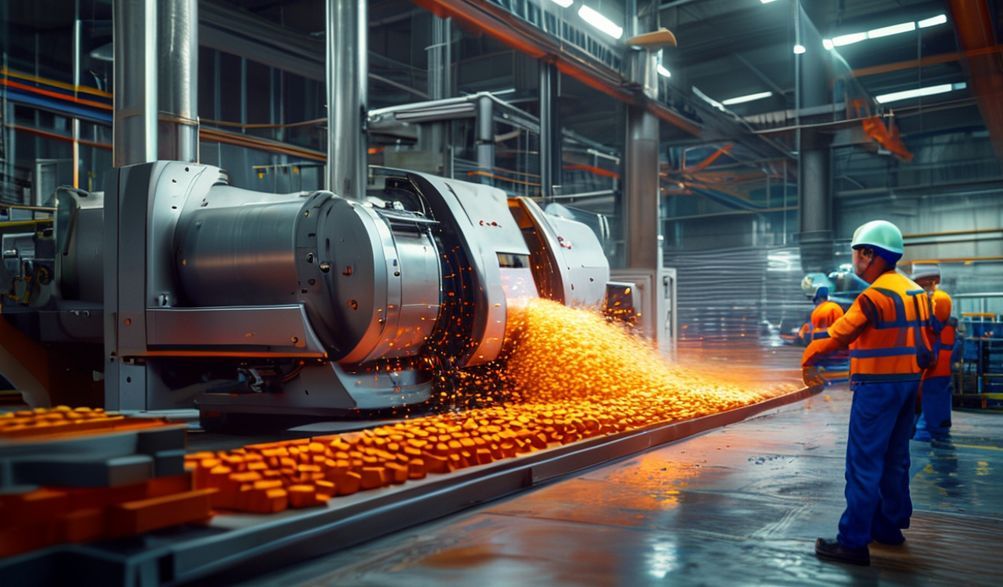
O Guia Definitivo para Máquinas de Fabricação de Blocos Totalmente Automáticas na Índia: Dentro da Fábrica de Tijolos FUDA
O setor de construção da Índia não está apenas crescendo; está explodindo. Com o impulso implacável do governo por infraestrutura, moradia para todos e cidades inteligentes, a demanda por materiais de construção atingiu níveis sem precedentes. Relatórios do setor sugerem uma necessidade de bilhões de tijolos e blocos anualmente para acompanhar o ritmo. No entanto, no centro desse boom reside um gargalo crítico: os métodos tradicionais e manuais de produção desses elementos fundamentais de construção são cada vez mais insustentáveis. Eles são intensivos em mão de obra, marcados por inconsistências, geram desperdício significativo e impõem um alto custo ambiental.
Entre a máquina totalmente automática de fabricação de blocos – uma maravilha tecnológica que está revolucionando a forma como a Índia constrói. Isso não é apenas uma atualização; é uma transformação industrial completa. E na vanguarda desta revolução na manufatura indiana está a Fábrica de Tijolos FUDA. Este guia é construído sobre uma base de profunda expertise do setor, análise técnica e insights sobre os processos de um fabricante líder. Nosso objetivo é fornecer a proprietários de empresas, construtoras e investidores um recurso abrangente e confiável para entender esta tecnologia, seus benefícios profundos e como uma parceria com um fabricante como a FUDA pode ser um divisor de águas para a lucratividade e o crescimento de longo prazo.
Ao final deste artigo, você terá uma compreensão clara de:
* As forças de mercado que impulsionam a automação na Índia.
* A tecnologia central por trás dessas máquinas avançadas.
* O que diferencia uma fábrica focada na qualidade como a FUDA.
* Os benefícios tangíveis de investir em um sistema totalmente automático.
* Uma lista de verificação prática para tomar sua própria decisão de compra informada.
Por que a Índia Está Adotando a Tecnologia de Fabricação de Blocos Totalmente Automática
A mudança em direção à automação na fabricação de blocos não é apenas uma tendência; é uma resposta estratégica às demandas únicas e poderosas do cenário moderno da construção na Índia.
A Demanda por Velocidade e Escala na Indústria da Construção
Do projeto rodoviário Bharatmala ao desenvolvimento de inúmeras cidades inteligentes e ao PM Awas Yojana (Urbano), a escala dos projetos é monumental. Essas iniciativas exigem um fornecimento consistente e massivo de materiais de construção de alta qualidade em prazos apertados. As plantas totalmente automáticas, capazes de produzir milhares de blocos precisos por hora, são a única solução viável para atender a essa demanda por velocidade e escala sem comprometer a qualidade.
Superando a Escassez de Mão de Obra e as Lacunas de Habilidades
A dependência da mão de obra manual para a fabricação de tijolos está repleta de desafios — migração sazonal, aumento dos custos salariais e falta de qualificação padronizada. A automação desvincula a produção dessas volatilidades de recursos humanos. Uma máquina totalmente automática garante que a produção permaneça consistente, previsível e eficiente, 24 horas por dia, se necessário, independentemente da disponibilidade ou do nível de habilidade da força de trabalho.
O Impulso Crítico pela Padronização e Qualidade
O foco intensificado da Índia na segurança e durabilidade das construções, reforçado por normas rigorosas como as do Bureau of Indian Standards (BIS), exige materiais de resistência certificada e dimensões precisas. Os tijolos artesanais são inerentemente variáveis. Em contraste, uma máquina totalmente automática produz blocos com excepcional precisão dimensional e resistência à compressão consistente, garantindo integridade estrutural, construção mais rápida (devido ao tamanho uniforme) e menor uso de argamassa.
Sustentabilidade e Regulamentações Ambientais
A conformidade ambiental não é mais opcional. O governo promove ativamente o uso de resíduos industriais, como cinzas volantes, na construção. As modernas máquinas de fabricação de blocos totalmente automáticas são projetadas para utilizar esses materiais (cinzas volantes, escórias, etc.) de forma otimizada, transformando resíduos em recursos valiosos. Além disso, elas eliminam a poluição causada pelos fornos tradicionais a carvão, otimizam o uso de matérias-primas para minimizar o desperdício e reduzem significativamente a pegada de carbono geral da produção de blocos.
Entendendo as Máquinas de Blocos Totalmente Automáticas: Componentes Principais e Como Funcionam
Para apreciar o valor, é preciso entender a excelência de engenharia dentro desses sistemas. Uma máquina de fabricação de blocos totalmente automática é uma orquestra sincronizada de componentes robustos.
O Coração do Sistema: A Unidade Hidráulica
Esta é a casa de força. Sistemas hidráulicos de alta pressão fornecem a força imensa necessária para compactar a mistura de concreto em um bloco denso e resistente. A qualidade do sistema hidráulico—suas bombas, válvulas e cilindros—determina diretamente a confiabilidade da máquina, a consistência da pressão (medida em toneladas) e a eficiência energética. Uma unidade hidráulica robusta garante longevidade e desempenho estável sob operação contínua.
O Painel de Controle: O Cérebro da Operação
Gone are the days of manual levers and guesswork. The modern nerve center is a Programmable Logic Controller (PLC) with a user-friendly touch-screen interface. This “brain” allows for:
* Precisão: Exact control over vibration time, pressure, and cycle times.
* Programmability: Store recipes for different block types (solid, hollow, pavers) and switch between them with a tap.
* Facilidade de Operação: Simplifies complex processes, requiring minimal training for operators.
* Diagnostics: Monitors machine health and can alert operators to potential issues.
Key Production Stations: From Raw Material to Finished Block
The process is a seamless, automated flow:
1. Alimentação & Mistura: Automated conveyors and weighing systems batch raw materials (cement, fly ash, aggregate) with precision, feeding them into a mixer for a homogenous blend. Consistency here is key to quality later.
2. Moldagem & Compactação: The mixed concrete is fed into the mold box. Here, simultaneous high-frequency vibration and immense hydraulic pressure work together to remove air voids and compact the material, defining the block’s final density and strength.
3. Cura e Paletização: The freshly formed block is automatically ejected onto a pallet, neatly stacked by a robotic stacker, and then transferred to a curing chamber (often a controlled steam or water spray environment) to gain its full strength. The empty pallet is automatically returned to the start of the cycle.
Spotlight on FUDA Brick Making Factory: A Benchmark in Indian Manufacturing
In a market filled with options, the manufacturer’s credibility is as important as the machine’s specifications. FUDA Brick Making Factory has established itself as a benchmark for quality and reliability.
FUDA’s Legacy and Commitment to the Indian Market
With years of specialized experience in industrial machinery manufacturing, FUDA has built a reputation grounded in technical prowess and customer success. Their deep understanding of the Indian context is crucial. Their machines are not just imported designs; they are engineered considering local raw material characteristics (like the specific properties of Indian fly ash), power supply conditions, and the demanding operational environments of Indian production sites.
Inside the FUDA Factory: Quality as a Process
Quality at FUDA is not an afterthought; it’s integrated into every step. Visiting their factory reveals a commitment to precision:
* Certified Materials: Use of high-grade steel, internationally branded hydraulic components, and quality electricals.
* Usinagem CNC: Critical parts are fabricated using Computer Numerical Control (CNC) machines, ensuring millimeter-perfect accuracy for perfect alignment and smooth operation.
* Rigorous Assembly & QC: Each workstation follows strict assembly protocols. Quality control checks are conducted at multiple stages—from welding integrity and hydraulic line assembly to final paint and function testing.
FUDA’s Machine Range: Solutions for Every Scale
FUDA offers a portfolio designed to cater to diverse business ambitions:
* High-Capacity Stationary Plants: For large-scale block producers and construction companies supplying major projects. Capable of producing thousands of blocks per shift.
* Gama de Produtos Versátil: Their machines can be configured to produce a wide array of products, including:
* Solid and Hollow Concrete Blocks
* Pavers and Interlocking Tiles
* Kerbstones and Decorative Blocks
This flexibility allows a business to adapt to market demands.
Key Benefits of Investing in a FUDA Fully Automatic Machine
The investment transcends the machinery; it’s an investment in transforming your business model.
Unmatched Productivity and Profitability
The numbers speak for themselves. A single fully automatic line can outperform dozens of manual laborers. This massive leap in output (often 10x or more compared to semi-automatic systems) directly translates to higher sales volume and faster return on investment (ROI). Reduced direct labor costs further amplify profitability.
Consistent, Superior Quality Blocks
Every block that comes off a FUDA line is a carbon copy of the last. This exceptional consistency means:
* Alta Resistência à Compressão: Meets and exceeds IS standards for load-bearing applications.
* Perfect Dimensions: Ensures straight walls, reduces mortar consumption, and speeds up construction.
* Acabamento Superficial Excelente: Enhances the aesthetic appeal of the final structure.
Remarkable Operational Efficiency and Savings
Automation drives efficiency across the board:
* Otimização de Mão de Obra: Requires only 3-5 personnel for oversight, feeding, and pallet management.
* Raw Material Savings: Precise batching and efficient compaction minimize waste.
* Eficiência Energética: Modern designs incorporate energy-saving features in hydraulics and motors, reducing per-block power costs.
Durabilidade e Confiabilidade de Longo Prazo
FUDA machines are built for the long haul. The robust construction, use of premium components, and thoughtful engineering result in:
* Tempo de Inatividade Mínimo: Reliable performance for continuous production cycles.
* Baixa Manutenção: Easy access for servicing and durable parts reduce maintenance frequency and cost.
* Lower Total Cost of Ownership: While the initial investment is significant, the extended service life and reduced operational costs make it a more economical choice over a decade or more.
Choosing the Right Fully Automatic Machine: A Buyer’s Checklist
Making the right choice requires careful evaluation. Use this checklist to guide your decision.
Assessing Your Production Needs and Business Goals
- What is your target daily/monthly output?
- Which block types and sizes are in highest demand in your market?
- What is the available space for the plant and curing area?
- What is your growth projection for the next 5 years?
Critical Technical Specifications to Scrutinize
- Hydraulic Pressure (Tonnage): Determines block density and strength.
- Tempo de Ciclo: Seconds per cycle; defines maximum hourly output.
- Motor Power & Electrical Requirements: Impacts your power infrastructure needs.
- Nível de Automação: From automatic material feeding to robotic palletizing.
- Pallet Size and Standard: Compatibility with existing or planned curing systems.
Beyond the Machine: Evaluating the Manufacturer
The machine is only part of the equation. The manufacturer’s support is critical.
* Serviço Pós-Venda: Is there a dedicated, trained service team locally available?
* Spare Parts Inventory: Are critical spares readily available in India to minimize downtime?
* Instalação e Comissionamento: Do they provide supervised installation and training for your staff?
* Factory Visit: Always insist on visiting the manufacturing facility. Seeing the build quality, like at FUDA’s factory, is the best testament to their claims.
Total Cost Analysis: Investment vs. Lifetime Value
Look beyond the sticker price. Consider:
* Installation and foundation costs.
* Training for operators.
* Estimated energy and maintenance costs per year.
* Potential cost of downtime without proper service support.
A slightly higher initial investment in a reliable machine from a reputable factory like FUDA often results in a much lower total cost over its lifespan.
Perguntas Frequentes (FAQ)
Q1: What is the approximate price range for a fully automatic block making machine in India from a manufacturer like FUDA?
A: Prices vary significantly based on capacity, automation level, and configuration. A small-scale model will cost differently than a large, fully-integrated plant. For an accurate quotation tailored to your specific production goals, it is best to contact FUDA directly with your requirements.
Q2: What kind of after-sales service and warranty does FUDA offer?
A: Reputable manufacturers like FUDA typically offer a comprehensive warranty on the machine and core components. More importantly, they back it with a strong service network, including trained engineers, availability of critical spare parts, and remote technical support to ensure minimal operational disruption.
Q3: Can these machines use local raw materials like Indian fly ash?
A: Absolutely. In fact, leading manufacturers design their machines specifically for regional material mixes. FUDA’s machines are expertly engineered to optimally utilize Indian fly ash and other locally available aggregates, ensuring high-quality block production from indigenous resources.
Q4: How much manpower is required to operate a fully automatic plant?
A: This is a key advantage. While a traditional brick yard may require 20-30 laborers, a fully automatic plant typically needs only 3-5 personnel to manage the control panel, oversee raw material feeding, and handle the palletized blocks for curing, representing massive labor savings and consistency.
Q5: What is the typical lead time for delivery and installation?
A: Lead time depends on the machine model and complexity. Generally, after order confirmation, delivery can take several weeks. Reputable manufacturers work closely with clients on site preparation guidance to ensure a smooth and timely installation and commissioning process.
Conclusão
The adoption of fully automatic block making technology is a defining shift for India’s construction material sector. It directly addresses the nation’s need for speed, scale, quality, and sustainability. This isn’t just about buying a machine; it’s about future-proofing your business.
Choosing to partner with FUDA Brick Making Factory means aligning with a manufacturer whose process is rooted in precision engineering, deep market understanding, and an unwavering commitment to quality. It is a strategic decision for long-term, profitable growth.
Ready to transform your block production capabilities? Take the next step with confidence.
* Request a Detailed Brochure to explore FUDA’s technical specifications.
* Schedule a Factory Visit to witness their manufacturing excellence firsthand.
* Consult with a FUDA Technical Expert for a custom solution tailored to your business goals.
Invest in a partnership built on quality, supported by expertise, and dedicated to building a stronger India, one perfect block at a time.
<