
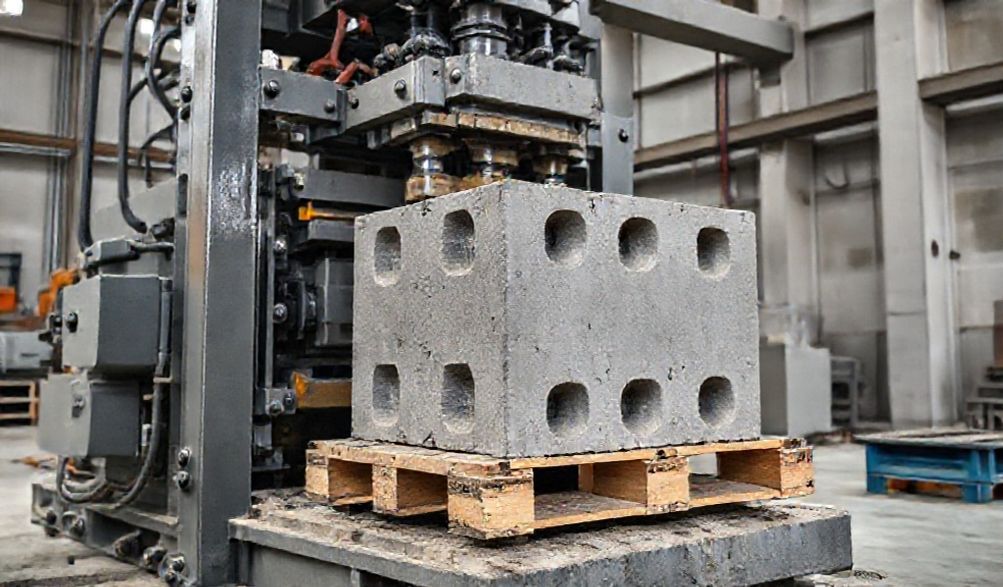
The Ultimate Guide to Hollow Block Making Machines: Types, Prices & How to Choose
Introdução
In the world of construction, efficiency and cost-effectiveness aren’t just goals—they’re the foundation of a successful project. For contractors, builders, and entrepreneurs, the pressure to deliver quality structures on time and within budget is constant. At the heart of this challenge lies a fundamental material: the humble hollow block. A staple in modern construction for walls, partitions, and even load-bearing structures, its demand is perpetual. But scaling production manually is a slow, inconsistent, and labor-intensive endeavor. This is where the hollow block making machine emerges as the game-changer.
Based on years of observation and analysis within the construction equipment industry, the leap from manual labor to mechanized production isn’t just an upgrade; it’s a strategic business decision. This comprehensive guide is designed to be your definitive resource. We’ll demystify the technical jargon, provide clear comparisons between machine types, offer transparent price insights, and deliver practical, experience-driven advice. Our goal is to equip you with the knowledge to make a confident, wise investment that aligns perfectly with your project scale, budget, and long-term ambitions.
What is a Hollow Block Making Machine? Core Function & Benefits
A hollow block making machine is a specialized piece of construction equipment designed to manufacture hollow concrete blocks automatically or semi-automatically. It does this by compacting a mixture of cement, aggregates (like sand or crushed stone), and water into a mold of a specific shape, which includes hollow cores. These cores reduce the block’s weight and material usage while maintaining structural strength and providing excellent thermal and acoustic insulation properties.
In essence, it transforms raw, bulk materials into standardized, high-quality building components with remarkable speed and consistency.
How It Works: The Production Process Simplified
The process, while sophisticated in engineering, follows a logical sequence that can be broken down into clear steps:
- Loteamento & Mistura: The raw materials (cement, sand, aggregate, water) are measured in precise ratios and mixed thoroughly to create a homogeneous, semi-dry concrete mix. The consistency is crucial—too wet, and the block won’t hold its shape; too dry, and it won’t compact properly.
- Alimentação & Moldagem: The mixed concrete is fed into the machine’s hopper. From here, it is transferred into the mold cavity (or cavities for multi-block production). The mold defines the block’s external dimensions and internal hollow core pattern.
- Compactação e Vibração: This is the heart of the process. Powerful vibrators, often operating at frequencies between 3000-6000 vibrations per minute (VPM), are activated. Simultaneously, a hydraulic or mechanical press applies high pressure. This dual action removes air pockets and compacts the concrete mix densely into every corner of the mold, ensuring the block’s structural integrity.
- Demolding (Stripping): Once compacted, the mold is lifted or retracted. The newly formed, green block is gently ejected onto a pallet, conveyor belt, or the factory floor.
- Cura: The blocks are not yet at full strength. They must undergo curing, typically by being stored in a controlled, humid environment for 14-28 days to allow the cement to hydrate fully and achieve its specified compressive strength.
Principais Vantagens em Relação aos Métodos Manuais ou Tradicionais
- Velocidade e Saída Inigualáveis Machines can produce hundreds, even thousands, of blocks per day, a rate impossible to match with manual labor.
- Consistência e Qualidade Superiores: Every block is identical in dimensions, density, and finish. This uniformity simplifies construction, reduces mortar use, and results in stronger, better-looking walls.
- Economias Significativas de Mão de Obra e Custos: One machine operated by a small crew can replace a large team of manual laborers, drastically reducing long-term wage costs and dependency.
- Enhanced Material Efficiency: Precise batching and compaction minimize waste of raw materials like cement.
- Greater Profit Potential: For businesses, the ability to produce blocks on-demand for your own projects or for sale creates a powerful revenue stream.
Types of Hollow Block Making Machines: Find Your Perfect Match
Choosing the right type of machine is your most critical decision. The market caters to everyone from rural self-builders to industrial manufacturers. Here’s a breakdown to help you find your perfect match.
Máquinas Manuais para Fabricação de Blocos
- Ideal Para: Small-scale projects, individual home builders, startups with minimal capital, or communities in remote areas with limited electricity.
- Operação: Entirely human-powered. Operators manually fill the mold, engage a lever to apply vibration (often via a small external motor), and then use a lever or handle to press and demold the block.
- Saída: Low, typically 200-500 blocks per 8-hour shift, depending on operator skill and stamina.
- Faixa de Preço: The most affordable entry point, generally ranging from $1,000 to $4,000.
- Prós: Low cost, simple maintenance, no electricity needed for basic models, highly portable.
- Contras: Labor-intensive, low output, inconsistent quality if not operated carefully, physical strain on operators.
Máquinas Semi-Automáticas para Fabricação de Blocos
- Ideal Para: Small to medium-sized enterprises (SMEs), growing construction businesses, and block-making yards supplying local markets. This is often considered the “sweet spot.”
- Operação: Strikes a balance between manual input and mechanical aid. The machine handles the core functions of vibration and compaction (usually via an electric motor and hydraulic system). Operators manually feed the mix and may handle the movement of blocks or pallets.
- Saída: Substantially higher than manual machines, ranging from 800 to 2,500+ blocks per 8-hour shift.
- Faixa de Preço: A significant step up, typically between $8,000 and $25,000, based on size and features.
- Prós: Good balance of output and cost, improved block consistency, reduces heavy labor, strong return on investment for active businesses.
- Contras: Requires a stable power source, more complex than manual machines, still requires a small operational crew.
Máquinas de Fabricação de Blocos Totalmente Automáticas
- Ideal Para: Large-scale commercial block production plants, industrial construction companies, and businesses aiming to dominate regional supply.
- Operação: These are complete production lines. They feature Programmable Logic Controller (PLC) panels for automation. Functions like material feeding, mixing, molding, compaction, block ejection, stacking, and even pallet return are fully automated. They often integrate with conveyor systems and automatic batching plants.
- Saída: Very high, from 4,000 to over 10,000 blocks per 8-hour shift.
- Faixa de Preço: A major capital investment, starting from $50,000 and easily exceeding $150,000 – $300,000+ for top-end lines.
- Prós: Maximum output with minimal labor, exceptional consistency, high efficiency, lower per-unit cost at scale.
- Contras: Very high initial investment, requires significant space and infrastructure (strong power supply, concrete floor), complex maintenance requiring specialized technicians.
Máquinas de Blocos Móveis vs. Estacionárias
This distinction cuts across the above types:
* Máquinas de Blocos Móveis: Mounted on a trailer or wheels. Perfect for producing blocks directly at a construction site, eliminating transport costs for the finished blocks. Best for projects in remote locations or where you need to move the machine between multiple sites. Typically manual or semi-automatic.
* Máquinas de Blocos Estacionárias: Installed in a fixed location like a factory or yard. They form the core of a production facility. All fully automatic and most high-output semi-automatic machines are stationary.
Critical Technical Specifications & Features to Analyze
Looking beyond the basic type, these technical details separate adequate machines from exceptional ones. In practice, overlooking these specs is a common pitfall for first-time buyers.
Production Capacity (Blocks per Hour/Day)
Never rely on a manufacturer’s “maximum theoretical” output. Ask for the practical, sustainable output for a standard block (e.g., 4″ or 6″) under normal working conditions. Consider your peak demand and buy a machine with 15-20% extra capacity to handle growth.
Block Size and Mold Customization Options
- What standard mold sizes are included? (e.g., 4″, 6″, 8″ hollow blocks).
- Can the machine produce solid blocks, paver blocks, or curb stones with a mold change?
- How easy and costly is it to order custom molds for unique block designs? Reputable suppliers should offer this service.
Machine Power Source (Electric, Diesel, Hybrid)
- Elétrico: Most common for semi and fully automatic machines. Clean, efficient, but requires reliable grid power or a large generator.
- Diesel: Found in some mobile or heavy-duty machines. Offers independence from the electrical grid but has higher fuel costs and emissions.
- Híbrido: Offers flexibility to switch between power sources, ideal for areas with intermittent electricity.
Key Components: Vibrator Power, Hydraulic System, and Frame Durability
- Vibrator: The soul of the machine. Inquire about vibration frequency (Hz or VPM) and amplitude. A strong, well-isolated vibrator system is non-negotiable for dense, strong blocks.
- Sistema Hidráulico: The muscle. Look for branded, reliable pumps and valves. Check for hydraulic oil cooling systems, which are essential for sustained operation.
- Frame & Welds: The skeleton. The frame must be made of heavy-duty steel with robust, clean welds. A flimsy frame will flex under pressure, leading to poor block quality and premature failure.
Automation Level: From Simple Levers to PLC Panels
Understand the control interface. Is it simple lever-operated hydraulics, a relay-based control panel, or a touch-screen PLC? PLC systems offer precision, programmability (for different block types), and diagnostic functions but come at a higher cost and complexity.
Comprehensive Buying Guide: How to Choose the Right Machine
This is where field experience translates into actionable advice. Follow this framework to navigate your purchase confidently.
Assessing Your Needs: Project Scale, Budget, and Location
Start with a brutally honest self-assessment:
* Escala: Are you building a single house, 50 houses, or supplying a city? Estimate your total block need and daily/weekly production requirement.
* Orçamento: Include not just the machine price, but also costs for installation, foundation, power setup, initial raw materials, and a buffer for operational expenses.
* Location: Do you have stable 3-phase electricity? Is the site accessible for delivery and installation? What is the local availability of cement and aggregates?
Top 10 Questions to Ask Suppliers or Manufacturers
- Can you provide contact details for 2-3 previous customers in my region who bought a similar model?
- What is included in the quoted price? (Training, installation, initial spare parts kit, molds?)
- What is the warranty period and what does it specifically cover?
- How readily available are spare parts, and what is the typical delivery time for a critical part like a hydraulic pump or vibrator motor?
- Do you have service technicians available, and what are the costs for a service visit?
- Can you share the machine’s technical drawings and foundation layout requirements?
- What is the recommended mix design (cement:sand:aggregate ratio) for optimal results with your machine?
- Do you offer video tutorials or detailed operation manuals in my language?
- What is the expected lead time from order to delivery?
- How does your machine ensure consistent vibration and pressure across all mold cavities?
Price Range Breakdown: What to Expect
(Note: Prices are approximate and vary widely by region, brand, and specifications.)
* Máquinas Manuais: $1,000 – $4,000
* Máquinas Semiautomáticas: $8,000 – $25,000
* Máquinas Totalmente Automáticas: $50,000 – $300,000+
The Importance of After-Sales Service and Supplier Reputation
This factor cannot be overstated. A slightly cheaper machine from a supplier with poor support can become a very expensive paperweight. A reputable supplier with a strong service network is often worth a premium. They ensure your machine remains productive, minimizing costly downtime over its 10-15 year lifespan.
Operating, Maintenance, and Safety Best Practices
Owning the machine is one thing; operating it profitably and safely for years is another.
Daily Operation Checklist for Optimal Performance
- Check and tighten any loose bolts or nuts.
- Inspect hydraulic hoses for leaks or wear.
- Ensure the vibrator motors are clean and functioning.
- Verify the concrete mix consistency is correct (should hold its shape when squeezed).
- Lubricate all moving parts as per the manual.
Routine Maintenance Schedule to Extend Machine Life
- Diário: Clean the machine thoroughly after use to prevent concrete buildup.
- Semanal: Check hydraulic oil levels and condition; inspect electrical connections.
- Mensalmente: Replace hydraulic oil filters; inspect mold liners and wear plates for damage.
- Annually: Perform a comprehensive check of the hydraulic system, vibrator bearings, and structural frame. Replace worn components proactively.
Essential Safety Protocols for Operators
- Always wear personal protective equipment (PPE): safety glasses, gloves, and steel-toe boots.
- Never place hands or tools in the mold area while the machine is powered on.
- Ensure all safety guards and interlocks are in place and functional.
- Lock out/tag out the power supply before performing any maintenance or clearing a jam.
Solução de Problemas Comuns
- Poor Block Quality (Crumbling): Usually caused by an incorrect water-cement ratio (too dry), insufficient vibration time/power, or poor-quality sand (too much clay/silt).
- Blocks Sticking in Mold: Often due to worn or damaged mold liners, insufficient release agent, or a mix that is too wet.
- Weak Vibration: Check for loose vibrator mountings, failing vibrator motor bearings, or incorrect voltage supply.
The Business Case: ROI and Profitability Analysis
For the commercial buyer, this is the bottom line.
Calculating Your Return on Investment (ROI)
A simplified formula: (Net Profit from Machine / Total Cost of Investment) x 100.
1. Estimate Annual Revenue: (Blocks produced per year) x (Selling price per block).
2. Calculate Annual Costs: Raw materials + Labor + Electricity/Fuel + Maintenance + Depreciation.
3. Determine Net Profit: Revenue – Costs.
4. Total Investment: Machine cost + Installation + Foundation + Initial material stock.
A semi-automatic machine in an active market can often pay for itself in 12-24 months.
Market Demand for Hollow Blocks: An Overview
The demand is tied directly to construction activity—residential, commercial, and infrastructure. Research your local area: is it growing? What are the major projects planned? Establishing relationships with local contractors and builders can secure steady offtake agreements.
Sourcing Raw Materials: Cement, Aggregate, and Fly Ash
Reliable, quality raw materials are critical. Secure suppliers for:
* Cimento: The binder. Branded, fresh cement is essential.
* Agregados: Sharp, clean sand and crushed stone of the correct gradation.
* Cinzas Volantes: (Optional) A pozzolanic material that can replace a portion of cement, reducing costs and improving workability and long-term strength. Check local availability from power plants.
Perguntas Frequentes (FAQ)
Q: What is the average price of a hollow block making machine?
A: There’s no single “average” due to the vast range. Manual machines start around $1,000, semi-automatic machines range from $8,000-$25,000, and fully automatic production lines begin at $50,000 and go up significantly from there.
Q: How many blocks can a standard automatic machine produce in an 8-hour shift?
A: A standard semi-automatic machine can produce 1,500-3,000 blocks. A fully automatic line can produce 5,000-10,000+ blocks, depending on its configuration and block size.
Q: Can one machine produce different sizes of blocks?
A: Yes, by changing the mold. Most manufacturers offer a variety of standard mold sizes. Changing molds typically takes 30 minutes to an hour for a trained crew.
Q: What is the typical warranty period for these machines?
A: Warranties typically range from 1 to 2 years for the core machine, though critical components like hydraulic pumps may have a shorter warranty (e.g., 6 months). Always get the warranty terms in writing.
Q: What are the most common maintenance requirements?
A: Daily cleaning, regular lubrication of moving parts, checking and tightening bolts, monitoring hydraulic oil levels and filters, and inspecting vibrator motors and mold liners for wear.
Q: How much space is needed to install and operate a semi-automatic machine?
A: For comfortable operation, including space for raw material storage, mixing, block curing, and finished product storage, a minimum area of 2,000 to 5,000 square feet (approx. 200-500 sq. meters) is recommended.
Q: What is the difference between a hollow block machine and a paver block machine?
A: The core principle is similar, but paver block machines use a much drier concrete mix and apply extremely high vibration and pressure to create a very dense, non-porous product. The molds are also different (thinner, often with decorative patterns). Some multi-purpose machines can produce both with appropriate mold and parameter changes.
Conclusão
Choosing the right hollow block making machine is a significant decision that hinges on a clear understanding of your own needs. The journey from a manual machine for a personal project to a fully automatic plant for commercial dominance is vast, but each step has a clear purpose. Remember to match the machine type to your actual project scale and budget, prioritize build quality and supplier reputation over the lowest upfront price, and commit to the operational and maintenance practices that ensure long-term productivity.
Pronto para dar o próximo passo? We recommend contacting multiple reputable suppliers with your specific requirements and project plans. Request detailed quotations, ask the tough questions from our list, and, if possible, visit a working site to see the machines in action. For final validation, consult with an independent construction equipment specialist or engineer in your region. Your informed investment today will lay the foundation for countless successful builds tomorrow.
<