
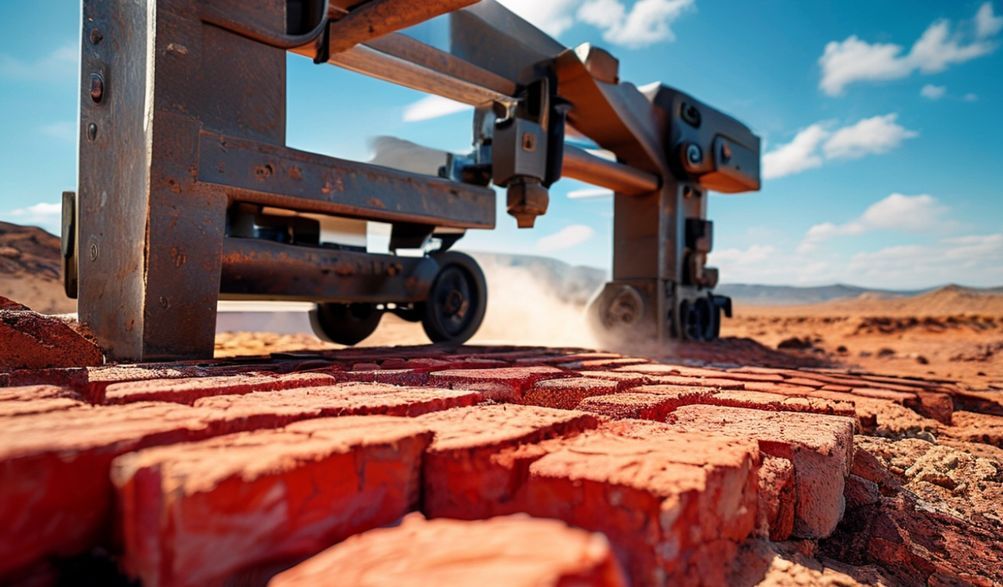
Seu Guia Completo para Comprar uma Máquina de Fabricar Tijolos na Namíbia (2026)
Introdução
Namibia is building its future. Driven by national development plans, urbanization, and a resilient private sector, the construction industry is a cornerstone of economic growth. Yet, for builders, contractors, and ambitious entrepreneurs across the country, a persistent challenge threatens progress: securing a reliable, affordable, and high-quality supply of bricks. Inconsistent quality from informal suppliers, soaring costs of imported materials, and frustrating project delays are all too common.
What if the solution wasn’t just to buy bricks, but to produce them? This is where the strategic investment in a brick making machine becomes a game-changer. Forging your own supply of bricks isn’t just about construction; it’s about taking control of costs, quality, and timelines, transforming a recurring expense into a potential profit center.
This comprehensive guide is built on a deep understanding of both the machinery and the unique Namibian market. We combine technical knowledge with local insights—from the sands of the Namib to the bustling sites of Windhoek—to provide information you can trust. Our goal is to empower you to make a confident, informed decision that strengthens your business and contributes to Namibia’s infrastructure.
By the end of this guide, you will understand the types of machines available, key buying considerations specific to Namibia, how to navigate local suppliers and logistics, and essential operational tips for success. Let’s build a foundation for your growth.
Why Invest in a Brick Making Machine in Namibia?
Moving from being a brick buyer to a brick producer is a significant strategic decision. In the Namibian context, the benefits extend far beyond simple convenience, offering tangible economic, qualitative, and socio-economic advantages.
Economic Advantages for Namibian Businesses
The financial case for producing your own bricks is compelling:
* Reduza os Custos de Materiais: Eliminate the mark-ups from middlemen and the volatile costs of transported or imported bricks. Your largest expenses become the raw materials—sand, cement, and water—which are often locally abundant.
* Unlock Profit Potential: Once your own project needs are met, surplus production can be sold to other builders, creating a new revenue stream. This turns a cost center into a profit-generating asset.
* Predictable ROI: For contractors with a steady pipeline of projects, the return on investment can be calculated with clarity. The machine pays for itself by reducing the per-brick cost on every project thereafter, leading to higher margins and competitive bidding power.
Quality Control and Construction Integrity
When you control production, you control the outcome.
* Consistency is Key: Machine-made bricks offer uniform size, shape, and density. This leads to straighter walls, less mortar use, faster construction times, and structurally sound buildings.
* Tailored for Namibia: You can engineer your brick mix to better withstand local conditions, such as the intense sun and abrasive wind-blown sand, by adjusting cement content and compaction.
* Raw Material Mastery: By sourcing and testing local sand and gravel, you ensure the final product is optimally suited to your specific region, enhancing durability.
Supporting Local Industry and Sustainability
Investing in a brick machine aligns with broader national goals.
* Boost Local Economy: Reducing reliance on imported building materials keeps capital within Namibia, supporting currency stability and local industries.
* Utilize Local Resources: It promotes the use of indigenous materials like desert sand and local aggregate, adding value to readily available resources.
* Create Employment: Operating and maintaining a brick production unit, even a small one, creates jobs—from machine operators to logistics helpers—fostering skills development in your community.
Types of Brick Making Machines Available in Namibia
Choosing the right type of machine is your first critical step. The market offers options for every scale of operation, from the individual homesteader to the large-scale block yard.
Máquinas Manuais para Fabricação de Tijolos
Ideal for entry-level entrepreneurs, community projects, or small-scale personal use.
* Prós: Very low initial investment, no power required, highly portable, and simple to maintain.
* Contras: Output is heavily dependent on labor (typically 500-1,000 bricks per day). Physical effort is high, and consistency relies entirely on the operator’s skill.
* Melhor Para: Testing the market, rural areas with no grid power, and projects with very low, intermittent brick requirements.
Máquinas Semi-Automáticas para Fabricação de Tijolos
The most popular choice for Namibian small-to-medium enterprises (SMEs) and growing contractors.
* Prós: Offers an excellent balance. Mechanical compaction and molding ensure consistent quality, while manual handling of raw materials and finished bricks keeps costs manageable. Output can range from 2,000 to 6,000 bricks per 8-hour shift.
* Contras: Requires a power source (electricity or diesel) and more initial capital than manual machines.
* Melhor Para: Growing construction businesses, block-making startups supplying local markets, and contractors with regular project flow.
Máquinas de Fabricação de Tijolos Totalmente Automáticas
Designed for industrial-scale production and major contractors.
* Prós: Maximum output (10,000+ bricks daily) with minimal manual labor. Fully automated processes—from mixing to molding to stacking—deliver unparalleled consistency and efficiency.
* Contras: High capital investment, significant space and power requirements, and more complex maintenance needing specialized skills.
* Melhor Para: Large block manufacturing plants, major construction firms with continuous demand, and businesses aiming to dominate regional supply.
Máquinas de Tijolos Móveis vs. Estacionárias
This is a crucial consideration given Namibia’s vast distances.
* Máquinas Móveis: Mounted on a trailer, these can be towed directly to a construction site. This eliminates brick transportation costs for remote projects—a massive advantage in regions like Kunene or Zambezi.
* Plantas Estacionárias: Set up at a fixed location (a “block yard”), these are optimized for high-volume, centralized production. They are more stable, can be integrated with larger mixing systems, and supply a town or region.
Key Factors to Consider Before Buying in Namibia
A successful purchase goes beyond just picking a type. You must align the machine with your specific Namibian context.
Avaliando Suas Necessidades de Produção
Be realistic about your requirements.
* Calculate Demand: Estimate the bricks needed for your upcoming projects on a daily/weekly basis. Do you need 1,000 bricks per day or 10,000?
* Define Your Product: Are you making standard hollow blocks, maxi bricks, pavers, or interlocking soil blocks? Ensure the machine you choose can produce the desired type and size.
* Plano para Crescimento: Consider a machine with 20-30% more capacity than your current need to accommodate business growth without an immediate reinvestment.
Raw Material Availability and Compatibility
The machine is only as good as the materials you feed it.
* Test Your Soil/Sand: This is non-negotiable. The properties of your locally available sand (grading, clay content, silt) dramatically affect brick strength. Simple, affordable testing kits are available.
* Ensure Machine Compatibility: Discuss your local material analysis with suppliers. Some machines are better suited for cement-stabilized soil, while others are designed for pure concrete (sand, stone, cement).
* Secure a Reliable Supply: Establish consistent sources for quality cement, aggregate, and water before production begins.
Power Source and Operational Environment
Namibia’s infrastructure dictates practical choices.
* Opções de Energia: In areas with stable grid power (e.g., Windhoek, Swakopmund), electric models are efficient. For rural or off-grid sites, a diesel-powered machine is essential. Some models offer dual-power capabilities.
* Planejamento de Espaço You need space not just for the machine, but for raw material storage, mixing, brick curing, and finished product storage. A flat, hard-standing area is required.
Budget and Total Cost of Ownership
Look beyond the sticker price.
* Custo Inicial: Includes the machine price, shipping, and any import duties.
* Lifetime Costs: Factor in installation, operator training, routine maintenance, spare parts (and their availability in Namibia), and potential downtime. A slightly more expensive machine from a supplier with local technical support often has a lower total cost of ownership than a cheap import with no support.
Navigating the Namibian Market: Suppliers and Support
Where and how you buy your machine is as important as the model you choose.
Local Suppliers vs. International Import
- Local Supplier (Windhoek, Walvis Bay):
- Prós: Easier communication, faster delivery of machine and spare parts, hands-on after-sales support, and often provide installation and training. They understand local conditions.
- Contras: Potentially higher purchase price due to their own import and holding costs.
- Direct International Import:
- Prós: May offer a lower initial purchase price and access to a wider range of global brands.
- Contras: High logistical complexity, potential hidden costs (shipping, insurance, port clearance), lengthy delays for spare parts, and often no local technical support.
Expert Advice: Always verify a supplier’s credentials. Ask for references from other Namibian clients. Visit their workshop if possible. A reputable supplier’s after-sales service is worth its weight in gold.
Critical After-Sales Services
Before signing, confirm the support structure:
* Suporte Técnico: Is there a local mechanic or technician on call?
* Garantia: What is covered, for how long, and what are the claim procedures?
* Spare Parts Inventory: Do they stock common wear parts (molds, mixer blades, hydraulic seals) in-country?
* Treinamento: Will they provide comprehensive training for your operators on both use and basic maintenance?
Understanding Import Duties and Logistics
If importing yourself, be prepared:
* Customs Duty: Heavy machinery typically attracts import duty. Consult with a customs clearing agent for the latest HS codes and rates from the Namibia Revenue Agency (NamRA).
* Logística: Plan the route from the port (Walvis Bay) to your site. You will need a suitable low-bed trailer and possibly police escorts for oversized loads. Factor these costs into your budget.
Operating Your Brick Machine for Optimal Results
Owning the machine is the start; operating it correctly ensures profitability and longevity.
Sourcing and Preparing Raw Materials
Consistency in input equals consistency in output.
* The Mix is Everything: Follow proven ratios for your brick type (e.g., a standard 1:6 cement-sand mix for concrete blocks). Use measuring containers, not shovels, for accuracy.
* Water Quality: Use clean water. The right moisture content is critical—too wet and bricks slump; too dry and they won’t compact properly. The mix should hold its shape when squeezed in your hand.
* Preparação do Material: Ensure sand and aggregate are free of debris, vegetation, and oversized stones. Sieving may be necessary.
Routine Maintenance for Longevity
A little daily care prevents major breakdowns.
* Diário: Clean the machine thoroughly at the end of each shift to prevent concrete buildup. Check for loose bolts and nuts. Lubricate all moving parts as per the manual.
* Semanal: Inspect hydraulic hoses for leaks. Check the oil level in the hydraulic tank. Examine molds for wear or damage.
* Environment: Shield the machine from direct sun and dust when not in use with a tarpaulin to protect seals and electronics.
Proper Curing and Storage of Bricks
Curing is what gives bricks their strength, especially vital in Namibia’s dry air.
* Initial Curing: Keep newly molded bricks under a plastic sheet or in a shaded, damp area for at least 24-48 hours to prevent moisture loss.
* Water Curing: After demolding, spray the bricks with water 2-3 times a day for 7-14 days. This allows the cement to fully hydrate and gain strength.
* Storage: Stack cured bricks on a level, dry surface. Protect them from rain until they are used. Properly cured bricks will have a consistent color and a ringing sound when tapped together.
Perguntas Frequentes (FAQ)
Q: What is the average price range for a brick making machine in Namibia?
A: Prices vary widely. A basic manual machine can start from around NAD 15,000. A quality semi-automatic machine typically ranges from NAD 80,000 to NAD 250,000. Fully automatic plants can start from NAD 500,000 and go well into the millions. Always get detailed, all-inclusive quotes.
Q: Can I use locally available desert sand in the machine?
A: Often, yes, but it requires testing. Desert sand can be too fine and uniform. It may need to be blended with a coarser aggregate (like crusher dust or small gravel) to achieve the necessary grading for strength. A simple soil test is the only way to know for sure.
Q: What kind of business license do I need to start a brick-making business?
A: You must consult official sources. Start with the Namibia Ministry of Industrialisation and Trade (MIT) for business registration. Then, check with your local municipal authority for any zoning, environmental, or trading license requirements specific to manufacturing.
Q: How many bricks can a typical semi-automatic machine produce per day?
A: A standard semi-automatic machine can produce between 2,000 and 5,000 bricks (standard hollow block equivalent) in an 8-hour shift. The exact number depends on the model’s cycle time, block size, and operator efficiency.
Q: Where can I get training on operating and maintaining the machine?
A: Your primary source should be the supplier—quality training should be part of the purchase. For broader skills development, investigate courses offered by the Namibia Training Authority (NTA) or technical institutes like the Namibia University of Science and Technology (NUST), which may offer relevant engineering or artisan training.
Conclusão
Investing in a brick making machine in Namibia is more than a purchase; it’s a strategic commitment to self-reliance, quality, and business growth. In a nation actively constructing its future, the ability to produce durable, cost-effective building materials locally is a powerful advantage.
We’ve explored the economic benefits, the different machine types suited to various scales, and the critical local factors—from soil testing to supplier vetting—that determine success. The path forward is clear: start by meticulously assessing your own needs and local conditions. Research reputable suppliers who offer not just a machine, but a partnership with strong after-sales support. For many, beginning with a semi-automatic model provides the perfect balance of affordability and professional output.
This guide was created to provide you with trustworthy, actionable information to navigate this important decision with confidence. We encourage you to perform your due diligence, ask the hard questions of suppliers, and take the first step towards building your business—and Namibia—brick by brick.
Your Next Step: Begin by contacting two or three established local suppliers for a consultation. Better yet, start by testing the composition of your local soil or sand to have concrete data (pun intended) before you even start shopping for a machine.
<