
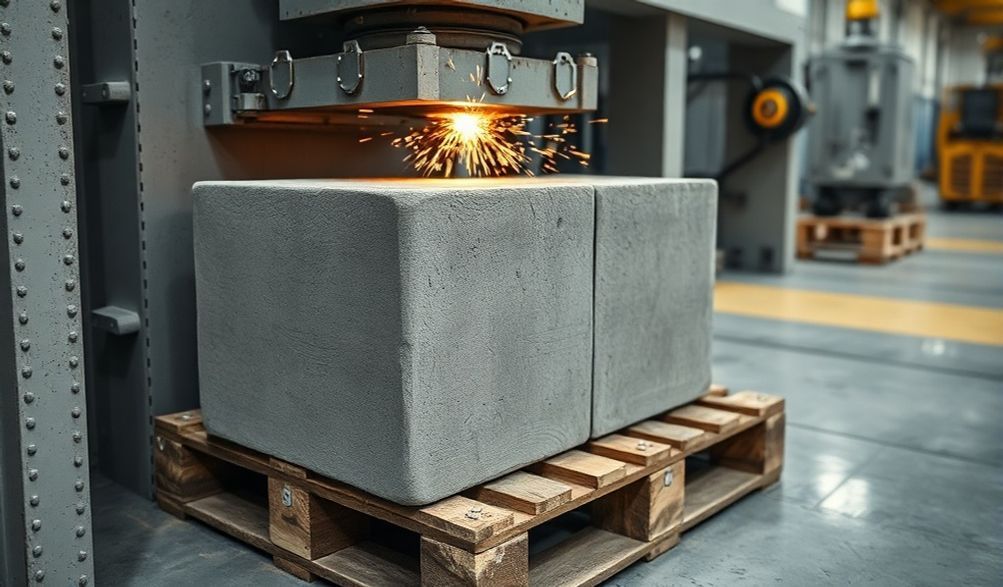
Your Ultimate Guide to Block and Paver Making Machines: Types, Costs & How to Choose
Imagine you’re a contractor who’s just landed a major contract to pave a new subdivision. Or perhaps you’re an entrepreneur who sees the booming demand for affordable housing and wants to start producing the very building blocks of that growth. Your success hinges not just on skill and market knowledge, but on a single, pivotal piece of equipment: the block and paver making machine.
Choosing the right machine is one of the most critical investment decisions you’ll make in the construction or manufacturing space. Get it right, and you unlock a stream of consistent, high-quality products and healthy profits. Get it wrong, and you face a nightmare of downtime, poor-quality output, and financial strain.
This guide is designed to be your comprehensive, unbiased resource. We’ll cut through the marketing jargon and provide the grounded, industry expertise you need to understand the different types of machines, evaluate key features, navigate costs, and ultimately select the perfect equipment for your specific goals. Let’s build a solid foundation for your decision.
Understanding Block and Paver Making Machines: Core Concepts
Before diving into specifications and suppliers, it’s essential to grasp what these machines do and the vast potential they unlock.
What is a Block and Paver Making Machine?
At its core, a block and paver making machine is a precision industrial device that transforms raw materials—primarily a dry-mix of concrete (cement, sand, aggregate, and water)—into dense, uniform, and structurally sound construction components.
The fundamental operating principle is vibration and pressure:
1. Alimentação: The prepared dry-mix concrete is fed into a mold box.
2. Compactação: The mold is subjected to intense vibration (mechanical or hydraulic) while simultaneous pressure is applied from above. This dual action removes air pockets and compresses the material.
3. Ejeção: The newly formed, high-density block or paver is ejected onto a pallet or conveyor.
4. Cura: The product is then moved to a curing area where it gains strength over time.
This process allows for the mass production of geometrically precise units with consistent strength, which is impossible to achieve with purely manual methods.
Key Applications and End-Products
The versatility of these machines is their greatest strength. They are the engines behind a wide array of construction projects:
- Construção Residencial: Interlocking pavers for beautiful, durable driveways, patios, and walkways; solid and hollow blocks for walls, foundations, and fencing.
- Projetos Comerciais e Industriais: Heavy-duty paving for parking lots and industrial yards; landscaped areas around office parks and retail centers.
- Infraestrutura Pública: Curbstones, gutter blocks, and drainage channels for roadways; retaining wall blocks for erosion control and landscaping.
- Architectural Design: A wide range of decorative, colored, textured, and specially shaped pavers for high-end aesthetic projects.
Types of Block Making Machines: A Detailed Breakdown
The market offers a spectrum of machines, categorized by their level of automation. Your choice here will define your production capacity, labor needs, and initial investment.
Máquinas Manuais para Fabricação de Blocos
These are the most basic, human-powered units. An operator manually fills the mold, engages a lever to apply vibration and pressure, and then releases the block onto the ground.
- Ideal Para: Individual builders, very small-scale startups, NGOs for community projects, or situations with extremely low and intermittent demand.
- Prós:
- Custo inicial mais baixo.
- No electricity or complex mechanics required.
- Simple to understand and maintain.
- Contras:
- Very low output (typically 100-500 blocks per day).
- Altamente intensivo em mão de obra e fisicamente exigente.
- Product consistency and density heavily depend on operator skill.
Máquinas Semi-Automáticas para Fabricação de Blocos
This category strikes a crucial balance. The core compaction process (vibration and pressure) is powered mechanically or hydraulically, but material feeding and product removal are still manual operations. They often feature a simple conveyor or pallet system.
- Ideal Para: Small to medium-sized businesses (SMEs), block yards with steady local demand, and entrepreneurs making a serious entry into the market.
- Prós:
- Significantly higher output than manual machines (e.g., 1,000 – 4,000 blocks per 8-hour shift).
- Better product consistency and strength due to controlled, powered compaction.
- More efficient use of labor compared to manual machines.
- Contras:
- Output is still limited by the speed of manual loading and offloading.
- Requires a stable power supply (electric or diesel).
- Higher initial investment and maintenance than manual options.
Máquinas de Fabricação de Blocos Totalmente Automáticas
These are complete production lines. They integrate automated material batching and feeding, computerized molding, automatic pallet circulation, and sometimes robotic stacking and packaging. Operation is managed via a PLC (Programmable Logic Controller) panel.
- Ideal Para: Large-scale manufacturing plants, businesses fulfilling high-volume contracts, and export-oriented producers where consistency and output are paramount.
- Prós:
- Maximum output (e.g., 10,000+ blocks per shift).
- Minimal manual labor required (mainly for supervision and maintenance).
- Exceptional, unwavering product quality and density.
- Highest overall efficiency and lowest cost-per-unit at scale.
- Contras:
- Very high capital investment.
- Requires significant technical knowledge for operation and maintenance.
- Needs a large, dedicated space and robust infrastructure (power, flooring).
Critical Features and Specifications to Evaluate
Once you’ve narrowed down the type, you must compare machines on their technical merits. Here’s what truly matters.
Production Capacity: Output per Hour & Mold Size
Don’t just look at the “blocks per hour” headline figure. Scrutinize it.
* Context is Key: Is that output for a standard 4″ hollow block or a smaller solid block? Always ask for the output specification for the specific product you intend to make.
* Mold Adaptability: Your business will need to adapt. A machine with a “quick mold change” system and a wide range of available molds (for different block sizes, pavers, curbs) offers incredible long-term flexibility without needing a new machine.
Machine Mechanism: Mechanical vs. Hydraulic Vibration
The compaction system is the heart of the machine and dictates product strength.
* Mechanical Vibration: Uses rotating eccentric weights to create vibration. It’s often simpler and can be more cost-effective. Best suited for standard concrete mixes and products.
* Hydraulic Vibration: Uses hydraulic power to generate vibration and pressure. It offers more precise control over the compaction force and frequency, often resulting in higher-density, stronger products. It is generally better for specialized mixes (e.g., with fly ash) and is considered more robust for heavy-duty, continuous use.
Requisitos de Energia e Custos Operacionais
Look beyond the sticker price.
* Fonte de Energia: Electric motors are clean and efficient for fixed locations with grid power. Diesel engines offer mobility and are essential for sites without reliable electricity.
* Custo Total de Propriedade (CTP): Factor in energy consumption, expected maintenance costs, and the price/availability of spare parts. A slightly cheaper machine with expensive or hard-to-find parts can become a money pit.
Durabilidade e Qualidade de Construção
Inspect the fundamentals:
* Quadro: Look for heavy-duty, welded steel construction.
* Sistema de Vibrador: It should be robust and easily serviceable.
* Moldes: They must be made from high-quality, hardened steel to withstand constant abrasion and maintain dimensional accuracy.
* Proteção contra Corrosão: A good powder-coated or painted finish is vital, especially in humid climates, to prevent rust and extend lifespan.
How to Choose the Right Machine for Your Needs
This is where theory meets practice. Apply a structured framework to your unique situation.
Assessing Your Business Goals and Market Demand
Ask yourself the hard questions:
* What is my realistic target production volume per day/week/month?
* Who are my primary customers? (Contractors, retailers, direct to public, government?)
* What specific products are in highest demand in my region?
* Am I aiming for steady growth? Your machine should have some capacity headroom.
Budgeting: Initial Investment vs. Total Cost of Ownership
Create a comprehensive budget that includes:
1. Capital Expenditure (CapEx): Machine price, shipping, insurance, and installation.
2. Operational Expenditure (OpEx): Raw materials, labor, utilities (power/water), routine maintenance.
3. Contingency Fund: For unplanned repairs and spare parts.
A critical warning: The hidden cost of choosing an under-capacity or unreliable machine—lost orders, damaged reputation, and contract penalties—can far exceed the price of investing correctly the first time.
Supplier Vetting and Due Diligence
This step is non-negotiable for mitigating risk. Your supplier’s credibility is as important as the machine’s specs.
* Verify Authority & Trustworthiness:
* Request Client References: Speak directly to past customers, especially those with similar machines.
* Seek Proof: Ask for videos of the machine in operation, visit a working installation if geographically feasible.
* Check Certifications: ISO certification is a strong indicator of quality management systems.
* Scrutinize Support Terms:
* Garantia: What is covered (parts, labor)? For how long? What are the terms?
* Serviço Pós-Venda: Do they offer installation supervision? Operator training? Is technical support readily available (phone, remote access)?
* Peças de Reposição: Is there a local parts depot or a guaranteed supply chain? How long do shipments take?
Maximizing ROI: Operation, Maintenance, and Best Practices
Your machine is a productive asset. Protect your investment with proper care.
Raw Material Preparation: The Foundation of Quality
The best machine cannot compensate for poor raw materials.
* Use clean, well-graded aggregates and sand.
* Adhere to a consistent mix design (cement-to-aggregate ratio). A typical starting point is a 1:6 or 1:7 ratio for standard blocks.
* Precisely control moisture content. Too dry, and the mix won’t compact properly; too wet, and the blocks will slump or crack.
Essential Daily and Periodic Maintenance Checklist
Preventive maintenance is cheaper than repairs.
* Diário: Clean the machine thoroughly at the end of each shift, especially the mold and pallets. Check for loose bolts or nuts.
* Semanal: Lubricate all moving parts as per the manual. Inspect the vibrator mounts and hydraulic lines for wear.
* Mensalmente: Conduct a more thorough inspection of electrical connections, wear parts on the mold, and the pressure system.
Proper Curing and Storage of Finished Products
Curing is not optional; it’s the process where concrete gains its strength.
* Keep newly produced blocks/pavers in a moist, humid environment (often by covering them with plastic sheeting) for at least 3-7 days.
* Avoid rapid drying from sun and wind, which causes cracking and weakens the final product.
* Stack cured products neatly on flat, level ground to prevent leaning and breakage.
Perguntas Frequentes (FAQ)
Q: What is the average price range for a block making machine?
A: Prices vary dramatically based on type and capacity. A basic manual machine can start around $1,500, while a robust semi-automatic machine may range from $15,000 to $50,000. Fully automatic production lines can easily exceed $100,000. Always get detailed quotes based on your specific production requirements.
Q: Can one machine produce different types of blocks and pavers?
A: Absolutely. This is a key feature to look for. The ability to produce different products depends on having the corresponding molds. Ensure the supplier offers a “quick mold change” system and that the molds for your desired product range (e.g., hollow block, paver, curb) are compatible and available for your machine model.
Q: What kind of after-sales support should I expect from a reputable supplier?
A: A trustworthy supplier will provide a comprehensive package: a clear, written warranty (typically 1 year on major parts), detailed operation and maintenance manuals, installation guidance (either onsite or via video), training for your operators, and most importantly, reliable access to spare parts and responsive technical support.
Q: How much space is required to set up a block manufacturing plant?
A: Space needs are substantial. You must account for the machine footprint, raw material storage (covered area for cement), a mixing station, a large curing area (often the most space-intensive), and finished goods storage. A small semi-automatic operation may require 2,000 to 5,000 square feet. A full-scale automated plant with multiple machines and curing racks will need an acre or more. Always plan for workflow efficiency and future expansion.
Conclusão
Selecting the ideal block and paver making machine is a strategic decision that goes far beyond comparing price tags. It requires a clear understanding of your own business objectives, a realistic assessment of market demand, and a meticulous evaluation of both the equipment and the company that stands behind it. From the foundational principles of operation to the nuanced details of hydraulic systems and supplier due diligence, each factor plays a part in ensuring your investment pays dividends for years to come.
By applying the insights from this guide, you move from being a passive buyer to an informed decision-maker. You are now equipped to ask the right questions, spot potential red flags, and confidently navigate the market. Investing in the right machinery is more than a purchase; it’s the critical first step in building a profitable, resilient, and sustainable business in the vital construction materials industry. Your foundation for success is now firmly in place.
Pronto para dar o próximo passo? Download our free, detailed “Block Machine Buyer’s Checklist” to compare specifications and ask suppliers the right questions. For personalized advice, consult with an industry expert who can analyze your specific project requirements.
<