
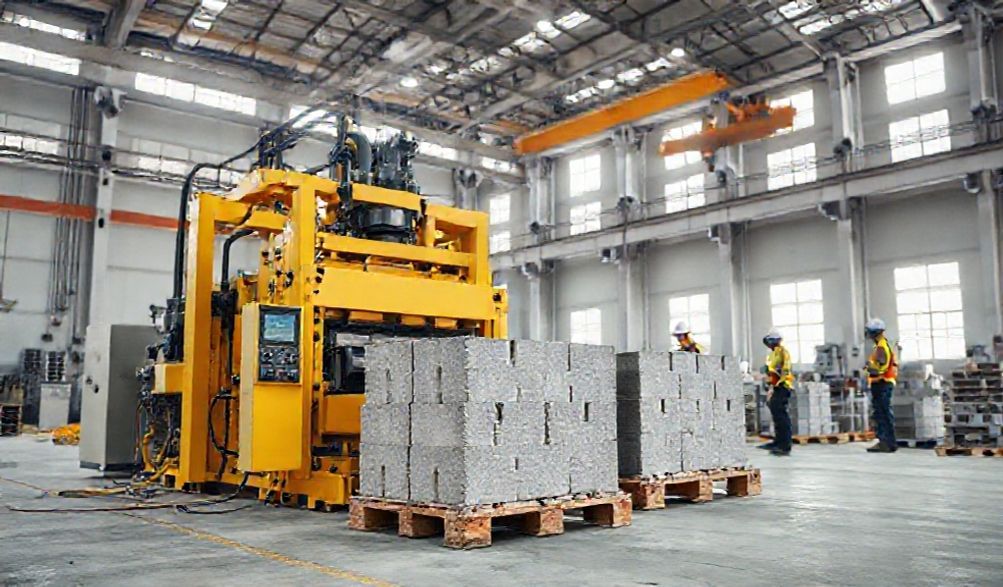
Your Ultimate Guide to Choosing a Reliable Block Machine Manufacturer in China
Introdução
The global construction industry runs on concrete. From affordable housing projects to sprawling infrastructure, the demand for high-quality concrete blocks, bricks, and pavers is insatiable. At the heart of this supply chain is the machinery that produces them. For decades, China has solidified its position as the world’s undisputed manufacturing hub for block-making equipment, offering an unparalleled combination of scale, technology, and value.
But with this opportunity comes a significant challenge. A simple online search for a “block machine manufacturer in China” yields thousands of results. How can you, as a serious buyer, investor, or entrepreneur, cut through the noise and identify a partner that delivers not just a machine, but reliability, innovation, and long-term profitability? The stakes are high—a poor choice can lead to costly downtime, inferior product quality, and operational headaches.
This guide is designed to be your definitive roadmap. Built on a foundation of industry knowledge, trade insights, and procurement best practices, we will move beyond superficial listings. Our goal is to equip you with the critical framework needed to make an informed, confident decision. We’ll dissect what makes China the leader, outline the non-negotiable criteria for selecting a manufacturer, explore the machinery itself, and walk you through the procurement process while highlighting the pitfalls you must avoid. Let’s begin.
Why China is a Global Leader in Block Machine Manufacturing
Compreensãopor que China dominates this sector is the first step in leveraging its advantages effectively. It’s not just about low cost; it’s about a mature, sophisticated, and responsive industrial ecosystem.
Escala e Capacidade Industrial
China’s manufacturing prowess is built on an interconnected network of suppliers, foundries, and component manufacturers. This integrated supply chain means a block machine factory has efficient access to high-quality steel, precision hydraulic parts, robust vibration motors, and advanced PLC control systems. This ecosystem enables mass production, which drives down component costs and reduces lead times significantly compared to regions where sourcing is more fragmented. For you, this translates to competitive pricing and the ability to scale your order up or down with relative ease.
Avanço Tecnológico e Inovação
The outdated stereotype of Chinese manufacturing producing only “cheap copies” is just that—outdated. Leading Chinese block machine manufacturers now invest heavily in Research & Development (R&D). You’ll find:
* Smart Automation: Machines integrated with IoT sensors for real-time monitoring of production data, pressure, and temperature.
* Projetos de Eficiência Energética: Systems that recover and reuse hydraulic energy, reducing operational costs by up to 30%.
* Sistemas de Controle Avançados: User-friendly touchscreen PLC interfaces that allow for precise adjustment of vibration frequency, pressure, and curing time.
This focus on innovation ensures you can access modern, efficient technology that rivals—and often surpasses—Western counterparts in value.
Custo-Efetividade e Preços Competitivos
While price is a factor, the true advantage is custo-benefício. Chinese manufacturers offer a spectrum of options, from robust, no-frills manual machines ideal for startups to fully automated turnkey plants. The economic efficiencies of scale and local sourcing allow them to offer advanced features—like servo motors or multi-layer pallet systems—at a price point that is often unbeatable globally. This enables businesses in emerging markets to mechanize and businesses in developed markets to expand their production capacity with a faster return on investment.
Diverse Product Range for Global Markets
China’s manufacturers don’t produce a one-size-fits-all machine. They have evolved to meet specific global demands. Whether you need:
* A simple, manual egg-laying block maker for a small rural enterprise.
* A high-output stationary machine for producing standard hollow blocks.
* A mobile block machine for on-site production at a remote construction site.
* A fully automated line with robotic pallet handling for producing intricate interlocking pavers or curb stones.
…you will find a Chinese supplier specializing in it. This diversity ensures you can find equipment perfectly matched to your local market needs, raw material availability, and business model.
Key Criteria for Selecting a Top-Tier Manufacturer
With countless options, you need a filter. These criteria are your checklist for separating market leaders from mediocre workshops.
Manufacturing Experience and Industry Longevity
In heavy machinery, experience is the best teacher. A company with 10-15+ years of operation has likely:
* Refined its designs through multiple iterations.
* Established a stable supply chain for durable components.
* Built a global client base, providing real-world proof of machine performance in different climates and conditions.
Longevity suggests resilience, financial stability, and a commitment to the industry. Always ask for their company history and founding date.
In-House R&D and Technical Expertise
A true manufacturer, not just an export trading company, will have its own engineering and R&D department. This is critical for:
* Personalização: Can they modify a mold design or machine layout for your specific block size or raw material (e.g., fly ash, crushed aggregate)?
* Inovação: They develop new features rather than just assembling purchased parts.
* Suporte Pós-Venda: An in-house technical team can diagnose issues and provide accurate spare part numbers and solutions quickly. Ask to see their engineering office or speak with a technical manager during your inquiry.
Quality Certifications and Compliance
Certifications are an objective benchmark. Look for these key indicators:
* ISO 9001: Certifies a consistent Quality Management System in manufacturing.
* Marcação CE: Indicates the machine meets EU health, safety, and environmental standards, requiring rigorous design and documentation.
* SGS/BV Inspection Reports: Third-party verification of material quality and machine performance.
These are not just logos on a website; reputable manufacturers will provide certificate numbers and reports.
Production Capacity and Factory Audit
Always verify the actual production facility. A professional manufacturer will welcome this scrutiny.
* Virtual Tour: Insist on a live video call walkthrough of the factory floor, welding shop, assembly area, and testing yard. Look for organization, modern equipment, and quality control stations.
* Key Questions: How many machines do they produce per month? What is their workforce size? How do they test the hydraulic system and vibration table before shipment?
This step is your primary defense against dealing with a non-existent “factory.”
Comprehensive After-Sales Service
The relationship begins depois the machine is paid for. A reliable partner offers a clear service plan:
* Documentação Detalhada: Professional operation manuals, electrical schematics, and hydraulic diagrams in English.
* Digital Support: Installation videos, troubleshooting guides, and access to a parts catalog.
* Spare Parts Policy: A guarantee that spare parts (like seals, vibration motors, control cards) will be available for 5-10 years, with clear pricing.
* Suporte Técnico: Availability for remote video calls to guide your technicians through setup or maintenance.
A Deep Dive into Block Machine Types and Applications
Choosing the right machine type is as important as choosing the right manufacturer. Your business goals dictate the technology.
Máquinas Estacionárias para Fabricação de Blocos
These are the workhorses for high-volume, fixed-location production.
* Características: Heavy-duty steel structure, large vibration platform, often integrated with a automatic pallet feeder and brick stacker.
* Saída: Can produce from 4,000 to over 20,000 standard blocks per 8-hour shift.
* Ideal Para: Established block yards, large construction companies supplying multiple sites, and entrepreneurs focusing on wholesale supply.
Máquinas de Blocos Móveis
Also known as “egg-layers” or “mobile block makers,” these bring production to the material.
* Características: Mounted on a wheeled frame, they produce blocks directly on the ground or a concrete floor.
* Vantagens: Eliminates block transportation costs, lower initial investment, highly versatile for remote projects.
* Ideal Para: On-site construction of housing projects, farms, or in regions with poor road infrastructure.
Automatic vs. Semi-Automatic vs. Manual
- Totalmente Automático: Computer-controlled from raw material feeding to block stacking. Requires minimal labor (1-2 operators), offers the highest and most consistent output. Highest capital investment.
- Semiautomático: The operator loads/unloads pallets, but the molding, pressing, and vibrating are automated. A great balance between output, cost, and labor (needs 3-4 operators).
- Manual: The operator controls all steps. Lowest output and highest labor requirement, but also the most affordable entry point for micro-businesses.
Specialized Machines for Different Blocks
- Concrete Hollow Block Machines: The most common type, for producing load-bearing and non-load-bearing blocks.
- Paving Slab Machines: For producing thick, flat pavers and tiles, often with color mixers and surface texture options.
- Máquinas de Tijolos Intertravados: For producing bricks that lock together without mortar, popular for landscaping and erosion control.
- Curbstone & Kerb Machines: For producing long, heavy concrete curbs for roadways and pathways.
The Step-by-Step Procurement Process
A clear process minimizes risk and sets expectations for both buyer and supplier.
Initial Inquiry and Requirement Specification
Be specific. A good inquiry includes:
* Desired block type, size, and compressive strength.
* Target daily/weekly output.
* Level of automation (manual, semi-auto, full-auto).
* Available local power supply (voltage, phase).
* Raw materials you plan to use (cement, sand, aggregate, potential waste materials like fly ash).
* Budget range.
Quotation Analysis and Comparison
Compare all-inclusive quotes. The machine price is only part of the cost. Ensure the quote details:
* FOB (Free On Board) Cost: Price at the Chinese port, includes all export clearance.
* CIF (Cost, Insurance, Freight) Cost: Price delivered to your nearest port, includes sea freight and insurance.
* Packing: Type of export wooden case or steel frame.
* Peças de Reposição: What is included in the initial package (e.g., a set of spare seals, tools).
Sample Inspection and Factory Visit (Virtual/Physical)
This is non-negotiable. For large orders, consider hiring a third-party inspection company (like SGS or Intertek) for a Pre-Shipment Inspection (PSI). For all orders, a live video factory tour and a request for videos of a similar machine running are essential.
Negotiation, Contract, and Payment Terms
Standard terms are often 30% deposit via T/T (Telegraphic Transfer), 70% balance before shipment. The contract must be detailed and include:
* Technical Specification Annex: All machine parameters, component brands (e.g., Siemens PLC, Rexroth hydraulics).
* Delivery Time: A clear, committed date.
* Garantia: Typically 12 months for the whole machine, excluding wear parts.
* Penalty Clauses: For significant delays.
Production Monitoring, Shipping, and Installation
A good supplier provides weekly production update photos. Before shipping, they should conduct a Factory Acceptance Test (FAT) with you virtually. Upon shipment, you will receive shipping documents (Bill of Lading, Packing List, Commercial Invoice). Discuss installation: will you self-install with their remote guidance, or pay for their technicians to travel to your site?
Red Flags and Common Pitfalls to Avoid
Forewarned is forearmed. Be cautious of suppliers who exhibit these traits.
Unrealistically Low Prices
If a quote is 30-40% below market average, it is a major warning. This typically means:
* Substandard materials (thin steel, low-power motors, generic hydraulics).
* No proper factory testing or quality control.
* Hidden costs that will appear later for “essential” components or documentation.
Lack of Transparency or Communication
- They refuse a live video call or give excuses for not showing the factory.
- Communication is only via email/chat with no direct phone contact.
- Their company address on Alibaba is a residential apartment or vague “unit.”
- They are evasive about providing client references from your region.
No Clear Warranty or After-Sales Plan
A supplier that says “don’t worry, we support you” but provides no written warranty document is a huge risk. The warranty terms, scope, and claim process must be in the contract.
Limited Technical Documentation
If they cannot provide a detailed technical drawing, parts list, or manual before purchase, it indicates a lack of professional engineering backing. You will struggle with maintenance and repairs.
Perguntas Frequentes (FAQ)
Q1: What is the typical lead time for a block machine from China?
A: For standard models, expect 15-30 days after deposit. For large, fully customized automated lines, lead times can extend to 60-90 days. Always confirm and contract this timeline.
Q2: Can Chinese manufacturers customize machines for my specific needs?
A: Yes, reputable manufacturers with strong R&D teams frequently handle customization. This can include special mold designs for unique block shapes, adjustments for local voltage/frequency, or integration with specific raw material feeders. Discuss this in detail during the initial inquiry.
Q3: How do I handle machine installation and operator training?
A: Most top suppliers offer optional on-site installation and training services for an additional fee, covering travel and accommodation. Alternatively, they provide comprehensive digital guides, installation videos, and are available for live video support during your first production run.
Q4: What are the standard payment terms?
A: 30% deposit and 70% balance before shipment is the most common structure. For orders over $100,000, terms like a Letter of Credit (LC) or 30%/60%/10% (10% after installation) can sometimes be negotiated.
Q5: How do I ensure the quality of the machine before it ships?
A: Insist on a pre-shipment Factory Acceptance Test (FAT) over video call. You can witness the machine running under load, producing sample blocks. For high-value orders, hiring a third-party inspection service to verify materials, welding, and performance is a highly recommended investment.
Conclusão
Sourcing a block machine from China is not about finding the cheapest option; it’s about identifying the most reliable partner for your long-term business growth. Success hinges on diligent research, focusing squarely on manufacturer credibility—proven experience, verifiable certifications, transparent operations, and a robust after-sales framework.
Use this guide as your actionable checklist. Ask for client references and actually contact them. Verify certifications directly on the issuer’s website. Communicate your requirements with crystal clarity. By doing this due diligence, you transform a complex international procurement into a strategic, calculated investment.
The right block machine, from the right Chinese manufacturer, is more than a piece of equipment. It is the engine that can power your construction business, build your community’s infrastructure, and lay a solid foundation for years of profitability. Choose wisely.
<