
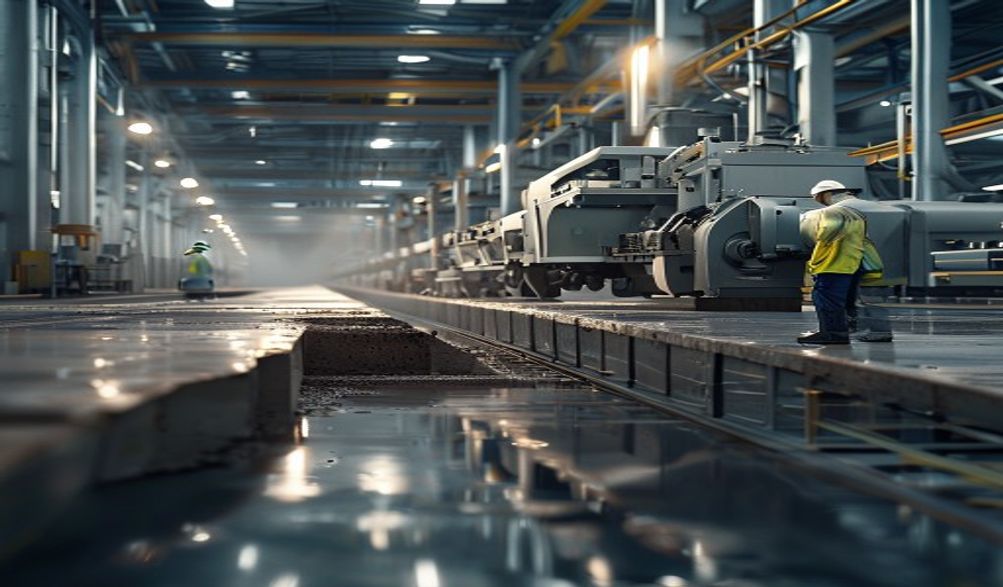
Como Escolher uma Fábrica de Máquinas para Fabricação de Blocos de Concreto: Guia Especializado do Comprador
Introdução
A decisão de investir em uma máquina de fabricar tijolos de bloco é um compromisso significativo, mas a escolha defábricaé o que realmente determina o seu sucesso. Selecionar o parceiro de fabricação certo é o ponto crucial para a lucratividade do seu negócio, os prazos dos projetos e a integridade estrutural de cada tijolo que você produz. A escolha errada pode levar a uma cascata de problemas: tempo de inatividade caro, qualidade inconsistente do produto e uma máquina que se torna um fardo financeiro em vez de um ativo.
Este guia não é uma lista superficial. Trata-se de uma estrutura sistemática destilada a partir de melhores práticas do setor, análise técnica aprofundada de especificações de máquinas e percepções reais obtidas ao avaliar inúmeros fornecedores globais. Nosso objetivo é municiá-lo com a mesma visão crítica usada por profissionais experientes, transformando um processo complexo de aquisição em uma jornada clara, passo a passo. Abordaremos desde a definição das suas necessidades essenciais até a análise das credenciais das fábricas e a finalização de um contrato à prova de falhas.
Passo 1: Defina os Requisitos e Especificações do Seu Projeto
Antes de falar com um único vendedor, você deve se tornar um especialista no seu próprio projeto. Este passo fundamental impede que você seja influenciado por características irrelevantes e garante que você avalie apenas fábricas capazes de atender às suas demandas específicas.
Avalie Suas Necessidades de Capacidade de Produção
Sua saída necessária é o ponto de partida mais crítico. Errar aqui significa comprar uma máquina que é decepcionante ou desnecessariamente potente.
- Calcular Saída NecessáriaSeja preciso. Não pense em termos vagos. Calcule com base em:
- Tijolos por ciclo:Quantos blocos a máquina produz em uma prensagem?
- Tempo de ciclo:Quantos segundos para um ciclo completo?
- Operational hours: How many shifts per day, days per week?
- Example: A target of 10,000 standard blocks per 8-hour shift will require a vastly different machine than a target of 50,000.
- Understand Machine Types:
- Máquinas Estacionárias para Fabricação de Blocos: High-output machines installed on a solid foundation. Ideal for large-scale, fixed-location production plants.
- Máquinas de Blocos Móveis: Lower output but movable. Perfect for on-site production for construction projects, reducing transport costs of finished blocks.
Determine the Raw Materials You’ll Use
Not all machines work with all materials. Your locally available inputs dictate the machine’s design.
- Machine Compatibility: Explicitly confirm the factory’s machine is engineered for your primary raw material:
- Cement-based: (Most common) For concrete blocks.
- Fly Ash / Slag: Eco-friendly options requiring specific mix designs.
- Argila: For traditional fired bricks, requiring a different machine type entirely.
- Solo/Cimento: For interlocking stabilized soil blocks (ISSB).
- The Crucial of Testing: For soil-based blocks, insist on a raw material test. A reputable factory will ask for your soil sample to analyze its composition and recommend the correct cement ratio and machine settings.
Specify Brick Types and Sizes
What will you build? The machine must be able to produce the precise blocks your market demands.
- Standard Types: Hollow blocks (for load-bearing walls), solid blocks, paving stones, curbstones, and interlocking bricks (for dry-stack construction).
- Custom Mold Requirements: Do you need a unique design, texture, or size? Discuss mold capabilities early. A good factory has in-house mold design and fabrication, while cheaper suppliers may outsource this, leading to quality issues and delays.
Step 2: Research and Shortlist Potential Factories
With your specifications in hand, you can now begin the search for a partner. This phase is about casting a net in the right waters and performing an initial quality filter.
Where to Find Reputable Manufacturers
Avoid generic search engines. Focus on industry-specific channels:
- Industry B2B Platforms: Sites like Alibaba or Made-in-China can be starting points, but use their verification filters. Look for “Gold Suppliers,” “Assessed Suppliers,” or those with on-site check certificates. Read transaction histories and reviews critically.
- Trade Shows and Exhibitions: Events like bauma CONEXPO, or regional construction expos are invaluable. You can see machines in operation, meet engineers face-to-face, and gauge a company’s stature firsthand.
- Professional Recommendations: Consult construction industry associations or networks. A recommendation from a trusted peer who has operated a machine for years is worth more than 100 online brochures.
Initial Vetting Criteria
Quickly eliminate unsuitable candidates with these filters:
- Anos de Atuação: Prioritize factories with a track record. 10+ years in operation generally indicates stability, accumulated technical knowledge, and a commitment to the industry.
- Scope of Business: Be wary of the “everything factory.” A company that specializes in block making machines is often preferable to a general machinery exporter. Specialization usually equals deeper expertise.
- Online Professionalism: Their website is their digital front door. Is it modern, with clear technical data, CAD drawings, and video demonstrations? Is contact information transparent? Poor online presence often correlates with poor offline organization.
Step 3: Conduct a Deep Factory and Machine Evaluation
This is the core technical due diligence. It separates marketing claims from manufacturing reality.
Scrutinize Manufacturing Quality and Technology
If possible, a physical factory visit is non-negotiable. If travel is impossible, demand a comprehensive live video tour.
- During the Visit/Tour, Observe:
- Organização de Workshops: Is it clean, orderly, and safe? Chaos on the floor can mean chaos in quality control.
- Welding Quality: Look for smooth, consistent, and clean welds on machine frames. Poor welding is a major point of future structural failure.
- Assembly Line Precision: Check if components are aligned and assembled with care.
- Core Components Assessment: Ask for specifics. Brand names matter.
- Sistema Hidráulico: Renowned brands (like Bosch Rexroth, Kawasaki, Yuken) offer reliability. Unknown systems are cheaper but prone to leaks and failures.
- Controles Elétricos A Programmable Logic Controller (PLC) with a touchscreen allows for precise, automated control and recipe storage. Manual controls are cheaper but less consistent and efficient.
- Steel Grade & Thickness: The frame’s steel thickness directly impacts machine stability and longevity under constant vibration and pressure.
- Qualidade do Molde: Molds should be made from hardened, high-chromium steel for durability and precise block dimensions.
Evaluate the Machine’s Performance Metrics
Move beyond “high output” claims. Ask for the technical data sheet.
- Tempo de Ciclo: The time to fill, compact, vibrate, and eject a batch of blocks. Faster isn’t always better if it compromises density.
- Vibration Frequency & Amplitude: Proper vibration is crucial for compacting the concrete mix and eliminating air pockets, which defines block strength. Ask for the vibration motor specs.
- Pressure Rating (Kn/Tons): This is the hydraulic pressure applied to compact the block. Higher pressure typically creates denser, stronger blocks. Compare this figure across shortlisted machines.
- Nível de Automação: From manual feeding to fully automatic robotic pallet handling. Higher automation reduces labor costs and improves consistency but increases the initial investment.
Analyze the Product Portfolio and R&D Capability
A factory that innovates is a factory that will stay relevant and support you long-term.
- Look at their model history. Have they improved designs over time?
- Can they provide case studies or examples of custom solutions for specific client needs?
- The presence of in-house R&D engineers and patents is a strong indicator of technical depth and a commitment to leading, not just following, the market.
Step 4: Verify Credentials, Reputation, and After-Sales Service
A machine is a long-term partnership. The factory’s support system is as important as the machine itself.
Check Certifications and Client References
- Certificações: Look for international standards like ISO 9001 (Quality Management)eCE marking (for the European market, indicating safety compliance). These are audits of their processes.
- The Reference Check – Your Most Powerful Tool: Always ask for 3-5 client references in your region or a similar climate. Then, actually call them.
- Ask: “How has the machine’s reliability been? What were the biggest issues? How responsive was the factory’s after-sales team? Would you buy from them again?”
Dissect the After-Sales Service Package
The cheapest machine often comes with the most expensive service—or none at all.
- Garantia: Standard is 12 months for parts. What is covered? (Usually manufacturing defects). What is excluded? (Wear parts like molds, misuse). Get it in writing.
- Instalação & Treinamento: Will they send an engineer for installation, commissioning, and on-site operator training? This is critical for correct setup and avoiding early-life failures.
- Spare Parts Policy: How long does it take to get a critical spare part (e.g., a hydraulic pump)? Is there a local warehouse? What are the costs? A factory with a transparent parts catalog and reasonable pricing is planning for your success.
- Suporte Técnico: Is support available via WhatsApp, email, phone? What are the promised response times? Do they offer remote diagnostics?
Step 5: Compare Quotations and Finalize the Deal
Now, with deep knowledge, you can compare apples to apples. The lowest price is rarely the best value.
Understanding the Quotation Breakdown
A professional quote is transparent. Ensure it includes:
- Ex-Works/FOB/CIF Price: Know the exact terms.
- FOB (Livre a Bordo): You pay for machine and delivery to the shipping port. You handle and pay for sea freight, insurance, and import.
- CIF (Cost, Insurance, Freight): They deliver the machine to your nearest port, including sea freight and insurance. You handle import clearance and local transport.
- Detailed Machine Description: Including all component brands and model numbers.
- List of Included Spare Parts: A standard set of filters, seals, and tools.
- Cost of Standard and Optional Molds.
- Installation & Training Fees (if not included).
Negotiation Points and Contract Essentials
Protect your investment with a clear, legal contract.
- Key Negotiation Points: Payment terms (e.g., 30% deposit, 70% before shipment), delivery timeline, and inclusion of extended warranty or extra spare parts.
- Critical Contract Clauses:
- Detailed Payment Schedule linked to milestones.
- Penalty Clause for delivery delays.
- Warranty Terms in full detail.
- After-Sales Service Agreement outlining response times and support channels.
- Dispute Resolution mechanism.
- Crucial: The contract must be in English or your native language and reviewed by a legal professional familiar with international trade.
Perguntas Frequentes (FAQ)
What is the most important factor when choosing a factory?
A: While all factors are interconnected, a proven, verifiable track record of reliable after-sales service and technical support is paramount. The machine will eventually need support. A factory that stands by its product for the long term minimizes your operational risk and ensures a higher return on investment.
Is it better to buy a very cheap machine?
A: Almost always, no. A suspiciously low price invariably indicates compromises—thinner steel, inferior hydraulic components, less engineering precision, and minimal quality control. This leads to higher breakdown rates, poor brick quality, more downtime, and a much shorter machine lifespan. Always evaluate Custo Total de Propriedade (TCO), which includes purchase price, maintenance, repair costs, and production efficiency over 5-10 years.
How can I verify a factory’s claims if I can’t visit in person?
A: Be proactive and demand digital verification:
1. Request a live video tour of the active production floor and a working machine test with your specific block type.
2. Ask for high-resolution photos/videos of the machine’s construction details: welds, component labels, electrical cabinet wiring.
3. Insist on verifiable client references with contact details and speak to them directly. This is your most reliable source of truth.
What’s the typical lead time for delivery and installation?
A: This varies significantly based on machine complexity and customization. For a standard model, expect 30 to 90 days from order confirmation to shipment. A reputable factory will provide a clear, contractual production and shipping schedule. Installation can take an additional 1-3 weeks after the machine arrives at your site, depending on foundation readiness.
Conclusão
Choosing a block brick making machine factory is a strategic investment that demands rigorous due diligence far beyond comparing price lists. It is a decision that will echo through your business for a decade or more.
By following this systematic guide—from defining your precise needs to conducting deep technical and reputational verification—you shift the odds dramatically in your favor. Remember, you are not just buying a machine; you are entering a partnership. Prioritizing factory reputation, verifiable manufacturing quality, and a robust, responsive after-sales support system is the surest path to minimizing risk and maximizing your long-term profitability.
Call to Action: Use this guide as your definitive checklist. Before you contact your first supplier, complete Step 1 in detail. When you receive quotations and promises, relentlessly apply the verification steps in Step 3 and Step 4. Your diligence today is the foundation of your success tomorrow.
<