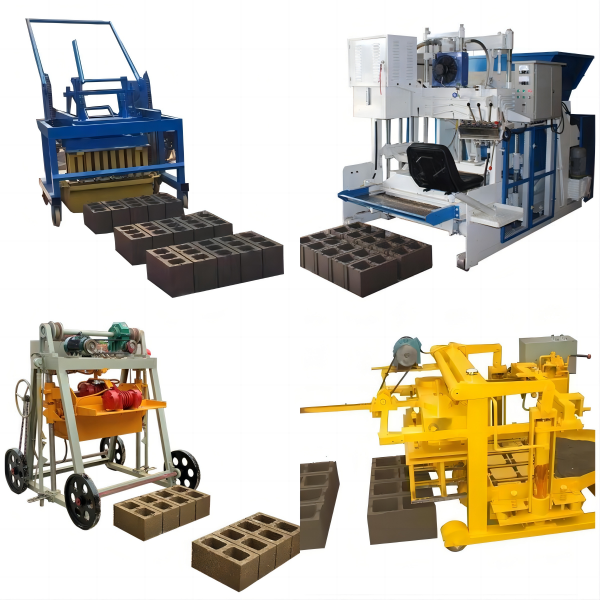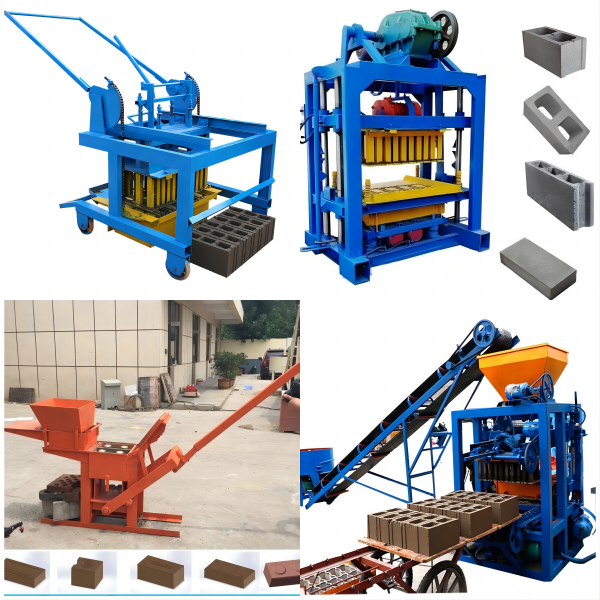
O Guia Completo para Máquinas de Fabricar Tijolos Pequenos
1. Compreensão da Categoria do Produto e Seus Mecanismos Principais
Máquinas pequenas de fabricar tijolos são unidades compactas, frequentemente móveis ou semiestacionárias, projetadas para a produção de tijolos maciços, vazados e de encaixe, além de outros produtos à base de concreto. Diferente de suas equivalentes industriais totalmente automatizadas e de grande porte, essas máquinas priorizam flexibilidade, acessibilidade de custo e facilidade de operação, sem comprometer a qualidade do produto final.
1.1. Princípios Operacionais Primários:
A maioria das máquinas de pequena escala opera com base em um de três princípios fundamentais:
- Vibração e Compressão:Este é o mecanismo mais comum. Uma mistura de cimento, areia e agregado é colocada em um molde. A vibração de alta frequência, frequentemente combinada com pressão mecânica ou hidráulica, compacta a mistura, removendo bolsas de ar e garantindo um produto final denso e resistente. O nível de pressão está diretamente relacionado com a resistência à compressão do tijolo.
- Extrusão:Neste processo, a mistura de concreto semi-seco é forçada através de uma matriz para criar uma coluna contínua de material, que é então cortada por fio até o tamanho desejado do tijolo. Este método é menos comum em máquinas muito pequenas, mas é eficiente para produzir tijolos maciços.
- Prensagem Hidráulica:Utilizando energia hidráulica, essas máquinas aplicam uma pressão imensa e controlada sobre as matérias-primas dentro de um molde. Este método produz tijolos de alta resistência e precisão, sendo conhecido por sua consistência e níveis de ruído mais baixos durante a operação.
2. Uma Tipologia Detalhada das Máquinas Disponíveis
Para atender efetivamente a diferentes segmentos de mercado, é crucial entender os vários tipos de máquinas disponíveis.
2.1. Por Modo de Operação:
- Máquinas Manuais de Fabricação de Tijolos:Estes são os pontos de entrada mais básicos e econômicos. Eles exigem mão de obra humana significativa para misturar, alimentar e operar a alavanca ou mecanismo que compacta os tijolos. São adequados para projetos de pequena escala, iniciativas comunitárias ou mercados com custos de mão de obra extremamente baixos. Sua principal vantagem é o baixo investimento inicial.
- Máquinas Semi-Automáticas para Fabricação de Tijolos:Esta categoria atinge um equilíbrio ideal entre custo e produtividade. Essas máquinas geralmente contam com um motor elétrico para acionar o processo de vibração e compactação. Embora ainda sejam necessários operadores para alimentar as matérias-primas e retirar os produtos acabados, o processo central de moldagem é mecanizado. Isso aumenta significativamente a produção e melhora a consistência, tornando-a a categoria mais popular para as PMEs.
- Máquinas de Fabricação de Tijolos Pequenas Totalmente Automáticas:No extremo superior do espectro "pequeno", essas unidades integram um misturador, transportador e sistema de fabricação de blocos em uma única linha de produção coordenada. Elas exigem intervenção humana mínima, principalmente para monitoramento e carregamento de matéria-prima. Oferecem o maior rendimento e controle de qualidade em sua categoria e são ideais para empreendedores que visam um negócio de produção substancial.
2.2. Por Produção de Saída:
- Modelos de Nível Básico (100-500 tijolos por turno de 8 horas):Ideal para proprietários individuais, empreiteiros muito pequenos ou projetos piloto.
- Modelos de Médio Porte (500-2.000 tijolos por turno de 8 horas):Este é o ponto ideal para a maioria das pequenas empresas e construtoras que atendem a projetos habitacionais locais.
- Modelos Pequenos de Alta Capacidade (2.000-5.000+ tijolos por turno de 8 horas):Estas são máquinas robustas adequadas para pátios de blocos estabelecidos e empresas que abastecem múltiplos canteiros de obras.
3. A Proposta de Valor Atraente: Por Que Este Mercado Está em Expansão
O caso de negócio para distribuir pequenas máquinas de fazer tijolos é construído sobre poderosos fatores econômicos e práticos que ressoam com os usuários finais.
3.1. Vantagens Econômicas para o Usuário Final:
- Baixo Investimento de Capital:Em comparação com grandes plantas industriais, o custo inicial de uma pequena máquina de fazer tijolos é acessível, abrindo portas para uma gama mais ampla de empreendedores.
- Custos de Produção Reduzidos: On-site production eliminates transportation costs, which can constitute a major portion of brick expenses. Users can also source local raw materials, further reducing input costs.
- High Return on Investment (ROI): Due to the low operational cost and consistent demand for building materials, a well-managed brick production unit can often recoup its initial investment within a surprisingly short timeframe, sometimes as little as 6 to 12 months.
- Criação de Empregos: Each machine facilitates the creation of several direct and indirect jobs, from operators to transporters and sales personnel, a factor that can be leveraged in marketing.
3.2. Operational and Logistical Flexibility:
- Produção no Local: Bricks can be made exactly where they are needed, minimizing handling, breakage, and logistical complexities.
- Capacidade de Personalização: End-users can produce bricks in various sizes, shapes, colors, and even strengths to meet specific project requirements or architectural designs, a level of customization unavailable with mass-produced bricks.
- Utilization of Local Materials: Many machines are designed to work with locally available soil, sand, and even certain industrial by-products like fly ash, promoting sustainable practices and further cutting costs.
3.3. Contributing to Sustainable Development:
- Pegada de Carbono Reduzida: Localized production drastically cuts down on the fuel emissions associated with long-distance transportation of bricks.
- Potential for Eco-Friendly Products: Many entrepreneurs use these machines to produce compressed stabilized earth blocks (CSEBs) or fly ash bricks, which have a lower cement content and are considered more environmentally friendly than traditional fired clay bricks.
4. Critical Technical Specifications for Informed Procurement
When selecting machines to add to your inventory, a deep understanding of technical specifications is non-negotiable.
4.1. Core Performance Metrics:
- Tempo de Ciclo: The time taken to produce one brick or one mold of bricks. A shorter cycle time means higher overall productivity.
- Brick Output per Hour/Day: This is the ultimate measure of a machine’s capacity and must be verified under realistic operating conditions.
- Pressure Capacity (for hydraulic models): Measured in kN or MPa, this indicates the compacting force and is a direct determinant of the final brick’s strength.
- Vibration Frequency and Amplitude: The effectiveness of the vibration system is critical for achieving proper compaction and a smooth finish.
4.2. Power Requirements and Machine Build:
- Motor Power (kW): Determines electricity consumption and the machine’s power. Options may include single-phase or three-phase motors to suit different regional electrical infrastructures.
- Construction Quality: The frame should be made of high-strength steel. The mold, a consumable part, should be manufactured from hardened, high-grade steel to ensure longevity and consistent product dimensions.
- Nível de Automação: Decide on the mix of manual, semi-automatic, and fully automatic models to offer based on your target market’s technical expertise and investment capacity.
5. Strategic Marketing and After-Sales Support: Keys to Success for Distributors
Selling the machine is only the first step; selling a successful business outcome for your client is what builds a lasting reputation.
5.1. Identifying and Targeting Key Customer Segments:
- Small and Medium Construction Companies: They benefit from producing their own materials for projects.
- Empreendedores Aspirantes: Individuals seeking to start a brick-making business.
- Agricultural Co-operatives: For producing paving slabs for dairy farms or building storage structures.
- Government and NGO Projects: For affordable housing, sanitation, and community development initiatives.
5.2. The Non-Negotiable Importance of After-Sales Service:
- Availability of Spare Parts: Stocking critical spares like molds, vibration motors, and hydraulic seals is essential. Long lead times for parts can severely damage your brand’s credibility.
- Technical Training: Offer comprehensive training for the end-user’s operators on machine use, maintenance, and basic troubleshooting.
- On-Ground Support: Having a network of technicians who can provide installation and repair services is a significant competitive advantage.
Conclusion: Positioning Your Business at the Forefront of a Building Revolution
The small brick making machine is far more than a piece of industrial equipment; it is an engine of local economic development, a tool for sustainable construction, and a gateway to entrepreneurship. For distributors and procurement agents, this product category offers a high-growth, high-value opportunity with a tangible social impact. The market dynamics of urbanization, infrastructure needs, and the drive for cost efficiency are powerful tailwinds that show no sign of abating.
Success in this field requires a strategic approach: a deep technical understanding of the product range, a clear analysis of customer segments, and an unwavering commitment to robust after-sales support. By building a portfolio of reliable, efficient machines and coupling it with exceptional service, your business can become a cornerstone supplier in this vibrant and essential industry, helping to build the future, one brick at a time.
Perguntas Frequentes (FAQ)
Q1: What is the typical range of raw materials that can be used with these machines?
These machines are highly versatile. They can process a standard concrete mix (cement, sand, and aggregate), soil (for stabilized earth blocks), and industrial by-products like fly ash or slag. The specific mix design and required cement ratio will depend on the desired strength of the final product and local material availability.
Q2: How strong are the bricks produced by small-scale machines?
The compressive strength can vary significantly based on the machine type, pressure applied, and raw material mix. Bricks from a good quality hydraulic or vibratory machine can easily achieve strengths between 7 MPa and 15 MPa, which is more than sufficient for one-to-two-story residential construction and most paving applications. Higher strengths are achievable with optimized mixes and higher-pressure machines.
Q3: What kind of space and foundation is required to operate one of these machines?
A semi-automatic machine typically requires a covered area of about 100 to 200 square meters for the machine itself, raw material storage, and a curing area. The machine should be installed on a level, solid concrete floor to ensure stability during the vibration process. Fully automatic lines require more space to accommodate conveyors and ancillary equipment.
Q4: What is the lead time for a customer to become proficient in operating the machine?
For a semi-automatic machine, a basic operator can be trained to achieve competent production within a few days to a week. Mastering mix designs for different products and performing basic maintenance may take a few weeks of hands-on experience. Comprehensive training from the distributor is crucial to accelerate this learning curve.
Q5: Are there significant differences in the operational costs between manual, semi-automatic, and automatic models?
Yes. Manual machines have the lowest upfront cost but the highest ongoing labor cost per brick. Semi-automatic machines have a higher initial investment but a much lower labor cost and higher, more consistent output. Fully automatic machines have the highest capital cost but the lowest per-unit labor cost and the highest overall efficiency. The choice depends on the client’s production volume and budget.
Q6: How critical is the after-sales support, and what should we look for in a supplier?
After-sales support is arguably the most critical factor for long-term success. When evaluating a supplier, prioritize those who offer comprehensive technical documentation, readily available spare parts (especially molds and wear parts), and a clear channel for technical support, whether remotely or through local service technicians. A supplier’s commitment to after-sales service is a direct reflection of their product’s quality and their reliability as a business partner.