
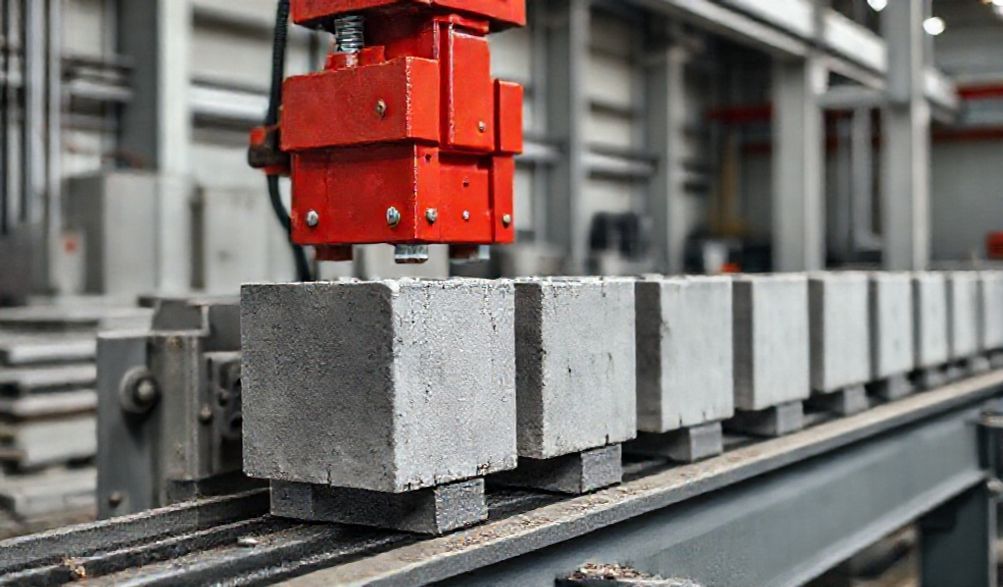
The Ultimate Guide to Machinery for Making Building Blocks: From Startup to Industrial Scale
Introdução
Look around any city, town, or village. The structures that define our built environment—homes, schools, offices—are overwhelmingly constructed from building blocks. From humble concrete hollow blocks to innovative interlocking bricks, these modular units are the literal building blocks of modern civilization. Behind every one of these blocks is a machine, a piece of engineering that transforms raw, loose materials into precise, durable construction components.
The machinery for making building blocks is more than just equipment; it’s the engine of the construction materials industry. Selecting the right machine is a pivotal decision that impacts everything from product quality and daily output to long-term profitability and business viability. Whether you’re an entrepreneur looking to enter the market, a construction firm aiming to produce on-site, or an established factory seeking to upgrade, navigating the landscape of block-making machinery requires clear, expert guidance.
This comprehensive guide demystifies the world of block production technology. We’ll explore the core types of machines, break down how they work, provide a practical checklist for selection, and outline best practices for operation. Our goal is to equip you with the knowledge to make an informed, confident investment that aligns perfectly with your project scope and business ambitions.
1. Understanding Building Block Machinery: Core Types and Technologies
The first step in your journey is understanding the fundamental categories of machines available. Each type represents a different balance of automation, output, and investment.
1.1. Manual and Semi-Automatic Block Making Machines
These machines form the accessible entry point into block manufacturing.
- Descrição e Operação: As the name implies, these machines rely heavily on operator involvement. Workers manually feed the concrete or soil mix into the mold box. A lever or flywheel is then used to engage a press or a mechanical vibrator to compact the material. Finally, the freshly formed “green” block is manually removed and set aside for curing. Semi-automatic models often integrate a motorized vibration system or a simple hydraulic press for better compaction.
- Ideal Para: Startups, small-scale builders, community cooperatives, and markets where labor costs are favorable. They are perfect for producing 500 to 2,000 blocks per day, catering to local, small-batch needs.
- Prós e Contras:
- Prós: Very low initial capital investment, simple mechanical design easy to understand and repair, low energy consumption, and high flexibility for short production runs.
- Contras: High labor intensity, lower and inconsistent output, greater physical strain on operators, and generally less precise block dimensions and strength compared to automated systems.
1.2. Fully Automatic Stationary Block Making Plants
These are the powerhouses of high-volume, fixed-location block production.
- Descrição e Operação: This is a complete, integrated system. Raw materials are automatically batched and fed into a mixer. The mixed concrete is then conveyed to the machine’s mold chamber, where it undergoes intense, high-frequency vibration and hydraulic pressure. The block is automatically ejected onto a pallet, which is then conveyed to a curing area. The entire process is controlled by a Programmable Logic Controller (PLC) with minimal manual intervention.
- Ideal Para: Established block manufacturing plants supplying distributors, contractors, and large projects across a region. These systems are built for high daily outputs of 10,000 to 30,000+ blocks.
- Prós e Contras:
- Prós: Exceptional production speed and consistency, significant reduction in direct labor costs, superior block density and strength, and advanced data tracking capabilities.
- Contras: Very high capital expenditure, requires a large, fixed factory space with proper foundations, complex installation and maintenance requiring skilled technicians, and high energy consumption.
1.3. Mobile Block Making Machines (Egg Layers)
A unique and strategic solution for large-scale on-site construction.
- Descrição e Operação: These self-contained units are mounted on wheels or tracks. They produce blocks directly on a prepared, level ground surface (like a concrete slab or compacted soil), “laying” them in rows as the machine slowly moves forward—hence the nickname “egg layer.” They do not require pallets, as the blocks cure where they are laid.
- Ideal Para: Massive construction projects such as new housing estates, large commercial complexes, or remote infrastructure projects where transporting thousands of finished blocks would be logistically challenging and costly.
- Prós e Contras:
- Prós: Eliminates finished block transport costs, reduces handling and potential damage, has a smaller operational footprint than a full plant, and is highly strategic for specific project-based work.
- Contras: Output speed is generally lower than high-end stationary plants, requires a perfectly level production area, and the machine itself is a major site asset that needs security and planning.
1.4. Specialized Machinery for Alternative Blocks
Beyond standard concrete blocks, technology has evolved for specialized products.
- Máquinas de Tijolos Intertravados: These produce dry-stack blocks with designed ridges and grooves. They often use stabilized earth (soil mixed with a small amount of cement) as raw material, making them cost-effective and sustainable. The interlocking design eliminates or minimizes the need for mortar.
- AAC (Autoclaved Aerated Concrete) Block Plants: This is a top-tier, industrial process. AAC plants involve mixing cement, lime, sand, and an aluminum powder foaming agent. The mixture is poured into a large mold, rises like bread dough, is wire-cut into blocks, and then steam-cured in a high-pressure autoclave. The result is a lightweight, highly insulating block.
- Paver and Curbstone Making Machines: These are heavy-duty variants of stationary machines equipped with specialized molds and often higher pressure capabilities to produce the dense, wear-resistant blocks used in landscaping, driveways, and roadways.
2. Key Components and How They Work
Understanding the major subsystems of a block-making machine is crucial for evaluating quality, troubleshooting issues, and communicating effectively with suppliers.
2.1. The Mixing System: Foundation of Quality
A homogeneous mix is non-negotiable for consistent block strength and appearance.
* Importance: Inconsistent mixing leads to weak spots, color variations, and poor surface finish in the final block.
* Common Mixer Types:
* Misturadores de Pan: Efficient for semi-dry concrete mixes common in block making. They provide a thorough, consistent blend.
* Planetary Mixers: Offer intensive mixing action, excellent for ensuring all materials, including color pigments, are uniformly distributed.
* Compulsory Mixers: Use rotating paddles in a stationary drum to force mixing, highly effective for stiff concrete mixes.
2.2. The Molding System: Heart of the Machine
This is where the raw mix becomes a formed block. Its quality dictates the quality of your product.
* Mold Design & Materials: Molds are typically made from hardened, high-chrome steel to withstand immense abrasion. Precision machining ensures consistent block dimensions. A single machine can use many different mold sets.
* Vibração & Compactação: Most machines use a vibrating table. The frequency (speed) and amplitude (force) of vibration are adjustable to compact the concrete, remove air voids, and create a dense structure. Proper vibration is key to achieving the required compressive strength.
* Prensagem Hidráulica: High-end machines supplement vibration with hydraulic pressure. A hydraulic cylinder applies tons of pressure to the mix in the mold, producing extremely compact and strong blocks, ideal for pavers and heavy-duty applications.
2.3. The Control System: Brain of the Operation
This subsystem has evolved from simple levers to sophisticated digital interfaces.
* Evolução: Manual controls → Relay-based panels → Controladores Lógicos Programáveis (CLPs).
* Benefits of PLC Automation: Ensures precise repeatability of every cycle, allows easy adjustment of vibration/pressure timings, enables diagnostic monitoring, and can integrate with batching systems for a fully automated production line.
2.4. Handling and Curing Systems
The block’s journey doesn’t end at ejection. Proper handling and curing are critical for final strength.
* Block Ejectors and Pallet Feeders: In automatic machines, systems gently transfer the fragile green block onto wooden or steel pallets for transport to the curing area without deformation.
* Curing Methods: Concrete gains strength through a chemical reaction with water that requires time, moisture, and favorable temperature.
* Steam Curing: Blocks are placed in a curing chamber and exposed to steam heat, accelerating strength gain to within 24 hours.
* Water Spraying & Covered Storage: A more common method involves spraying blocks with water and covering them with plastic sheeting for 7-14 days to retain moisture.
3. How to Choose the Right Machinery: A Buyer’s Checklist
Armed with technical knowledge, apply this practical framework to your purchasing decision.
3.1. Assess Your Production Requirements
- Capacidade de Saída: Be realistic. Calculate your current and 3-year projected demand in blocks per shift or per day. Don’t overbuy capacity you can’t utilize.
- Tipo e Tamanho do Bloco: List all products you plan to sell: 4”, 6”, 8” hollow blocks, solid blocks, decorative pavers? Ensure the machine can accommodate the necessary mold sizes and pressures.
- Matérias-primas: Audit locally available materials. What type of sand, aggregate, and cement is accessible? The machine must be suited to work with your local mix design.
3.2. Evaluate Machine Specifications and Build Quality
- Key Metrics: Compare tempo de ciclo (seconds per block), pressão hidráulica (in tons), vibration motor power (kW), and main motor horsepower.
- Construction Quality: Inspect the frame (is it robust welded steel?), hydraulic cylinders (reputable brand?), and especially the thickness and hardness of the mold steel. This is a primary wear part.
- Supplier Reputation & Support: This is critical. Research the manufacturer’s history, ask for client references, and explicitly discuss after-sales service, warranty, and spare parts availability.
3.3. Analyze Cost Beyond the Purchase Price
- Custo Total de Propriedade (TCO): Include:
- Purchase Price & Shipping
- Installation & Foundation Costs
- Electrical Hookup (3-phase power often needed)
- Annual costs for energy, spare parts, and labor
- Return on Investment (ROI) Projection: Model your business. Based on local block selling prices and your calculated production costs (materials, energy, labor, depreciation), how long will it take for the machine to pay for itself?
3.4. Consider Operational and Environmental Factors
- Available Space & Layout: Map out your facility. You need space for the machine, raw material storage, mixing area, block curing yard, and finished product storage.
- Fonte de Alimentação: Verify your electrical supply matches the machine’s requirements. A lack of 3-phase power can limit your options or add converter costs.
- Local Regulations: Check for any environmental regulations concerning dust, noise, or water runoff from your curing yard.
4. Best Practices for Operation, Maintenance, and Safety
Owning the machine is just the beginning. Proper operation and care determine its lifespan and your profitability.
4.1. Installation and Commissioning
- Foundation is Key: Pour a level, reinforced concrete foundation as per the manufacturer’s exact specifications. An unstable base causes misalignment, vibration issues, and premature wear.
- Follow the Protocol: Work with the supplier’s technician during commissioning. This includes checking all hydraulic connections, electrical wiring, and calibration of the control system.
4.2. Daily Operation and Quality Control
- Develop SOPs: Create clear Standard Operating Procedures for material feeding ratios, machine startup/shutdown sequences, and block handling.
- Implement Quality Checks: Routinely sample blocks to check:
- Dimensions (using calipers)
- Weight (consistent weight indicates consistent density)
- Compressive Strength (send samples to a lab periodically)
4.3. Preventive Maintenance Schedule
Strict maintenance prevents catastrophic downtime.
* Daily: Lubricate all moving parts as per the manual, clean excess concrete from the mold and frame, check hydraulic fluid levels.
* Weekly: Inspect and tighten all bolts and nuts (vibration loosens them), check wear on mold liners and vibration table springs.
* Monthly: Conduct a thorough inspection of hydraulic hoses for leaks, clean and check electrical connections, calibrate sensors.
4.4. Essential Safety Protocols
- Machine Guarding: Ensure all moving parts, especially the mold area and hydraulic cylinders, have proper guards in place.
- Lockout-Tagout (LOTO): Implement a strict procedure for locking and tagging the power source before any maintenance or clearing of jams.
- PPE is Mandatory: Operators must wear safety glasses, hearing protection (vibration is loud), steel-toe boots, and gloves.
Perguntas Frequentes (FAQ)
Q1: What is the average cost of a building block making machine?
A: There is no single “average” due to the vast range. A basic manual machine can start from $3.000 – $8.000. A robust semi-automatic machine may range from US$15.000 – US$50.000. Fully automatic stationary plants begin around $70,000e pode exceder$300,000+ for large, turn-key lines. Mobile egg layers often fall in the $40,000 – $120,000 range. The cost must be evaluated against your specific output needs.
Q2: Can one machine produce different types and sizes of blocks?
A: Absolutely. This is a key feature of most machines. By purchasing different interchangeable mold sets, you can use the same press/vibration system to produce hollow blocks, solid blocks, paving slabs, and even garden curbs. Mold changeover typically requires a trained crew and 1-3 hours of downtime.
Q3: What is the typical lifespan of a block making machine?
A: A high-quality machine from a reputable manufacturer, subjected to proper maintenance and operated within its design limits, can have a productive lifespan of 15 to 25 years. Wear parts like mold liners, vibration motors, and hydraulic seals will need replacement during this time, but the core frame and structure should last.
Q4: How important is after-sales service when choosing a supplier?
A: It is arguably the most important factor after machine quality itself. A slightly cheaper machine from a supplier with poor support can become a costly paperweight when it breaks down. Prioritize suppliers who offer comprehensive training, detailed manuals, readily available spare parts, and responsive technical support (ideally locally or via video call).
Q5: What are the most common raw materials used?
A: For standard concrete blocks: Portland cement, sand (fine aggregate), and gravel or crushed stone (coarse aggregate). Fly ash, a byproduct of coal power plants, is often used as a partial cement replacement, making blocks more cost-effective and eco-friendly. For specialized machines: soil/clay (for compressed earth blocks) or a slurry of sand, cement, lime, and aluminum powder (for AAC blocks).
Conclusão
Selecting and operating machinery for making building blocks is a significant undertaking that blends technical understanding with strategic business planning. It’s a decision that moves beyond mere equipment purchase to defining the scale, quality, and future of your construction or manufacturing enterprise.
From the hands-on control of a manual press to the automated hum of a full production line, each machine type serves a distinct purpose in the ecosystem of construction. Your success hinges on the alignment of your chosen technology with your market demand, operational capabilities, and financial vision.
Remember, the most sophisticated machine is only as good as the team that operates and maintains it. Invest in training, instill a culture of safety and quality control, and adhere to a rigorous maintenance schedule. By doing so, you transform your investment from a piece of capital equipment into a reliable, profitable engine for growth, laying down not just blocks, but the foundation for lasting success in the vital building materials industry.
<