
Guia Completo sobre Equipamentos para Fabricação de Tijolos de Barro: Insights da Fábrica de Blocos FUDA
Introdução
Das civilizações antigas às megacidades modernas, o tijolo de barro resistiu ao teste do tempo como um bloco fundamental da sociedade. Sua popularidade duradoura baseia-se na durabilidade, na massa térmica e na estética natural. No entanto, por trás de cada tijolo consistente e de alta qualidade, há uma máquina sofisticada. A escolha do equipamento para fabricação de tijolos de barro não é apenas uma compra; é uma decisão estratégica crucial que determina a qualidade do produto, a eficiência operacional e a lucratividade a longo prazo por muitos anos.
Este guia definitivo serve como seu recurso abrangente, sintetizando conhecimento técnico profundo com experiência prática em fabricação. Baseamo-nos na extensa expertise deFábrica de Blocos FUDA, uma autoridade estabelecida com décadas de envolvimento prático no projeto, engenharia e otimização de maquinário para produção de tijolos e blocos. Nossos insights são forjados no chão de fábrica, e não apenas nos livros.
Seja você proprietário de uma pequena ou média empresa buscando expandir, gerente de projetos de construção em busca de materiais confiáveis, investidor industrial avaliando oportunidades ou especialista em compras no setor de materiais de construção, este guia foi feito para você. Prometemos desmistificar as máquinas essenciais, fornecer estruturas práticas para seleção, compartilhar segredos de otimização e explorar tendências futuras — capacitando você a tomar decisões confiantes e informadas para seu empreendimento de produção de tijolos.
Compreendendo a Máquina Central para Fabricação de Tijolos de Barro
No coração de qualquer fábrica de tijolos há uma sinfonia de máquinas interconectadas. Cada uma desempenha um papel crucial na transformação de argila bruta em unidades de construção de precisão. Compreender esses componentes é o primeiro passo para dominar a produção.
1. The Brick Extruder: Heart of the Production Line
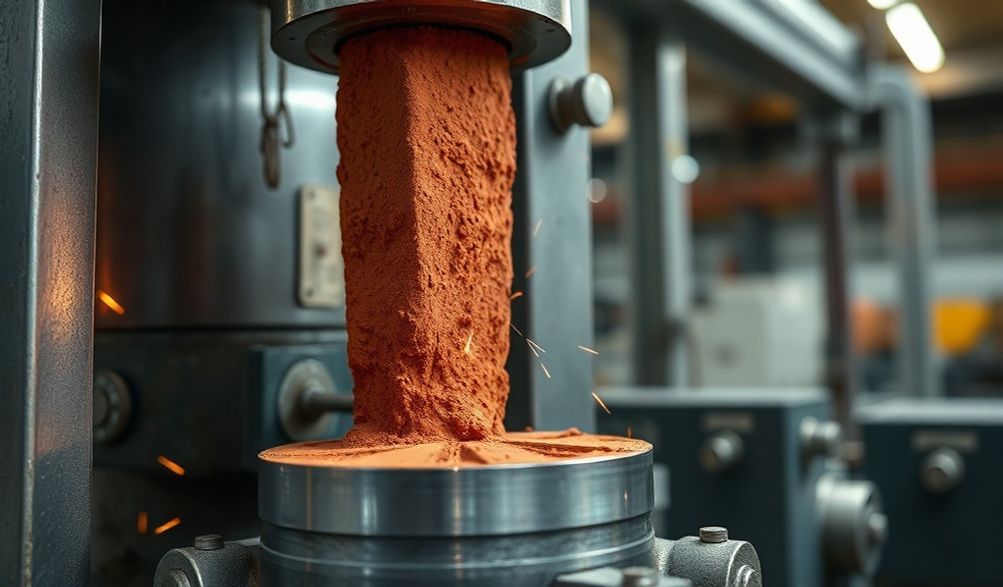
The extruder is the undisputed core of the modern clay brick production line. It employs the principle of vacuum extrusion to create a continuous, dense column of clay.
- Função: It compacts, de-airs, and shapes the prepared clay mix into a solid, continuous column with a uniform cross-section.
- Componentes Principais:
- Main Body & Drive: Houses the powerful motor and gearbox that provide the necessary torque.
- Câmara de Vácuo: Removes air pockets from the clay. This is crucial for preventing laminations, cracks, and ensuring high final brick strength.
- Auger (Screw): The workhorse that conveys, compacts, and pushes the clay through the machine. Its design and wear resistance are vital.
- Die Head: The final shaping tool. The clay column emerges through this hardened steel die, taking on its final profile (solid, perforated, hollow, etc.).
- Impacto: The extruder’s pressure and vacuum efficiency directly determine the brick’s green strength (pre-drying) and ultimate densidade e resistência à compressão after firing.
2. Brick Cutting Systems: From Column to Unit
Once the continuous column exits the extruder, it must be cleanly cut into individual bricks. The cutting system defines dimensional accuracy and surface finish.
- Wire Cutters: Utilize a series of taut, high-tensile wires on a reciprocating or rotating frame to slice through the clay column. They offer excellent versatility for different brick heights and a smooth cut finish.
- Gang Mold Cutters: Press shaped molds onto the clay column to form multiple bricks at once, often imparting a textured surface. They can be faster for high-volume, standard-sized brick production.
- Precision & Waste: A high-quality cutter ensures consistent brick length and clean edges, minimizing waste from misshapen units and reducing secondary finishing work.
3. The Importance of Mixers and Feeders
Consistency begins here. The quality of the final brick is irrevocably linked to the homogeneity and proper conditioning of the clay body.
- Mixers (Pan, Paddle, Shaft): These machines blend different clay types, additives (like sand or ash), and water to achieve a uniform plasticity and moisture content. A homogeneous mix is non-negotiable for stable extrusion.
- Feeders (Box, Belt): They provide a consistent, regulated flow of the prepared clay mix into the extruder hopper. An inconsistent feed leads to variations in extrusion pressure, causing density flaws and potential jams.
4. Automation & Handling: Stackers, Packers, and Conveyors
Modern plants leverage automation to boost efficiency and safety dramatically.
- Role: Automated systems transfer green bricks from the cutter to dryers, and later, stack fired bricks for packaging and shipment.
- Benefícios:
- Reduces Labor Costs & Strain: Minimizes heavy manual handling.
- Improves Safety: Creates a safer work environment with less physical risk.
- Increases Throughput: Enables continuous, high-speed operation without bottlenecks.
- Reduces Damage: Gentle, robotic handling lowers breakage rates of green and fired bricks.
Why Choose a Professional Manufacturer: The FUDA Factory Perspective
Selecting equipment from a reputable, experienced manufacturer like FUDA is an investment in peace of mind and operational longevity. The difference lies in the engineering depth and support infrastructure.
Engineering for Durability and Low Maintenance
At FUDA, we build machinery for the harsh reality of continuous industrial production.
- Materiais de Alta Qualidade: Critical wear parts like augers, liners, and die heads are fabricated from specially hardened, abrasion-resistant steels to withstand the punishing nature of clay.
- Filosofia de Design: Our machines are designed with easy service access in mind. Bearings, seals, and wear components can be inspected and replaced with minimal downtime. Robust frames and foundations ensure stability under load.
Customization Capabilities for Specific Needs
No two clay deposits or market demands are identical. Off-the-shelf solutions often fall short.
- Adaptable Machinery: We customize extruder hardness, mixer configurations, and cutter setups to suit your specific clay plasticity, mineral content, and desired brick sizes (from standard building bricks to large perforated blocks).
- Real-World Solution: For instance, a client with highly abrasive clay required a special alloy auger and liner configuration. FUDA’s engineers designed, tested, and delivered a solution that tripled the wear life compared to a standard setup, drastically reducing their operating costs.
Integrated Production Line vs. Standalone Machines
- Integrated Line Advantage: Sourcing a complete, synchronized line from a single manufacturer like FUDA ensures seamless compatibility. The extruder, cutter, and conveyors are engineered to work in perfect harmony, maximizing overall equipment effectiveness (OEE) and simplifying troubleshooting.
- Standalone Upgrades: For existing plants, we provide targeted upgrades—such as a new high-efficiency extruder or automated stacker—that integrate with your current setup to boost productivity without a complete overhaul.
Key Factors in Selecting Your Clay Brick Equipment
Making the right choice requires a careful analysis of your unique situation. Here is a practical framework based on decades of client consultations.
Assessing Your Raw Material (Clay) Properties
Your clay is the primary variable. Its characteristics dictate your machinery needs.
- Clay Testing is Essential: Conduct tests to determine:
- Plasticidade: How well it shapes and holds form.
- Shrinkage: Drying and firing shrinkage rates.
- Mineral & Abrasiveness: Affects wear on equipment.
- Equipment Impact: Sandy, low-plasticity clay may require a different extruder auger design and higher pressure than a highly plastic, sticky clay. Share your test results with your manufacturer for precise recommendations.
Calculating Required Production Capacity (Output)
Capacity planning balances current needs with future growth.
- Project Demand: Calculate your current and projected 5-year daily or monthly brick requirement.
- Match Machine Specs: Equipment is rated in tijolos por hora. Choose a line that meets your peak demand with a 15-20% buffer for efficiency losses and future growth. An oversized plant wastes capital; an undersized one loses sales.
Power Requirements & Operational Costs Analysis
Look beyond the sticker price to the total cost of ownership.
- System Types: Modern plants often use electromechanical systems for drives (efficient, precise) and sistemas hidráulicos for cutters and clamps (powerful).
- Cost Evaluation: Analyze the energy consumption (kWh) of the full line. A slightly more expensive, energy-efficient machine can save significantly on utility bills over its lifespan. Factor in estimated maintenance and spare parts costs.
After-Sales Support: Service, Spares, and Training
The manufacturer’s relationship with you begins after the sale.
- Critical Questions to Ask:
- What is the warranty period and coverage?
- Do you have a local service network or technicians?
- What is the guaranteed availability time for critical spare parts?
- What training do you provide?
- The FUDA Value:Nós fornecemoscomprehensive on-site training for operators and maintenance staff, detailed manuals, and maintain a vast inventory of wear parts with a clear logistics plan to minimize your downtime.
Optimizing Your Brick Plant for Efficiency & Quality
Owning great equipment is only half the battle. Optimal operation is key to profitability.
Best Practices in Raw Material Preparation
“Garbage in, garbage out” applies profoundly to brick making.
- The Process Chain: Proper preparation involves weathering (exposing clay to elements), primary crushing, screening to remove stones, and finally tempering—adding water and mixing to achieve the perfect, consistent plasticity for extrusion.
- The Payoff: Skipping or rushing preparation leads to defects like cracks, laminations, and warping, while also accelerating wear on your extruder and cutter.
Routine Maintenance Schedules for Critical Equipment
Preventive maintenance is the cheapest insurance.
- Daily: Check lubrication levels, inspect cutter wires for nicks, clear clay buildup from conveyors.
- Weekly: Inspect auger and liner for wear, check vacuum pump oil and seals, tighten bolts and fasteners.
- Monthly: Perform more thorough inspections of gearboxes, motors, and bearings. Calibrate sensors.
- Goal: Prevent unexpected catastrophic failures that can halt production for days.
Quality Control Checks Throughout the Process
Quality must be monitored in-process, not just at the final product.
- Monitor Key Parameters:
- Extrusion Pressure: A sudden change indicates a feed issue or wear.
- Clay Column Dimensions: Before cutting, ensure consistency.
- Green Brick Weight/Dimensions: Sample bricks regularly.
- Final Product: Regularly test fired bricks for dimensional tolerance, water absorption, and compressive strength to ensure they meet relevant building standards.
Industry Trends & Future Outlook
The clay brick industry is evolving, embracing efficiency and sustainability.
The Rise of Energy-Efficient and Hybrid Kilns
Kiln technology is advancing rapidly, influencing upstream processes.
- Impact on Machinery: Modern tunnel kilns with improved heat recovery demand bricks with very consistent density and dimensions for optimal firing. This places a higher premium on precise extrusion and cutting equipment.
- Carbon Footprint: The industry’s push to reduce emissions makes the energy efficiency of the entire production line—from mixer drives to extruder motors—a major purchasing consideration.
Smart Manufacturing and IoT in Brick Plants
Data is becoming a key raw material.
- Manutenção Preditiva: Vibration and temperature sensors on extruder gearboxes and motors can predict failures before they happen, scheduling maintenance during planned downtime.
- Production Optimization: Real-time monitoring of extrusion pressure, cutter speed, and production counts allows for fine-tuning and immediate correction of deviations, maximizing yield and quality.
Sustainable Practices: Recycling and Alternative Materials
The circular economy is reaching brick manufacturing.
- Alternative Materials: Equipment is being adapted to incorporate fly ash, slag, or recycled construction waste into the clay body. This may require specialized mixers or modified extruder designs.
- Water Recycling: Closed-loop water systems in clay preparation and cleaning processes are becoming standard, reducing freshwater consumption and waste.
Perguntas Frequentes (FAQ)
Q1: What is the typical lead time for a complete clay brick making plant from FUDA?
A: Lead times vary based on the level of customization and order scale. For a standard, configured production line, typical lead times range from 8 to 14 weeks from finalized order to shipment. We provide a detailed project timeline upon specification agreement.
Q2: Can your equipment produce different types of bricks (hollow, paving, etc.)?
A: Absolutely. Our core extrusion and cutting technology is highly versatile. By changing the extrusion die and adjusting the cutter setup, the same machinery base can produce solid, perforated, hollow, and even paving bricks or blocks. We assist in the design of specific dies for your target product range.
Q3: What kind of training do you provide for machine operation?
A: FUDA provides comprehensive on-site training conducted by our experienced engineers. It covers safe operation, daily and preventive maintenance procedures, basic troubleshooting, and quality control checks. We also supply detailed digital manuals and instructional video guides.
Q4: How do you ensure the availability of spare parts?
A: We maintain a large centralized inventory of all critical wear parts, such as augers, liners, cutter wires, and seals. Clients receive a detailed parts catalog. Our established global logistics partners help ensure timely delivery to your factory to minimize potential downtime.
Q5: What are the most common operational mistakes in brick making, and how can they be avoided?
A: The most frequent issues are: 1) Improper clay tempering (leading to cracks), avoided by strict moisture control; 2) Inconsistent feed to the extruder, solved by using reliable feeders; and 3) Neglecting routine maintenance, prevented by adhering to our provided schedules. Following the operational protocols we supply is the best safeguard.
Conclusão
Selecting and operating clay brick making equipment is a multifaceted endeavor that blends technical understanding with strategic business planning. It begins with a deep knowledge of core machinery—from the powerful extruder to the precise cutter—and extends to choosing a manufacturer whose expertise, build quality, and support match your long-term vision.
As we have explored, Fábrica de Blocos FUDA stands as more than just a supplier; we are a engineering partner dedicated to transforming your raw material and vision into a efficient, profitable, and sustainable production reality. Our approach is built on durable engineering, practical customization, and unwavering after-sales support.
Your Next Step: From Insight to Action.
We invite you to leverage this knowledge in a practical conversation. Contact the FUDA engineering team today for a free, no-obligation consultation. Share your clay analysis, target production capacity, and product goals. Let us develop a tailored equipment proposal that aligns precisely with your ambition to build quality, drive efficiency, and contribute to the sustainable future of construction.