
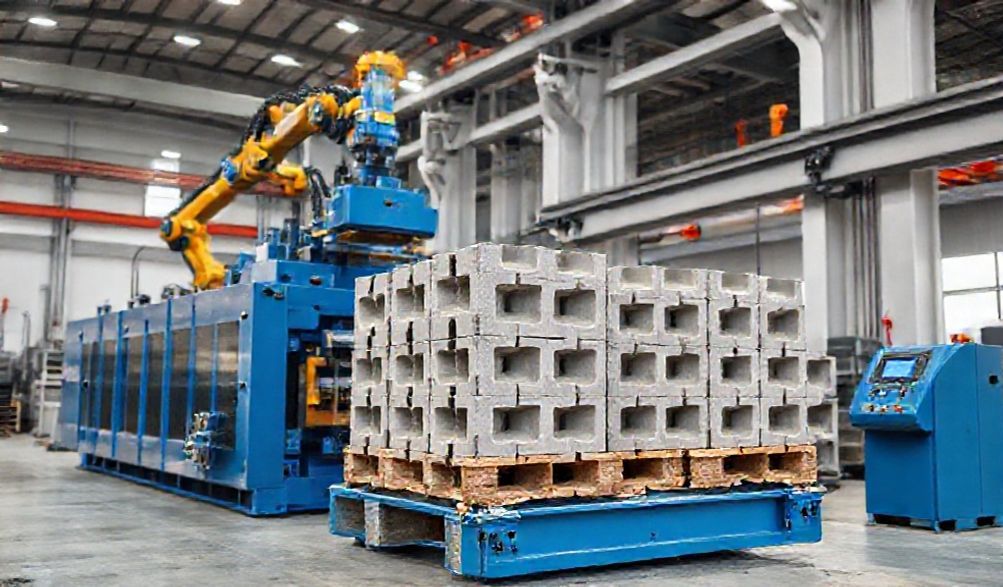
The Ultimate Guide to China Block Forming Machines: Quality, Types & How to Choose
Introdução
The global construction industry is booming, driven by urbanization, infrastructure development, and the ever-present need for affordable housing. At the heart of this growth lies a fundamental building block: the concrete block. Producing these essential components efficiently and cost-effectively requires reliable machinery, leading countless businesses and project managers worldwide to consider a pivotal sourcing decision—where to buy a block forming machine. Increasingly, the answer points to China.
This guide serves as your comprehensive, unbiased resource for navigating China’s vast block forming machine industry. Drawing on technical specifications, market trends, and procurement realities, we will dissect the advantages, identify the potential pitfalls, and provide a clear roadmap for making an informed purchase. Whether you are a contractor scaling up operations, an investor launching a block-making business, or a project manager for a large development, your core concerns—unbeatable price, enduring quality, machine reliability, and supplier trustworthiness—are valid. We address them all.
Sourcing heavy industrial equipment from across the globe is a significant undertaking. This guide is designed to be your trusted advisor, balancing the undeniable value proposition of Chinese manufacturing with the critical due diligence required to secure a machine that will be a profitable asset for years to come.
Understanding Block Forming Machines and Their Applications
Before diving into the specifics of the Chinese market, it’s crucial to understand the equipment itself and its role in modern construction.
What is a Block Forming Machine? Core Function and Outputs
A block forming machine, also known as a block making machine or concrete block machine, is a piece of industrial equipment designed to manufacture construction blocks from raw materials like cement, sand, aggregate, and water, often incorporating industrial by-products like fly ash.
The core process involves three key stages:
1. Mistura: Raw materials are combined in precise ratios.
2. Moldagem: The mixed concrete is fed into a mold cavity and subjected to high mechanical vibration and hydraulic pressure to compact it and remove air pockets.
3. Cura: The freshly formed (or “green”) blocks are ejected and allowed to set, typically through air curing or steam curing for faster strength gain.
The output of these machines is diverse, enabling various construction needs:
* Blocos Vazados: The standard for load-bearing and non-load-bearing walls.
* Blocos Sólidos: Used for foundations, pavements, and heavy-duty applications.
* Lajotas e Tijolos de Bloqueio:Para calçadas, passarelas e pátios.
* Meios-fios: For road edges and landscaping.
* Formatos Especiais: Such as grass blocks for permeable surfaces or decorative masonry units.
Key Industries and Projects That Rely on This Equipment
The application of block forming machines is universal in construction:
* Large-Scale Construction & Urban Development: For producing bricks for residential, commercial, and industrial buildings at high volume.
* Infrastructure & Road Paving: Manufacturing curbstones, paving blocks, and concrete barriers for roads, highways, and public spaces.
* Landscaping and Hardscaping: Creating decorative pavers, retaining wall blocks, and garden edging.
* Small Business & Entrepreneurial Ventures: Enabling local, on-demand production of blocks for community projects or retail sale.
* Disaster Relief & Rapid Deployment Housing: Mobile block machines can produce building materials directly on-site in remote or affected areas.
Why Source Block Forming Machines from China?
China has evolved into the world’s foremost manufacturing hub for construction machinery, and block forming equipment is no exception. Here’s why global buyers consistently look east.
The Competitive Edge: Cost-Effectiveness and Scale
The most apparent advantage is cost. China’s unparalleled manufacturing scale, integrated supply chains, and competitive labor markets create significant economies of scale.
* Preço Direto da Fábrica: Sourcing directly from manufacturers eliminates multiple middlemen.
* Eficiência da Cadeia de Suprimentos: Proximity to steel mills, component suppliers, and foundries reduces material costs and lead times.
* Resultado: You can acquire a machine with similar specifications to Western or Indian counterparts at a fraction of the initial capital investment, freeing up budget for other project needs.
Avanço Tecnológico e Inovação
The perception of Chinese manufacturing as solely producing low-tech copies is outdated. The industry has made massive strides in R&D.
* Automação e Controle: Modern Chinese machines feature Programmable Logic Controller (PLC) systems, touch-screen interfaces, and automated material handling (feeders, mixers, stackers).
* Design Ecológico: Many manufacturers now specialize in machines that optimize the use of industrial waste (fly ash, slag) to produce non-fired, environmentally friendly blocks.
* Eficiência Energética: Improved hydraulic systems and motor designs reduce power consumption, lowering the operational cost.
Gama Diversificada de Produtos para Cada Necessidade
Whether you need a simple manual machine for a village cooperative or a fully automated plant for a city-wide development project, Chinese suppliers have a model for you. This vast range ensures you are not overpaying for capacity you don’t need or under-investing in a machine that can’t meet your demand.
Navigating the Market: Types of Block Machines from China
Understanding the categories of machines available is the first step in matching equipment to your project scope and budget.
Manual and Semi-Automatic Block Making Machines
- Ideal Para: Start-ups, small businesses, markets with low labor costs, and producing specialized or low-volume orders.
- Operação: Requires significant operator involvement for feeding material and removing finished blocks. Semi-automatic models may include a hydraulic system for compaction and ejection.
- Prós: Very low initial investment, simple maintenance, easy to move and operate.
- Contras: Labor-intensive, lower output (typically 500-2,000 blocks per 8-hour shift), inconsistent product quality if not operated carefully.
Fully Automatic Stationary Block Making Plants
- Ideal Para: Medium to large-scale commercial block production yards seeking high, consistent output with minimal labor.
- Operação: These are complete production lines. They automatically mix, convey, mold, compact, cure, and stack blocks. Often controlled by a central PLC.
- Prós: High output capacity (4,000 to 20,000+ blocks per shift), consistent quality, reduced labor costs, and better working conditions.
- Contras: Higher capital cost, requires more space and stable power supply, more complex maintenance.
Máquinas de Blocos Móveis
- Ideal Para: On-site production for large construction projects, remote locations, or disaster zones.
- Operação: Mounted on a trailer, these machines can be towed directly to the job site. They produce blocks where they are needed, eliminating the cost and breakage associated with transporting finished blocks over long distances.
- Prós: Eliminates transport costs for blocks, enables just-in-time production, highly flexible.
- Contras: Output is generally lower than stationary plants, requires on-site raw material handling.
Specialized Machines: Paver, Curbstone, and Interlocking Brick Machines
These are engineered for specific products. They feature unique mold designs and vibration systems to produce high-density, precise, and aesthetically finished products for landscaping and road construction.
Critical Factors for Choosing a Reliable Chinese Supplier
This is the most critical phase of your journey. Diligent supplier vetting separates a successful investment from a costly mistake.
Verifying Manufacturer Credentials and Experience
- Business License: Request a copy of their official business license. Use third-party verification services if possible.
- Auditoria de Fábrica: Insist on a live video tour of the manufacturing facility. Look for organization, welding quality, and assembly lines.
- Histórico: Ask for company history. A supplier with 10+ years of experience has likely navigated technical challenges and improved their designs.
- Client Portfolio & References: Request contact information for previous international clients, preferably in your region. Follow up with them.
Assessing Manufacturing Standards and Quality Control
- Qualidade do Material: Inquire about the grade of steel used for the frame and molds. High-tensile steel is essential for durability.
- Componentes Principais: Ask for the brands of key components like hydraulic pumps, motors, PLCs, and vibration motors. Reputable brands (Siemens, Schneider, Omron, etc.) indicate a focus on reliability.
- Craftsmanship: Examine close-up photos or videos of welding seams and paint finish. Rough welding and thin paint are red flags for poor construction.
The Importance of After-Sales Service and Technical Support
A machine is a long-term asset. The supplier’s support is crucial.
* Garantia: Standard is 12 months for parts (excluding wear items). Clarify what is covered and the process for claims.
* Peças de Reposição: Ensure they commit to supplying spare parts for a minimum of 5-10 years. Ask for a parts catalog and price list.
* Documentation: They must provide comprehensive English manuals, electrical diagrams, and hydraulic schematics.
* Suporte Técnico: Determine if they offer remote support (via video call) and the availability of engineers for on-site installation (at an additional cost).
Navigating Communication and Customization
- Clear Specs: Provide detailed, written specifications (block type, size, output, power supply) to avoid misunderstandings.
- Moldes Personalizados: Most suppliers can make custom molds. Provide precise CAD drawings or a physical sample. Get a separate quote and lead time for the mold.
- MOQ: Understand Minimum Order Quantities, especially for smaller, standard machines.
A Step-by-Step Guide to the Procurement Process
Follow this structured approach to navigate your purchase confidently.
Step 1: Define Your Requirements
Determine your needed output (blocks per hour/day), block types and sizes, level of automation, available factory space, and power supply (voltage, phase).
Step 2: Shortlist and Vet Suppliers
Research online (Alibaba, Made-in-China, industry directories) but dig deeper. Send a detailed Request for Quotation (RFQ) to 5-7 suppliers. Use their responses and your vetting criteria (from the section above) to shortlist 2-3 serious contenders.
Step 3: Deep Dive: Analyze Quotations and Technical Specifications
Compare quotes line-by-line. Ensure they are for identical specifications. Scrutinize the technical data sheet—compare motor power, pressure, cycle time, and component brands. The cheapest quote often omits key features or uses inferior parts.
Step 4: Finalize the Deal: Payment Terms, Contract, and Logistics
- Payment: Never pay 100% upfront. Standard terms are 30% deposit, 70% before shipment. Consider using Trade Assurance or Letter of Credit for security.
- Contract: Have a formal, detailed contract covering specs, payment, delivery timeline, warranty, and responsibilities.
- Logistics (Incoterms): Understand terms like FOB (you arrange shipping) or CIF (supplier arranges to your port). Factor sea freight, insurance, and import duties into your total cost.
Step 5: Pre-Shipment Inspection and Arranging Delivery
Hire a third-party inspection company to check the machine at the factory before it’s packed. Confirm it meets the agreed specifications and is fully functional. Only then authorize final payment and arrange shipping.
Common Pitfalls and How to Avoid Them
The “Too Good to Be True” Price Trap
Extremely low prices almost always signal inferior materials, copied designs, or hidden costs. Quality steel and reputable components have a market price.
Overlooking the Total Cost of Ownership
Focus not just on purchase price, but on running costs: energy consumption, maintenance ease, spare parts availability, and potential downtime. A slightly more expensive, robust machine can have a far lower cost per block produced over its lifetime.
Inadequate Power and Site Preparation Planning
Ensure your facility’s electrical supply matches the machine’s requirements. Prepare a level, reinforced concrete foundation as per the supplier’s drawings antes the machine arrives.
Neglecting to Clarify Export Packaging
Machines must be crated in heavy-duty, weather-resistant timber frames for ocean freight. Specify this in the contract to prevent damage during transit.
Seção de Perguntas Frequentes
Q1: What is the average price range for a block forming machine from China?
A: Prices vary dramatically. Small manual machines can start from $3,000 – $7,000. Semi-automatic models range from $10,000 – $30,000. Fully automatic production lines can cost anywhere from $50,000 to over $300,000, depending on capacity and automation level. A detailed quote based on your specifications is the only way to get an accurate price.
Q2: How do I ensure the machine meets international safety and quality standards?
A: Request relevant certifications like CE (for the European market). More importantly, verify the quality of core components (e.g., Siemens PLCs, Schneider electricals, Rexroth hydraulics). Insist on a pre-shipment inspection report from a recognized third-party agency.
Q3: Can I get custom molds for unique block designs?
A: Absolutely. Most reputable manufacturers have in-house mold workshops. You will need to provide detailed technical drawings (CAD files are best) or a physical sample. Be sure to clarify the separate cost and production time for the custom mold, which is typically $1,000 – $5,000+ depending on complexity.
Q4: What is the typical lead time for production and delivery?
A: For standard models, production takes 15-30 days after deposit. For customized or large plants, allow 30-60 days. Sea freight shipping adds another 20-40 days to most global destinations. Always get and contractually bind these timelines.
Q5: Who is responsible for installation and operator training?
A: This is a key negotiation point. Many suppliers include detailed installation manuals and remote video support. For an additional fee, they can dispatch a technician to your site for installation and training—highly recommended for complex automatic lines. Ensure the contract explicitly states the scope of installation support.
Conclusão
China’s block forming machine industry presents a compelling proposition: a blend of advanced technology, immense variety, and significant cost-effectiveness that can empower construction projects and businesses worldwide. The potential for value is substantial.
However, this value is not automatic. It must be unlocked through meticulous due diligence. Success hinges on your commitment to thorough supplier vetting, crystal-clear technical communication, and a holistic view of the investment that prioritizes total cost of ownership over the temptingly low sticker price.
As a final piece of expert advice, approach this procurement as the beginning of a long-term partnership, not just a one-time transaction. Start with a clear project plan, use this guide as your checklist, and engage proactively with suppliers who demonstrate transparency, technical knowledge, and a genuine interest in your project’s success. The right machine from the right partner will be a cornerstone of your productivity for years to come.
<