
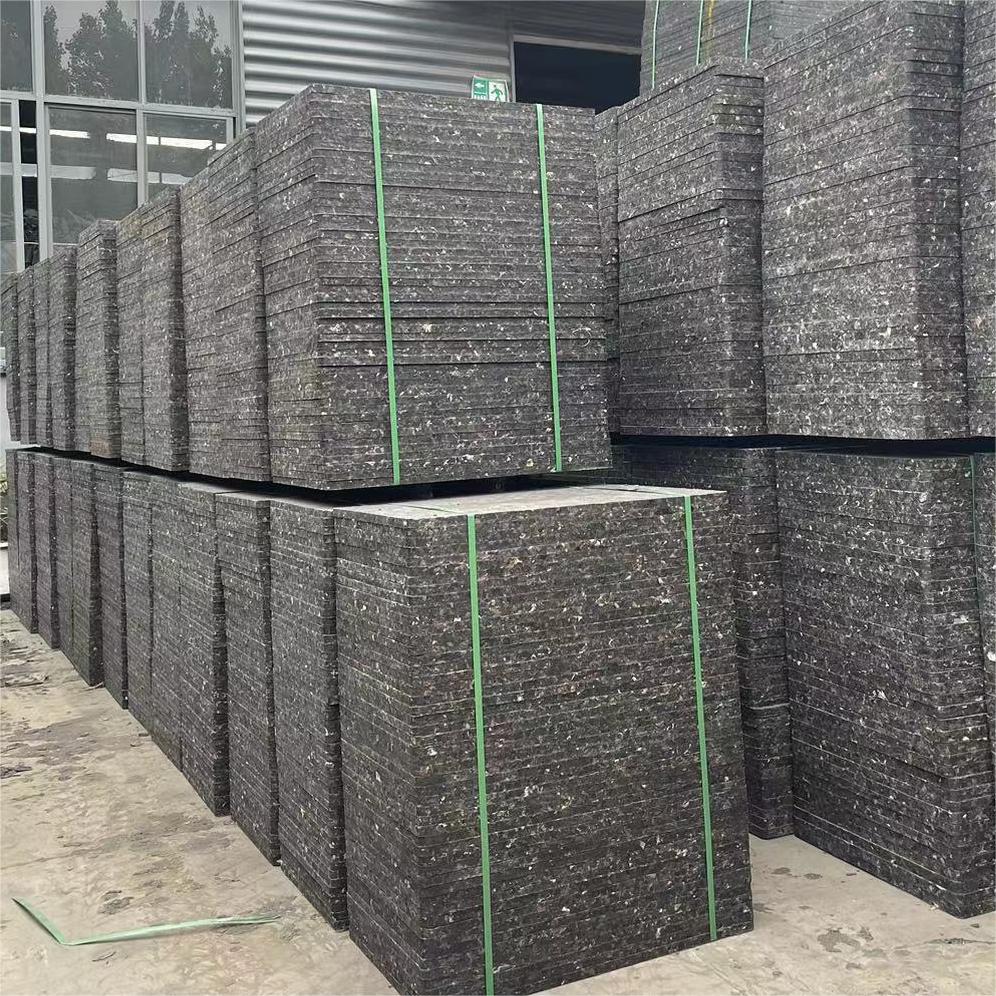
A Dinâmica de Engenharia e Operacional dos Paletes de Produção
Função Principal e Integração de Sistemas
Em uma fábrica automática de produção de blocos, o palete desempenha uma série de funções críticas e de alto risco. Sua função principal é formar a superfície inferior da caixa de moldagem. Ele deve criar uma vedação perfeita com as paredes do molde para evitar o vazamento da mistura de concreto durante a fase de vibração e compactação de alta frequência. Após a compactação, o palete, que agora sustenta os blocos "verdes" recém-formados e extremamente frágeis, é transferido para o sistema de esteiras da fábrica. Em seguida, ele percorre uma câmara de cura ou uma área de cura natural, onde o concreto adquire resistência inicial. Todo o ritmo de produção da fábrica é sincronizado com o movimento desses paletes. Um único palete empenado, danificado ou fora das especificações pode causar um travamento no sistema de transferência, parar toda a linha de produção ou levar à criação de um lote inteiro de blocos defeituosos, resultando em perdas financeiras significativas.
Composição do Material e Avanços Tecnológicos
A evolução dos materiais das paletes é uma resposta direta às condições exigentes da produção de blocos: abrasão extrema, impacto constante dos mecanismos de transferência, exposição à umidade e à química alcalina do concreto, e significativa variação térmica.
- Paletes de Aço de Alto Teor de Carbono Tratados Termicamente:Esta é a opção tradicional e mais robusta. Fabricadas a partir de chapas grossas de aço de alto carbono, essas paletes são então tratadas termicamente (têmpera e revenimento) para alcançar um equilíbrio ideal entre dureza superficial e tenacidade interna. Sua principal vantagem é a durabilidade excepcional e a resistência à deformação sob cargas pesadas. São ideais para ambientes de alta produção que fabricam produtos densos e pesados, como blocos maciços ou pavimentadoras. A principal desvantagem é o custo inicial mais elevado e o peso significativo, o que exige mais potência do sistema de transporte.
- Polymer-Composite and Engineering Plastic Pallets: A more modern innovation, these pallets are constructed from advanced polymers, often reinforced with fibers or other composite materials. Their key benefits are a significant reduction in weight (lowering energy consumption for conveyance) and inherent corrosion resistance. They also generate less noise during transfer operations. However, they may have a lower resistance to extreme impact and can be susceptible to permanent deformation if exposed to temperatures beyond their thermal stability point, especially in accelerated steam-curing environments.
- Hybrid and Coated Steel Solutions: To leverage the benefits of both worlds, some pallets feature a steel core for structural integrity with a bonded polymer or specialized abrasive-resistant coating on the top surface. This coating reduces friction during block ejection, minimizes adherence issues with certain concrete mixes, and provides an additional layer against corrosion. The performance and lifespan of these pallets are highly dependent on the quality and application process of the coating.
The Strategic Impact on Production Efficiency and Total Cost of Ownership
Pallet Quality as a Determinant of Product Quality and Plant Uptime
The direct correlation between pallet condition and block quality cannot be overstated. A pallet that is not perfectly flat will produce blocks with inconsistent thickness, rendering them non-compliant with structural standards and unsaleable. Surface wear, pitting, or corrosion on the pallet’s top face will transfer imperfections to the bottom surface of every block produced, affecting aesthetics and, in the case of paving stones, their functional laying characteristics. Furthermore, dimensional instability—such as warping or changes in thickness—is a primary cause of machine stoppages. An out-of-tolerance pallet can jam in the mold station, misalign on the conveyor, or fail to be correctly handled by stackers and destackers, bringing a multi-hundred-thousand-dollar production line to a complete standstill. Therefore, specifying high-quality pallets is not an area for cost-cutting; it is a direct investment in production reliability and output quality.
Analyzing the Total Cost of Pallet Ownership
For a block manufacturer, the true cost of pallets extends far beyond the simple purchase price per unit. A sophisticated TCO analysis provides a more accurate financial picture and is a key tool for distributors to use with their clients.
- Initial Purchase Price: The upfront cost of the pallet batch.
- Operational Costs: This includes the energy consumption for moving the pallets (heavier steel pallets cost more to convey) and the labor for routine inspection and handling.
- Impact on Production Losses: This is the most significant variable. A low-quality pallet with a short lifespan necessitates more frequent shutdowns for replacement. More critically, pallet-induced jams and product rejections lead to massive production losses that can dwarf any savings from a cheaper initial purchase.
- Replacement Interval and Lifespan: A premium heat-treated steel pallet might last for 500,000 cycles or more, while an inferior alternative may wear out after 150,000 cycles. Calculating the cost per production cycle provides a clear comparison and almost always favors the higher-quality, longer-lasting option.
- Compatibility and Standardization: For a plant running multiple products, using standardized, interchangeable pallets simplifies operations and reduces the spare parts inventory required. A distributor who can provide a universal pallet design that works across a client’s various mold sets adds tremendous operational value.
Procurement and Supply Chain Strategy for Distributors
Technical Specifications and Quality Assurance Benchmarks
When sourcing pallets, either as standalone consumables or as part of a machine supply package, distributors must enforce rigorous technical standards.
- Material Certification: Suppliers should provide mill certificates for steel, verifying its grade and composition. For polymer pallets, data sheets specifying the polymer type, filler materials, and reinforcement percentages are essential.
- Dimensional Tolerances: Specifications must dictate strict tolerances for length, width, thickness, and, most critically, flatness. Flatness should be measured over the entire surface and held to a tolerance of within fractions of a millimeter.
- Hardness and Surface Treatment: For steel pallets, a minimum surface hardness, measured on the Rockwell scale (e.g., HRC 40+), should be required to ensure abrasion resistance. Documentation of the heat-treatment process is necessary. For coated pallets, the coating thickness and bond strength should be specified.
- Sample Testing and Validation: Before placing a bulk order, it is prudent to procure a small sample batch for real-world testing in a client’s plant. This provides invaluable data on actual wear rates, compatibility with the specific block machine, and resistance to the client’s unique concrete mix design.
Building a Resilient and Responsive Supply Program
The pallet is a consumable, and its supply must be managed with the urgency that a production-stopping shortage demands.
- Strategic Inventory Management: Distributors should maintain a calculated inventory of the most common pallet sizes to serve their client base. This allows for rapid response to emergency replacement needs, building immense customer loyalty.
- Reliable Manufacturing Partnerships: The pallet supplier must be a specialized manufacturer with proven expertise in metal fabrication or precision polymer molding. They must have the capacity for consistent quality and the ability to fulfill large and rush orders without compromising on specifications.
- Logistics and Lead Time Management: Given the weight and size of pallet shipments, efficient logistics planning is crucial. Distributors must have clear visibility into production and shipping lead times from their supplier to provide accurate delivery commitments to their end clients, ensuring the continuous operation of block manufacturing plants.
Conclusion
In the high-stakes environment of automated block production, the pallet is a component that demands strategic focus from equipment distributors and suppliers. Its role is pivotal, acting as the critical interface between the machine’s dynamic mechanics and the final product’s quality. Viewing pallets as simple, low-value consumables is a profound miscalculation that can jeopardize client relationships and the performance reputation of the entire machinery line. By developing deep expertise in pallet materials, engineering specifications, and lifecycle economics, B2B professionals can transition from being mere parts suppliers to becoming indispensable partners in productivity. Offering a premium, well-specified pallet, backed by a reliable and responsive supply chain, is a powerful strategy for reducing client downtime, enhancing their product quality, and securing a durable and profitable position in the competitive masonry equipment market.
Frequently Asked Questions (FAQ)
Q1: How often should a block manufacturing plant inspect and replace its pallets?
A: Inspection should be a daily routine. Operators should visually check for obvious damage and use a straightedge to periodically verify flatness. The replacement interval is not time-based but cycle-based. Premium pallets can last for several years under continuous use. Replacement should occur when consistent wear leads to product quality issues (e.g., thickness variation, poor bottom surface finish) or when dimensional changes cause persistent transfer or jamming problems.
Q2: What are the primary causes of premature pallet failure?
A: The most common causes are:
- Abrasive Concrete Mix: Using aggregates with high abrasive qualities (like some river gravels) without adjusting the mix design will accelerate wear.
- Improper Machine Adjustment: Incorrect vibration settings or a misaligned mold can cause excessive impact and stress on the pallet.
- Handling Damage: Dropping pallets during manual handling or cleaning can cause warping or edge damage.
- Chemical Attack: Highly alkaline cement or aggressive curing agents can corrode steel or degrade certain polymers over time.
Q3: Can warped or slightly damaged pallets be repaired or reconditioned?
A: In some cases, yes. Specialized workshops can re-mill the surface of a steel pallet to restore flatness, but this is only feasible if the pallet has sufficient original thickness to maintain its structural integrity after material removal. Severely warped or cracked pallets cannot be economically repaired and must be replaced for the safety and reliability of the production line.
Q4: Are there different pallet specifications for different block products?
A: Absolutely. While the base material may be the same, the specifications vary. Heavy-duty products like retaining walls require thick, high-strength pallets. For thin, lightweight products, a lighter pallet might be acceptable. The surface finish requirement is also higher for products like exposed aggregate pavers where the bottom face becomes the visible top face.
Q5: What is the typical lead time for a custom-sized or non-standard pallet order?
A: Lead times for custom pallets depend on the manufacturer’s workload and the complexity of the order. For a standard material and a common size, lead time might be 4-6 weeks. For a completely new size requiring new fabrication jigs or a special material treatment, the lead time could extend to 8-12 weeks. It is critical to plan for pallet inventory and replacement well in advance of anticipated needs.

