
The Ultimate Guide to Cinder Block Machines: Types, Uses, and Selection
Introdução
Cinder blocks—or more accurately, concrete masonry units (CMUs)—are the unsung heroes of modern construction. From foundational walls and retaining structures to decorative landscaping features, their utility is unmatched. Behind every one of these ubiquitous blocks is a machine engineered for transformation, turning raw aggregate, sand, and cement into precise, durable building components.
For contractors, manufacturers, and ambitious DIYers, navigating the world of cinder block machinery can be complex. The right machine isn’t just a purchase; it’s a capital investment that impacts production capacity, product quality, and ultimately, profitability. This comprehensive guide synthesizes industry knowledge to cut through the confusion. We’ll explore how these machines work, break down the different types available, and provide a clear framework for choosing the perfect model for your scale, budget, and goals. Let’s build a solid foundation of knowledge.
Understanding Cinder Block Machines: Core Principles and Components
Before comparing models, it’s essential to grasp the fundamental engineering that allows a pile of dry mix to become a structural block.
O que é uma Máquina de Blocos de Concreto?
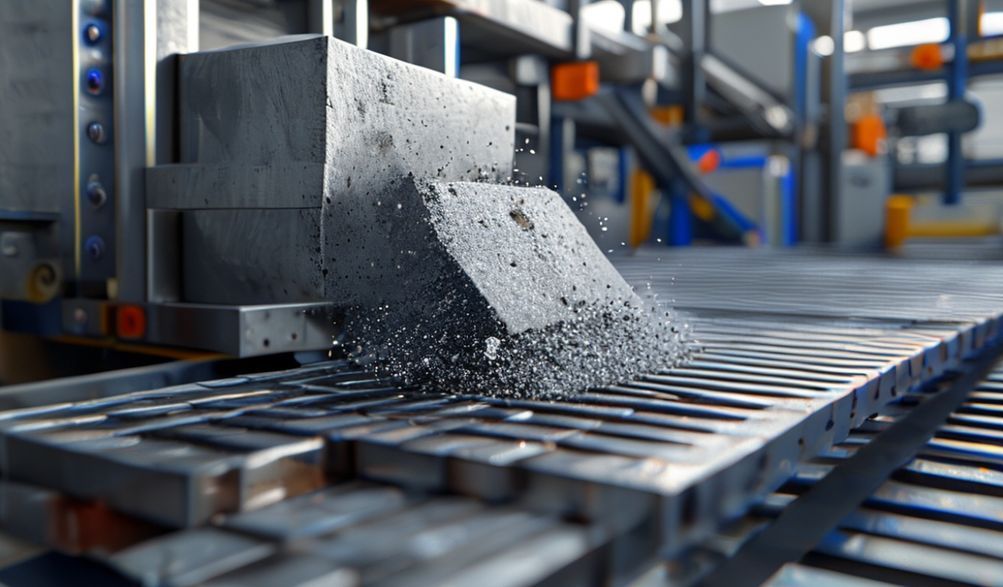
A cinder block machine is a device designed to compact a dry concrete mixture into a specific mold under high pressure and vibration. The result is a “green” block that is then cured to achieve its full strength.
A quick historical note: True “cinder” blocks used coal cinders as an aggregate and are now largely obsolete. Today’s machines produce concreto blocks, though the term “cinder block” persists colloquially. Modern machines create stronger, more durable, and more consistent products.
Componentes Principais e Suas Funções
Every block machine, from the simplest to the most advanced, is built around a set of core components:
- Hopper: This is the entry point. It stores and feeds the raw dry concrete mix (a blend of sand, cement, and aggregate like crushed stone) into the machine’s molding system.
- Mofo ou Morra: The heart of the machine. This is a precision steel cavity that defines the block’s final shape, size, and design—whether it’s a standard 8x8x16 inch hollow core block, a solid block, or a specialty shape like a corner unit or paver.
- Sistema de Vibração: Critical for block integrity. High-frequency vibration motors compact the mix, forcing out air pockets and ensuring the material fills every corner of the mold. This creates a dense, strong block with a smooth finish.
- Sistema Hidráulico: The muscle. In semi- and fully-automatic machines, hydraulic cylinders provide the immense pressure needed for final compaction, ensuring each block has uniform density and strength.
- Sistema de Controle: The brain. This ranges from simple manual levers and switches to sophisticated Programmable Logic Controller (PLC) panels that automate the entire cycle, control pressure and vibration timing, and monitor for faults.
The Basic Production Process: From Mix to Cured Block
The transformation follows a consistent four-stage sequence:
- Loteamento e Mistura: Raw materials are measured in precise ratios and mixed with a small amount of water to achieve a “dry” yet cohesive consistency. Too much water weakens the final block.
- Alimentação e Compactação: The mix is fed into the hopper. The machine cycle begins: the mold is filled, vibration starts to settle the material, and then hydraulic pressure is applied to achieve final compaction.
- Ejeção: The newly formed, “green” block is gently pushed out of the mold onto a wooden or steel pallet. It is structurally sound enough to be moved but has only a fraction of its potential strength.
- Cura: The pallets of green blocks are moved to a curing area. Here, they are kept moist, often in a specialized steam curing chamber (kiln), for 18-24 hours. This controlled process accelerates the chemical hydration of the cement, allowing the blocks to gain over 75% of their full strength rapidly.
Types of Cinder Block Machines: From Manual to Fully Automatic
Your choice here is the single most important decision, as it dictates your output, labor needs, and investment level.
Máquinas Manuais ou Operadas à Mão
- Melhor Para: Extremely small-scale projects, DIY homesteaders, NGOs in remote areas with no power, or producing custom blocks in very low volume.
- Operação: Entirely human-powered. An operator manually fills the mold, uses a lever to apply mechanical pressure, and then releases the block. Vibration, if present, is minimal.
- Saída: Very low, typically between 100 to 500 blocks per 8-hour day, heavily dependent on operator stamina.
- Prós e Contras:
- Prós: Very low initial cost, highly portable, requires no electricity, simple to understand and repair.
- Contras: Extremely labor-intensive, low and inconsistent output, block quality and density can vary significantly between operators.
Máquinas Semi-Automáticas para Fabricação de Blocos
- Melhor Para: Small to medium-sized businesses, entrepreneurs starting a block yard, or contractors supplying multiple local projects.
- Operação: The core compaction process (vibration and hydraulic pressure) is mechanized. However, an operator is still needed to feed raw material into the hopper and often to remove the finished blocks and feed empty pallets.
- Saída: A significant step up. A good semi-automatic machine can produce between 1,000 to 5,000 blocks in an 8-hour shift.
- Prós e Contras:
- Prós: Excellent balance of affordability and increased output. Much more consistent block quality than manual machines. More energy-efficient than full automation for its scale.
- Contras: Still requires consistent manual labor. Output is limited by the operator’s pace. Not suitable for massive, continuous production.
Máquinas de Blocos Totalmente Automáticas
- Melhor Para: Large-scale commercial production plants supplying regional distributors, builders’ merchants, or major construction projects.
- Operação: These are complete systems. A central PLC controls everything: automated material batching and feeding, multi-cavity molding, high-pressure compaction, block ejection, and stacking onto curing racks. They often integrate with automated pallet feeders and stackers.
- Saída: High to industrial-scale. A single line can produce 10,000 to 30,000+ blocks per shift with minimal human oversight.
- Prós e Contras:
- Prós: Maximum output and production efficiency. Exceptional consistency in block quality and dimensions. Dramatically reduced direct labor costs per block.
- Contras: Very high capital investment. Requires significant space, a stable power supply, and skilled technicians for maintenance and troubleshooting.
Máquinas de Blocos Móveis
- Melhor Para: Large, fixed-duration construction projects (e.g., a housing development, remote mine site) where transporting blocks from a distant plant is cost-prohibitive.
- Operação: Typically a semi-automatic machine mounted on a robust trailer. It can be towed to the job site, set up, and used to produce blocks directly where they are needed.
- Saída: Variable, depending on the model, but designed for on-site demand.
- Prós e Contras:
- Prós: Eliminates transportation costs for finished blocks. Provides ultimate flexibility in location. Can be a competitive advantage for large contractors.
- Contras: Requires on-site organization for raw material delivery and storage. Subject to weather and site conditions. Output may be lower than a stationary plant.
Key Factors to Consider When Choosing a Machine
Moving beyond type, these factors will help you zero in on the right model and supplier.
Assessing Your Production Needs and Scale
Be brutally honest. Ask yourself:
* What is my current daily/weekly demand?
* Am I supplying a single project or establishing an ongoing business?
* What are my realistic growth projections for the next 3-5 years?
* Expert Tip: It’s often wiser to buy a machine with 20-30% more capacity than you currently need to accommodate growth without immediate reinvestment.
Power Source: Electric, Diesel, or Hybrid?
- Elétrico: The standard for fixed installations. Clean, quiet, efficient, and provides consistent power for vibration and hydraulics. Requires reliable grid access.
- Diesel: Essential for sites without electricity or for mobile units. Offers power independence but comes with fuel costs, noise, fumes, and higher maintenance.
- Híbrido: Some models can switch between power sources. Offers flexibility but at increased complexity, cost, and potential points of failure.
Machine Capacity and Output Specifications
- Tipos de Bloco: Don’t assume one mold fits all. Can the machine produce just standard blocks, or can you easily swap molds for pavers, curbstones, decorative blocks, or lintels? Versatility opens more market opportunities.
- Tempo de Ciclo: Manufacturers state “blocks per hour.” Scrutinize this. Is it based on a single-cavity or multi-cavity mold? Does the calculation include time for pallet changes? Ask for real-world demonstrations or references.
- Tamanho do Palete: This determines how many blocks are produced per machine cycle. A larger pallet size means higher efficiency but also requires handling heavier loads.
Quality of Construction and Durability
Look for tangible signs of robust engineering:
* Estrutura e Estrutura: Heavy-duty, reinforced steel welding, not light-gauge bolted-together frames.
* Motores de Vibração: Brand names (e.g., Italian Oli, German Siemens) and ample power (measured in kW) are indicators of reliable, long-lasting compaction.
* Hydraulic Components: Systems using reputable brands like Bosch Rexroth, Parker, or Eaton are a mark of quality and ensure easier part sourcing.
* Warranty & Service Support: A comprehensive warranty (12-24 months) reflects manufacturer confidence. Even more critical is the supplier’s reputation for providing spare parts, technical manuals, and responsive support.
Budget: Initial Investment vs. Operational Costs
The machine’s price tag is just the beginning. Factor in the Custo Total de Propriedade:
* Hidden Initial Costs: Shipping, import duties (if applicable), installation, concrete foundation work, and initial operator training.
* Ongoing Operational Costs: Regular maintenance, spare parts (mold liners, hydraulic seals, vibration motors), energy consumption, and labor.
Operational Best Practices and Maintenance
A machine is only as good as its operation. Proper care ensures safety, longevity, and consistent output.
Essential Safety Protocols for Operators
- Always implement Lock-Out/Tag-Out (LOTO) procedures before performing any maintenance or clearing a jam.
- Mandatory Personal Protective Equipment (PPE): Safety glasses, hearing protection (vibration is loud), steel-toe boots, and gloves.
- Never remove or bypass machine guards, light curtains, or safety interlocks. They are there for a reason.
Routine Maintenance Checklist
Preventative maintenance is far cheaper than emergency repairs.
- Daily: Thoroughly clean the mold cavity and platens. Check hydraulic fluid levels and look for leaks. Inspect for any loose bolts or nuts.
- Weekly: Grease all bearings, pivot points, and guide rails. Check the tightness of vibration motor mounts and electrical connections.
- Monthly: Inspect hydraulic hoses for cracks, bulges, or wear. Check the alignment of the mold and feeding system. For automated machines, perform a basic calibration check on sensors and the control system.
Troubleshooting Common Issues
- Problem: Blocks breaking or cracking during ejection.
- Likely Causes: Insufficient vibration/compaction time, incorrect moisture content in the mix (too dry), or a worn/damaged mold with burrs.
- Problem: Poor surface finish or rough edges on blocks.
- Likely Causes: A dirty mold, insufficient release agent, or low compaction pressure.
- Problem: Machine fails to complete its cycle.
- Likely Causes: Hydraulic pressure fault, a failed sensor (in automatic machines), a misaligned pallet, or an error in the PLC program.
Optimizing Your Raw Material Mix
The machine can only form what you feed it.
* Osand-to-cement-to-aggregate ratio is paramount for achieving the target block strength (e.g., 2000 psi, 3000 psi).
* Moisture content is a fine art. The mix must be just damp enough to bind under pressure without being wet, which causes slump and weak blocks.
* Consider additives like plasticizers to improve workability or integral color pigments for decorative blocks. Always test mix designs thoroughly.
FAQ: Your Cinder Block Machine Questions Answered
Q: What is the average cost of a cinder block machine?
A: There’s a massive range. Basic manual machines start around $2,000-$5,000. Semi-automatic models are a significant step up, typically ranging from $15,000 to $50,000+ depending on capacity and features. Fully automatic production lines represent a major industrial investment, starting around $100,000 and easily exceeding $500,000 for high-capacity, integrated systems.
Q: Can one machine produce different block sizes and styles?
A: Yes, through interchangeable molds. Most reputable manufacturers offer a catalog of molds for different block types (standard, hollow, solid, pavers, etc.). However, changing molds takes time (from 30 minutes to a few hours), which must be factored into production planning for multi-product runs.
Q: How much space is needed to set up a block manufacturing plant?
A: Space needs are substantial. For a semi-automatic operation, you’ll need at least 5,000-10,000 square feet for the machine itself, raw material storage (covered), a curing area (often the largest section), and space for finished inventory. A fully automatic line with conveyor systems and a steam curing chamber may require 20,000+ square feet under a roof.
Q: What is the typical payback period on a block machine investment?
A: This is highly variable and the core of your business plan. It depends on your local market price for blocks, your production costs (materials, labor, overhead), and your sales volume. A well-managed small-to-medium operation in an area with good demand can often achieve payback within 1 to 3 years. Detailed financial modeling is essential.
Q: How important is after-sales service when choosing a supplier?
A: It is arguably as important as the machine itself. You are investing in a long-term asset. Prioritize suppliers who provide comprehensive documentation, instructional videos, readily available spare parts lists, and a proven track record of support—whether via video call, timely shipment of parts, or optional on-site technician visits for installation and training.
Conclusão
Selecting a cinder block machine is a strategic decision that blends technical understanding with business acumen. From the rudimentary lever of a manual press to the synchronized dance of a fully automated line, the right technology exists for every scale of ambition. Success hinges on a clear-eyed assessment of your true production needs, a budget that accounts for both visible and hidden costs, and a partnership with a supplier who offers not just a machine, but ongoing support.
Remember, in block manufacturing, consistency is currency. The machine you choose will define the quality and reliability of your product. Invest in robust engineering, commit to rigorous operational practices, and lay a foundation for your business that is as solid as the blocks you produce. With careful planning and the right equipment, you can build a venture that stands the test of time.
<