
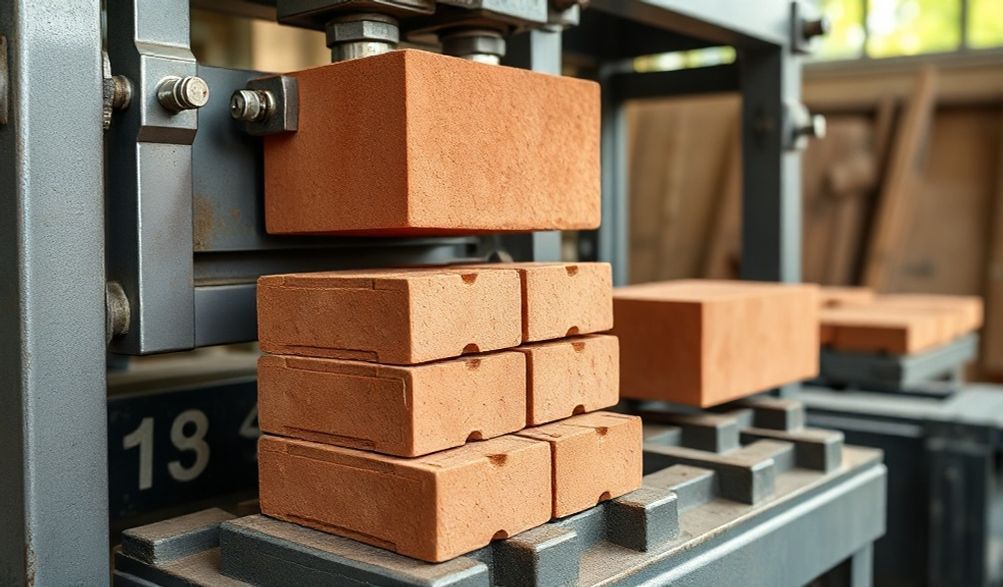
Guia Completo para a Fabricação de Máquinas de Tijolos Intertravados: Do Conceito à Construção
Imagine construir uma casa sólida e bonita sem a necessidade de argamassa cara ou pedreiros altamente qualificados. E se os próprios tijolos se encaixassem como peças de um quebra-cabeça, criando estruturas que não são apenas econômicas, mas também notavelmente resistentes? Isso não é um conceito futurista — é a realidade oferecida pelos tijolos de encaixe, um material de construção revolucionário que está mudando o jogo na construção em todo o mundo.
No cerne desta inovação está uma ferramenta poderosa: a máquina de tijolos de encaixe. Este guia é o seu roteiro abrangente. Seja você um empreendedor de olho em uma oportunidade de negócio lucrativa, um construtor em busca de métodos mais eficientes ou um entusiasta do faça-você-mesmo sonhando em construir seu próprio espaço, compreender esta máquina é o primeiro passo crucial. Desmistificaremos todo o processo, desde a função central da máquina até a parede finalizada, fornecendo a você o conhecimento necessário para tomar decisões informadas e desbloquear o potencial da construção sustentável.
O que é uma Máquina de Tijolos Intertravados?
Uma máquina de tijolos de encaixe é um equipamento especializado projetado para fabricar tijolos de construção com uma característica de design única: ranhuras e saliências integradas. Diferente dos tijolos tradicionais, que dependem inteiramente de argamassa para a ligação, esses tijolos são projetados para se encaixarem perfeitamente, criando uma estrutura estável e interligada.
Função e Princípio Central
O princípio fundamental é a compressão. A máquina, seja acionada por sistemas hidráulicos, alavancagem mecânica ou força manual, aplica uma pressão imensa a uma mistura específica de matérias-primas. Essa ação compacta solo, areia e uma pequena porcentagem de cimento em um bloco denso e sólido. A mágica acontece dentro de um molde de precisão, que molda não apenas as dimensões do tijolo, mas também seu sofisticado padrão de encaixe na parte superior, inferior e laterais. Esse processo é frequentemente chamado de fabricação de "bloco de terra comprimida" ou "bloco de solo estabilizado".
O Produto Final: Tijolos de Encaixe
Os tijolos produzidos são a estrela do espetáculo. Sua característica definidora é a capacidade de se encaixarem firmemente com tijolos adjacentes, muito parecido com blocos LEGO®. Esse design elimina a necessidade de argamassa úmida nas juntas verticais, resultando em duas grandes vantagens:
* Velocidade de Construção:As paredes sobem significativamente mais rápido, pois o mecanismo de travamento simplifica o alinhamento e reduz as etapas envolvidas na colocação de cada tijolo.
* Simplicidade na Construção:Permite um processo de construção menos intensivo em mão de obra, tornando-o acessível mesmo com mão de obra semiqualificada.
Tipos de Máquinas de Tijolos Intertravados
Escolher a máquina certa depende inteiramente da sua escala, orçamento e objetivos de produção. O mercado oferece um espectro que vai desde prensas simples movidas a energia humana até sistemas industriais totalmente automatizados.
Máquinas Manuais para Tijolos de Entrelaçamento
Estes são os pontos de entrada mais acessíveis para o mundo da fabricação de tijolos de encaixe.
* Operação:Depende inteiramente do trabalho humano, geralmente utilizando uma alavanca ou um sistema de macaco hidráulico para gerar a força de compressão.
* Saída:Ideal para produção em pequena escala, geralmente variando de 200 a 500 tijolos por dia, dependendo do operador.
* Custo e Caso de Uso:Eles são a opção mais acessível. Perfeitos para projetos de faça você mesmo, construções comunitárias, startups muito pequenas ou para produzir tijolos para uma única casa. Seu baixo custo e portabilidade são seus maiores pontos fortes.
Máquinas de Tijolos de Bloqueio Semi-Automáticas
Esta categoria atinge um equilíbrio entre automação e custo, oferecendo uma melhoria significativa na eficiência da produção.
* Operação:Essas máquinas geralmente apresentam um sistema hidráulico elétrico ou a diesel que automatiza o ciclo de compressão. O carregamento da matéria-prima e a remoção do tijolo acabado ainda podem ser manuais.
* Saída: Can produce between 1,000 to 3,000 bricks per 8-hour shift, ensuring much greater consistency than manual models.
* Custo e Caso de Uso: A mid-range investment suited for small to medium businesses, construction companies, or social housing projects that require reliable, higher-volume output.
Fully Automatic Interlocking Brick Machines
These are the powerhouses of interlocking brick production, designed for maximum output with minimal manual intervention.
* Operação: Fully computerized systems that automate the entire process: feeding raw material, mixing (if integrated), compression, molding, and even stacking the finished bricks on pallets.
* Saída: Designed for large-scale commercial production, capable of producing 5,000 to 10,000+ bricks per day.
* Custo e Caso de Uso: Represents a major industrial investment. Ideal for established brick-making businesses, large construction firms, or entrepreneurs aiming to dominate a regional market with high-volume supply.
The Manufacturing Process: How These Machines Make Bricks
Producing high-quality interlocking bricks is a straightforward but precise process. Consistency at each stage is key to achieving strong, durable blocks.
Preparação de Matéria-Prima
The foundation of a good brick is the right mix. Not all soil is suitable.
* The Ideal Mix: A blend of approximately 60-75% sandy soil or laterite, 20-30% sharp sand, and 5-10% cement (for stabilized blocks). The exact ratio requires local testing.
* Screening & Moisture: The soil must be sieved to remove stones, roots, and organic matter. The moisture content is critical—typically around 10-12%. A simple test: the mixture should hold its shape when squeezed in your fist but crumble when poked.
The Compression and Molding Stage
This is where the machine performs its core function.
1. The prepared mix is fed into the machine’s mold box.
2. A hydraulic ram or mechanical press exerts tremendous pressure (often measured in tons) onto the material.
3. This pressure compacts the particles, eliminating air voids and creating a dense matrix.
4. Simultaneously, the mold imparts the precise interlocking shape—the tongues and grooves—onto the brick.
5. The compressed brick is then ejected, ready for curing.
Curing and Quality Control
Freshly pressed bricks are strong but need time to reach their full potential.
* Cura: The bricks are stacked and kept damp for 7-14 days. This allows the cement (if used) to hydrate fully and develop strength. Sun-drying is common, but light water sprinkling improves the cure.
* Quality Tests:
* Drop Test: Drop a cured brick from waist height onto a hard surface. A good brick should not break.
* Compression Test: More formally, bricks can be tested in a lab to determine their load-bearing capacity, which often exceeds standard fired clay bricks.
Key Benefits of Using an Interlocking Brick Machine
The advantages extend far beyond the simple brick, impacting economics, structural integrity, and the environment.
Vantagens Econômicas
- Lower Construction Costs: Drastic reduction in mortar use (up to 70% less) and the need for highly skilled masons.
- Velocidade: Walls can be laid 3-5 times faster than conventional brickwork, reducing labor costs and project timelines.
- Alto Retorno sobre o Investimento: For entrepreneurs, the low cost of raw materials (often locally sourced soil) versus the market value of finished bricks creates a healthy profit margin.
Structural and Environmental Benefits
- Earthquake Resistance: The interlocking design provides a degree of flexibility and mechanical bonding, allowing structures to better withstand seismic loads.
- Isolamento Térmico: The dense earth blocks have excellent thermal mass, keeping interiors cool in summer and warm in winter.
- Sustentabilidade: The process uses local soil, minimizes cement consumption, and requires no firing—eliminating deforestation for firewood and reducing carbon emissions.
Oportunidade Empreendedora
An interlocking brick machine can be a “business-in-a-box.” It empowers individuals to address the global need for affordable housing by producing low-cost, high-quality building materials locally. This creates jobs, stimulates local economies, and provides a tangible solution to housing deficits.
How to Choose the Right Machine for Your Needs
Selecting a machine is a crucial investment. Here’s a structured approach to making the right choice.
Avaliando Seus Objetivos de Produção
Start by asking:
* What is the scale of my primary project? (A single house, a housing estate, a commercial supply business?)
* How many bricks do I need per day or month to meet demand?
* What is my available budget, including costs for power, space, and labor?
Critical Machine Specifications to Compare
When comparing models, scrutinize these specs:
* Força de Pressão (Tonelagem): Higher tonnage (e.g., 20-ton vs. 10-ton) generally produces denser, stronger bricks.
* Brick Size/Type Capacity: Ensure the machine can produce the brick design and dimensions you intend to use.
* Fonte de Energia: Electric (clean, consistent), Diesel (good for areas with unreliable grid power), or Manual.
* Tempo de Ciclo: How many seconds/minutes to produce one brick? This directly determines your maximum output.
Supplier Evaluation for Trust
The supplier is as important as the machine itself.
* Reputation & Experience: Research the manufacturer’s history. Look for established companies with verifiable client testimonials.
* Warranty & Service: A strong warranty (1+ years on critical parts) is a sign of confidence. Crucially, ensure they offer reliable after-sales service and ready availability of spare parts.
* Transparency: A trustworthy supplier will be happy to provide detailed specifications, offer guidance on material mix, and may even provide basic operator training.
Common Challenges and Practical Solutions
Forewarned is forearmed. Here’s how to troubleshoot common issues.
Achieving Consistent Brick Quality
- Problem: Bricks are crumbly or weak.
- Solution: Check moisture content (likely too low) and compression force (may be insufficient). Re-test your soil-sand-cement ratio.
- Problem: Bricks have poor interlock or are difficult to separate from the mold.
- Solution: The mold faces may be worn or damaged and need replacement. Also, ensure the mix is not too wet.
Maintenance and Operational Tips
A little maintenance goes a long way.
* Daily: Clean all parts of residual material. Check hydraulic hoses for leaks.
* Weekly: Lubricate all moving parts as per the manual. Inspect the mold for wear.
* Segurança: Always wear gloves and safety glasses. Never place hands in the compression area during operation.
Sourcing and Managing Raw Materials
Consistency in input equals consistency in output.
* Test Locally: Before committing to a large purchase, conduct compression tests on bricks made from your intended local soil source.
* Batch Preparation: Prepare raw material mixes in consistent, large batches to maintain uniform quality throughout production.
Seção de Perguntas Frequentes
Q: Can interlocking bricks be used for load-bearing walls?
A: Absolutely. When produced with the correct stabilized mix (containing cement or lime) and compressed to proper standards, interlocking bricks achieve compressive strengths that meet or exceed requirements for load-bearing walls in low-rise construction. Always consult or follow regional building codes.
Q: What is the typical cost range for an interlocking brick machine?
A: The range is vast. Manual presses can start from $500 – $2,000. Semi-automatic machines typically range from $3,000 – $15,000. Fully automatic production lines can cost from $20,000 to over $100,000, depending on capacity and automation level.
Q: Do I need special training to operate the machine?
A: While the operation is generally straightforward, basic training is essential for safety, maintenance, and ensuring brick quality. Any reputable supplier should provide operational training upon installation. The learning curve is much shorter than for traditional brick-making techniques.
Q: Are buildings made with interlocking bricks durable in all climates?
A: They are highly durable. In very wet or rainy climates, it is standard and recommended practice to apply a protective plaster, render, or exterior cladding. This shields the walls from direct, prolonged water erosion, ensuring centuries of longevity, much like any other earth-based construction.
Q: Is this a profitable business?
A: Yes, it can be highly profitable due to the low cost of raw materials and high global demand for affordable building solutions. Profitability depends on key factors: conducting thorough local market research, maintaining strict quality control, managing operational costs efficiently, and implementing sound business and marketing practices.
Conclusão
Interlocking brick machine making represents more than just a piece of machinery; it embodies a smarter, more sustainable approach to construction. It democratizes the ability to build, turning local earth into durable shelters and entrepreneurial dreams into tangible businesses.
The journey to success rests on three pillars: understanding the different types of machines and where you fit in, mastering the simple yet precise manufacturing process, and making a careful, informed investment in the right equipment from a trusted partner. Use this guide as your foundational blueprint. Let it empower you to take the next step—to research further, connect with reputable experts, and ultimately, to build something lasting, both for yourself and your community.
<