
O Guia Definitivo para Máquinas de Blocos de Solo Comprimido: Construa de Forma Sustentável
Introdução
Imagine um mundo onde a própria terra sob seus pés pode ser transformada nas paredes de uma casa segura, durável e acessível. Enquanto a comunidade global enfrenta uma dupla crise de escassez de habitação e o impacto ambiental da construção convencional, essa visão não é mais um sonho utópico. É uma realidade prática, impulsionada por uma peça de tecnologia engenhosa: amáquina de bloco de solo comprimido.
Este guia é o seu recurso abrangente sobre esta tecnologia transformadora. Seja você um construtor em busca de métodos sustentáveis, um empreendedor explorando um negócio verde, uma ONG planejando um projeto comunitário ou simplesmente um indivíduo ecologicamente consciente, esta visão geral especializada fornecerá insights acionáveis. Vamos desmistificar como ummáquina de bloco de solo comprimidofunciona, explore seus benefícios profundos e forneça o conhecimento prático para selecionar e usar um com eficácia. Ao final, você entenderá como essa ferramenta está revolucionando a construção, um bloco de cada vez.
O que é uma Máquina de Blocos de Solo Comprimido? A Tecnologia Central Explicada
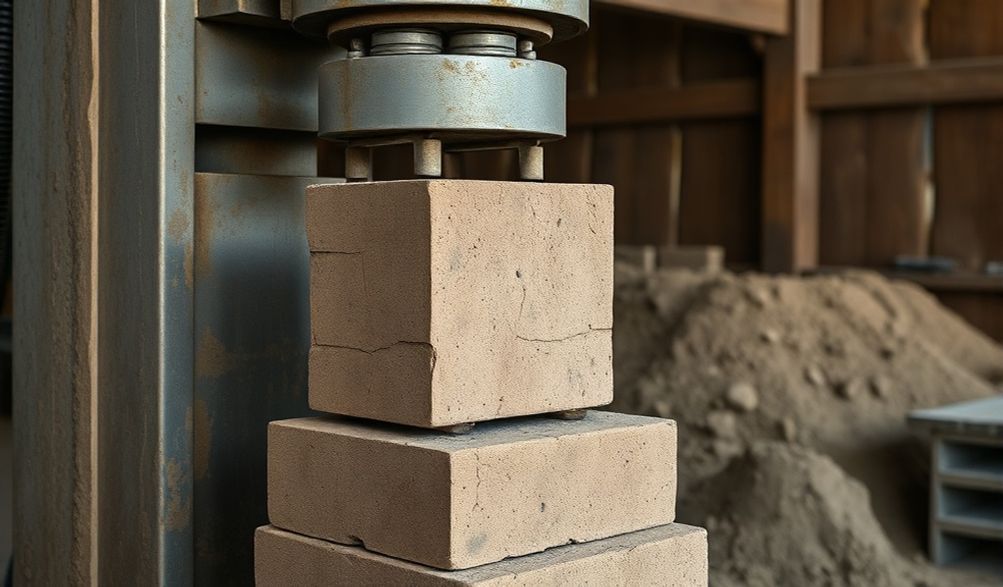
Em sua essência, uma máquina de blocos de solo comprimido (BSC) é uma prensa mecânica ou hidráulica projetada para compactar solo de origem local — frequentemente misturado com uma pequena quantidade de estabilizante — em blocos de construção incrivelmente densos e uniformes. Ela conecta a sabedoria construtiva ancestral com a engenharia moderna, oferecendo uma alternativa superior tanto aos tradicionais tijolos de barro quanto aos tijolos queimados ou blocos de concreto, que consomem muitos recursos.
Definindo a Máquina e o Bloco
The machine produces what are formally known as Compressed Stabilized Earth Blocks (CSEBs). Unlike sun-dried adobe, which relies on slow air drying, CSBs are created through instant, high-pressure compaction. This process yields blocks with significantly higher compressive strength and dimensional consistency. Compared to fired bricks, CSBs require no kiln, burning zero fossil fuels and releasing zero carbon emissions during production. The resulting blocks are a testament to lean, efficient, and low-impact manufacturing.
The Basic Principle of Operation
The operation of a CSB machine is elegantly simple, often following a four-step cycle:
- Preparação do Solo: Properly sieved and moistened soil (with or without stabilizer) is prepared.
- Filling the Mold: This mixture is loaded into the machine’s mold cavity.
- Applying High Pressure: A ram or piston applies immense pressure (measured in tons), compressing the soil particles into a solid, cohesive mass.
- Ejecting the Finished Block: The newly formed block is ejected onto a pallet, ready for curing.
A key innovation in many modern machines is the production of interlocking block designs. These blocks have grooves and tongues that allow them to fit together like puzzle pieces. This design drastically reduces or even eliminates the need for mortar in wall construction, speeding up building time, saving material costs, and increasing structural stability.
Key Benefits of Using a Compressed Earth Block Machine
Adopting CSB technology unlocks a powerful array of advantages spanning environmental, economic, and structural domains.
Vantagens Ambientais e de Sustentabilidade
- Ultra-Low Carbon Footprint: The process eliminates the energy-intensive firing of kilns. The primary input is local soil, resulting in minimal embodied energy.
- Sustainable Construction: It uses subsoil, which is typically a waste product from foundation excavation, turning a problem into a resource.
- Eco-Friendly Building Materials: No toxic emissions, no deforestation for fired bricks, and the blocks are 100% recyclable back into the earth.
Economic and Practical Benefits
- Radically Cost-Effective Building: The main raw material—soil—is often free or very cheap. Transportation costs are minimized when using on-site or locally sourced earth.
- Driver of Low-Cost Housing Projects: Ideal for community-led builds, social housing initiatives, and self-build projects, putting construction control back into local hands.
- Entrepreneurship & Job Creation: A single machine can form the basis of a small block-making enterprise, creating local jobs in production and construction.
Structural and Performance Qualities
- Alta Resistência à Compressão: Properly stabilized and compacted blocks can match or exceed the strength of conventional fired clay bricks.
- Massa Térmica Superior: Earth blocks absorb heat during the day and release it slowly at night, naturally regulating indoor temperatures and slashing heating/cooling costs.
- Inherently Fire-Resistant Blocks: Being made of mineral soil, they are completely non-combustible, offering excellent fire safety.
- Moisture Regulation: The micro-porous structure of earth blocks allows them to “breathe,” absorbing and releasing ambient humidity, which can improve indoor air quality.
Types of Compressed Soil Block Machines: Choosing the Right Press
Selecting the right machine depends entirely on your project scale, budget, and production goals.
Manual / Lever-operated Machines
- Melhor Para: Small-scale projects, DIY builders, community workshops, NGOs with limited budgets.
- Operação: Relies on human power via a long lever to generate compression force.
- Saída: Lower production (e.g., 100-300 blocks per day), but highly portable and affordable.
- Prós: Low cost, no electricity needed, easy maintenance, perfect for skill-building.
Semi-Automatic (Electro-Mechanical) Machines
- Melhor Para: Small-to-medium enterprises (SMEs), housing developers, and larger community projects.
- Operação: Uses an electric motor to drive a mechanical press, often with a conveyor system for easier operation.
- Saída: Medium production (e.g., 300-800 blocks per day).
- Prós: Good balance of output and cost, more consistent block quality than manual presses, reduces operator fatigue.
Fully Automatic Hydraulic Machines
- Melhor Para: Commercial-scale production for block yards supplying large construction sites.
- Operação: Utilizes a hydraulic system for high, consistent pressure. Features automated feeding, pressing, and stacking.
- Saída: High-volume production (e.g., 1000+ blocks per day).
- Prós: Highest output and block uniformity, requires minimal manual labor per block.
- Contras: Highest capital investment, requires reliable electricity, more complex maintenance.
Mobile vs. Stationary Units
An additional consideration is mobility. While most machines are stationary, some are mounted on trailers or trucks. Mobile CSB machines offer the unique advantage of producing blocks directly on the construction site, eliminating block transportation entirely and allowing for real-time adjustments to soil mix.
Critical Factors Before You Buy or Use a CSB Machine
Success with CSB technology hinges on preparation and informed decision-making.
Soil Testing and Stabilization: The Foundation of Success
This is the single most important step. Not all soil is suitable.
* Soil Suitability Test: You need the right blend of clay (as a binder), silt, and sand/gravel. Simple field tests (like the drop and ribbon tests) and lab analysis can determine this.
* Estabilização: Most blocks require a stabilizer for durability and water resistance. The most common is estabilização com cimento (typically 5-10% by volume). Lime stabilization is another eco-option, especially for certain clay types. Stabilization is what transforms raw earth into a durable, weather-resistant building material.
Machine Specifications to Scrutinize
When evaluating machines, look beyond the price tag:
* Força de Compressão: Measured in tons. Higher pressure generally produces denser, stronger blocks (e.g., 10-ton vs. 20-ton press).
* Block Production Capacity: Understand blocks per hour/day under realistic conditions.
* Block Dimensions & Mold Options: Check available mold sizes and shapes (solid, interlocking, etc.).
* Build Quality & Support: Prioritize robust, welded steel frames and manufacturers who offer training, spare parts, and technical support.
Total Project Cost Analysis
The machine cost is just one part of the equation. A realistic budget must include:
* Soil testing fees
* Cost of stabilizer (cement/lime)
* Auxiliary equipment: soil sieve, mechanical mixer, wheelbarrows, pallets
* Labor for operation and curing management
* Space for block production and the 28-day curing period
Step-by-Step: How to Produce Quality Compressed Earth Blocks
Phase 1: Material Preparation
- Source & Sieve: Excavate soil from below the topsoil layer. Sieve it through a 10mm mesh to remove stones and organic matter.
- Determine Mix Design: Based on soil tests, calculate the correct percentage of stabilizer (e.g., 7% cement).
- Mix Thoroughly: First mix the dry soil and stabilizer until uniform. Then, add water gradually to achieve optimal moisture content (usually around 10-12%). The mix should hold its shape when squeezed without crumbling or dripping.
Phase 2: Machine Operation & Block Production
- Safety First: Wear gloves, safety glasses, and sturdy boots.
- Load the Mold: Fill the machine’s mold cavity with the prepared mix, often using a measured scoop for consistency.
- Apply Pressure: Engage the press (via lever, button, or pedal) to compact the soil. Hold pressure for a moment.
- Eject Block: Carefully eject the green block onto a prepared, level pallet. Handle it gently, as it gains strength over time.
Phase 3: Curing and Quality Control
- Curing is Crucial: Stack blocks under a shaded, covered area (e.g., with plastic sheeting). Keep them damp by sprinkling water 2-3 times a day for the first week. Full curing for maximum strength takes 21-28 days.
- Simple Quality Test: After 28 days, you can perform a simple field test: soak a block in water for 24 hours. A well-stabilized block should remain intact and strong.
Applications and Building Potential of Compressed Earth Blocks
From Homes to Institutions
CSBs are a versatile, code-compliant building material used worldwide in:
* Single and multi-story residential homes.
* Schools, clinics, and community centers.
* Hotels, offices, and institutional buildings.
* Disaster-resistant and humanitarian shelter construction.
Beyond Walls: Architectural Versatility
The use of CSBs extends far beyond load-bearing walls:
* Boundary Walls & Landscaping: For beautiful, durable garden walls and retaining walls.
* Architectural Features: Vaults, domes, and arches are possible with certain block shapes.
* Interior Partition Walls: Providing excellent acoustic and thermal separation inside conventional buildings.
Frequently Asked Questions (FAQ) About Compressed Soil Block Machines
Q1: What is the typical compressive strength of a stabilized compressed earth block?
A: With proper stabilization (e.g., 5-10% cement), compressive strengths typically range from 3 MPa to over 10 MPa. For context, many building codes require a minimum of 3-5 MPa for load-bearing walls. Strength depends directly on soil quality, stabilizer type/percentage, and compaction pressure.
Q2: Are compressed earth blocks suitable for rainy or cold climates?
A: Yes, with proper detailing. Stabilization (especially with cement) provides water resistance. Critical design elements include:
* A strong, protruding roof overhang (e.g., 600mm+).
* A raised, damp-proof foundation.
* A protective exterior plaster coating.
Their high massa térmica is actually a major benefit in cold climates, storing passive solar heat.
Q3: Can I start a business with a compressed soil block machine?
A: Absolutely. Many successful small businesses are built around CSB production. Key steps include:
* Assessing local demand and competition.
* Selecting the right machine scale (semi-automatic is a common starting point).
* Mastering soil mix design and quality control.
* Marketing blocks to local builders, developers, and self-builders.
Be sure to research and comply with any local building material standards.
Q4: How does the cost compare to conventional fired bricks or concrete blocks?
A: While the machine and stabilizer have upfront costs, CSBs can be 20-40% cheaper than conventional materials in total. The savings come from:
* Free/very low-cost raw material (soil).
* Drastically reduced transportation if soil is on-site.
* Potential for mortar-less construction with interlocking blocks.
The economic advantage grows with project scale and local material scarcity.
Q5: Do I need special skills to operate the machine?
A: Operating the press mechanism itself is simple and can be learned in hours. The true “skill” lies in the preparatory and follow-up stages: soil selection, mix design, moisture control, and curing management. These are easily learned through hands-on training, which many manufacturers or NGOs provide.
Conclusão
Amáquina de bloco de solo comprimido stands as a powerful testament to the possibility of sustainable, affordable, and resilient construction. It is not a fringe technology but a proven, engineered solution with decades of successful application across diverse climates and cultures. By turning abundant local earth into high-quality building blocks, it empowers communities, reduces environmental impact, and creates durable, healthy buildings.
The journey from interest to implementation is clear. Your next steps could be to conduct a simple soil test on your land, connect with international networks like the Auroville Earth Institute or local sustainable building associations for training, or request detailed quotations from reputable machine manufacturers. By embracing technologies like the CSB machine, we actively participate in building a more self-reliant, ecological, and equitable world—starting from the ground up.
<