
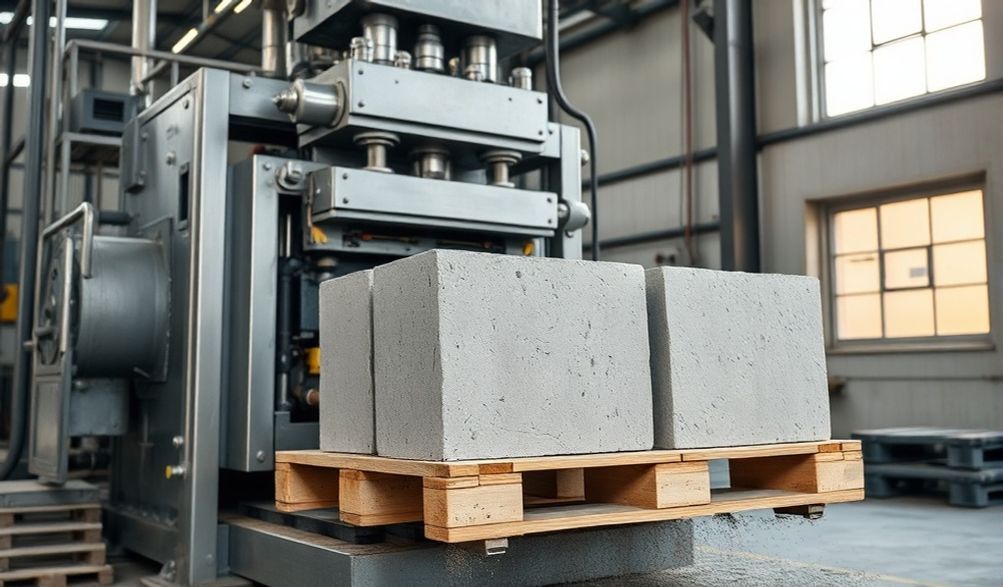
The Ultimate Guide to Solid Block Making Machines: Types, Prices & How to Choose
Introdução
Every builder, contractor, and entrepreneur knows the struggle: securing a consistent, high-quality, and affordable supply of solid concrete blocks. Delays, cost overruns, and variable material quality can derail even the best-planned construction project. In today’s fast-paced building environment, relying on manual labor or unpredictable suppliers is a risk few can afford.
The modern, efficient answer to this age-old challenge is the solid block making machine. This powerful equipment transforms raw materials—cement, aggregate, sand, and water—into precise, durable building blocks at a scale and speed impossible to achieve by hand. For those looking to take control of their supply chain, reduce costs, or even start a profitable block manufacturing business, this machine is the foundational investment.
This comprehensive guide is built on industry expertise, deep technical knowledge, and practical field insights. Our goal is to demystify the process and provide you with a clear, actionable roadmap. By the end, you will understand the different types of machines, their key features, realistic investment ranges, and a step-by-step framework to select the perfect machine for your specific needs, budget, and ambitions.
What is a Solid Block Making Machine? Core Function and Benefits
At its core, a solid block making machine is a device that automates and mechanizes the production of concrete blocks. It replaces the labor-intensive, inconsistent process of hand-filling molds with a system designed for repeatability, strength, and efficiency.
Princípio Básico de Funcionamento
The operation, while sophisticated in engineering, follows a logical sequence:
1. Mistura: Raw materials are combined in the correct proportions, either manually fed or via an automated pan mixer.
2. Alimentação e Compactação: The mixed concrete is fed into a mold (or molds) on the machine. A combination of high mechanical vibrationepressão hidráulica compacts the material, forcing out air pockets and ensuring dense, uniform compaction.
3. Ejeção: The freshly formed, solid block is then ejected from the mold onto a pallet or the factory floor.
4. Cura: The blocks are moved to a curing area, where they gain strength over days through controlled moisture and temperature.
Vantagens Principais em Relação aos Métodos Manuais
- Consistência e Qualidade Inigualáveis: Every block produced is identical in dimension, density, and texture. This leads to straighter walls, less mortar use, and structurally sound buildings. Machines achieve the precise compaction needed for high compressive strength, often exceeding standard requirements.
- Dramatically Increased Production Speed: A single semi-automatic machine can produce hundreds of blocks per hour. A fully automatic plant can produce thousands. This throughput is simply unattainable with manual labor.
- Redução Significativa de Custos a Longo Prazo: While the initial investment is higher, the per-block cost plummets. Savings come from reduced labor, minimal material waste, and the economies of scale in bulk raw material purchasing.
- Eficiência Laboral e Redução do Esforço Físico The machine handles the heaviest work—compaction and molding. This reduces the workforce needed and minimizes the risk of injury associated with manual block making.
- Versatility in Block Design and Size: Many machines allow for quick mold changes, enabling the production of various solid block sizes (e.g., 4-inch, 6-inch, 8-inch) and even other products like hollow blocks or pavers with additional attachments.
Types of Solid Block Making Machines Explained
Choosing the right type of machine is your first critical decision. The market caters to everyone from small homesteaders to industrial manufacturers.
By Operation: Manual, Semi-Automatic, and Fully Automatic
- Máquinas Manuais: These are the most basic and affordable entry point. Operators manually fill the mold, engage a lever for compaction (often using a flywheel mechanism), and then release the block. They are ideal for very small-scale projects, rural areas with limited power, or as a proof-of-concept for a new business. Production output is low and physically demanding.
- Máquinas Semiautomáticas: This category represents the “sweet spot” for most small to medium-sized enterprises (SMEs) and growing contractors. Key processes like vibration and compaction are powered (by electricity or diesel), but the feeding of raw material and removal of finished blocks is handled by an operator. They offer an excellent balance between output (300-1000 blocks per hour), investment cost, and operational control. In practice, this is where most businesses find the best return on investment.
- Máquinas Totalmente Automáticas: These are complete production plants. They feature computerized control panels, automatic material batching and feeding systems, conveyor belts, and block stackers. Human intervention is minimal, primarily for monitoring and maintenance. Designed for large-scale commercial production (1500+ blocks per hour), they require a significant capital investment, dedicated space, and reliable utilities. They are the choice for established block manufacturing businesses supplying the wider market.
By Mobility: Stationary vs. Mobile Block Making Machines
- Máquinas Estacionárias: These are set up in a fixed location, typically a dedicated production yard or factory. They are generally more robust, offer higher production capacities, and are the standard for most operations. They require a prepared foundation and access to stable power.
- Máquinas Móveis: Mounted on a trailer or wheels, these units can be towed directly to a large construction site. The primary benefit is producing blocks on-demand, right where they are needed, eliminating transport costs for the finished blocks. They are perfect for large infrastructure projects, remote locations, or companies that move between major sites.
By Block Output Per Cycle: Single, Double, or Multiple Block Machines
This specification directly ties to your production goals.
* Single Block Machines: Produce one block per machine cycle. Simpler and often more affordable, suitable for very low-volume needs.
* Double or Multiple Block Machines: The mold is designed to produce 2, 3, 4, or more blocks with every cycle. This dramatically increases hourly output without necessarily requiring a vastly larger or more expensive machine. For any business-focused operation, a multi-block machine is typically the recommended starting point.
Critical Features to Analyze Before Buying
Looking beyond the basic type, these technical features determine real-world performance, durability, and cost-effectiveness.
Capacidade de Produção (Blocos Por Hora/Dia)
Don’t just look at the theoretical maximum. Consider the sustainable, day-long production rate. Match this number to your current demand plus a 25-30% growth margin. Overbuying leads to idle capital; underbuying creates bottlenecks.
Pressure and Vibration System
This is the heart of the machine, determining block strength.
* Sistema de Vibração: High-frequency, vertically mounted vibrators under the mold table are essential for proper compaction. Look for machines with durable, industrial-grade vibrator motors.
* Pressão de Compactação: Hydraulic systems provide immense, controllable pressure from above (often called “press head” pressure). The combination of vibration from below and pressure from above creates the densest, strongest blocks. The quality of the hydraulic pump, cylinders, and valves is non-negotiable.
Power Source (Electric, Diesel, Hybrid)
- Elétrico: Cleaner, quieter, and lower operating cost per hour. Requires reliable grid or generator power. The most common choice for fixed installations.
- Diesel: Offers complete independence from the power grid. Ideal for remote sites or areas with frequent outages. Higher fuel costs and maintenance are trade-offs.
- Híbrido: Provides the flexibility to switch between power sources, offering valuable redundancy.
Build Quality & Durability
The machine must withstand constant vibration and pressure. Inspect:
* Estrutura de Aço: Look for heavy-duty, reinforced steel channels and plates.
* Welding Quality: Welds should be clean, continuous, and robust. Poor welding is a primary point of failure.
* Component Brands: Recognizable brands for hydraulics, vibrators, and electrical parts often indicate better reliability and easier servicing.
After-Sales Support & Availability of Spare Parts
This is arguably the most critical trust factor. A machine is a long-term asset.
* Garantia: A comprehensive warranty (1+ years on critical parts) signals manufacturer confidence.
* Rede de Serviço: Does the supplier have trained technicians who can provide installation support and emergency repairs?
* Peças de Reposição: Ensure common wear parts (mold liners, vibrator motors, hydraulic seals) are readily available. Long lead times for parts can shut down your business for weeks.
Understanding the Investment: Solid Block Making Machine Price Range
Aviso Importante: Prices are highly variable based on region, brand, capacity, and local market conditions. The figures below are indicative ranges to establish a framework. Always request detailed quotations from multiple suppliers.
Price Breakdown by Machine Type
- Máquinas Manuais: The most accessible entry point. Prices typically range from $1,000 to $4,000. Ideal for micro-enterprises or personal use.
- Máquinas Semiautomáticas: The core of the SME market. Expect to invest between $8,000 and $30,000. The price variance here depends heavily on production capacity, level of automation (e.g., with a mixer feeder), and build quality. This is where thorough feature comparison is essential.
- Plantas Totalmente Automáticas: A major industrial investment. Prices start from $50,000 and can easily exceed $150,000 for high-capacity, turnkey systems with pallet feeders and stackers.
Beyond the Sticker Price: Total Cost of Ownership
The machine’s price is just the beginning. A savvy buyer budgets for the full picture:
* Matérias-primas: Cement, aggregates, and sand. Your location will heavily influence this cost.
* Custos Operacionais: Electricity/fuel, operator wages, routine maintenance supplies (grease, hydraulic oil).
* Installation & Infrastructure: Cost of a leveled concrete foundation, a shed or factory space, and any necessary power connections (e.g., three-phase electric lines).
* Estrutura de ROI: To calculate a simple ROI, estimate your monthly production volume, subtract your total cost per block (materials + operational overhead), and compare the gross profit to your monthly loan payment or capital cost amortization. A well-run semi-automatic operation can often see a full return on investment within 12-24 months.
How to Choose the Right Machine: A Step-by-Step Decision Matrix
Follow this experiential, five-step process to eliminate confusion and make a confident choice.
Step 1: Assess Your Block Production Requirements.
Be specific. Are you supplying your own construction projects, or selling to the market? Calculate your average daily/weekly block need. Also, decide on the primary block sizes and types (e.g., 6″ solid block) you need to produce.
Step 2: Evaluate Your Available Resources.
Take a hard look at your constraints:
* Orçamento: Include the machine, installation, and 3-6 months of working capital.
* Espaço: Do you have a suitable, accessible yard or building?
* Poder: What is available? Single-phase or three-phase electricity?
* Trabalho: Do you have or can you train a dedicated, mechanically-inclined operator?
Step 3: Research and Shortlist Reputable Manufacturers.
Look beyond glossy brochures.
* Check for business certifications and industry affiliations.
* Ask for a list of existing clients and, if possible, visit a working installation.
* A factory visit is invaluable to assess manufacturing quality firsthand.
Step 4: Compare Technical Specifications & Support.
Create a spreadsheet. Compare the shortlisted machines on:
* Production capacity (realistic BPH)
* Motor power and pressure rating
* Build specifications (steel thickness, component brands)
* Warranty period and terms
* Clarity of spare parts list and pricing
Step 5: Consider Long-Term Business Scalability.
Ask yourself: “If my demand doubles in two years, can this machine handle it, or will I need a complete replacement?” Sometimes, investing in a slightly larger capacity machine upfront is more economical than an early upgrade.
Operating and Maintaining Your Machine for Longevity
Your machine is a workhorse, but it requires proper care. Neglecting maintenance is the fastest way to incur major repair costs and downtime.
Best Practices for Daily Operation
- Use a consistent, well-proportioned concrete mix. Too wet or too dry affects block quality and can strain the machine.
- Follow the recommended cycle time. Rushing the process can lead to incomplete compaction.
- Conduct pre-start safety checks: lubricant levels, loose bolts, and clear moving parts.
Essential Preventive Maintenance Schedule
- Daily: Clean the machine thoroughly at the end of each shift, especially removing hardened concrete from the mold and table. Check hydraulic oil levels.
- Weekly: Grease all lubrication points (bearings, pivots). Inspect mold liners for wear and check the tightness of all bolts and vibrator mounts.
- Monthly: Change hydraulic oil and filters as per the manual. Conduct a detailed inspection of electrical connections and hydraulic hoses for wear.
Troubleshooting Common Issues
- Blocks Breaking Easily: Likely causes are incorrect water-cement ratio (too much water), insufficient vibration/pressure time, or low-grade cement.
- Poor Surface Finish: Often due to a worn mold liner, insufficient lubrication of the mold, or a dirty mold surface.
- Low Compaction/Weak Blocks: Check the vibrator motors for proper function. Ensure the hydraulic system is reaching its full pressure. Verify the concrete mix design.
Seção de Perguntas Frequentes
Q1: What is the average lifespan of a solid block making machine?
With proper maintenance and operation, a well-built machine from a reputable manufacturer can last 10 to 15 years or more. Critical components like vibrators and hydraulic seals will need replacement during this time.
Q2: Can one machine produce different sizes and types of blocks (e.g., hollow, paver)?
Yes, but it requires interchangeable molds. Most manufacturers offer different mold kits. Ensure the machine you purchase has the power and mold compatibility for the range of products you intend to make.
Q3: What is the typical lead time for delivery and installation?
For standard semi-automatic models, expect 4-8 weeks from order to delivery, depending on location and customization. Installation by a technician can take 2-5 days. Always confirm this timeline with your supplier.
Q4: How much skilled labor is required to operate a semi-automatic machine?
Typically, a team of 3-4 people can efficiently run a semi-automatic system: one operator managing the machine, and 2-3 helpers for material handling (feeding raw mix, removing finished blocks, and curing).
Q5: Are there any government subsidies or loans available for this machinery?
In many countries, yes. Schemes for MSMEs (Micro, Small, and Medium Enterprises), agricultural subsidies, or specific industrial development loans often cover brick and block making machinery. Check with your local industry promotion board, agricultural bank, or small business administration.
Q6: What is the most common mistake first-time buyers make?
Choosing a machine based solely on the lowest initial price, without considering production capacity, durability, and after-sales support. This often leads to higher long-term costs through downtime, frequent repairs, and an inability to meet demand.
Conclusão
Selecting the right solid block making machine is a strategic decision that hinges on balancing four pillars: your production requirements, the machine’s technical features, your investment budget, and the manufacturer’s long-term support.
The most valuable advice we can offer from years in this industry is this: never buy in a vacuum. If possible, visit a supplier’s factory and an existing customer’s working unit. Talk to current owners about their experiences. Prioritize the robustness of the machine and the reliability of the supplier over shaving a few percentage points off the purchase price. This machine is the engine of your productivity or business; it must be built to last.
Ready to move forward with confidence? Use the insights and step-by-step matrix in this guide as your blueprint. For a personalized consultation tailored to your specific project scale, location, and business goals, reach out to our team of construction machinery specialists. Let’s build a solid foundation for your success.
<