
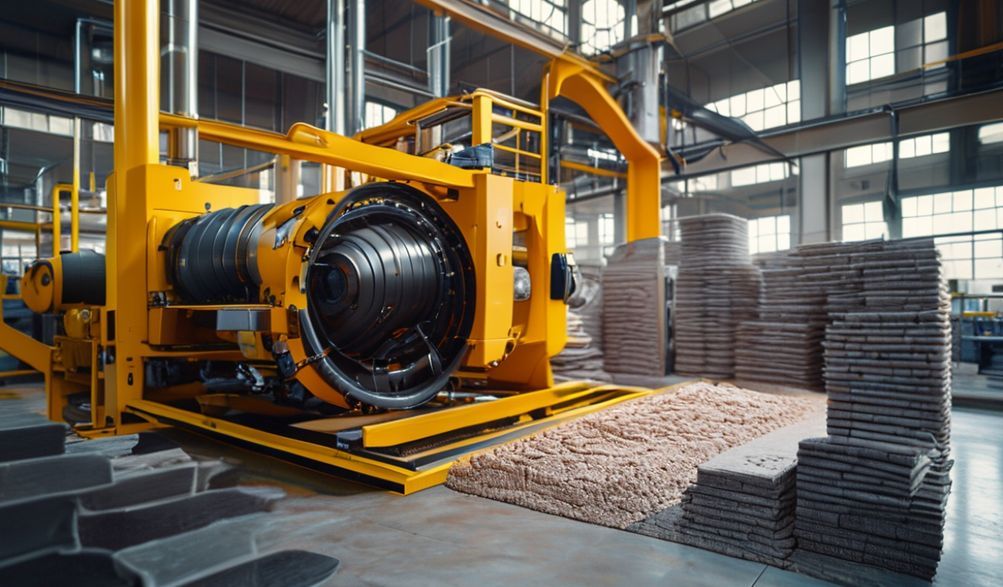
Top Fly Ash Bricks Machine Manufacturers in Gujarat: A 2026 Buyer’s Guide
Introdução
India’s construction sector is undergoing a green revolution. As the nation builds smarter and more sustainably, the demand for eco-friendly, cost-effective building materials is skyrocketing. At the forefront of this shift are fly ash bricks—a superior alternative to traditional clay bricks that utilize a waste product, reduce carbon footprint, and offer exceptional strength. And when it comes to manufacturing these bricks, the heart of the action beats in Gujarat.
Gujarat isn’t just an industrial powerhouse; it’s the epicenter for fly ash brick machinery manufacturing in India. But for an entrepreneur or business owner, navigating this dense market can be daunting. How do you choose between dozens of manufacturers? Is a lower upfront cost a wise decision, or will it lead to costly downtime later? The challenges of selecting the right partner—one that offers robust machinery, reliable after-sales service, and genuine technical support—are real and can make or break your venture.
This guide is your comprehensive solution. Built on extensive market research, analysis of industry trends, and a deep understanding of the manufacturing ecosystem, this 2026 Buyer’s Guide is designed to cut through the noise. We provide trustworthy, actionable information to help you make an informed, confident investment. Consider this your roadmap to finding a partner among the top fly ash bricks machine manufacturers in Gujarat, not just a supplier.
Why Gujarat is a Hub for Fly Ash Brick Machinery
Gujarat’s dominance in this niche industry is no accident. It’s the result of a powerful convergence of geographic advantage, industrial policy, and entrepreneurial spirit.
Proximity to Raw Materials (Fly Ash from Thermal Plants)
The primary raw material for these bricks is fly ash, a fine powder that is a byproduct of coal combustion in thermal power plants. Gujarat hosts several major thermal power stations. This abundant, local supply of the core ingredient drastically reduces raw material logistics costs for brick plants, making the entire business model more viable and profitable. Setting up your plant in Gujarat, or sourcing machinery from there, places you close to the source.
Strong Industrial Infrastructure and Manufacturing Ecosystem
From the machine tool hubs of Rajkot to the engineering excellence of Ahmedabad and Vadodara, Gujarat boasts a decades-old, deeply integrated manufacturing ecosystem. This means:
* Access to skilled labor and engineering expertise.
* A robust network of ancillary industries for components like hydraulic systems, motors, and molds.
* Efficient logistics and port connectivity for both domestic distribution and export.
Supportive State Policies for Eco-Friendly Industries
The Gujarat government has consistently promoted industries that align with sustainable development. Policies often favor waste-utilization projects like fly ash brick plants. Initiatives from the Gujarat Pollution Control Board (GPCB) and support through District Industries Centres (DICs) can facilitate easier setup, including guidance on environmental clearances and potential incentives for using industrial waste.
Fatores-Chave a Considerar Antes de Escolher um Fabricante
Your brick machine is a long-term capital asset. The right choice ensures productivity and profit for years; the wrong one can lead to endless operational headaches. Look beyond the brochure price and evaluate these critical factors.
Machine Types & Production Capacity (Fully Automatic, Semi-Automatic, Manual)
Your choice dictates your labor needs, output, and investment.
* Máquinas Manuais: Low-cost, entry-level options requiring significant manual labor for mixing, feeding, and brick removal. Suitable for very small-scale or rural operations.
* Máquinas Semiautomáticas: The most popular choice for small to medium-scale plants. They automate the critical pressing and ejection processes, ensuring consistent brick density, while mixing and raw material handling may be manual or partially automated. Offer an excellent balance of output and cost.
* Máquinas Totalmente Automáticas: High-output production lines with automated material conveying, mixing, pressing, stacking, and sometimes palletizing. Require minimal manual intervention, ensure supreme consistency, and are ideal for large-scale commercial production. The investment is significantly higher.
Quality of Components and Build Durability
A machine is only as good as its weakest part. Scrutinize:
* Sistema Hidráulico: The heart of the machine. Reputable brands of pumps, valves, and cylinders are non-negotiable for consistent pressure and longevity.
* Estrutura e Estruturação: Should be made from heavy-duty steel plates and profiles to withstand constant vibration and load without deformation.
* Qualidade do Molde: Molds should be precision-engineered from hardened steel to produce bricks with sharp edges and exact dimensions, and to resist wear.
After-Sales Service, Warranty, and Availability of Spare Parts
This is arguably the most important differentiator between a good manufacturer and a great one.
* Garantia: Look for a comprehensive warranty (typically 1-2 years) that covers major components.
* Service Network: Does the manufacturer have a dedicated service team capable of providing prompt on-site support?
* Inventário de Peças de Reposição: Ensure commonly wearing parts (seals, hoses, mold liners) are readily available. Long delays for parts mean costly production halts.
Compliance with Industry Standards and Certifications
Reputable manufacturers design their machines to comply with relevant Indian Standards (IS) for safety and performance. While a machine itself may not be “ISI marked,” its construction and output should facilitate the production of bricks that meet IS 12894:2002 (the specification for pulverized fuel ash lime bricks). Ask for test reports or certifications related to the machine’s electrical and hydraulic systems.
Cost Analysis: Investment vs. Long-Term ROI
Never buy on price alone. A cheaper machine may have:
* Lower-quality components leading to frequent breakdowns.
* Higher power consumption.
* Poor after-sales support.
Calculate the Custo Total de Propriedade. A slightly higher initial investment in a reliable machine from a reputable manufacturer almost always yields a far better return on investment through higher uptime, lower maintenance costs, and consistent brick quality.
Profiles of Leading Fly Ash Bricks Machine Manufacturers in Gujarat
Note: The following profiles are based on verifiable market presence, product range, and publicly available information. They are presented in alphabetical order for neutrality. We strongly recommend conducting your own due diligence.
Everon Impex
- Base of Operations: Ahmedabad
- Specializations & Machine Range: Known for a wide range, from manual and semi-automatic machines to fully automatic fly ash brick making plants. They also offer allied machinery like pan mixers and concrete block machines.
- Notable Clientele/Projects: They have a stated presence across India and in several international markets, suggesting a substantial client base.
- Key Strengths Highlighted: Emphasis on R&D for innovative designs, a comprehensive product portfolio to suit different scales, and a focus on export-quality machinery.
Force Engineering
- Base of Operations: Rajkot
- Specializations & Machine Range: A prominent manufacturer specializing in hydraulic construction equipment. Their range includes robust semi-automatic and fully automatic fly ash brick machines, often noted for their heavy-duty construction.
- Notable Clientele/Projects: Their machinery is used by a variety of small, medium, and large brick manufacturers across the country.
- Key Strengths Highlighted: Strong engineering background, durability-focused design, and a reputation for building machines capable of sustained high-pressure operation for optimal brick density.
The Spartan Engineering
- Base of Operations: Vadodara
- Specializations & Machine Range: Offers a focused range of semi-automatic and automatic fly ash brick making machines. They position themselves as providers of efficient, cost-effective solutions for entrepreneurs.
- Notable Clientele/Projects: Serves a pan-Indian market with a significant number of installations in Gujarat and neighboring states.
- Key Strengths Highlighted: Customer-centric approach, competitive pricing for the features offered, and a focus on providing complete plant solutions including guidance on setup.
How to Vet a Manufacturer: A Checklist
Before finalizing, go beyond the website and brochure.
1. Visiting the Factory: This is mandatory. See the production floor, the quality of materials in storage, and the assembly process. It speaks volumes about their capabilities and transparency.
2. Asking for Client References: Request contacts of at least 2-3 clients who have been using the machine for over a year. Speak to them directly about performance, brick quality, and most importantly, after-sales service responsiveness.
3. Reviewing Technical Documentation: Ask for detailed drawings, component lists with brand names, electrical and hydraulic circuit diagrams, and the operation & maintenance manual. A professional manufacturer will have these readily available.
The Technical Side: Understanding Fly Ash Brick Machine Operations
The Brick Making Process: From Raw Mix to Curing
A good machine automates and optimizes this core process:
1. Dosagem de Matéria-Prima: Fly ash, sand/stone dust, cement, and water are measured in precise ratios.
2. Mistura: A mixer (often a pan or paddle type) blends the materials into a homogeneous, semi-dry mix.
3. Alimentação e Compactação: The mix is fed into a mold cavity. A hydraulic ram applies immense pressure (typically 80-120+ tons) to compact the mix into a dense brick.
4. Ejeção: The freshly pressed brick is ejected onto a pallet or conveyor.
5. Cura: Bricks are stacked and kept moist for 14-28 days to gain strength through hydration, before being ready for sale.
Essential Features of a Good Machine
- Hydraulic Pressure & Control: Consistent and high hydraulic pressure is key to brick strength. Look for systems with precise pressure control and gauges.
- Nível de Automação: Defines labor needs and output consistency. Semi-auto is the sweet spot for many. Full automation is for high-volume output.
- Mixer Efficiency: A good mixer ensures a uniform mix, which is critical for consistent brick quality and color. It should be powerful enough to handle the designed batch size.
Maintenance Best Practices for Longevity
- Daily: Clean the machine thoroughly, especially the mold area. Check hydraulic oil levels and for any leaks.
- Weekly/Monthly: Grease all moving parts as per the manual. Tighten bolts and check electrical connections.
- Annually: Change hydraulic oil and filters. Get a comprehensive check-up by a technician from the manufacturer.
The Business Case for Fly Ash Brick Plants in Gujarat
Market Demand and Growth Potential
The push for green building materials (driven by regulations and consumer preference) is relentless. Fly ash bricks are mandated for use in certain government and infrastructure projects. The replacement market for traditional bricks is enormous, ensuring strong, sustained demand.
Government Incentives and Subsidies Available
While specific schemes change, Gujarat often has policies supporting:
* Waste-to-wealth projects under pollution control norms.
* MSME subsidies for plant setup through DICs.
* Soft loans from state financial corporations for eco-friendly industries.
* Always verify the latest schemes directly with the Gujarat Pollution Control Board (GPCB) and your local District Industries Centre (DIC).
Cost Savings Compared to Traditional Clay Bricks
- Matéria-Prima: Fly ash is a waste product, often available at minimal cost.
- Energy: The process doesn’t require fossil fuel-fired kilns, saving significantly on coal or gas.
- Taxes: Some states offer tax benefits for eco-friendly products.
- Qualidade: Higher strength and uniformity can reduce mortar consumption and improve construction speed.
Perguntas Frequentes (FAQ)
Q1: What is the approximate price range for a fly ash brick machine in Gujarat?
A1: Prices vary dramatically. A basic manual machine can start from ₹2-3 lakhs. Semi-automatic machines typically range from ₹8 lakhs to ₹25 lakhs. Fully automatic production lines can cost from ₹30 lakhs to well over ₹1 crore, depending on capacity and automation level. Always get detailed, itemized quotes.
Q2: What is the typical production output of a semi-automatic machine?
A2: A standard semi-automatic machine can produce between 2,000 to 6,000 bricks per 8-hour shift, depending on its cycle time, mold cavity count (e.g., 4, 6, 8 bricks per cycle), and operational efficiency.
Q3: How important is after-sales service, and what should it include?
A3: It is critical. Expect it to include: installation supervision or guidance, comprehensive training for your operators, a clear warranty period covering major defects, and a reliable supply chain for genuine spare parts. Prompt troubleshooting support is invaluable.
Q4: Are there any specific subsidies for setting up a fly ash brick plant in Gujarat?
A4: Subsidy schemes are updated periodically. The most reliable sources are the official portals of the Gujarat Pollution Control Board (GPCB) and your local District Industries Centre (DIC). They can provide information on capital subsidies, interest subventions, or other support for environmentally beneficial projects.
Q5: What raw material mix (fly ash, cement, sand ratio) is commonly used?
A5: A common starting mix is approximately 60-65% fly ash, 20-25% sand/stone dust, 8-12% cement, and water. However, the optimal mix depends heavily on the characteristics of your local fly ash and sand. Your machine supplier should provide technical support to help you determine the best, most cost-effective mix for your specific materials.
Conclusão
Choosing the right fly ash bricks machine manufacturer in Gujarat is a strategic decision that forms the foundation of your business. As this guide has outlined, success hinges on a balanced evaluation of machine quality, manufacturer reputation, and the depth of after-sales support—looking at total value, not just the initial price tag.
We recommend using this guide as a starting point to shortlist 3-4 manufacturers whose profiles align with your scale and budget. From there, embark on a thorough due diligence process: schedule factory visits, speak to existing clients, and scrutinize technical proposals. This investment in research is your best insurance against future operational challenges.
Remember, this guide is built on expert analysis and market insights to provide an unbiased foundation for your decision. However, it is not a substitute for professional technical consultation. We encourage you to engage with manufacturers, ask detailed questions, and potentially consult with an independent engineer before finalizing your investment.
Your next step is to turn research into action. Reach out to the shortlisted manufacturers for detailed quotations and project reports. Consider visiting industry expos in Gujarat to see machines in operation. With careful planning and the right partner from Gujarat’s vibrant manufacturing landscape, your fly ash brick plant can be a profitable and sustainable venture for years to come.
<