
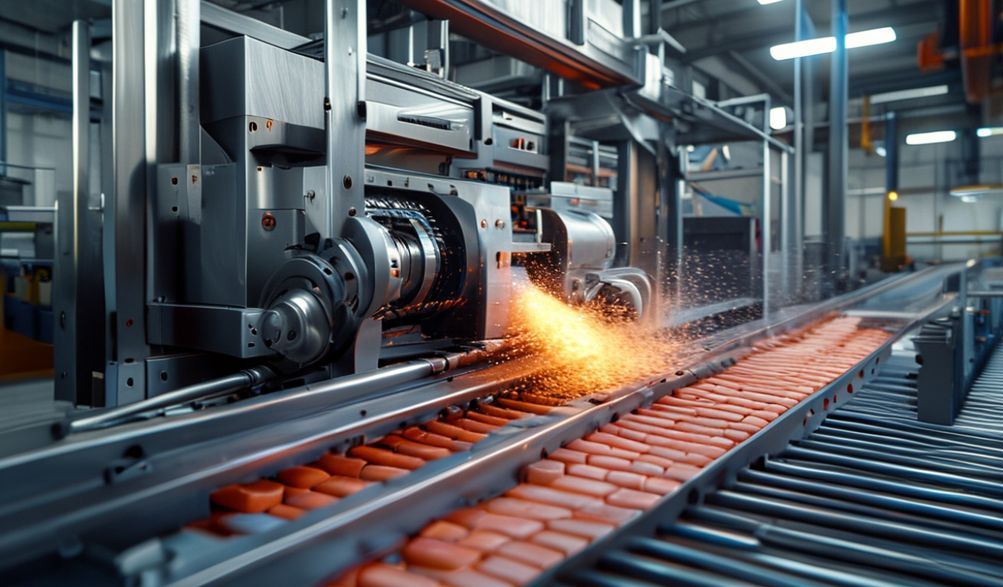
Your Ultimate Guide to Brick Machine Manufacturers: Spotlight on FUDA Brick Making Factory
Introdução
The global construction industry is in a perpetual race—against time, budgets, and environmental impact. At the heart of this race lies a fundamental demand: sustainable, efficient, and cost-effective building materials. Bricks, a timeless component of our built environment, are no exception. Today, the revolution isn’t in the brick itself, but in how it’s made. Automated brick production is transforming local economies and construction sites, turning raw, often waste materials, into precise, durable building blocks at unprecedented speeds.
However, for builders, contractors, and entrepreneurs, sourcing the right production engine—the brick making machine—is fraught with challenges. Many face the pitfalls of inconsistent machine quality, hidden operational costs, debilitating downtime, and a critical lack of technical support. These issues don’t just delay projects; they can sink investments.
The solution lies not just in purchasing a machine, but in partnering with the right brick machine manufacturer. This partnership is the cornerstone of a successful brick-making venture. In this landscape, names like the Fábrica de tijolos FUDA emerge as significant players. This guide serves as an expert, unbiased resource. We will dissect the critical role of manufacturers, establish a framework for evaluation, and apply that framework to FUDA as a case study. Our goal is to equip you with the knowledge to make an informed decision, whether you are considering FUDA or any other manufacturer in the global market.
The Role of Brick Machine Manufacturers in Modern Construction
Choosing a brick machine is not a simple equipment purchase; it’s selecting the industrial heart of your operation. The manufacturer you choose becomes a long-term partner in your productivity and profitability.
From Manual Labor to Automated Production
For centuries, brick-making was synonymous with back-breaking labor—molding, drying, and firing were slow, inconsistent, and highly dependent on skill and weather. The advent of mechanization, and later full automation, changed everything. Modern manufacturers have engineered systems that deliver:
- Consistência Inigualável: Every brick meets exact dimensional and compressive strength tolerances.
- Dramatic Efficiency: Output can scale from hundreds to tens of thousands of bricks per hour.
- Flexibilidade do Material: Advanced machines can process diverse raw materials, from traditional clay to eco-friendly fly ash, cement, and soil.
Key Benefits of Partnering with a Reputable Manufacturer
A credible manufacturer provides far more than a metal machine. They offer an ecosystem of value:
- Garantia de Qualidade: In-house engineering and rigorous testing protocols ensure machine durability and performance.
- Access to Technology: You benefit from ongoing R&D in hydraulics, vibration, and control systems.
- Treinamento Abrangente: Proper setup and operation are taught, maximizing your team’s effectiveness from day one.
- Long-Term Support: A reliable supply of genuine spare parts and accessible technical support minimizes costly downtime.
Types of Brick Machines: An Overview
Understanding the basic categories is essential before evaluating any manufacturer. Machines are typically defined by:
- Operation Principle: Hidráulico (high pressure for precision), Pneumatic (air pressure), or Vibração (for compaction).
- Nível de Automação: Manual (operator-dependent), Semi-Automático (automated compression, manual handling), Totalmente Automático (robotic handling from raw material to finished pallet).
- Mobilidade: Stationary plants for high-volume fixed sites vs. fabricantes de blocos móveis for on-site production.
- Matéria-Prima: Machines are specifically engineered for argila, concreto (cement & aggregate), or cinzas volantes (eco-friendly).
Essential Criteria for Choosing a Brick Machine Manufacturer
Armed with foundational knowledge, you can now critically assess any manufacturer. Use these criteria as your due diligence checklist.
Assessing Manufacturing Expertise & Experience
A company’s history is a proxy for its stability and accumulated knowledge.
* Histórico: How long have they been designing and building machines? A decade-plus often indicates refined designs.
* Investimento em P&D: Do they have a dedicated engineering team? Can they discuss technological improvements in recent models?
* In-House Capability: Manufacturers that control core processes (fabrication, assembly, painting) typically ensure better quality control than pure assemblers.
Qualidade e Tecnologia da Máquina
Look beyond the sales brochure to the engineering substance.
* Build Materials: The frame should use high-grade, reinforced steel. Thinner, low-quality steel will warp under constant stress.
* Sistemas Centrais: Investigate the brand and specifications of the hydraulic pump and cylinders (the machine’s “muscles”) and the Sistema de controle PLC (its “brain”).
* Eficiência Energética: Modern drives and well-designed hydraulic circuits consume less power, directly reducing your operating costs.
* Safety Features: Emergency stops, protective guards, and system overload protections are non-negotiable.
Product Range & Customization
A broad portfolio signals engineering depth and market understanding.
* Alcance: A manufacturer offering everything from small manual machines to fully automated lines can grow with your business and likely understands different market segments.
* Personalização: Your local raw materials or desired brick size (e.g., non-standard) may require adjustments. Can they modify mold designs, pressure settings, or feeding systems?
After-Sales Service & Support Network
This is the most critical, yet most frequently underestimated, factor.
* Instalação e Comissionamento: Will they send an engineer to ensure the machine is installed correctly and producing quality bricks from the start?
* Treinamento: Is comprehensive, hands-on training included for both operation and basic maintenance?
* Garantia: What is covered (parts, labor)? How long does it last? What are the claim procedures?
* Peças de Reposição: Is there a dedicated parts department? What is the typical shipping time for critical components?
Spotlight: A Deep Dive into FUDA Brick Making Factory
Let’s apply the established criteria to a specific player in the market: FUDA. This analysis is based on publicly available information and industry positioning.
Company Profile & Industry Standing
FUDA is a China-based manufacturer of construction machinery, with the Fábrica de tijolos FUDA specializing in brick and block making equipment. The company positions itself as an integrated enterprise involved in development, production, and sales. They typically highlight:
* Export Focus: A significant portion of their business is geared towards the international market, with machines exported to regions like Africa, Southeast Asia, and South America.
* Certificações: Many of their machines carry CE certification, indicating compliance with European health, safety, and environmental standards, which is a key consideration for export-oriented buyers.
* Escala: They present as a medium to large-scale factory with in-house production capabilities for core components.
Core Product Portfolio Analysis
FUDA’s product range covers several common machine types, which allows them to address various customer needs:
* Máquinas de Blocos de Concreto: These are a staple, including semi-automatic and fully automatic models. Capacities can range from lower-output models (e.g., 2,000-4,000 blocks per 8-hour shift) to higher-capacity automatic lines.
* Máquinas de Prensas Hidráulicas: For producing high-density, precision bricks and pavers. These often feature strong hydraulic systems for high pressure.
* Máquinas de Blocos Móveis: Smaller, often manual or semi-automatic machines designed for on-site production, useful for small-scale projects or startups.
* Raw Material Focus: Their machines are commonly engineered for standard concrete mixes (cement, sand, aggregate) and fly ash.
Technological Innovations & Strengths
In their communications, FUDA emphasizes several key selling points:
* Robust Structure: They often stress the use of heavy-duty steel plates and reinforced welding in the machine frame for longevity.
* Hidráulica de Alta Pressão: Many models are promoted for their strong compaction force, leading to bricks with high compressive strength.
* User-Friendly Design: Features like adjustable molding heads, easy mold changes, and simplified control panels are highlighted to reduce the skill barrier for operators.
* Custo-Efetividade: They are frequently positioned in the market as offering a balance between functionality and price, making automation more accessible.
Understanding the FUDA Customer Journey
A typical engagement might follow this path:
1. Inquiry & Needs Analysis: Customer provides basic requirements (output, brick type, raw materials).
2. Quotation & Proposal: FUDA recommends a machine model and provides a detailed quote (often FOB price).
3. Customization Agreement: If needed, details for custom molds or minor modifications are finalized.
4. Production & Pre-Shipment Testing: The machine is built and tested at the factory. Customers are sometimes invited to witness this.
5. Envio e Logística: Arranged as per Incoterms (FOB, CIF, etc.).
6. Support: Offers typically include installation guides, video manuals, and remote support. The scope of on-site installation and training should be explicitly confirmed in the contract.
Making an Informed Decision: FUDA vs. The Broader Market
This section provides a balanced perspective to aid your final decision-making process.
Potential Advantages of Choosing FUDA
Based on their market positioning, potential strengths include:
* Preços Competitivos: They can offer attractive price points for the level of automation and output provided.
* Export Readiness: Experience in shipping and handling international documentation for a global clientele.
* Gama de Produtos: A catalog that serves both entry-level and medium-scale production needs.
* Emphasis on Durability: The focus on robust construction in their messaging addresses a primary concern about machine lifespan.
Considerations and Due Diligence
Regardless of the manufacturer, rigorous verification is paramount.
* Request Customer References: Ask FUDA, or any maker, for 2-3 client contacts in a region similar to yours. Speak to them directly about performance, support, and hidden issues.
* Factory Visit (Highly Recommended): If feasible, visit the Fábrica de tijolos FUDA. Inspect the production floor, quality control processes, and the build quality of machines in progress.
* Specification-to-Specification Comparison: Don’t just compare model names. Compare the detailed tech specs: motor power, hydraulic pressure, cycle time, steel thickness, and component brands.
* Clarify All Costs: Understand the final landed cost. What is included (spare parts kit, molds)? What are the shipping, insurance, and import duty implications?
Questions to Ask Any Manufacturer (Including FUDA)
Arm yourself with this checklist during negotiations:
1. “What is your exact lead time from deposit to shipment?”
2. “Can you provide a video of this exact model running under load in your factory?”
3. “What are the top three wear parts, their expected lifespan, and their cost?”
4. “What are the terms for on-site installation and training? Is it included, or at an extra cost?”
5. “What is the protocol for technical support? Do you offer remote diagnostics via video call?”
6. “What is your warranty process? Who pays for return shipping if a major part fails?”
FAQ: Brick Machine Manufacturers and FUDA
Q1: What is the average price range for a brick making machine from manufacturers like FUDA?
A: Prices vary dramatically. A small manual machine can start from $3,000 – $7,000. A robust semi-automatic model may range from $15.000 – $40.000. Fully automatic production lines can range from $50,000 to over $200,000, depending on capacity and sophistication. Always get a formal, detailed quote based on your specific output requirements.
Q2: How do I ensure the machine is suitable for the raw materials in my country?
A: This is crucial. Before finalizing any purchase, you must send 20-50kg samples of your local raw materials (soil, sand, fly ash, etc.) to the manufacturer. They should conduct lab tests and possibly trial production to calibrate the machine’s settings (water ratio, pressure, vibration frequency) for optimal results.
Q3: What kind of training and installation support does a typical manufacturer offer?
A: Standard support often includes detailed paper manuals, video guides, and remote assistance via WhatsApp or video call. For larger machines, on-site installation and training by a factory engineer may be offered, sometimes included in the price or as a separate service. Negotiate and specify this clearly in your contract.
Q4: Can FUDA, or similar manufacturers, customize a machine for a specific brick design?
A: Yes, reputable manufacturers almost always offer custom mold fabrication. You provide the brick dimensions and design drawings. There will be an additional cost and a longer lead time for the mold production and testing. Discuss this upfront.
Q5: What are the most common maintenance issues and how can I prepare?
A: Common wear parts include:
* Moldes: The internal liners wear down over time.
* Hydraulic Seals & Hoses: Subject to constant pressure and can leak.
* Vibration Motor Bearings: High-vibration environments cause fatigue.
Prepare by ordering a recommended “spare parts kit” with your machine and establishing a relationship with the manufacturer’s parts department for future orders.
Conclusão
Selecting a brick machine manufacturer is a strategic decision that forms the foundation of your brick production success. It requires a careful balance of evaluating technical expertise, machine quality, and the invaluable safety net of after-sales support. As we’ve explored, manufacturers like the Fábrica de tijolos FUDA represent a segment of the market that offers competitive, export-ready solutions, particularly for those seeking a balance of durability and value.
The ultimate choice, however, must be yours, grounded in your unique project requirements, budget, and the thorough due diligence this investment deserves. Use the criteria and questions outlined here as your framework. Consult with multiple suppliers, insist on references and factory visits, and read every line of your contract. By doing so, you transform from a buyer into an informed partner, ready to build a successful and sustainable brick-making operation.
<