
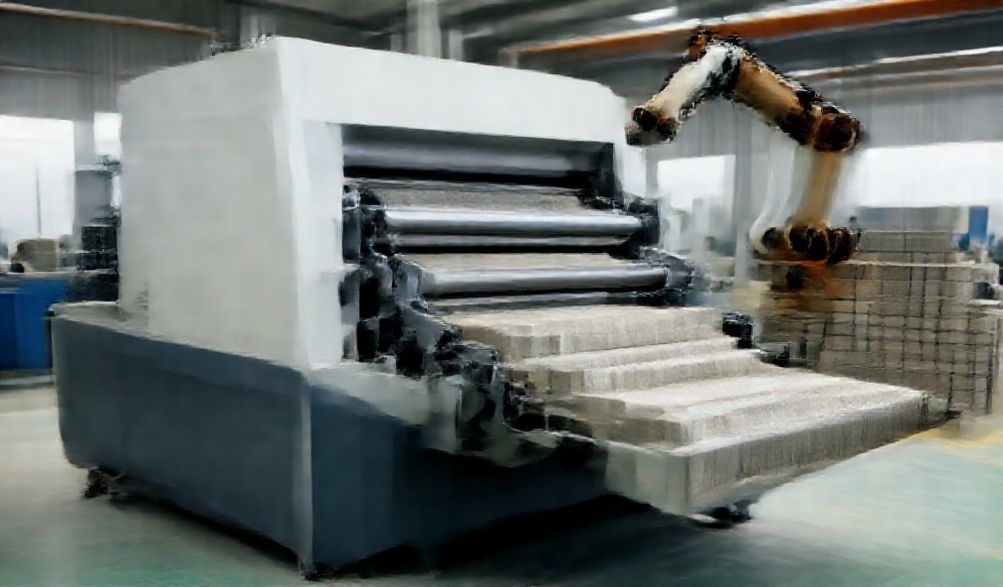
Seu Guia Definitivo para Escolher um Fabricante de Máquina de Fabricação de Tijolos de Cinzas Volantes na China
Introdução
A indústria global da construção está passando por uma revolução verde. À medida que a sustentabilidade passa de um termo da moda para uma necessidade empresarial, os tijolos de cinza volante emergiram como um pilar da construção ecológica. Feitos a partir de um subproduto da geração de energia a carvão, esses tijolos oferecem resistência superior, isolamento térmico e uma pegada de carbono drasticamente reduzida em comparação aos tijolos de barro tradicionais. Mas para construir esse futuro sustentável, você precisa do maquinário certo. É aqui que entra o epicentro da manufatura global: a China.
Para um comprador, navegar pelo vasto cenário de fabricantes chineses pode ser assustador. Como distinguir entre um parceiro respeitável e uma mera empresa comercial? O preço mais baixo é uma armadilha? Como garantir um suporte pós-venda confiável a milhares de quilômetros de distância? Os desafios de avaliar a verdadeira qualidade, verificar a credibilidade e garantir valor de longo prazo são reais e podem transformar um investimento promissor em uma dor de cabeça cara.
Este guia foi desenvolvido para ser sua bússola definitiva. Iremos além das etiquetas de preço superficiais e nos aprofundaremos nos fatores críticos que definem uma parceria de sucesso. Ao focar em expertise técnica, integridade de produção e suporte abrangente, você poderá identificar e colaborar com confiança com um fabricante chinês de máquinas para fabricação de tijolos de cinzas volantes de alto nível. Os insights a seguir são baseados em práticas de aquisição da indústria, análise técnica e uma visão clara do que é necessário para ter sucesso na aquisição internacional de equipamentos.
Por que adquirir máquinas de tijolos de cinza volante da China?
Escolher um destino de fornecimento é uma decisão estratégica. A dominância da China nesse setor não é acidental; é o resultado de décadas de desenvolvimento industrial focado. Aqui está o motivo pelo qual ela continua sendo a escolha principal para empresas em todo o mundo.
Escala e Capacidade de Fabricação
O ecossistema de produção da China é incomparável. Para a máquina de blocos de cinzas volantes, isso significa:
* Cadeias de Suprimento CompletasDesde aço de alta qualidade e componentes hidráulicos de precisão até sistemas CLP e motores, tudo está disponível em clusters industriais interconectados. Isso reduz prazos de entrega e custos.
* Alta Capacidade de Produção: Whether you need a single machine or a complete production line, Chinese factories are built for scale. This capacity also allows for efficient customization.
* Evolution Through Demand: Having supplied machines globally for decades, manufacturers have iterated designs to suit diverse raw materials (fly ash, slag, sand) and market requirements (from dense blocks to porous bricks).
Custo-Benefício Sem Compromissos
The “China price” advantage is often misunderstood. It’s not just about lower labor costs.
* Economias de Escala: Massive production volumes spread fixed costs (like R&D and tooling) across more units, benefiting every buyer.
* Advanced Manufacturing Techniques: Leading factories employ CNC machining, robotic welding, and automated assembly lines. This increases precision while controlling costs, allowing investment in better core components.
* Proposta de Valor: You are not just buying cheap; you are accessing advanced engineering and efficient production at a competitive total cost of ownership.
Adopção e Inovação Tecnológica
Today’s leading Chinese manufacturers are tech-driven. They are integrating features that define modern, profitable plants:
* Automation & Robotics: Fully automatic lines feature robotic arms for stacking and palletizing, minimizing labor and maximizing consistency.
* IoT and Smart Monitoring: Newer models come with systems that allow remote monitoring of production data, machine health, and predictive maintenance alerts via smartphone or computer.
* Design Eficiente em Energia: Innovations in hydraulic systems (like variable frequency drives) and vibration motors significantly reduce electricity consumption, a major operational expense.
Key Criteria for Evaluating a Manufacturer
A manufacturer’s website might look impressive, but true due diligence requires digging deeper. Use these criteria as your evaluation checklist.
Technical Expertise and R&D Capability
The engine of a great manufacturer is its engineering team.
* Engenharia Interna: Prefer manufacturers with their own R&D and design departments. This ensures direct control over quality and the ability to solve unique technical challenges.
* Active R&D Investment: Ask about their recent improvements. Are they developing faster cycle times, lower-energy systems, or new brick profiles? Continuous innovation is a key indicator.
* Tecnologia Proprietária: Patents or unique technological solutions (e.g., a specific vibration compaction system, a proprietary hydraulic circuit) signal deep expertise and a commitment to leading the market.
Production Capacity and Quality Control
A factory tour (virtual or physical) tells the real story. Look for:
* Certificações: ISO 9001 for quality management systems is a fundamental baseline. CE certification indicates design compliance with European safety standards, a good sign of build quality.
* QC Processes: Quality should be checked at every stage: material inspection, machining, welding, assembly, and final performance testing. Ask for their QC protocol.
* Component Brands: Reputable manufacturers use internationally recognized components for critical parts. Look for brands like Siemens or Mitsubishi for PLCs, Schneider or ABB for electrical systems, and Rexroth or Yuken for hydraulic pumps. This ensures reliability and easier spare parts sourcing globally.
Machine Performance and Specifications
Move beyond glossy brochures to hard data. Your technical inquiry should demand clarity on:
* Core Metrics: Production output (bricks per hour, shifts per day), pressing force (in tons), and cycle time (seconds per brick).
* Flexibilidade: What range of brick sizes (e.g., hollow blocks, solid blocks, pavers) can the standard machine produce? What is the process and cost for custom molds?
* Nível de Automação: Does it require 10 workers or 2? Match the automation level to your available labor and investment budget.
* Eficiência Operacional: Request data on energy consumption (kW per cycle) and noise levels. Efficient machines have a lower long-term operational cost.
After-Sales Service and Support
This is where partnerships are made or broken. Scrutinize their support structure:
* Garantia: A standard warranty is 12-18 months for the whole machine, with 1-2 years for the hydraulic system and mainframe. Read the terms—what is excluded?
* Suporte Técnico: Is support available in your time zone? Do they offer remote diagnostics? What is their target response time?
* Peças de Reposição: Guarantee the availability of spare parts for a minimum of 10 years. Ask about their parts supply chain and typical shipping times for your region.
* Commissioning & Training: Will they send an engineer for installation and commissioning? Is operator training provided at their factory or on your site? Clarify all associated costs.
A Deep Dive into Machine Types and Selection
Choosing the right machine type is crucial for your ROI. Your selection should be driven by your target production volume, budget, and labor scenario.
Fully Automatic Fly Ash Brick Making Machines
The pinnacle of efficiency for large-scale operations.
* Ideal Para: High-volume commercial plants, government infrastructure projects, and businesses focusing on maximum output with minimal manual intervention.
* Principais Características:
* Fully automated material feeding, pressing, curing, and brick stacking/palletizing.
* Centralized PLC control panel for easy operation and parameter setting.
* High-pressure hydraulic systems (often 150+ tons) for producing high-density, load-bearing bricks.
* Integrated conveyor systems and robotic handling units.
Semi-Automatic Fly Ash Brick Making Machines
The smart choice for balancing investment and capability.
* Ideal Para: Medium-scale businesses, entrepreneurs scaling up from manual operations, and markets with moderate labor costs.
* Principais Características:
* Automated core functions like pressing and ejection, but manual feeding of raw material or manual stacking of green bricks.
* Significant output improvement over manual machines with a lower capital outlay than fully automatic lines.
* Greater operational flexibility and easier maintenance.
Manual / Mobile Fly Ash Brick Machines
The gateway to the fly ash brick business.
* Ideal Para: Small startups, community-based projects, on-site production for specific construction projects, and testing market viability.
* Principais Características:
* Lowest upfront cost and simple, mechanical operation.
* High mobility—some models can be towed directly to a construction site.
* Lower output, but excellent for understanding the production process with a manageable investment.
Navigating the Procurement Process Successfully
A structured procurement process mitigates risk and sets the stage for a smooth transaction.
Effective Communication and Requirement Clarification
Clarity prevents costly misunderstandings.
* Create a Technical Inquiry (TI) Sheet: This should include your local raw material analysis (fly ash, sand, cement ratios), desired brick type/specifications, target daily output, available factory space, and local power voltage (e.g., 380V/50Hz or 440V/60Hz).
The Importance of Factory Audits and Sample Visits
Seeing is believing.
* Virtual Factory Tour: A live video walkthrough of the workshop, assembly line, and testing area is a non-negotiable first step.
* Brick Sample Testing: Request the manufacturer to produce bricks using a raw material formula similar to yours. Have these samples tested for compressive strength, water absorption, and dimensional accuracy at a local lab. The machine’s capability is proven by its output.
Understanding Logistics, Shipping, and Customs
Plan for the journey from their factory floor to yours.
* Incoterms: Understand your responsibilities. FOB (Livre a Bordo) means you own the goods and handle costs/risks once they’re loaded on the ship in China. CIF (Custo, Seguro e Frete) means the supplier arranges and pays for shipping to your nearest port. FOB is generally recommended for greater control.
* Parceria com um Agente de Carga: A reliable forwarder handles complex logistics, customs clearance, and final inland delivery to your door.
Payment Terms and Contract Safeguards
Protect your investment with clear agreements.
* Standard Payment Terms: A common and balanced term is 30% deposit via T/T (bank transfer), 70% balance against copy of Bill of Lading. This shares the risk between buyer and seller.
* The Contract is Key: Ensure the final, signed Proforma Invoice (PI) or commercial contract includes all technical specifications, warranty details, delivery timeline, and agreed payment terms. This document is your legal safeguard.
Common Pitfalls to Avoid When Sourcing from China
Forewarned is forearmed. Steer clear of these frequent mistakes.
Choosing Based on Price Alone
The cheapest machine is often the most expensive in the long run.
* Custos Ocultos: Inferior steel, low-grade hydraulics, and poor machining lead to frequent breakdowns, high maintenance costs, excessive downtime, and a short machine lifespan. Calculate Custo Total de Propriedade, not just purchase price.
Overlooking After-Sales Service
A machine without support is a liability.
* Verify Support Networks: Does the manufacturer have a history of servicing machines in your region? Do they have local agents or partners? A supplier unwilling to discuss detailed service plans is a major red flag.
Vague Contracts and Specifications
Verbal promises have no value in international trade.
* Document Everything: If a feature, a specific component brand, or a performance metric was promised during negotiations, it must be written into the contract. Ambiguity favors the seller if disputes arise.
FAQ: China Fly Ash Brick Machine Manufacturers
Q1: What is the average lead time for a machine from China?
A: For standard models, expect 25 to 40 days from receipt of deposit to shipment. Customized machines or complete production lines can take 45 to 70 days. Always confirm this in writing.
Q2: Can manufacturers provide customized molds for special brick designs?
A: Absolutely. Most reputable manufacturers have in-house mold workshops. To get an accurate quote, provide detailed CAD drawings or precise dimensions (length, width, height, web thickness) of your desired brick design.
Q3: How do I verify a manufacturer’s legitimacy and reputation?
A: Conduct a multi-point check:
* Business License: Request it and verify via official channels.
* Platform Verification: If using B2B sites like Alibaba, check their verification level and years as a Gold Supplier.
* Client References: Ask for contact information for 2-3 clients in your region or a similar market. Follow up with them.
* Case Studies: Review detailed project reports or videos from past installations.
Q4: What is the typical warranty, and what does it cover?
A: A standard warranty is 12 months from the date of shipment or commissioning. It typically covers defects in material and workmanship. Critical components like the hydraulic power pack and mainframe may have 18-24 months of coverage. Crucially, the warranty often excludes wear-and-tear parts (like molds), damage from improper operation, or use of non-specified raw materials.
Q5: Do manufacturers offer training for our operators?
A: Yes, leading manufacturers do. Training is often conducted at their factory during commissioning for the machine buyers. For an additional fee, they can also send engineers to your site for installation supervision and on-site training for your entire team—a highly recommended service for first-time buyers.
Conclusão
Sourcing a fly ash brick making machine from China is a significant step toward building a profitable and sustainable business. The journey involves understanding the strategic advantages of the Chinese market, applying rigorous and technical evaluation criteria to potential partners, carefully selecting the machine type that matches your business goals, and meticulously managing the procurement and logistics process.
Remember, the most successful outcomes are built on partnerships, not just transactions. By conducting thorough due diligence, communicating with precision, and choosing a manufacturer that demonstrates a commitment to your long-term success through robust engineering and reliable support, you lay a foundation as solid as the bricks you will produce.
Your Next Step: Use this guide as your actionable checklist. Prepare your detailed project requirements and technical inquiry sheet. Then, start structured conversations with a shortlist of 3-5 manufacturers who meet the benchmarks outlined here. Ask the hard questions, request the evidence, and move forward with confidence.
<