
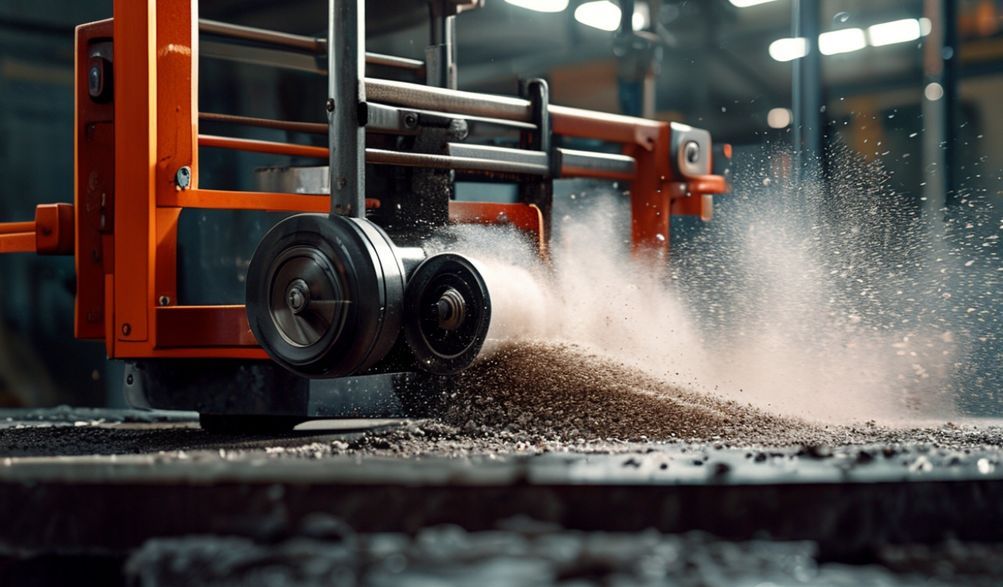
Полное руководство по цементным машинам для кирпича: типы, применение и как выбрать
Введение
В мире строительства и производства эффективность и экономическая целесообразность — это не просто цели, а основа успеха. Будь вы подрядчиком, стремящимся оптимизировать проект, предпринимателем, запускающим кирпичный бизнес, или энтузиастом, воплощающим мечту о дворе своими руками, задача универсальна: как производить качественные, однородные строительные материалы, не разоряясь и не тратя уйму времени? Ответ всё чаще кроется в ключевой технологии — машине для производства цементных кирпичей.
Гораздо больше, чем простой инструмент, эти машины олицетворяют эволюцию каменной кладки, превращая сырье в точные и долговечные кирпичи и блоки благодаря сочетанию давления, вибрации и автоматизации. Это всеобъемлющее руководство основано на технических характеристиках, прямых данных производителей и десятилетиях коллективного опыта отрасли. Наша цель — развеять тайны вокруг этого важного оборудования, предоставив вам авторитетные знания, необходимые для понимания его работы, оценки его потенциала и принятия уверенного, обоснованного решения об инвестициях, соответствующих вашим конкретным потребностям.
Что такое кирпичная цементная машина? Основная функция и эволюция
По своей сути, термин «машина для производства цементных кирпичей» охватывает целый ряд оборудования, предназначенного для одной ключевой функции: формования смеси цемента, заполнителей (таких как песок или гравий) и часто воды в твердые, стандартизированные кирпичи или блоки. Это достигается за счет приложения значительной уплотняющей силы — посредством гидравлического давления, механической вибрации или их комбинации — к сырью в форме. В результате получается плотный, однородный продукт, готовый к отвердеванию и использованию в строительстве.
Определение технологии
Хотя название указывает на работу с цементом, современные машины универсальны. Исходный материал, известный как "смесь", может варьироваться. Наиболее распространена смесь на основе цемента, но многие машины также спроектированы для работы с грунтом (для производства прессованных земляных блоков), золой-уносом (экологичным побочным продуктом) или даже дроблеными переработанными строительными отходами. Роль машины заключается в придании этой смеси необходимой структурной целостности, создавая строительный компонент, единообразный по размеру, форме и прочности — чего практически невозможно достичь в крупных масштабах при чисто ручном труде.
От ручного до полностью автоматического
Путь развития технологии изготовления кирпича — это история возрастающей точности и уменьшающихся физических затрат.
* Эпоха Ручного Управления:Началось всё с простых немеханизированных деревянных или стальных форм. Рабочие вручную утрамбовывали смесь в форму, уплотняли её и затем снимали опалубку. Производительность была низкой, качество — нестабильным, а сам процесс — изнурительным.
* Механический скачок:Введение рычажных, а затем и гидравлических машин стало революцией. Эти системы использовали механическое преимущество для приложения значительно большего и более стабильного давления, производя более прочные кирпичи с меньшими усилиями.
* Эпоха Автоматизации:Сегодня спектр варьируется от полуавтоматических машин (где оператор запускает цикл) до полностью автоматизированных установок. Эти передовые системы объединяют смешивание, транспортировку, формование и укладку, часто управляемые программируемыми логическими контроллерами (ПЛК). Достигаемые преимущества огромны: экспоненциальный рост производительности, практически идеальная стабильность и значительное сокращение затрат на прямой труд.
Типы машин для производства цементных кирпичей: Подробный обзор
Выбор подходящего оборудования начинается с понимания его категорий. Ваш выбор будет фундаментально определять производственные мощности, модель труда и масштабируемость бизнеса.
Ручные станки для производства блоков/кирпичей
- Операция: These are the simplest mechanical presses. An operator fills a mold by hand, then uses a manual lever or a small hydraulic pump (often hand-operated) to apply compaction force. The brick is then ejected manually.
- Идеально подходит для: Extremely small-scale projects, DIY homesteaders, community initiatives in low-resource settings, or producing specialty bricks in very low volumes.
- Плюсы: Very low initial cost, minimal maintenance, no power requirement for purely manual models, portability.
- Минусы: Very low output (50-200 bricks per day), highly labor-intensive, brick quality heavily dependent on operator skill and consistency.
Semi-Automatic Brick Machines
- Операция: This category strikes a crucial balance. Typically, an operator feeds material into the hopper and may place pallets or initiate the cycle. The machine then automates the core functions: mixing (if equipped), vibrating, compacting hydraulically, and ejecting the finished block. Popular models include egg-laying mobile block makers.
- Идеально подходит для: Small to medium-sized businesses (SMBs), contractors producing blocks for specific projects, and entrepreneurs entering the commercial brick market.
- Плюсы: Good output (500-3000 bricks per 8-hour shift), significantly less labor per brick than manual machines, consistent quality, moderate investment cost.
- Минусы: Requires a steady operator, output is still limited compared to full automation, often requires a power source (electric or diesel).
Полностью автоматизированные заводы по производству кирпича
- Операция: These are industrial production lines. Raw materials are automatically batched and mixed, then conveyed to a central press (like a stationary block machine). The entire process—filling molds, high-pressure compaction, ejection, curing, and stacking—is sequenced and controlled by a computer. They often include integrated pallet feeders and stackers.
- Идеально подходит для: Large-scale commercial brick manufacturers, industrial construction projects, and government housing initiatives requiring massive, consistent output.
- Плюсы: Very high output (10,000+ bricks per shift), minimal manual labor, exceptional consistency and brick density, high level of process control.
- Минусы: High capital investment, significant space and utility (three-phase power) requirements, need for more skilled maintenance.
Специализированные машины
Beyond the automation spectrum, machines are designed for specific outputs:
* Стационарные блок-машины: High-production machines that produce blocks in a fixed location, with blocks transported away on pallets.
* Mobile Brick Machines (“Egg-Layers”): Semi-automatic machines that produce and deposit blocks directly onto the ground, moving forward as they work. Ideal for on-site production.
* Product-Specific Presses: Machines dedicated to manufacturing paving slabs, interlocking locking blocks (for dry-stack walls), hollow blocks, or curved bricks.
Key Components & How a Brick Cement Machine Works
Understanding the core components demystifies the machine’s operation and helps you assess build quality when comparing models.
The Essential Parts
- Хоппер: The receptacle where raw materials (dry mix or with added water) are loaded.
- Mixer (Optional on basic models): A rotating chamber or pan that ensures a homogeneous blend of cement, aggregate, and water before compaction.
- Плесень или смерть: The heart of the machine. This is a precision steel box that defines the brick’s shape, size, and surface texture. Interchangeable molds allow one machine to produce different block types.
- Система уплотнения: This is the “muscle.” It can be:
- Hydraulic Rams: Use fluid pressure to apply immense, controlled force (measured in tons) to the mix in the mold.
- Вибростенд: Uses high-frequency vibrations to settle and partially compact the mix, often used in conjunction with some pressure.
- Система управления: Ranges from simple lever valves on manual machines to touchscreen PLC panels on automatic ones, governing the production cycle.
- Рамка: The heavy-duty steel structure that must withstand constant stress and vibration without deformation.
The Production Cycle Step-by-Step
Let’s follow the process in a typical semi-automatic hydraulic machine:
1. Кормление: The prepared mix is loaded into the machine’s hopper.
2. Дозирование и наполнение: A measured amount of mix is dropped or fed into the empty mold cavity below.
3. Уплотнение: The hydraulic ram descends into the mold, applying immense pressure (e.g., 150-300 tons) to the mix. Simultaneously, vibration may be activated to remove air pockets and ensure even density.
4. Выброс: After a brief hold under pressure, the ram retracts. The mold opens or rises, and the newly formed, solid block is pushed out onto a waiting pallet or the ground.
5. Курение: This critical post-production step is not done by the machine. The green bricks are moved to a curing area where they are kept moist (often by covering with plastic sheeting) for several days. This allows the cement to fully hydrate and gain strength, a process essential for durability.
Ключевые факторы для выбора подходящего оборудования
Selecting a machine is a strategic decision. Here’s a framework based on practical field experience.
Оценка ваших производственных потребностей
- Выходная мощность: Be brutally realistic. Calculate your average daily or weekly brick requirement. Is it for a single house (small-scale), a housing development (medium-scale), or a continuous supply business (large-scale)? Machine specs list output per hour—factor in setup, maintenance, and operator breaks.
- Тип и размер кирпича: What are you making? Standard solid blocks, hollow blocks for insulation, or decorative pavers? Ensure the machine you choose offers (or can be fitted with) the appropriate mold.
- Масштаб проекта и сроки выполнения: A short-term project might favor a mobile machine for on-site production to eliminate transport costs. A long-term business demands a stationary, durable workhorse.
Источник питания и эксплуатационные расходы
- Электрические модели: Cleaner, quieter, and generally cheaper to run per hour in areas with stable grid power. Require correct voltage (often 3-phase for larger models).
- Дизельные модели: Offer complete independence from the grid, crucial for remote sites. Higher fuel cost per hour and require ventilation for exhaust.
- Гибридные модели: Offer flexibility, but complexity. Consider not just the machine price, but the total cost of ownership: energy/fuel consumption, expected maintenance costs, and part availability.
Quality of Output & Machine Durability
- Brick Quality: Request sample bricks from a shortlisted machine. Check for sharp edges, consistent dimensions, and high density. A good brick should have a clear “ring” when struck.
- Machine Build: Inspect the frame welding (should be clean and robust), the grade of steel used, and the brand of critical components like hydraulic pumps, valves, and motors. Reputable brand parts, while sometimes more expensive upfront, offer far greater reliability and easier servicing.
Budget & ROI Considerations
The cheapest machine is often the most expensive in the long run. Balance initial investment against:
* Productivity: A $10,000 machine making 1000 bricks/day is a worse investment than a $15,000 machine making 2500 bricks/day if you can utilize the output.
* Продолжительность жизни: A machine built with inferior steel may fail in 2-3 years, while a quality machine can last 10-15+ with proper care.
* Growth Potential: Can the machine handle a 20% increase in demand, or would you need to replace it entirely? Slightly over-specifying can be a wise strategy.
Top Applications & Industries for Brick Machines
The versatility of this technology drives its adoption across a wide spectrum.
Construction Companies & Contractors
For producing blocks directly on the construction site. This eliminates transport costs for heavy materials, reduces breakage, and allows for just-in-time production, optimizing cash flow and logistics.
Brick Manufacturing Businesses
The core asset for any venture selling bricks, blocks, or pavers commercially. The choice of machine directly defines product range, capacity, and competitive pricing.
DIY Enthusiasts & Community Projects
Empowering individuals and communities to build their own structures—from garden walls and sheds to small homes—using locally sourced materials. Manual and small semi-automatic machines are popular in this space.
Sustainable Construction
Brick machines are key to green building. They enable the production of Сжатые земляные блоки (CEB) using stabilized soil, a low-embodied-energy material. They can also utilize industrial by-products like fly ash or recycle construction debris into new building blocks.
Maintenance, Safety, and Best Practices
A machine is a long-term partner. Proper care ensures safety, longevity, and consistent output.
Routine Maintenance Checklist
- Ежедневно: Clean all mix residue from the hopper, mold, and frame. Check hydraulic fluid levels and look for leaks. Inspect bolts and fittings for tightness.
- Weekly: Grease all moving pins and bearings as per the manufacturer’s manual. Check wear parts like mold liners and ram seals.
- Monthly: Perform a more thorough inspection of hydraulic hoses, electrical connections, and vibration motor mounts.
Common Troubleshooting Issues
- Poor Brick Quality (Crumbling): Usually indicates incorrect mix proportions (too little cement or too much water) or insufficient compaction pressure.
- Bricks Sticking in Mold: Often caused by a worn or damaged mold, lack of mold release agent (often just water or a light oil), or an overly wet mix.
- Hydraulic System Overheating: Check fluid level and cleanliness. Ensure the hydraulic cooler (if equipped) is not clogged with dust.
Essential Safety Protocols
- PPE is Non-Negotiable: Safety glasses, steel-toed boots, and hearing protection (especially around vibration tables) are mandatory.
- Lockout/Tagout (LOTO): Before any cleaning, adjustment, or maintenance, the machine must be powered down and its energy source (electrical, hydraulic) isolated and locked.
- Обучение: No one should operate the machine without thorough training on its specific controls and emergency stop procedures. Never bypass safety guards or interlocks.
FAQ: Your Brick Cement Machine Questions Answered
Q1: What is the average cost range for a brick cement machine?
Prices vary dramatically. Basic manual presses start around $1,000 – $3,000. Productive semi-automatic machines range from $5,000 to $25,000. Fully automatic production lines begin at $50,000 and can exceed $250,000 for large, sophisticated plants.
Q2: Can I use a brick machine with soil instead of cement?
Yes, for Сжатые земляные блоки (CEB). However, the soil must be properly stabilized, often with a small percentage (5-10%) of cement or lime, to achieve weather resistance and durability. Not all cement-based machines are optimal for soil; some are specifically designed as earth presses.
Q3: How much space is needed to operate and store the machine?
For a semi-automatic mobile machine, plan for an operational area of at least 20×30 feet to allow for material storage, brick stacking, and curing. A full plant may require a small warehouse. Always consult the machine’s footprint and workflow specifications.
Q4: What is the typical lifespan of a quality brick making machine?
With proper maintenance and reasonable usage, a well-built machine using quality components can last 10 to 20 years. The mold and other wear parts will need replacement more frequently, but the main frame and systems should endure.
Q5: Are there any specific skills required to operate a semi-automatic machine?
No formal degree is needed, but a good operator needs mechanical aptitude, attention to detail for mix proportions, and consistency in operation. Basic troubleshooting skills (like identifying a loose bolt or a leaking hose) are invaluable for minimizing downtime.
Заключение
Navigating the world of brick cement machines is about aligning powerful technology with your specific vision—be it building a single home, launching a manufacturing business, or embracing sustainable construction. We’ve explored the evolution from manual to automatic systems, broken down the critical components, and provided a practical framework for selection based on output, cost, and quality.
Remember, this machine is an investment in efficiency, consistency, and ultimately, the quality of your built environment. Use this guide as your benchmark when evaluating options and speaking with suppliers. Prioritize safety, demand quality in both the machine’s output and its construction, and always verify the credentials and after-sales support of the manufacturer. By choosing wisely, you’re not just buying a piece of equipment; you’re laying a solid foundation for your project’s, or your venture’s, long-term success.
<