
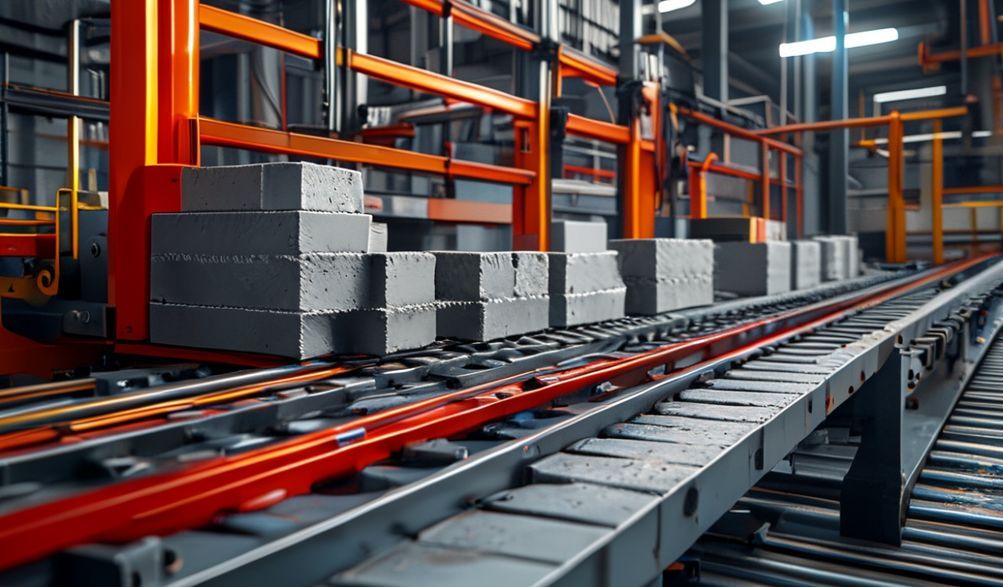
The Ultimate Guide to Block Machine Prices in 2026
Finding an accurate and transparent block machine price list can feel like searching for a needle in a haystack. One website quotes $5,000, another $50,000 for what seems like the same machine, and hidden costs are rarely mentioned upfront. This confusion can derail your project budget before you even pour the first block.
This guide cuts through the noise. As seasoned industry analysts, we won’t just give you another generic list. Instead, we’ll provide you with an expert-backed framework for understanding the true cost of a block making machine. Our insights are built on current manufacturer data, real-world cost breakdowns, and an analysis of market trends heading into 2026.
By the end of this article, you will understand the key factors that cause prices to swing wildly, realistic price ranges for every machine type—from manual to fully automatic—and how to budget effectively for your specific business needs. We’re deconstructing the typical block machine price list to give you the knowledge to build a smarter investment.
Why a Simple “Block Machine Price List” Is Misleading
A single, static price list is not just unhelpful—it’s often dangerously misleading. The final cost of a block machine is a highly customized figure, a sum of dozens of variables unique to your operation. Treating it like a commodity purchase is the first mistake many new entrants make.
Two buyers can both be looking for an “automatic block machine” and receive quotes that differ by 300%. This isn’t necessarily because one supplier is gouging; it’s because they are pricing two completely different solutions. Let’s break down the primary variables that make a universal list impossible.
Основной тип машины и уровень автоматизации
This is the most significant driver of cost. The level of human intervention required inversely correlates with the price tag.
-
Ручные станки для производства блоков: These are the simplest and least expensive. Operators fill molds by hand, initiate vibration, and manually remove the finished block.
- Ценовое значение:Самые низкие первоначальные затраты.
- Идеально подходит для: Micro-enterprises, DIY projects, remote locations with limited power, or producing specialty blocks in very low volumes.
-
Полуавтоматические блочные машины: This category offers a middle ground. Key processes like mixing, feeding, or block ejection are mechanized, but the machine may require an operator to move pallets or initiate cycles.
- Ценовое значение: Moderate investment with a significant jump in consistent output and reduced labor fatigue.
- Идеально подходит для: Small to medium-sized businesses (SMBs) looking to scale reliably without the capital for a full plant.
-
Полностью автоматические блочные машины: These are complete production lines. They integrate material batching, mixing, conveying, block molding, curing, and sometimes even stacking and packaging—all with minimal human oversight, often controlled by a Programmable Logic Controller (PLC).
- Ценовое значение: The highest investment, justified by high-volume, consistent, and efficient production.
- Идеально подходит для: Large-scale commercial production, supplying major construction projects, or industrial manufacturers.
-
Мобильные против стационарных блочных машин: A mobility premium exists. A mobile block machine (often mounted on a trailer) is a self-contained factory that can be moved to a job site, eliminating material transport costs.
- Влияние на затраты: You pay for the engineering and components (like an onboard generator or hydraulic system) that enable mobility. A stationary machine of similar output will generally cost less.
Производственные мощности и технические характеристики выпускаемой продукции
The machine’s “engine” size directly impacts its price. Capacity is typically measured in blocks per hour (BPH) or blocks per cycle.
- A machine producing 1,000 standard hollow blocks per hour will be priced fundamentally differently than one producing 5,000.
- Тип и размер формы: The mold is the heart of the machine. A basic standard block mold is less expensive than a complex, multi-cavity mold for interlocking pavers or insulated concrete forms (ICFs). The ability to quickly change molds (a quick-change system) also adds to the cost.
Key Components That Impact Cost
The quality of core components determines longevity, maintenance frequency, and final product quality. This is where “hidden value” (or future cost) resides.
- Гидравлическая система: The powerhouse. Tier-1 components from recognized brands (e.g., Bosch Rexroth, Kawasaki) are more expensive but offer reliability and precision. A cheaper, unnamed system may fail sooner, leading to costly downtime.
- Вибросистема: Critical for block density and strength. High-frequency, durable vibration motors mounted on an isolated table cost more but produce superior, consistent blocks.
- Каркас и структура: Heavy-duty, reinforced steel frames that resist warping under constant stress add to the material and manufacturing cost.
- Система управления: A basic relay panel is cheaper than a touch-screen PLC. The PLC allows for precise control, diagnostics, and easier integration with other automated equipment.
- Brand & Origin: A machine from a German engineering firm carries a different price and perceived value than one from an Indian, Turkish, or Chinese manufacturer. This reflects differences in labor costs, material standards, quality control, and intellectual property. Local assembly or manufacturing can also affect price due to tariffs and logistics.
Detailed Block Machine Price Ranges & Breakdowns (2026)
The following price ranges are estimates for base configurations in 2026. They are intended to provide a realistic financial framework. Crucially, these numbers can fluctuate by ±15-25% based on the customizations discussed above, currency exchange rates, raw material (steel) prices, and shipping logistics. Always use these as a reference point when soliciting formal quotes from suppliers.
Entry-Level & Manual Machines
- Диапазон цен: $1,500 – $7,000
- What’s Typically Included: A simple mechanical or hydraulic press, one or two basic block molds, a small vibration motor. Power can be electric, diesel, or even manual lever-operated for the most basic models.
- Вывод: 100 – 500 blocks per 8-hour shift, heavily dependent on operator skill and stamina.
- Идеально подходит для: The individual entrepreneur starting a small block yard, community-led building projects, or producing blocks for personal use on a farm or homestead. It’s a test-of-concept machine.
Mid-Range Semi-Automatic Machines
- Диапазон цен: $8,000 – $45,000
- What’s Typically Included: An integrated hydraulic system, automatic vibration and compaction, often an automatic mold-filling system (feeder) and block ejection. May include a basic control panel. More robust frames and motors.
- Вывод: 800 – 2,500 blocks per hour. This is the workhorse category for profitable small-to-medium businesses.
- Идеально подходит для: Growing block manufacturing businesses, contractors supplying local housing developments, or municipal works departments. It offers the best balance of productivity and manageable investment for many.
High-Capacity Fully Automatic Plants
- Диапазон цен: $50,000 – $250,000+
- What’s Typically Included: This is a complete system. The price encompasses the block machine itself (often with a high-speed multi-stage press), an automatic concrete batching and mixing plant, conveyor belts for raw material and finished blocks, a pallet feeder/retriever system, and a sophisticated PLC control cabin. Options like automatic pallet stackers or robotic arms add to the cost.
- Вывод: 3,000 – 10,000+ blocks per hour with a crew of just 2-4 people.
- Идеально подходит для: Large-scale commercial block producers, industrial operations supplying national distributors, or government-backed infrastructure projects requiring massive, consistent output.
Beyond the Machine: The Total Investment Cost
A seasoned business owner knows the machine’s sticker price is only the entry fee. True budgeting requires a holistic view of the total investment. Ignoring these ancillary costs is a primary reason for business failure in this sector.
Essential Ancillary Equipment
Your block machine is useless without support systems. Budget for these separately:
* Mixing Equipment: A pan mixer or planetary mixer ($2,000 – $20,000) is essential. For automatic lines, a full batching plant ($15,000 – $80,000) is integrated.
* Материально-техническое обеспечение: Conveyor belts ($1,500 – $10,000), wheel loaders, or forklifts (often leased or purchased separately) for moving aggregate and pallets.
* Curing Infrastructure: Pallets ($20 – $80 each, needed by the hundred), a curing rack system, and space in a sheltered yard or shed.
Shipping, Installation & Commissioning
This is a major, often overlooked, line item, especially for international purchases.
* Shipping Terms: Understand Incoterms. ФОБ (Франко борт) means you own the goods and pay for shipping/insurance once they leave the supplier’s port. CIF (стоимость, страхование и фрахт) includes shipping to your nearest port—you handle customs and inland transport. CIF quotes appear higher but may be simpler.
* Cost Factors: Container size (20ft vs. 40ft HC), current freight rates, and distance. Always budget an extra 10-15% of the machine cost for shipping and logistics.
* Installation: Factor in the cost of a foundation (for stationary machines), electrical hookup by a certified electrician, and most importantly, commissioning fees. Paying for a technician from the supplier to travel, install, calibrate, and train your staff is non-negotiable for automatic machines and worth every penny.
Operating & Maintenance Costs
Your ongoing P&L statement will be defined by these:
* Сырье: The largest recurring cost. Fluctuations in cement, sand, and aggregate prices directly affect your profit margin.
* Профилактическое обслуживание: Regular oil changes for hydraulics, checking vibration motor bearings, replacing wear parts like mold liners and mixer blades. Budget 3-5% of the machine’s initial cost annually for maintenance and spare parts.
* Labor & Energy: While automatic machines reduce labor, they increase energy consumption. A fully automatic plant is a significant power user.
How to Get an Accurate Quote & Avoid Costly Mistakes
Navigating the supplier landscape requires a methodical approach. Here is an authoritative process to ensure you get comparable, transparent quotes.
Preparing Your Requirements for Suppliers
Before you contact a single supplier, have this checklist ready:
* Desired block types and dimensions (hollow, solid, paver, weight, strength class).
* Target daily/weekly production output in blocks.
* Available factory space (length, width, height clearance, floor strength).
* Available power supply (voltage, phase, amperage).
* Local availability of raw materials (aggregate size and quality).
* Number of available operators.
Sending this information to suppliers forces them to quote on a like-for-like solution.
Evaluating Quotes & Suppliers
A low price can be the most expensive option if it comes from the wrong partner.
* Red Flags: Vague specifications, refusal to provide a detailed component list (brands of hydraulics, motors, PLC), pressure to pay 100% upfront, no clear warranty terms, and no mention of after-sales support.
* Signs of a Reputable Manufacturer: Willingness to provide customer references, detailed engineering drawings, a clear warranty (at least 12 months on core components), a published spare parts catalog with prices, and a stated commitment to installation support.
* The Deciding Factor: In this industry, послепродажное обслуживание и наличие запасных частей are often more important than a 5-10% lower price. How quickly can they get a critical spare part to you?
Financing and ROI Considerations
- Financing: Many equipment dealers offer financing plans. Alternatively, explore small business equipment loans or leasing options. Compare the total cost of ownership (interest, fees) across options.
- Расчет рентабельности инвестиций: Ask yourself: Based on my local block selling price and production capacity, how many blocks do I need to sell to cover the total investment cost (machine, ancillaries, shipping, installation)? How long will that take? A good supplier should help you model this.
Frequently Asked Questions (FAQ)
Q1: What is the cheapest type of block machine available?
А: The absolute cheapest are small, manual press machines (often called “egg-laying” or mobile manual machines), which can start around $1,500. However, it’s vital to balance this low cost against their very limited output (often 100-200 blocks per day) and high labor intensity. They are a tool for specific, very small-scale scenarios, not a foundation for a commercial business.
Q2: How much does a medium-scale automatic block making machine cost?
А: For a robust, quality semi-automatic or entry-level fully automatic machine suitable for a serious medium-scale business (output of 2,000-4,000 blocks per day), you should budget in the range of $45,000 to $85,000. This would typically include a good mixer and basic material handling. The final price depends heavily on your chosen automation level and component brands.
Q3: Are used block machines a good way to save money?
А: They can be, but caution is paramount. The primary pro is a significantly lower upfront cost (30-50% less than new). The cons are substantial: potential hidden wear and tear, obsolete technology, no warranty, and difficulty sourcing spare parts. Only consider a used machine if you can have it thoroughly inspected by an independent mechanic and if the model is still supported by the manufacturer.
Q4: Besides the machine price, what is the biggest hidden cost?
А: For international buyers, shipping, customs duties, and inland transportation are the most common “sticker shock” expenses. For all buyers, the long-term hidden cost is poor maintenance leading to premature failure of cheap components. Investing in a machine with quality parts and a rigorous maintenance schedule avoids far greater costs in downtime and repairs.
Q5: How can I verify the quality of a machine before buying?
А: 1. Ask for References: A confident supplier will connect you with past customers in a similar climate or market. 2. Request a Video: Ask for a real-time video of the exact model running in their factory, not a promotional clip. 3. Visit if Possible: Nothing beats seeing the machine, and the supplier’s factory organization, in person. 4. Check Certifications: Look for relevant safety and quality certifications like CE marking, which indicates compliance with EU health and safety standards.
Заключение
As we’ve explored, the true value of a block machine price list isn’t in the numbers themselves, but in understanding the complex engineering, components, and business logic behind them. The “why” of the price is infinitely more valuable than the “what.”
Your path to a successful investment starts long before you receive a quote. It begins with precisely defining your production goals, operational constraints, and growth ambitions. Use the factors, ranges, and frameworks in this guide as your blueprint for conversations with suppliers.
Ваш следующий шаг: Approach at least three reputable manufacturers with your detailed requirements checklist. Request comprehensive quotes that break down the machine cost, component brands, shipping estimates, and warranty terms side-by-side. This disciplined approach will transform you from a price-shopper into a valued client, ensuring you secure not just a machine, but a profitable partnership for years to come.
<