
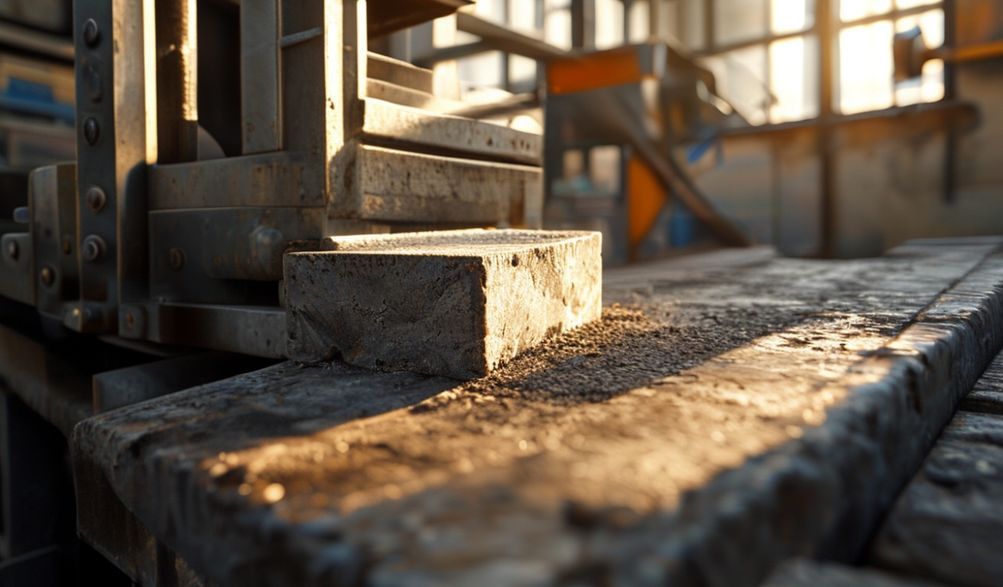
Полное руководство по поиску надежного и недорогого станка для производства блоков
Начать строительный бизнес или производство блоков требует значительных капиталовложений. Одна из самых больших статей расходов? Сам станок для производства блоков. Вполне естественно искать доступный вариант.
Но вот горькая правда, которую многие осознают слишком поздно: машина с самой низкой ценой часто может стать самой дорогой покупкой в вашей жизни. Как? Из-за постоянных поломок, низкокачественных блоков, которые невозможно продать, и губительных простоев, уничтожающих вашу прибыль.
Имея более 15 лет опыта в индустрии строительного оборудования, мы повидали и хорошее, и плохое, и совершенно ненадежное. Это руководство не просто о поиске "дешевой машины для производства блоков" — оно о том, как сделать умные, обоснованные инвестиции, которые балансируют первоначальные затраты с долгосрочной ценностью, долговечностью и прибылью.
Мы отделим зерна от плевел. Вы узнаете о различных типах оборудования и их назначении, реальных факторах, влияющих на цену, где искать надежные предложения и о критических тревожных сигналах, которые кричат "бегите отсюда". Давайте нарастим ваши знания, чтобы вы могли построить свой бизнес на прочном фундаменте.
Понимание станков для производства блоков: не только цена
Прежде чем вы даже взглянете на прайс-лист, вам необходимо понять, что именно вы покупаете. Термин "станок для производства блоков" охватывает огромный спектр оборудования: от простых ручных инструментов до полностью автоматизированных заводских линий. Именно этот выбор станет главным определяющим фактором как стоимости, так и возможностей.
Types of Machines and Their Price Ranges
-
Ручные станки для производства блоков: These are the champions of low upfront cost. Operated by hand levers, they are simple, have no electrical requirements, and are very portable.
- Лучше всего подходит для: Extremely small-scale projects, DIY enthusiasts, or remote locations with no power.
- The Trade-off: They are labor-intensive, slow, and produce lower volumes. The “cheap” price is offset by high physical labor costs per block.
-
Полуавтоматические станки для производства блоков: This is the sweet spot for most small to medium-sized businesses (SMBs). They use a combination of mechanical vibration (often from an electric motor) and hydraulic pressure to form blocks. Loading of raw material and removal of finished blocks is typically manual or semi-mechanized.
- Лучше всего подходит для: The vast majority of startups and growing block yards. They offer an excellent balance between investment, output (hundreds to thousands of blocks per day), and operational control.
- The Trade-off: Requires a small crew and more infrastructure (a stable power supply, a level production floor) than a manual machine.
-
Полностью автоматические машины для производства блоков: These are production powerhouses. They feature Programmable Logic Controller (PLC) systems, automatic material feeding, block ejection, stacking, and pallet return. Human intervention is minimal.
- Лучше всего подходит для: Large-scale commercial production, municipal projects, or businesses with very high, consistent demand.
- The Trade-off: High initial capital investment, significant space requirements, and more complex maintenance. The “cost per block” is low, but the barrier to entry is high.
-
Мобильные станки для производства блоков: Mounted on a trailer or truck bed, these are designed to produce blocks directly on a construction site.
- Лучше всего подходит для: Large infrastructure projects (like roads in remote areas) where transporting blocks is cost-prohibitive.
- The Trade-off: They command a premium for their mobility and specialized design. Not typically the “cheap” option for a fixed-location business.
Key Terminology Decoded for Buyers
Understanding these specs will help you compare apples to apples and avoid marketing fluff.
- Время цикла: The total time it takes to produce one batch of blocks (e.g., 4 blocks per cycle). A shorter cycle time means higher output. Влияние на цену: Faster cycle times generally mean a more sophisticated (and costly) machine.
- Производственные мощности: Always look for “blocks per 8-hour shift” under realistic conditions, not a perfect, theoretical maximum. A machine rated for 5,000 blocks/day might realistically produce 3,500-4,000. Влияние на цену: This is a primary cost driver.
- Размер поддона: The metal plate on which blocks are formed. Standardizing pallet sizes can save money on spare parts. Влияние на цену: Larger/more pallets can increase output and cost.
- Hydraulic vs. Vibration System: Most machines use a combination. High-quality vibration motors ensure proper block compaction, while robust hydraulics apply ejection pressure. Влияние на цену: Industrial-grade components from known brands (e.g., Siemens, Bosch Rexroth) are more expensive but far more reliable than no-name parts.
What Does “Cheap” Really Mean? The True Cost of Ownership
Shifting your mindset from “purchase price” to “total cost of ownership” is the mark of a savvy buyer. A machine that costs $10,000 but breaks down every month is infinitely more expensive than a $15,000 machine that runs reliably for years.
Upfront Price vs. Long-Term Value
Think beyond the invoice. The real cost includes:
* Цена покупки: The number on the quote.
* Maintenance: Regular servicing, oil changes, greasing.
* Потребление энергии A robust but efficient motor will save thousands in electricity over its lifespan.
* Замена деталей Molds wear out, hydraulic seals leak. What do these parts cost, and how easy are they to get?
* Простой: This is the silent profit-killer. If your machine is broken for a week, you’re not just paying for repairs; you’re losing sales, delaying projects, and potentially losing customers.
The Golden Rule: A slightly higher initial investment in a well-built machine almost always results in a significantly lower cost per block produced over its lifetime.
Hidden Costs to Scrutinize
These are the budget-busters that first-time buyers often miss:
* Shipping, Freight, and Import Duties: For international purchases, this can add 20-40% to the machine’s landed cost. Always get a CIF (стоимость, страхование и фрахт) quote to your nearest port.
* Spare Parts Inventory: You will need spare parts. Before buying, price out a standard spare parts kit (common molds, seal kits, vibration motor). If parts are exorbitantly priced or have a 3-month lead time, reconsider.
* Technical Support & Service: Does the supplier offer remote troubleshooting? Do they have service technicians who can travel to your site (and at what cost)? Paying a premium for a supplier with excellent after-sales service is a wise insurance policy.
Key Factors That Influence the Price of a Block Machine
When two machines look similar but have very different prices, these are the elements creating the gap.
Производственные мощности и выпуск продукции
A machine designed to produce 500 solid blocks per day will cost less than one producing 2,000. Furthermore, complex block types like interlocking pavers or hollow blocks with thin walls require more precise, expensive molds and often more powerful vibration systems.
Build Quality and Material
This is where the “cheap” often cuts corners, with catastrophic results.
* Рамка: Look for a heavy-duty steel frame with thick welds. A flimsy frame will flex under load, leading to misalignment and rapid wear.
* Гидравлика: Industrial-grade hydraulic pumps, valves, and cylinders are non-negotiable. Cheap hydraulics leak, overheat, and fail.
* Электрические системы: Are control panels neatly wired with branded components (e.g., Schneider, ABB) or a tangled mess of unknown parts? The latter is a fire and failure risk.
Уровень автоматизации
Every step you remove from manual labor adds cost but also consistency and output. Compare:
* Инструкция: Operator does everything.
* Semi-Auto: Operator loads mix, machine forms and ejects.
* Fully Auto with PLC: Operator monitors; machine feeds, forms, ejects, stacks, and cleans pallets automatically. The jump from semi to full automation is the largest price increase, driven by software, sensors, and complex mechanics.
Where to Find Affordable & Trustworthy Machines
Finding the right supplier is as important as finding the right machine.
Reputable Manufacturers vs. Unknown Suppliers
- Do Your Homework: Research the manufacturer’s history. How long have they been in business? Do they have legitimate certifications (like CE for Europe, indicating basic safety standards)? Can they provide a client list or case studies?
- Beware the “Too-Good-To-Be-True” Online Marketplace: Alibaba and similar sites host both excellent manufacturers and dubious traders. A supplier with only glossy catalog photos, no verifiable factory address, and prices 50% below market average is a massive red flag.
The Value of Used or Refurbished Equipment
For the budget-conscious, this can be a fantastic path to a higher-quality machine.
* Плюсы: You can acquire a well-built, brand-name machine (like a Zenith, Hess, or a reputable local brand) for 30-60% of its original cost.
* Минусы: You inherit its wear and tear. Technology may be outdated. Warranty is often limited or non-existent.
* Expert Inspection Checklist for a Used Machine:
* Check for cracks or welds on the main frame.
* Inspect the mold for excessive wear and damage.
* Run the machine. Listen for knocking sounds in the vibrator or grinding in the hydraulics.
* Check for hydraulic oil leaks around seals and hoses.
* Review maintenance logs, if available.
* Always, always see a video of it running under load, producing blocks.
Essential Questions to Ask Before You Buy (Expert Checklist)
Arm yourself with these questions. A trustworthy supplier will have clear, confident answers.
Questions About the Machine:
- “Can you provide a video of this exact model producing blocks in a working factory, not a showroom?”
- “What is the realistic, average production output per 8-hour shift for [your desired block type]?”
- “Can you provide a detailed spare parts list with current prices and estimated delivery times to my country?”
- “What is the warranty period? What components are covered (e.g., frame, hydraulics, electrical)? What is the process for a warranty claim?”
Questions About the Supplier:
- “Can you share contact information for 2-3 past clients in my region who I can speak with directly?”
- “Do you offer installation supervision, on-site training for my operators, and detailed technical manuals in a language we understand?”
- “What is your after-sales service structure? Do you have technical support via WhatsApp/Video call? Do you have agents or technicians in my country?”
- “What are the secure payment terms? Can we use an escrow service or Letter of Credit (LC) for protection?”
Red Flags: When a “Cheap” Machine is a Bad Investment
If you encounter any of these, proceed with extreme caution or disengage entirely.
* Vague or Missing Technical Specifications on the brochure or website.
* Unwillingness to Provide a Real Operation Video. Excuses like “the factory is too busy” are unacceptable.
* No Clear, Written Warranty Terms. A verbal promise is worthless.
* Pressure to Pay via Unsecured Methods like Western Union or direct bank transfer with no buyer protection.
* Lack of a Verifiable Physical Address. A P.O. Box or only a website contact form is a major warning sign.
* The Price is Drastically Lower than every other comparable supplier you’ve found.
Frequently Asked Questions (FAQ)
Q1: What is the cheapest type of block making machine available?
А: Manual block making machines have the lowest upfront purchase price. However, they require significant physical labor and have very low output, making them suitable only for very small-scale or occasional personal projects, not a commercial business.
Q2: Can I get a good quality automatic block machine at a low price?
А: “Low” is relative. You can find excellent value, especially in the semi-automatic category. However, be deeply suspicious of “fully automatic” machines priced like semi-automatics. This almost always indicates severely compromised build quality, the use of counterfeit parts, or it may be an outright scam. Focus on value and supplier reputation over the absolute lowest number.
Q3: How much should I budget for a small-scale block making business?
А: For a new, quality semi-automatic machine capable of supporting a serious startup, a realistic budget range is $8,000 to $25,000. The final cost depends on your desired output, level of automation, and included features (like multiple molds). A quality used machine can lower the entry point to the $5,000 – $15,000 range.
Q4: Is it safe to buy a block machine directly from an overseas manufacturer?
А: It can be safe and cost-effective, but due diligence is не подлежит обсуждению. Always use secure payment terms that offer protection (like a Letter of Credit), verify the company’s business license and factory address, and have a clear contract covering all terms. For first-time importers, using a reputable sourcing agent or inspector can be a wise investment.
Q5: What are the most common maintenance issues with budget machines?
А: The most frequent failures are hydraulic leaks (from poor-quality seals), vibrator motor burnout (from inadequate power or poor bearings), and rapid mold wear (from soft, low-grade steel). Choosing a machine that uses standard, globally available parts for these components is the best mitigation strategy.
Заключение
Finding a truly “cheap block making machine” is not a race to the bottom of the price list. It’s a strategic exercise in intelligent cost-saving—identifying a machine that is affordable to acquire, reliable to operate, and profitable to run over the long term.
Define your production needs and financial constraints first. Then, let those parameters guide you. Prioritize demonstrable build quality and impeccable supplier reputation over a tempting, rock-bottom price. The right machine is an asset that grows your business; the wrong one is a liability that drains it.
Ready to take the next step? Download our free, detailed Block Machine Buyer’s Comparison Checklist to evaluate your options side-by-side with confidence. For personalized advice tailored to your specific project and location, contact our team of equipment specialists. We’re here to help you build on a foundation of smart investment, not just a cheap purchase.
<