
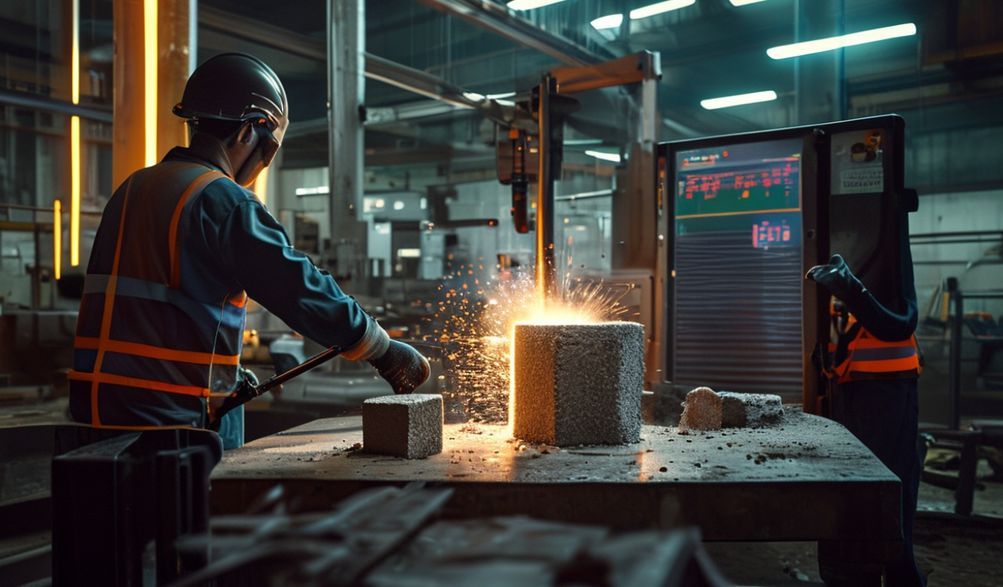
The Ultimate Guide to Hydraulic Block Making Machines in India (2026)
Введение
India’s construction sector is not just booming; it’s undergoing a seismic shift. With ambitious infrastructure projects, rapid urbanization, and the government’s relentless push for housing for all, the demand for high-quality, consistent, and sustainable building materials has never been higher. At the heart of this construction revolution lies a humble yet critical component: the concrete block.
For decades, block manufacturing relied on labor-intensive, inconsistent methods. Today, forward-thinking entrepreneurs and established manufacturers are turning to a superior technological solution: the hydraulic block making machine. This isn’t merely a piece of equipment; it’s a profit center, a quality assurance tool, and a gateway to scaling a business in India’s competitive market.
This guide serves as your comprehensive, one-stop resource. Whether you’re an aspiring entrepreneur in Gujarat, a procurement manager for a large construction firm in Tamil Nadu, or a builder looking to understand the material sourcing chain, this post is designed for you. We’ve compiled insights from industry data, technical specifications, and market trends to create a trustworthy guide. Our goal is to empower you with the knowledge to make an informed, low-risk investment decision that aligns with India’s unique construction landscape and your business ambitions.
What is a Hydraulic Block Making Machine?
At its core, a hydraulic block making machine is a press that uses immense, controlled hydraulic force to compact concrete mix into dense, precisely shaped blocks. It represents a significant evolution from traditional vibratory machines, prioritizing compression over vibration for superior results.
Core Working Principle: Hydraulic Force vs. Vibration
Traditional machines rely on high-frequency vibration to settle the concrete mix into a mould. While functional, this can lead to inconsistencies in density, especially with variable raw materials. A hydraulic machine operates differently:
- Pressure & Compression: A hydraulic power pack pumps oil into a cylinder, driving a piston with tremendous force (measured in tonnes) onto the concrete mix in a mould.
- Результат: This static compression forces out air pockets and compacts the mixture uniformly from top to bottom, creating a block of exceptional and consistent density and strength. Think of it as the difference between tapping a container to settle its contents versus using a powerful, even press.
Разбивка ключевых компонентов
Понимание устройства машины помогает в её эксплуатации и обслуживании.
- Прочная рама: The robust skeleton, usually made of reinforced steel, that withstands constant high-pressure operation.
- Гидравлическая силовая установка: The machine’s “heart.” It consists of an electric motor, hydraulic pump, oil tank, valves, and actuators that generate and control the pressing force.
- Control Panel (PLC/Solenoid): The “brain.” In semi and fully automatic models, this programmable logic controller manages the cycle sequence—feeding, pressing, lifting, and ejection.
- Moulds (Dies): Interchangeable steel moulds that define the block’s shape and size (hollow, solid, paver, etc.).
- Конвейерная система: In automatic setups, belt conveyors transport raw mix to the machine and carry away freshly pressed blocks for curing.
Типы производимых блоков
The versatility of these machines is a major selling point. By simply changing the mould, a single machine can produce:
* Пустотелые блоки (4″, 6″, 8″): The staple for load-bearing and partition walls.
* Сплошные блоки: For foundations, pavements, and areas requiring extreme strength.
* Paver Blocks & Tiles:Для ландшафтного дизайна, подъездных путей и пешеходных дорожек.
* Кирпичи из зольной пыли: An eco-friendly product utilizing thermal power plant waste.
* Взаимосцепляющиеся блоки: For dry-stack construction, reducing mortar use.
Why Choose a Hydraulic Block Making Machine in India?
The Indian market presents specific challenges and opportunities. Here’s why hydraulic technology is particularly well-suited:
Superior Block Quality
In construction, quality is non-negotiable. Hydraulic machines produce blocks with:
* High Density & Compressive Strength: Often exceeding 5-7 N/mm², well above standard BIS (Bureau of Indian Standards) requirements, leading to safer, more durable structures.
* Excellent Dimensional Accuracy & Finish: Uniform size (±1-2 mm) ensures faster, neater masonry work with less mortar consumption. The smooth finish is often aesthetically pleasing enough for exposed walls.
High Production Output & Efficiency
Time is money, especially when supplying large projects or RERA-regulated timelines.
* A standard semi-automatic hydraulic machine can produce 800-1200 blocks per 8-hour shift, depending on the block type.
* Fully automatic lines can produce 3000+ blocks per shift with minimal human intervention.
* Consistent cycle times eliminate bottlenecks in your supply chain.
Cost-Effectiveness & ROI
While the initial investment is higher than vibratory machines, the total cost of ownership is favorable:
* Снижение зависимости от рабочей силы: Automation reduces manual handling, cutting long-term labor costs.
* Reduced Cement Consumption: Denser blocks often require less cement in the mix design without compromising strength.
* Higher Block Durability: Means fewer breakages during transport and construction, reducing waste.
* Market Premium: High-quality blocks can command a better price in the market.
Suitability for Indian Raw Materials
India’s raw materials (sand, aggregate, fly ash) can vary greatly in gradation and moisture content. Hydraulic compression is more forgiving and effective at compacting these variable mixes into a consistent product compared to vibration, making it an ideal technology for the local context.
Key Features to Look for When Buying in India
Navigating the market requires a sharp eye for specs that matter. Don’t just buy a machine; invest in a solution.
Hydraulic Pressure Capacity (Tonnes)
This is the primary indicator of potential block strength.
* Low-Pressure (60-100 Tonnes): Suitable for non-load-bearing blocks and fly ash bricks.
* Medium-Pressure (100-150 Tonnes): The sweet spot for most standard hollow/solid blocks for residential construction.
* High-Pressure (150+ Tonnes): For heavy-duty pavers, solid blocks for industrial use, or where exceptionally high strength is specified.
Automation Level: Matching Needs with Investment
- Инструкция: Operator controls each step. Lowest cost, high labor, lower output. Suitable for very small-scale startups.
- Полуавтоматический: Machine automates the pressing and ejection cycle; operator feeds mix and removes blocks. Best balance of price, output, and control for small to medium enterprises (SMEs).
- Полностью автоматический: Integrated with mixers, conveyors, and stackers. One operator can manage the entire line. Highest output and consistency for large-scale plants.
Требования к питанию
Most industrial-grade hydraulic machines require a 3-phase, 415V AC power supply. Ensure your facility has this connection. Check the motor rating (e.g., 10 HP, 15 HP) to estimate running costs. Some models offer diesel-powered options for areas with unreliable electricity.
After-Sales Service & Parts Availability
This is arguably the most critical factor for the Indian market. A machine breakdown can halt your entire business.
* Prioritize suppliers with a proven service network in your region or state.
* Ask about the availability of common spare parts (seals, hoses, solenoid valves) and their typical delivery time.
* Comprehensive warranty (at least 1 year on the hydraulic system and frame) is a must.
Top Hydraulic Block Machine Manufacturers & Suppliers in India
Instead of a static list that may become outdated, we equip you with the framework to find and evaluate the best partner for your business.
Overview of the Indian Market Landscape
Major manufacturing hubs are clustered in industrial cities known for engineering excellence:
* Coimbatore, Tamil Nadu: Often called the “Engineering Hub of South India,” hosting numerous established machinery manufacturers.
* Ahmedabad & Rajkot, Gujarat: Strong in manufacturing and innovation for construction equipment.
* Delhi NCR, Punjab, Hyderabad: Also have significant clusters of suppliers and fabricators.
Criteria for Evaluating a Supplier
Use this checklist during your research and factory visits:
1. Manufacturing Experience: Look for companies with 15-20+ years of specific experience in building block making machines. This speaks to accumulated expertise.
2. Client Portfolio & References: Ask for a list of past clients, preferably in your state. A reputable company will gladly connect you.
3. Сертификаты: ISO 9001 certification is a good indicator of quality management processes in manufacturing.
4. Factory Visit: If possible, visit the manufacturing unit. Assess the build quality, material used (grade of steel), and assembly practices.
5. Warranty & Service Contract: Scrutinize the warranty document. Understand what is covered, what is excluded, and the terms of the after-sales service agreement.
Cost Analysis & Investment Guide
Transparency in costing builds trust. Here’s a realistic breakdown to help you plan your budget.
Price Range Breakdown (Approximate, Excluding GST)
- Manual Hydraulic Machine: ₹ 5 – 8 Lakhs
- Semi-Automatic Hydraulic Machine: ₹ 8 – 20 Lakhs
- Fully Automatic Hydraulic Plant: ₹ 25 Lakhs – ₹ 1 Crore+
Factors Influencing Price
- Brand Reputation: Established brands command a premium for proven reliability.
- Степень автоматизации: Each step of automation adds cost but also efficiency.
- Производственная мощность (блоков в час): Higher output machines cost more.
- Настройка: Special moulds or material handling systems add to the cost.
Government Subsidies & Schemes
Explore potential financial support:
* State-Level MSME Schemes: Many state governments offer capital subsidy on plant and machinery for new industrial units. Check your state’s Directorate of Industries website.
* Credit Linked Capital Subsidy Scheme (CLCSS): For technology upgradation by MSMEs (terms apply).
* Bank Loans: Most nationalized and private banks offer term loans for machinery purchase under priority sector lending. A solid business plan is key.
Calculating Your Return on Investment (ROI)
A simplified framework:
1. Calculate Fixed Costs: Machine cost + installation + civil work.
2. Calculate Variable Cost/Block: Cement, sand, aggregate, power, labor, overheads.
3. Determine Selling Price/Block: Based on local market rates for quality blocks.
4. Estimate Production Capacity: Realistic output per month after accounting for maintenance and curing time.
5. Projection: (Monthly Profit = (Selling Price - Variable Cost) * Monthly Output). Use this to estimate your payback period. A well-run semi-automatic plant can often see a payback within 18-30 months.
Installation, Operation, and Maintenance Best Practices
Your machine’s performance and lifespan depend heavily on how it is set up and cared for.
Site Preparation Requirements
- Foundation: Pour a strong, level concrete foundation as per the machine manufacturer’s drawing to absorb vibrations.
- Космос: Allocate space for the machine, raw material storage (sand, aggregate), curing area, and finished block storage.
- Power & Water: Ensure stable 3-phase power and a water connection for mixing.
Basic Operational Guide & Safety Protocols
- Never skip training. Insist on comprehensive training from the supplier for all operators.
- Follow the mixing ratio precisely. Consistency in raw material input is crucial for consistent output.
- Always wear safety gear: gloves, safety shoes, and eye protection.
- Never place hands in the mould area during the pressing cycle.
Routine Maintenance Checklist
- Ежедневно: Check hydraulic oil level, clean the machine, inspect hoses for leaks, lubricate moving parts.
- Weekly: Tighten all bolts and nuts, check electrical connections, clean the oil filter.
- Monthly: Change/clean hydraulic oil filters as recommended, inspect moulds for wear, check pressure settings.
Устранение распространённых проблем
- Low Block Strength: Incorrect mix design, insufficient pressing time/pressure, poor-quality cement.
- Oil Leaks: Damaged seals or hoses. Replace immediately.
- Block Sticking in Mould: Mould may need cleaning or a release agent; check for wear or damage on the mould walls.
- Machine Not Building Pressure: Faulty relief valve, pump issue, or low oil level.
Раздел часто задаваемых вопросов
Q1: What is the average production capacity of a standard hydraulic block making machine in India?
A: A typical semi-automatic machine produces 800-1200 blocks per 8-hour shift, depending on block type and operator efficiency. Fully automatic lines can produce 3000+.
Q2: Can hydraulic machines use fly ash effectively?
A: Absolutely. In fact, hydraulic compression is excellent for producing high-strength fly ash bricks (FAL-G bricks), promoting eco-friendly construction and utilizing industrial waste.
Q3: What is the typical lead time for machine delivery and installation?
A: For standard models, expect 4-8 weeks from order confirmation, including manufacturing, testing, and transportation. Installation and commissioning take an additional 1-2 weeks.
Q4: How does the block quality from a hydraulic machine compare to traditional methods?
A: There is no comparison. Hydraulically pressed blocks are significantly denser, stronger (higher compressive strength), and have superior dimensional accuracy and surface finish than vibratory blocks.
Q5: What is the expected lifespan of a well-maintained hydraulic block machine?
A: With proper maintenance and timely part replacements, the core structure (frame) can last 15-20 years. The hydraulic system and electrical components may require overhauls or replacements every 5-7 years.
Q6: Are there financing options available for purchasing these machines?
A: Yes. Most suppliers have tie-ups with banks or NBFCs to offer financing. You can also approach banks directly with a project report for a term loan under MSME equipment financing schemes.
Заключение
The adoption of hydraulic block making technology is more than an upgrade; it’s a strategic decision to future-proof your business in India’s dynamic construction sector. These machines offer a compelling blend of unparalleled quality, impressive efficiency, and strong long-term returns on investment.
As you move forward, remember that the cheapest machine is often the most expensive in the long run. Prioritize build quality, reliable after-sales support, and the total cost of ownership. The future of Indian construction is leaning towards sustainability, precision, and speed—attributes that hydraulic block making machines are uniquely positioned to provide.
We encourage you to use this guide as a foundation for your research. The final, critical step is to consult directly with shortlisted manufacturers, request detailed technical specifications, and, most importantly, witness a live machine demonstration. Seeing the machine in action, assessing the block quality firsthand, and interacting with the technical team is the best way to build confidence and ensure your investment paves the way for success.
<