

A Comprehensive Breakdown of Investment Costs
Establishing a functional block production line requires capital allocation across several distinct categories. The total investment varies dramatically based on scale, automation level, and regional factors, but the cost components remain consistent.
1. Core Machinery and Equipment Investment
This is the most significant capital outlay and the heart of the production line.
- The Block Forming Machine: Costs are tiered by capability.
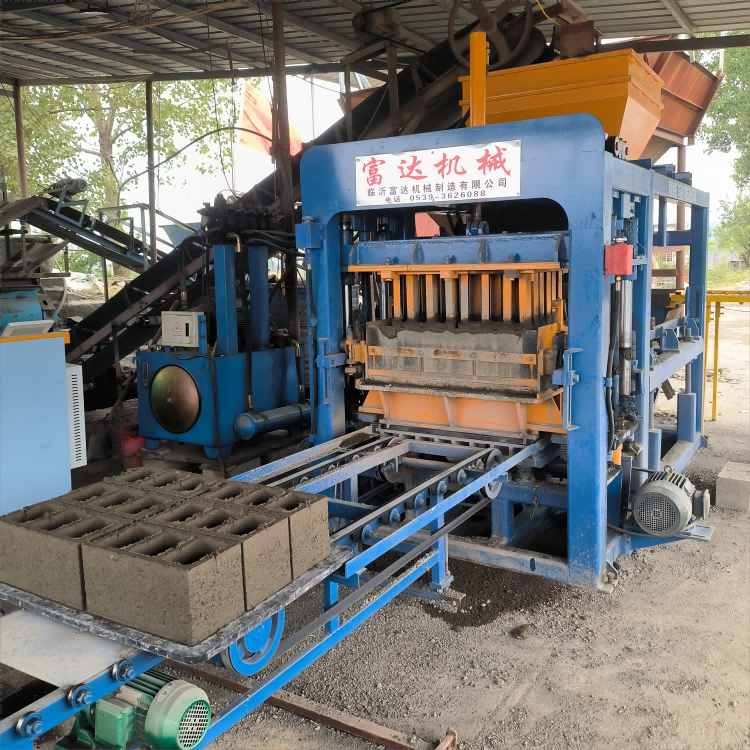
- Semi-Automatic Production Line: The central machine, typically with a pallet circulation system, represents a substantial investment. Price escalates with increased output capacity (blocks per hour), the number of mold stations, and the sophistication of the control system.
- Полностью автоматизированная производственная линия: This is a major industrial investment. The cost encompasses the fully automated block maker, often with a robotic handling system, integrated into a synchronized line. This represents the premium segment of machinery costs.
- Essential Auxiliary Equipment: A line cannot function with the block maker alone. Budget must include:
- Система смешивания: A compulsory industrial pan mixer or twin-shaft mixer of matching capacity.
- Материально-техническое обеспечение: Conveyor belts (for moving raw mix and blocks), wheel loaders or forklifts for bulk aggregates.
- Curing Infrastructure: Pallets, racking systems, and potentially a controlled curing chamber or spray system.
- Источник питания: A dedicated, robust electrical connection and often a backup generator.
2. Facility, Installation, and Pre-Operational Costs
These are the foundational expenses to host and activate the production line.
- Land and Site Development: Costs for leasing or purchasing industrial land. Site preparation includes constructing a large, level, reinforced concrete floor slab, building a production shed for weather protection, and creating storage bays for raw materials.
- Logistics and Installation: Expenses for transporting heavy machinery, often involving specialized freight. This includes customs duties, insurance, and the cost of technical specialists to supervise installation, align the line, and conduct commissioning.
- Utilities and Infrastructure: Ensuring access to sufficient three-phase electrical power, a reliable water source for production, and drainage systems. Connection fees and potential infrastructure upgrades can be significant.
3. Working Capital and Recurring Operational Reserves
This capital funds the business operations until revenue is generated and sustained.
- Initial Raw Material Inventory: Funds to purchase the first bulk quantities of cement, aggregates, and other materials to begin production.
- Labor Force: Salaries for skilled machine operators, maintenance technicians, mixers, and yard staff for at least the first 3-6 months of operation.
- Pre-Launch and Operating Expenses: Capital to cover rent, utilities, marketing, administration, and other overheads during the setup and initial low-capacity utilization phase.
- Spare Parts Fund: An essential reserve for the immediate purchase of critical wear parts to minimize unscheduled downtime.
Conclusion: Investment as a Strategic Calculus
The question of startup cost ultimately leads to a strategic calculation, not just a budgetary one. For the distributor, the goal is to guide the client from seeing a collection of expenses to understanding a structured investment in productive capacity. The decision between a robust semi-automatic line and a fully automated system is a function of target market size, access to capital, and growth strategy. Emphasizing the importance of a complete financial model—one that includes all categories outlined above—is crucial. A well-capitalized venture that accounts for both fixed assets and sufficient working capital is positioned for stability and growth. By providing this holistic financial perspective, you enable clients to approach lenders or investors with confidence and embark on their manufacturing journey with a clear roadmap to profitability, ensuring the long-term success of both their enterprise and your professional partnership.
Frequently Asked Questions (FAQ)
Q1: Can you provide a typical total investment range for a production line?
А: Providing a single range is misleading due to vast differences in scale and location. However, for planning purposes, consider these tiers: A small-scale semi-automatic line requires a significant multi-faceted investment covering machinery, site, and working capital. A medium-capacity semi-automatic integrated line represents a more substantial industrial investment. A fully automated production plant constitutes a major capital project. Specific figures must be derived from a detailed project plan with local costings.
Q2: What percentage of the total cost should be allocated to working capital?
А: A common oversight is underestimating working capital. As a prudent rule, allocate 20-30% of your total project budget to working capital and initial operational expenses. This reserve is critical to navigate the ramp-up phase, where production efficiency is being optimized and customer payments may have credit terms.
Q3: How does local infrastructure affect startup costs?
А: Profoundly. If the chosen site lacks three-phase power, the cost to bring it in can be substantial. Poor road access increases material transport costs. Limited water access may require drilling a borewell. A thorough site survey is essential to identify and budget for these infrastructure costs, which can vary drastically by region.
Q4: Are there financing options available for such an equipment-heavy business?
А: Yes, several options exist. These include traditional business loans from banks (requiring a solid business plan and collateral), equipment financing or leasing programs sometimes offered through the machinery supplier’s network, and investor capital. The structure of the deal (down payment, letter of credit, installments) should be discussed transparently with your supplier.
Q5: What is the single biggest financial risk if costs are underestimated?
А: The greatest risk is running out of operating capital before the business reaches its break-even point. This often occurs when the budget covers only the machinery and basic installation, leaving no financial runway for raw materials, labor, marketing, and covering initial monthly losses. This can force a premature shutdown despite having the physical plant in place. Comprehensive, conservative financial planning is the best mitigation.
- автоматическая машина для изготовления блоков7 products
- Глиняный блокоформительный станок4 products
- передвижная машина для изготовления блоков4 products
- другое строительное оборудование5 products
- полуавтоматическая машина для производства блоков4 products