The Significance of Water Absorption: Beyond a Simple Number
Water absorption rate measures the amount of water a concrete block can take in by capillary action and pore absorption when exposed to moisture. It is expressed as a percentage of the block’s dry weight. This value is a powerful indicator of the block’s internal microstructure and its vulnerability to environmental stress.
- Durability and Freeze-Thaw Resistance: This is the most critical implication. In cold climates, water absorbed into the block’s pores can freeze. As water turns to ice, it expands by approximately 9%, generating immense internal pressure. Repeated freeze-thaw cycles can cause spalling (surface flaking), cracking, and ultimately, structural deterioration. A lower absorption rate minimizes the amount of water available to freeze, thereby dramatically extending the service life of the masonry.
- Efflorescence Control: Efflorescence is the unsightly white, powdery deposit of soluble salts on the surface of masonry. It occurs when water moving through the block dissolves salts within the material, then evaporates at the surface, leaving the salts behind. A lower absorption rate reduces the volume of water moving through the block, effectively mitigating the primary driver of efflorescence.
- Thermal and Moisture Performance: Water within the pores of a block reduces its insulating capacity (as water conducts heat better than air) and can lead to moisture transfer into interior spaces, potentially causing dampness and mold issues. Controlling absorption is key to maintaining designed thermal performance and indoor air quality.
II. Defining Optimal Absorption Rates: Standards and Applications
There is no single “perfect” absorption rate; the appropriate target depends on the block’s density class and its exposure conditions.
- Governing Standards: International standards establish maximum allowable absorption limits based on the block’s weight classification. The two most prevalent systems are:
- ASTM C90 (Standard Specification for Loadbearing Concrete Masonry Units): This standard categorizes blocks by their oven-dry density and sets maximum absorption limits. For example, it specifies that normal weight blocks (125 lbs/ft³ or 2000 kg/m³ and over) must have a maximum absorption of 13 pounds per cubic foot (208 kg/m³). This translates to a water absorption percentage typically between 6% and 10% for a standard block, depending on its exact density.
- EN 771-3 (Aggregate concrete masonry units): European standards often use a different methodology but share the same principle: stricter limits for more severe exposure. Blocks are classified for different exposure categories (e.g., protected, moderate, severe), with lower absorption required for more exposed applications.
- Application-Based Guidelines:
- Foundations & Below-Grade Walls: Require the lowest possible absorption, ideally at the lower end of the ASTM C90 range or better. These elements are in constant contact with soil moisture and are most vulnerable to hydrostatic pressure and freeze-thaw cycles.
- Above-Grade Exterior Walls: Must meet or exceed the standard’s limits for the relevant exposure. In severe rainy or freeze-thaw climates, specifying blocks with absorption rates below the maximum allowable is a prudent practice for enhanced durability.
- Interior Partitions: Have more lenient requirements, as they are not exposed to weather. However, low absorption is still beneficial for controlling moisture transfer and efflorescence from plaster or paint.
III. Factors Controlling Absorption Rate in Production
The absorption rate is not a matter of chance; it is a direct result of the manufacturing process and material selection.
- Concrete Density and Compaction: This is the most influential factor. A well-compacted block with a low void ratio has fewer and smaller interconnected pores for water to enter.
- Проектирование состава смеси. The use of dense, well-graded aggregates and an optimal cement content creates a less porous matrix.
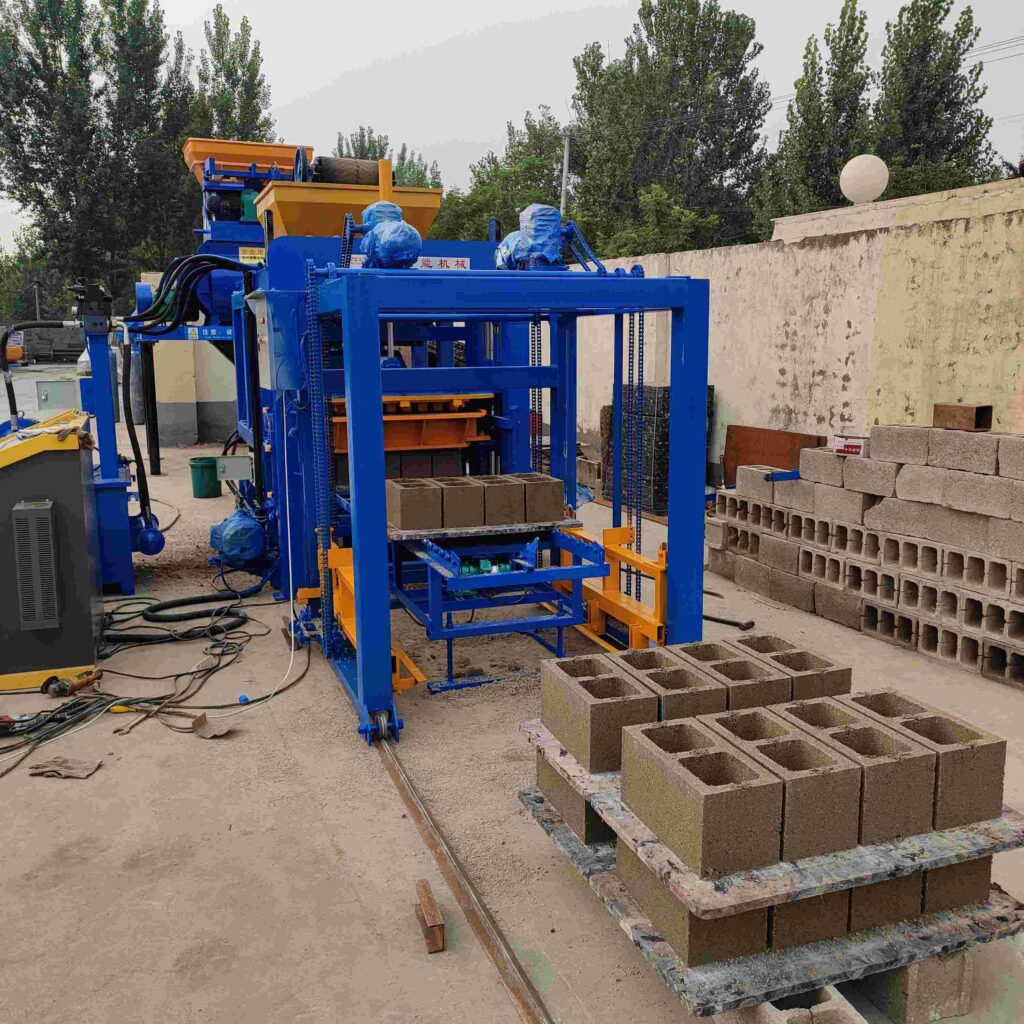
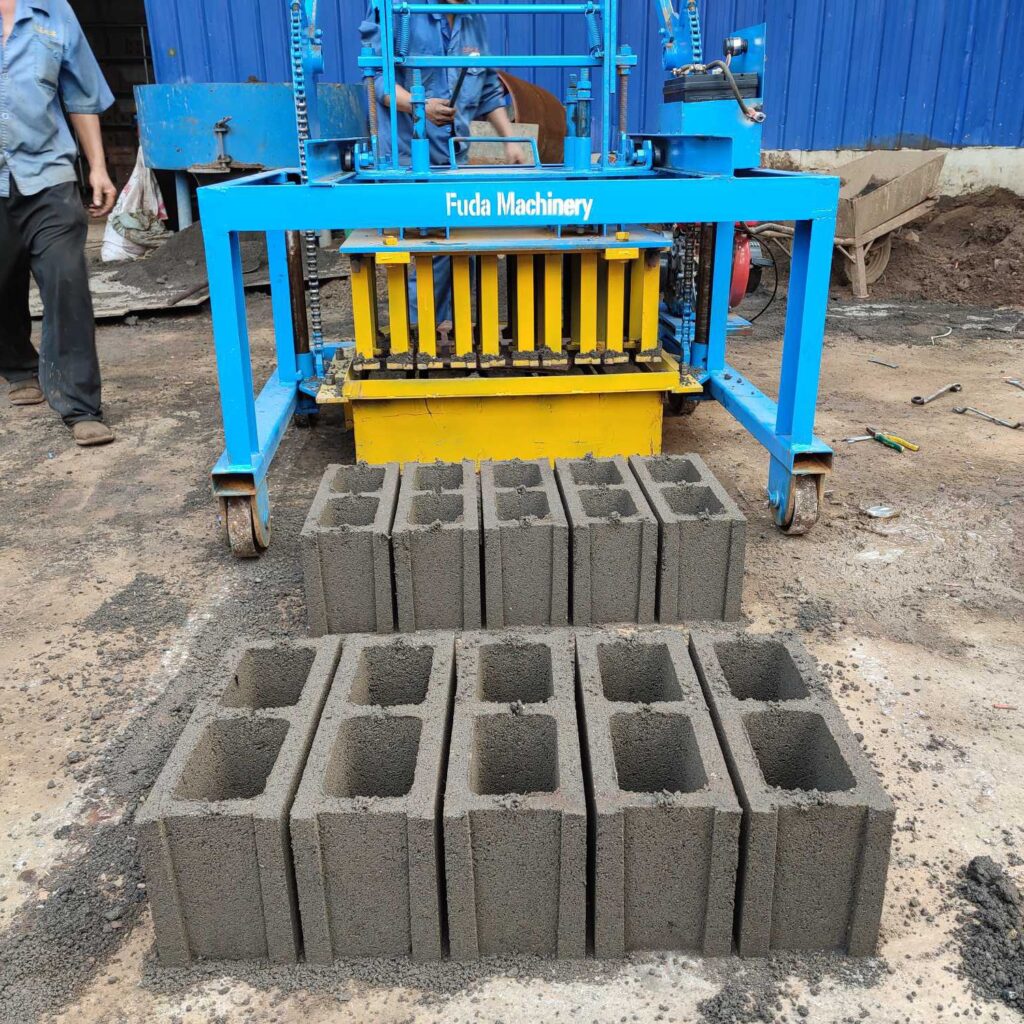
- Manufacturing Process: High-pressure vibration and compaction in the block machine are essential to minimize air voids and create a dense product.
- Water-Cement Ratio (w/c ratio): A critical control point. An excess of water in the mix, beyond what is needed for cement hydration, evaporates and leaves behind capillary pores. A low w/c ratio is fundamental to producing a low-permeability, low-absorption block.
- Процесс отверждения: Proper curing allows for continuous cement hydration, which fills microscopic pores with hydration products, thereby densifying the matrix and reducing permeability. Inadequate curing leaves the microstructure more open and porous.
- Use of Admixtures: Integral water repellents or hydrophobic admixtures can be added to the mix. These chemicals line the capillary pores, reducing surface tension and making the block more water-resistant.
Conclusion
The water absorption rate of a concrete block is a definitive benchmark of its quality and resilience. It is a quantifiable measure that predicts how a masonry system will interact with its environment over decades. For industry professionals involved in the supply chain, prioritizing this specification—alongside compressive strength—is a mark of expertise. It enables the recommendation of products that will not only bear load but also withstand the relentless challenges of moisture, freeze-thaw cycles, and time. By demanding blocks that meet stringent absorption standards and understanding the production factors that achieve them, distributors and procurement specialists become partners in constructing durable, sustainable, and trouble-free buildings.
FAQ
Q1: Is a lower water absorption rate always better?
А: Generally, yes, for durability. However, there is a practical limit. An extremely low absorption (e.g., below 5%) can potentially affect the bond between the block and mortar if the block does not absorb some moisture from the mortar, which is necessary for proper curing and adhesion of the mortar itself. High-quality mortars are designed to work within the absorption ranges specified by block standards.
Q2: How can I quickly assess a block’s absorption quality on-site?
А: While lab testing is definitive, simple field observations can be indicative. A high-quality, low-absorption block will feel dense and heavy for its size. Tap two blocks together; they should produce a sharp, ringing sound, not a dull thud. Visually, the surface should be tight-grained, not porous or sandy. For a rough test, place a few drops of water on the surface; on a dense block, the water will bead up and be absorbed very slowly, if at all.
Q3: What is the link between compressive strength and water absorption?
А: They are strongly correlated but measure different things. Both are outcomes of a dense, well-compacted concrete matrix. Typically, a block with higher compressive strength will have a lower water absorption rate, as both result from a low water-cement ratio and effective compaction. However, it is possible to have a moderately strong block with high absorption if it uses porous aggregates, which is why both specifications must be checked independently.
Q4: Do “waterproof” or “damp-proof” surface coatings eliminate the need for low-absorption blocks?
A: Absolutely not. Surface coatings are considered a secondary line of defense. They can degrade over time due to UV exposure, mechanical damage, or substrate movement. The primary defense against moisture-related damage must be the inherent quality and low permeability of the block itself. Relying solely on a coating is a high-risk strategy.
Q5: How often should a manufacturer test for water absorption?
А: As part of a comprehensive quality assurance program, absorption should be tested regularly, typically in conjunction with compressive strength testing. For consistent production, testing on a weekly or per-batch basis is a sign of a rigorous operation. The test results should be part of the manufacturer’s quality records, available for review by specifiers and distributors.