
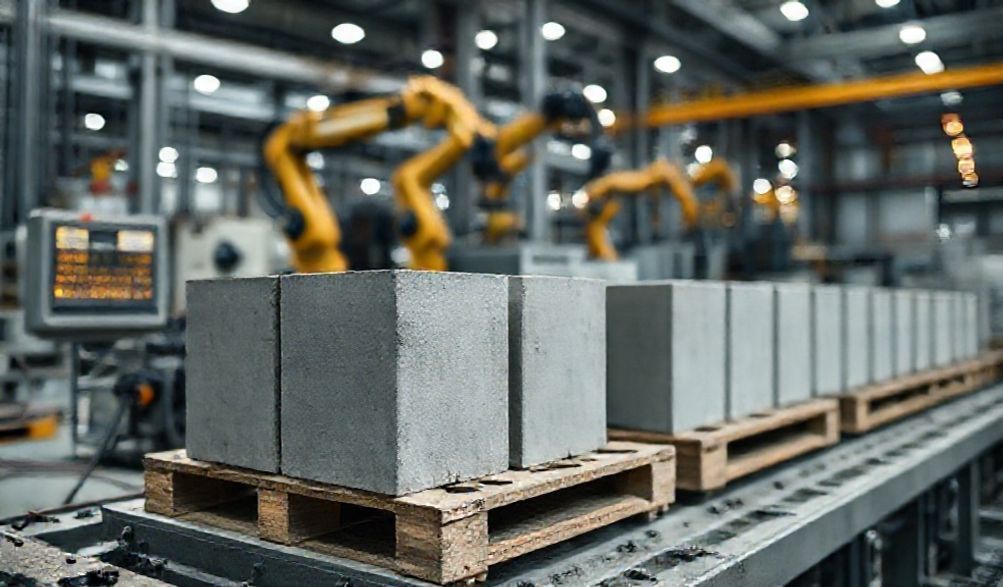
The Ultimate Guide to China’s Baking-Free Block Machines: Technology, Benefits & Selection
The global construction industry is at a pivotal crossroads. As the demand for infrastructure and housing grows exponentially, so does the urgent need for sustainable, efficient, and cost-effective building solutions. The traditional paradigm of fired-clay bricks—a process synonymous with high energy consumption, significant carbon emissions, and environmental degradation—is being fundamentally challenged. In this landscape of change, innovative machinery is paving the way for a greener future. Enter the baking-free block machine, a technological marvel that transforms waste into wealth and redefines modern construction.
This guide delves into the heart of this innovation, focusing on China’s dominant role as the world’s leading manufacturer and technological pioneer in baking-free block machinery. For buyers, project managers, and construction professionals, navigating this market can be complex. This comprehensive overview, synthesized from technical manuals, industry reports, and manufacturer data, is designed to demystify China baking-free block machine offerings. We will explore the core technology, undeniable benefits, critical selection criteria, and operational know-how to empower your decision-making process.
What is a Baking-Free Block Machine? Core Technology Explained
At its core, a baking-free block machine is a press that manufactures construction blocks without the need for a kiln or firing process. It represents a shift from thermal energy to mechanical and chemical energy, creating durable building materials from a blend of cementitious materials and aggregates.
The Science Behind “Baking-Free”
The term “baking-free” refers to the curing process, which is fundamentally different from traditional brick-making.
- Chemical Curing vs. Thermal Firing: Instead of using heat to sinter clay particles together, baking-free blocks gain strength through гидратация. The primary binder, usually cement, reacts with water in a chemical process that forms hard, crystalline structures (calcium silicate hydrate gel) that bind the aggregates. Supplementary materials like fly ash or slag undergo a secondary “pozzolanic reaction” with calcium hydroxide, further enhancing long-term strength and density.
- The Role of Pressure and Vibration: Chemistry alone isn’t enough. These machines employ высокое давление уплотнения (often hydraulic) combined with powerful вибрация. This dual action removes entrapped air, forces particles into intimate contact, and dramatically increases the initial “green strength” of the block, allowing it to be demolded immediately and stacked for curing.
Ключевые компоненты и принцип работы
Understanding the machine’s anatomy clarifies its efficiency. A standard machine consists of:
- Система кормления: A hopper and conveyor that deliver the premixed raw materials (e.g., cement, sand, fly ash, stone chips) to the mold cavity.
- Плесень: The heart of the machine, a precision-engineered steel box that defines the block’s shape (hollow, solid, paver, etc.).
- Гидравлический пресс: Provides the immense pressure (measured in tons) to compact the material.
- Вибросистема: High-frequency vibrators mounted on the mold table or press head to ensure even material distribution and maximum density.
- Панель управления: The brain, often featuring a Programmable Logic Controller (PLC) for automating the production cycle, adjusting pressure/vibration time, and monitoring operations.
- Паллетоподатчик/Паллетоукладчик: Automatically feeds empty pallets for block formation and stacks finished blocks for curing.
The Simplified Workflow: Raw material mixing → Feeding into mold → Simultaneous vibration and high-pressure compaction → Lifting of the press head and mold → Ejection of the finished block onto a pallet → Transport to curing area.
Why Choose a China-Made Baking-Free Block Machine?
China’s dominance in this sector is no accident. It is the result of decades of focused development, massive industrial scale, and relentless innovation, offering compelling advantages to global buyers.
Unmatched Cost-Effectiveness and Value
- Конкурентные цены: The concentrated manufacturing ecosystem, efficient supply chains, and economies of scale allow Chinese manufacturers to offer highly competitive prices without necessarily sacrificing quality.
- Превосходная окупаемость инвестиций: The lower initial capital investment, combined with the machines’ energy efficiency (no kiln required) and ability to use low-cost raw materials (like industrial waste), translates to a faster return on investment and a lower cost per produced block compared to many Western-made alternatives.
Advanced Technology and Innovation
China’s industry has moved far beyond basic copying. Leading manufacturers invest heavily in R&D, resulting in:
- Высокая автоматизация: From fully automatic batching systems and robotic pallet handling to intelligent curing room controls, reducing labor costs and human error.
- Материальная адаптируемость: Modern machines are engineered to handle a wide spectrum of raw materials, including virgin aggregates, fly ash, slag, construction & demolition waste, and mine tailings, supporting circular economy projects.
- Energy-Efficient Design: Innovations in hydraulic systems and motor controls minimize power consumption, a critical operational cost factor.
Diverse Models for Every Project Scale
Whether you’re a startup or a national construction firm, China’s market has a solution.
- Small-Scale/Manual: Ideal for rural projects or entrepreneurs, producing 1,000-4,000 blocks per day with lower investment.
- Полуавтоматический: A balance of automation and manual intervention for medium output (5,000-12,000 blocks/day).
- Полностью автоматизированные линии: High-speed, computer-controlled plants with outputs exceeding 20,000 blocks per shift, requiring minimal manpower.
Critical Applications and Output of Baking-Free Blocks
The versatility of these machines is mirrored in the products they create and their applications.
Типы производимых блоков
- Пустотелые блоки (для несущих и ненесущих стен)
- Solid Blocks (for foundations and heavy-duty construction)
- Interlocking Pavers (for driveways, walkways)
- Curb Stones & Grass Blocks (for landscaping and roadways)
- Special Shapes (customizable for architectural features)
Construction Applications
- Residential & Commercial Buildings: For internal and external walls.
- Industrial Structures: Warehouses, factories, and boundary walls.
- Infrastructure: Retaining walls, sound barriers, and sub-structures.
- Landscaping & Urban Development: Pavements, parking lots, and garden features.
Environmental & Economic Benefits of the Final Product
- Экологически чистый: Utilizes industrial by-products (fly ash), reduces landfill waste, and eliminates the pollution from kiln firing.
- High Performance: Offers excellent thermal insulation (reducing heating/cooling costs), soundproofing, and fire resistance.
- Прочность: When produced correctly, blocks achieve high compressive strength, often meeting or exceeding international standards like ASTM C90 or EN 771-3.
How to Select the Right Supplier in China: A Buyer’s Checklist
Due diligence is paramount when sourcing machinery from overseas. This checklist focuses on Экспертность, Авторитетность и Надёжность (Э-А-Н).
Evaluating Manufacturer Credentials (Trustworthiness)
- Сертификаты: Verify valid business licenses and international certifications like ИСО 9001(Управление качеством) иCE (meeting EU health, safety, and environmental standards).
- Experience & Portfolio: Prefer suppliers with 10+ years of specialization. Request a client list and case studies, especially from your region.
- Аудит производства: Insist on a live video factory tour. Assess workshop organization, quality control processes, and inventory of parts.
Assessing Machine Specifications and Quality
Don’t just compare price; compare technical value. Key specs include:
* Сила давления The compaction tonnage (e.g., 200 tons) directly impacts block density and strength.
* Время цикла: Time to produce one block/pallet (e.g., 15-20 seconds), determining hourly output.
* Основные компоненты: Ask about brands for critical parts—Siemens or Mitsubishi PLCs, Schneider electrics, Rexroth hydraulics indicate higher reliability.
* Качество пресс-формы: Molds should be made from high-grade, heat-treated steel for longevity and precision.
Understanding After-Sales Service and Support
This is where reputable suppliers distinguish themselves.
* Гарантия: Standard is 12-18 months for the machine, excluding wear parts.
* Техническая поддержка Ensure availability of English manuals, wiring diagrams, and PLC programs. Clarify timezone coverage for remote support.
* Запчасти: Confirm a systematic spare parts supply chain. A parts list with item codes is essential.
* Training & Installation: Professional suppliers offer on-site installation, commissioning, and hands-on training for your technicians. Get these terms in writing.
Operational Insights and Best Practices
Success depends as much on operation as on the machine itself.
Raw Material Preparation and Ratio Formulas
- Formula is Key: A typical mix might be: 10-15% cement, 30-40% fly ash, 40-50% aggregate (sand/stone chips), and the right amount of water (usually 8-12%).
- Последовательность: Materials must be consistent in particle size and free of debris. Moisture content must be strictly controlled—too wet causes sticking, too dry leads to weak blocks.
- Testing: Always conduct small-batch tests with your local materials to optimize the formula for strength and appearance before full production.
Routine Maintenance for Longevity
- Ежедневно: Clean the machine thoroughly, especially the mold and feed hopper. Check hydraulic oil levels and for leaks.
- Weekly: Inspect and tighten bolts, check vibrator mounts, and lubricate all moving parts as per the manual.
- Monthly: Change hydraulic oil filters, inspect mold for wear or damage, and calibrate the pressure system.
Устранение распространённых проблем
- Block Cracking: Often caused by improper material mix (too much water or cement), insufficient curing, or excessive vibration.
- Poor Density/Strength: Check if pressure is too low, vibration time is insufficient, or the raw material ratio is incorrect.
- Поверхностные дефекты: Usually indicates a worn-out mold, contaminated raw materials, or incorrect release agent application.
- Machine Jams: Can be due to overfeeding, foreign objects in the material, or a misaligned pallet.
Frequently Asked Questions (FAQ)
Q1: What is the typical production capacity range for these machines?
А: Capacity varies widely. Small manual machines produce 1,000-5,000 blocks per 8-hour shift. Semi-automatic models range from 5,000-15,000 blocks. Large, fully automatic lines can produce 20,000 to over 40,000 blocks per shift, depending on the block type and machine model.
Q2: What is the lead time and shipping process for importing from China?
А: Standard production lead time is 30-45 days after order confirmation. Shipping (via sea freight) takes 25-40 days, depending on the destination port. Key terms are FOB (you arrange and pay for shipping/insurance) or CIF (supplier arranges to your port). Essential documents include the Commercial Invoice, Packing List, Bill of Lading, and Certificate of Origin.
Q3: Can the machine use 100% fly ash or other waste materials?
А: While designed for high waste content, most machines require a blend. A 100% fly ash mix typically lacks the granular skeleton for proper compaction and strength. Successful formulas use fly ash as a major component (up to 60-70%) alongside a binder (cement or lime) and some aggregate. Specific ratios require material testing.
Q4: How does the strength of baking-free blocks compare to traditional fired bricks?
А: High-quality baking-free blocks can easily match or surpass the compressive strength of traditional fired clay bricks. They are engineered to meet specific international standards (e.g., 7-20 MPa or higher for load-bearing blocks), making them suitable for a vast array of structural applications.
Q5: What kind of training is provided with the machine purchase?
А: Reputable suppliers include comprehensive training. This typically covers machine operation, routine maintenance, troubleshooting, safety procedures, and basic raw material formula management. Training is usually conducted on-site by a dispatched engineer during installation and commissioning, ensuring your team is confident and operational.
Заключение
China’s baking-free block machine technology stands as a transformative force in the construction industry. It elegantly solves the twin challenges of sustainability and economics by turning industrial waste into durable, high-performance building materials. The market offers a spectrum of sophisticated, automated, and cost-effective solutions for projects of any scale.
Looking ahead, integration with AI for real-time quality monitoring and the increased use of recycled concrete aggregates will push this technology even further. Your success in adopting this technology hinges on thorough research and partnering with a credible supplier who demonstrates proven Expertise, Authoritativeness, and Trustworthiness in both their product and their support.
Ready to take the next step? Begin by shortlisting suppliers who can provide detailed technical specifications, video demonstrations of their machines in operation, and material test reports from projects similar to yours. Request clear quotations and ensure all service and support agreements are documented. The future of construction is being built today, block by sustainable block.
<