
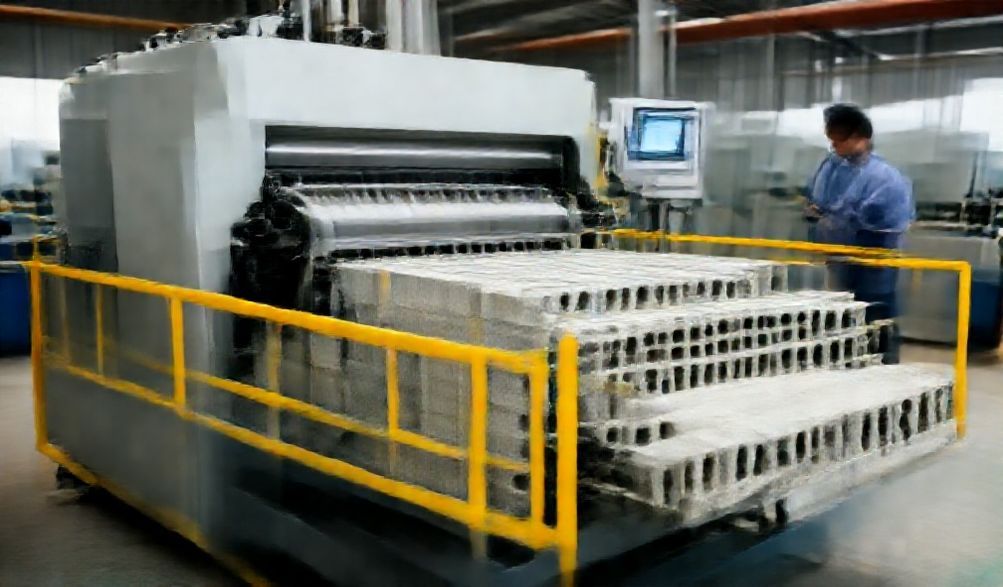
Leading Cement Bricks Making Machine Manufacturers in India: A Deep Dive into FUDA Brick Making Factory
Введение
The skyline of India is transforming. From ambitious infrastructure projects to the steady rise of residential complexes, the construction industry is in the midst of an unprecedented boom. At the foundation of this growth—quite literally—are cement bricks, the essential building blocks of modern India.
But behind every durable brick is a powerful machine that made it. Choosing the right cement bricks making machine manufacturer isn’t just a purchase; it’s a pivotal business decision that dictates your production capacity, product quality, and long-term profitability for years to come.
The Indian market is rich with manufacturers, each promising reliability and efficiency. Navigating this landscape requires insight. This guide serves as your comprehensive resource, mapping the key players and critical factors in the industry.
We place a special spotlight on Фабрика по производству кирпича FUDA, a name synonymous with robust engineering in this sector. By analyzing technology, support, and overall value, we aim to provide a decision-making framework grounded in real-world practicality and aligned with the principles of Опыт, Экспертиза, Авторитетность и Надёжность (E-E-A-T).
The Indian Market for Cement Brick Making Machines
India’s demand for construction machinery is directly fueled by its developmental ambitions. Understanding this market context is the first step in making an informed investment.
Growth Drivers: Infrastructure and Housing Demand
The market’s vigor is no accident. It’s propelled by powerful, interconnected forces:
- Государственные инициативы: Flagship programs like “Housing for All (Pradhan Mantri Awas Yojana)”и“Smart Cities Mission” have created a massive, sustained demand for affordable, quality housing and urban infrastructure.
- Private Sector Expansion: A surge in private residential townships, commercial spaces, and industrial projects further amplifies the need for reliable building materials.
- Material Shift: There is a pronounced move towards sustainable and cost-effective materials. Cement bricks, especially those utilizing industrial by-products like fly ash, offer strength, thermal insulation, and environmental benefits over traditional clay bricks, driving their adoption.
Ключевые производственные центры в Индии
Cement brick machine manufacturing is concentrated in major industrial corridors, offering distinct advantages:
- Gujarat & Maharashtra: Known for advanced engineering, a strong component supply chain, and a culture of innovation. Many leading automated machine manufacturers are based here.
- Tamil Nadu & Karnataka: Major hubs with deep expertise in industrial machinery, offering competitive solutions and skilled technical labor.
- Delhi NCR (National Capital Region): A key distribution and trading center for a wide range of machinery, from semi-automatic to fully automatic models.
Sourcing from these clusters often ensures better access to spare parts, technical expertise, and logistical efficiency.
Types of Machines Prevalent in the Market
Knowing the machine taxonomy is crucial. They are broadly categorized by automation and function:
-
По уровню автоматизации:
- Ручные станки: Low-cost, entry-level options requiring significant manual labor for mixing, feeding, and brick removal. Suitable for very small-scale or rural operations.
- Полуавтоматические станки: A balanced choice. They mechanize the critical compression and vibration processes but may require manual feeding or pallet handling. Ideal for small to medium-scale businesses.
- Полностью автоматические машины: High-output, computer-controlled systems that handle the entire process from raw material feeding to brick stacking with minimal human intervention. The choice for large-scale, profitable plants.
-
By Design:
- Стационарные станки для производства блоков: High-production machines where concrete blocks are produced at a fixed station and then moved to a curing area.
- Mobile “Egg Laying” Block Machines: Self-contained units that produce and deposit bricks directly on the ground, moving along as they work. Excellent for on-site production.
-
Crucial Distinction: Ensure you are looking at Машины для производства бетонных блоков (which use cement, sand, and aggregates) and not clay brick making machines, which use a completely different technology and raw material.
FUDA Brick Making Factory: An In-Depth Profile
As a significant player in this competitive field, FUDA Brick Making Factory has carved a niche. Let’s examine what defines their offering.
Company Legacy and Manufacturing Expertise
FUDA has established itself as a manufacturer focused on the core needs of the Indian brick producer. While specific founding timelines are part of their corporate narrative, their market presence is built on:
- Evolution with the Market: They have grown alongside India’s construction boom, adapting their product range from simpler models to more advanced, automated systems to meet increasing demands for productivity.
- Интегрированное производство: Operating from dedicated production facilities, they emphasize in-house manufacturing of key components, allowing for better quality control.
- Фокус на исследованиях и разработках: Their commitment is evident in the continuous refinement of machine designs for greater durability, ease of use, and energy efficiency, tailored to Indian working conditions and raw material variability.
Core Product Portfolio and Technical Specifications
FUDA’s range typically caters to the small, medium, and large entrepreneur. Their machines are often recognized by model codes like the QT series.
-
Flagship Models (Illustrative Examples):
- QT4-15: A popular semi-automatic or fully automatic model, ideal for mid-scale production. It can produce a variety of blocks (solid, hollow, pavers) with an output of several thousand blocks per 8-hour shift.
- QT6-15 & Higher Models: These represent higher-capacity, fully automatic lines with increased output, often featuring PLC control systems, automatic pallet feeders, and stackers for streamlined production.
-
Ключевые характеристики, на которые стоит обратить внимание:
- Объем производства Ranges from ~1,000 to over 10,000 blocks per 8-hour shift, depending on the model and block type.
- Требуемая мощность: Varies from standard 3-phase industrial connections for smaller models to higher capacity requirements for full automatic lines.
- Настройка: A major advantage is the use of interchangeable molds. A single machine can produce:
- Solid & Hollow Blocks (4″, 6″, 8″ standard sizes)
- Pavers and Interlocking Blocks
- Designer blocks for landscaping
Technology and Build Quality: What Sets Them Apart?
In a market sensitive to downtime, build quality is non-negotiable. FUDA’s proposition often hinges on:
- Прочная конструкция: Use of heavy-duty steel frames and reinforced structures to withstand the constant vibration and pressure of block production.
- Premium Core Components: Reliable гидравлические системы from trusted brands, high-efficiency vibration motors, and in advanced models, user-friendly PLC control panels for consistent operation.
- Efficiency Engineering: Designs focused on optimizing hydraulic and electrical consumption to reduce operating costs.
- Соответствие стандартам: Manufacturing processes aimed at meeting relevant Indian quality and safety standards, providing a baseline of reliability.
Critical Factors When Choosing a Manufacturer (Beyond Brand)
While brand reputation is a starting point, your due diligence must go deeper. Here are the non-negotiable factors to evaluate.
Assessing Machine Performance and Suitability
The “best” machine is the one that fits your business perfectly.
- Соответствие выпуска продукции спросу: A machine producing 5,000 blocks/day is useless if you can only sell 1,000. Analyze your local market demand, project pipelines, and growth plans.
- Гибкость сырья: Test if the machine can efficiently handle the mix proportions you plan to use—especially important with fly ash, which is eco-friendly and cost-effective. A good machine should tolerate slight variations in aggregate size and moisture content.
The Importance of After-Sales Service and Support
This is where the true cost and value of your investment are revealed over time. A cheap machine with poor support becomes expensive overnight.
- Установка и обучение: Does the manufacturer provide on-site installation supervision and comprehensive operator training? Proper setup is critical for performance.
- Экосистема запчастей: Inquire about the availability and location of spare parts. A local or responsive supply chain minimizes downtime.
- Сервисная сеть: Is there a team of trained service engineers who can be dispatched? What are the typical response times?
- Warranty Clarity: Understand exactly what is covered (e.g., hydraulic system, main frame, motors) and for how long. A clear, fair warranty is a sign of confidence.
Cost Analysis: Investment vs. Long-Term ROI
Look beyond the sticker price to the Total Cost of Ownership (TCO).
- TCO Components: Include machine price, installation, foundation, initial training, operating power costs, routine maintenance, and potential spare parts.
- Calculating Break-Even: Estimate based on:
- Machine’s daily output capacity
- Your local selling price per brick
- Cost of raw materials per brick
- Fixed operational costs
This will give you a realistic picture of your investment’s payoff period.
- Financing: Some manufacturers or their dealers offer financing schemes or can guide you to MSME-friendly loan options.
Why Trust and Authority Matter in Heavy Machinery
When investing in capital equipment that will run your business, E-E-A-T isn’t an abstract concept—it’s a due diligence checklist.
Verifying Manufacturer Credentials (E-E-A-T in Practice)
- Сертификаты: Look for ИСО certifications relevant to manufacturing quality. For certain components or export models, CE marking can indicate adherence to international safety standards.
- Proof of Work: Client testimonialsиdetailed case studies are gold. Even better, a reputable manufacturer will often arrange or allow visits to existing customer plants to see the machine in operation.
- Industry Longevity: A manufacturer that has consistently served the market for years has likely navigated various challenges and improved its products based on feedback.
Safety Standards and Operational Training
- Встроенная безопасность: Machines should have safety guards on moving parts, emergency stop buttons, and stable, secure designs.
- Training Imperative: The safest machine can be hazardous without proper training. Ensure the manufacturer provides thorough operational and safety training for your team.
Sustainable and Future-Ready Practices
- Eco-Friendly Production: Machines that optimally use зола-унос (a thermal power plant by-product) help in creating greener bricks and can reduce material costs.
- Эффективный дизайн: Energy-efficient motors and optimized hydraulic cycles reduce the carbon footprint and electricity bills of your operation.
Frequently Asked Questions (FAQ)
Q1: What is the approximate price range for a FUDA cement brick making machine in India?
А: Prices vary significantly based on automation level and production capacity. A basic manual/semi-automatic machine can start from ₹5-10 lakhs, while high-output, fully automatic production lines can range from ₹25 lakhs to over ₹1 crore. It is essential to get a detailed quotation based on your specific output and automation requirements.
Q2: Can FUDA machines produce different types and sizes of bricks?
А: Yes, absolutely. Most FUDA block making machines are designed with interchangeable mold systems. This allows you to produce solid blocks, hollow blocks (in standard sizes like 4″, 6″, 8″), paving slabs, and interlocking blocks by simply changing the mold box. The process is relatively straightforward but requires proper training.
Q3: What kind of after-sales support can I expect from manufacturers like FUDA?
А: A reputable manufacturer should provide a comprehensive support package. This typically includes installation supervision, operator training, a standard warranty (often 12 months on core components), and access to a service team and spare parts. Always confirm the exact terms, the location of service centers, and spare parts availability in writing before finalizing your purchase.
Q4: How do I calculate the production capacity I need for my new brick plant?
А: Start by assessing your local market demand. Contact local builders, contractors, and hardware stores. Estimate the volume of bricks used in typical local projects. Your machine’s “blocks per shift” capacity should meet your current sales projections with some room for growth. It’s better to scale up gradually than to invest in underutilized, expensive capacity.
Q5: Are there government subsidies available for setting up a brick making plant?
А: Subsidies and schemes can be available, particularly under MSME (Micro, Small & Medium Enterprises) policies or state-level industrial promotion schemes. These change periodically. The best course is to consult with a District Industries Centre (DIC) or a local industry association for the most current and applicable information for your region and plant scale.
Conclusion
Selecting your cement bricks making machine manufacturer is a strategic decision that lays the foundation for your business’s future. The Indian market, with manufacturers like Фабрика по производству кирпича FUDA, offers a spectrum of technologies to suit every ambition and budget.
The ultimate choice, however, should transcend the machine’s specifications on paper. It must be rooted in a holistic evaluation of build quality, technological reliability, and—most critically—the manufacturer’s after-sales support ecosystem. By prioritizing a partner who demonstrates proven Экспертность, Авторитетность и Надёжность (Э-А-Н), you invest not just in a machine, but in a long-term partnership for productivity and growth.
Insist on factory visits, speak directly to existing customers, and analyze the total value proposition. In the dynamic construction sector of India, the right foundation is everything. Make yours solid.
<