Foundational Control: Mastering Raw Material Consistency
The quality of a finished block is predetermined by the consistency and properties of its constituent materials. Inconsistent inputs guarantee inconsistent outputs.
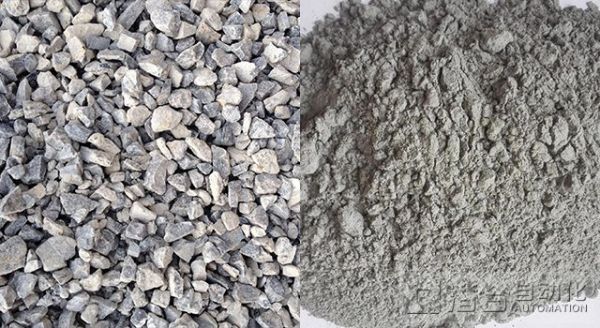
- Aggregate Grading and Quality: The size distribution and hardness of aggregates are paramount.
- Implement Sieve Analysis: Regularly test sand and coarse aggregate to ensure they conform to a consistent, optimal grading curve. A well-graded mix with a balance of particle sizes packs more densely, requiring less cement paste, reducing voids, and improving both strength and surface finish.
- Source Control: Establish and enforce strict specifications with aggregate suppliers. Variations in aggregate type, shape (crushed vs. rounded), and clay/silt content can dramatically alter water demand and final strength.
- Precision in Cement and Water Management:
- Cement Freshness and Storage: Cement must be stored properly to prevent pre-hydration from atmospheric moisture, which reduces its effectiveness. Use older stock first (FIFO – First In, First Out).
- The Water-Cement Ratio Imperative: This is the most critical variable. The target is to use the minimum water content necessary for complete hydration and workability. Excess water creates capillary pores upon evaporation, weakening the block and increasing absorption. Invest in automated moisture sensors for sand and implement weight-based batching for all materials, including water, to eliminate volumetric guesswork.
II. Optimizing the Production Process: From Mixer to Mold
With consistent materials, the focus shifts to the precision of the manufacturing process itself.
- Mixing Homogeneity: The mix must be uniform, with every aggregate particle coated in cement paste.
- Mixer Efficiency: Ensure your mixer (typically a pan mixer) is in good condition, with unworn blades, and is operated for a sufficient, fixed time per batch. Undermixing leads to weak spots.
- Mixing Sequence: Adopt a standardized sequence: load aggregates and most of the water first, mix briefly, then add cement and any remaining water/admixtures. This improves dispersion and efficiency.
- Machine Calibration and Maintenance:
- Vibration Optimization: The frequency, amplitude, and duration of vibration must be tuned for your specific mix. Insufficient vibration leads to poor compaction and honeycombing; excessive vibration can cause segregation. Experiment to find the “sweet spot” that yields maximum density with a smooth surface.
- Постоянство давления: Ensure the hydraulic system delivers consistent pressure every cycle. Monitor for leaks, pump wear, and valve malfunctions that can cause pressure drops.
- Mold and Pallet Integrity: Это не обсуждается. Worn or damaged mold liners produce blocks with poor dimensional tolerances and rough surfaces. Pallets must be perfectly flat and clean. Implement a strict schedule for mold inspection, maintenance, and pallet refurbishment/replacement.
III. Implementing Rigorous Quality Assurance and Curing Protocols
Quality is not inspected in; it is built in. A proactive QA system identifies trends before they become defects.
- In-Process and Final Testing: Move from reactive to predictive quality control.
- Daily Testing: Establish a simple on-site lab. Perform daily tests for прочность на сжатие (on cured samples), dimensional checks, and water absorption. Chart the results to identify any drift from standards.
- The “Ball Test”: Train operators to perform the simple ball test on the fresh mix (it should form a cohesive ball that crumbles when dropped) to quickly verify workability and moisture content before loading the machine.
- Scientific Curing: Curing is not just “letting blocks dry”; it is the controlled process of cement hydration.
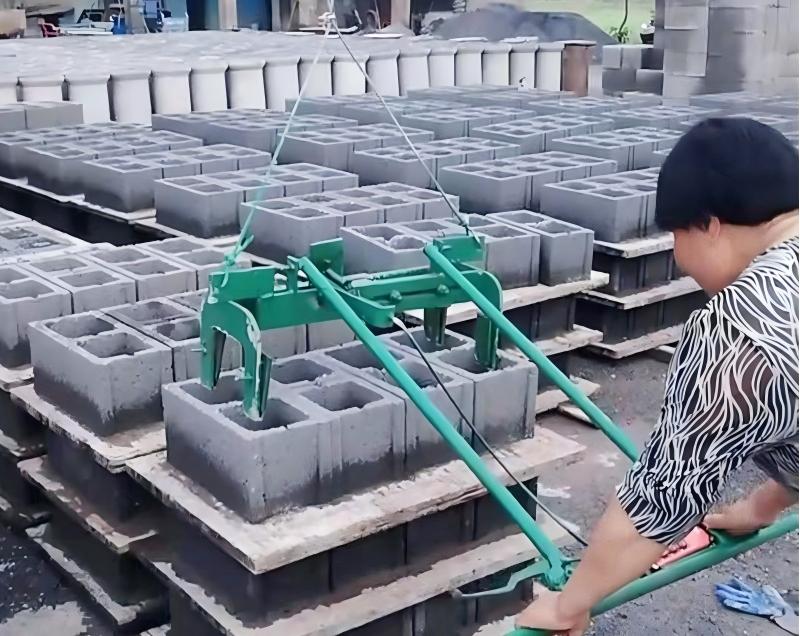
- Controlled Environment: If possible, cure blocks in a chamber or enclosed area where temperature and humidity can be managed. Avoid rapid drying from wind and direct sun, which causes plastic shrinkage cracks.
- Curing Duration: Blocks gain strength over time. Do not handle or ship “green” blocks prematurely. Establish a minimum curing period (e.g., 7-14 days) before they are moved to storage or shipment, based on strength test data.
- Data-Driven Decision Making: Use the data from your QA tests to close the feedback loop. If strength is low, analyze the w/c ratio and compaction. If absorption is high, investigate curing and compaction. Let empirical evidence guide your process adjustments.
Conclusion
Improving the quality of machine-made blocks is a systematic pursuit that integrates materials science, mechanical precision, and process discipline. It begins with the unwavering consistency of raw materials, is realized through the calibrated and well-maintained operation of the production line, and is validated and secured by a rigorous, data-centric quality assurance regime. For the ambitious manufacturer, this holistic approach transforms quality from a hoped-for outcome into a predictable, repeatable result. The reward is not merely a better block, but a stronger brand, reduced operational waste, access to higher-value projects, and the sustainable competitive advantage that comes from being known as a producer of uncompromising excellence.
FAQ
Q1: We have a good machine, but our block strength is inconsistent. Where should we start investigating?
А: Inconsistent strength almost always points to inconsistent water content or inconsistent compaction. First, rigorously audit your batching process: are you weighing water and compensating for sand moisture? Second, check your vibration system: are all motors working evenly, and is the cycle time consistent? These two areas account for the vast majority of strength variability.
Q2: Our blocks have a good finish on one side but are rough on the other. What causes this?
А: This typically indicates uneven compaction or mold wear. Check the vibration table to ensure it is level and that all vibrators are operational and producing equal force. Also, meticulously inspect the mold liners on the rough side for wear, scoring, or buildup of hardened concrete that prevents smooth material flow and release.
Q3: Is investing in automated batching and moisture sensors worth the cost for quality improvement?
А: For any serious operation targeting high and consistent quality, it is one of the highest-return investments you can make. Automation eliminates human error in the most critical variable—the water-cement ratio. It pays for itself through reduced cement waste (from over-watering), eliminated batches of scrap blocks, and the ability to guarantee a consistent product specification to clients.
Q4: How does curing method impact block quality beyond initial strength?
А: Proper curing directly impacts long-term durability, not just early strength. Blocks cured under controlled, moist conditions develop a denser microstructure with fewer micro-cracks. This results in lower permeability, higher resistance to freeze-thaw damage, and reduced efflorescence. It is an investment in the block’s lifelong performance.
Q5: Can we improve the quality of our blocks without buying new equipment?
А: Absolutely. Significant gains are almost always achievable through process refinement before capital investment. Start by enforcing strict raw material specifications, implementing weight-based batching, establishing a disciplined preventive maintenance schedule for your existing machine, optimizing vibration timing, and instituting a scientific curing protocol. These steps, driven by management commitment, often yield dramatic quality improvements at minimal cost.