
Полное руководство по покупке станка для производства блоков с замковым соединением в Нигерии (2026)
Введение
Нигерия сталкивается с ошеломляющим дефицитом жилья, который оценивается более чем в 28 миллионов единиц. В условиях роста цен на цемент, сталь и импортные строительные материалы строительная отрасль срочно ищет устойчивые и экономически эффективные альтернативы. Традиционное производство кирпича часто является трудоемким, экологически вредным и нестабильным по качеству, создавая узкие места для проектов любого масштаба.
Вот и появляется машина для производства блоков с замковым соединением — революционная технология, которая меняет ландшафт строительной отрасли Нигерии. Позволяя производить на месте прочные, не требующие раствора кирпичи из легкодоступного грунта и небольшого количества цемента, эта машина предлагает эффективное решение строительных проблем нашей страны.
Это всеобъемлющее руководство не является лишь теоретическим. Оно основано на обширных рыночных исследованиях, консультациях с практикующими нигерийскими инженерами-строителями и успешными производителями блоков, а также на глубоком анализе операционных реалий в рамках нашего уникального экономического и инфраструктурного контекста. К концу этой статьи вы получите четкое представление о типах доступного оборудования, ключевых факторах для совершения разумной покупки, реалистичном взгляде на затраты и окупаемость инвестиций, а также проверенную стратегию поиска надежного поставщика в Нигерии.
Что такое машина для производства блоков с замковым соединением и почему она революционизирует строительство в Нигерии?
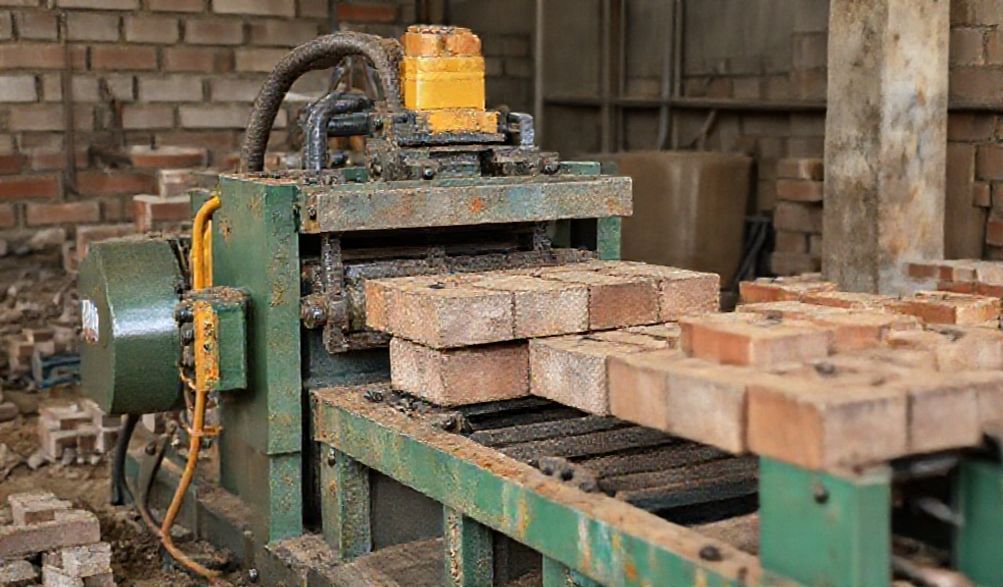
Машина для производства блокирующихся кирпичей — это устройство, которое прессует смесь грунта (обычно латерита), небольшого процента цемента и воды в кирпичи со специально разработанными выступами и пазами. Эти особенности позволяют кирпичам сцепляться друг с другом, как детали пазла, в процессе строительства.
Как работают блоки с замковым соединением: простота инженерного решения
Основное новшество заключается в дизайне кирпича. Система сцепления устраняет необходимость использования влажного раствора для вертикальных швов между кирпичами.
- Скорость строительства:Стены можно возводить в три раза быстрее, чем традиционными методами, поскольку не нужно ждать, пока раствор схватится между рядами.
- Сокращение квалифицированной рабочей силы:Простая система блокировки означает, что каменщикам требуется менее специализированное обучение, что решает ключевую проблему в отрасли.
- Структурная целостность:При правильном уплотнении эти кирпичи обладают высокой прочностью на сжатие. Конструкция с замковым соединением также обеспечивает отличную прочность на сдвиг, что делает сооружения более устойчивыми к боковым нагрузкам.
Нигерийский контекст: Решение местных проблем
Эта технология идеально подходит для нужд Нигерии. Она напрямую решает ряд системных проблем:
- Закупка материалов:Он использует богатую латеритную почву Нигерии, снижая зависимость от дорогих и нестабильных импортных материалов.
- Дефицит жилья:Скорость и более низкая стоимость за квадратный метр делают эту технологию жизнеспособной для крупномасштабных проектов доступного жилья, как государственных, так и частных.
- Предпринимательство: It creates significant SME opportunities. Individuals can start a brick-making venture to supply the booming construction market in urban and peri-urban areas.
- Government Alignment: The technology supports initiatives like the National Housing Policy and aligns with the Nigerian Building and Road Research Institute (NBRRI) promotions for sustainable local building materials.
Types of Interlocking Brick Machines Available in Nigeria
Choosing the right type of machine is your first critical decision. The Nigerian market offers three main categories, each suited to different scales and budgets.
Ручные станки для производства блоков с замковым соединением
These are hand-operated presses, often using a lever mechanism to generate compression force.
- Идеально подходит для: Startups with limited capital, small personal projects, community-led builds, and areas with unreliable electricity.
- Плюсы:
- Самые низкие первоначальные затраты.
- Zero energy consumption.
- Highly portable and simple to maintain.
- Минусы:
- Low output (typically 300-800 bricks per day).
- Physically demanding operation.
- Brick quality can vary with operator consistency.
Полуавтоматические станки для производства блоков с замковым соединением
This category often uses a hydraulic system (powered by electricity or a diesel engine) to apply pressure. Some loading and brick removal may still be manual.
- Идеально подходит для: Growing SMEs, medium-scale housing developments, and cooperative societies.
- Плюсы:
- Excellent balance between cost and production capacity.
- More consistent brick quality due to uniform pressure.
- Reduces physical strain compared to manual machines.
- Минусы:
- Higher initial investment than manual presses.
- Requires a power source (generator or grid).
- Needs basic technical knowledge for operation and maintenance.
Fully Automatic Interlocking Brick Machines
These are complete production lines. They automatically mix raw materials, compress bricks, and sometimes even stack them on pallets.
- Идеально подходит для: Large block manufacturing plants, major construction firms undertaking big projects, and investors targeting high-volume supply.
- Плюсы:
- Very high output (5,000+ bricks per day).
- Exceptional consistency and quality.
- Maximizes labor efficiency.
- Минусы:
- Significant capital investment required.
- Dependent on stable, high-capacity power supply.
- Requires advanced technical skills for maintenance and repair.
Comparative Table: Interlocking Brick Machine Types in Nigeria
| Feature | Manual | Semi-Automatic | Fully Automatic |
| :— | :— | :— | :— |
| Capital Cost | Low (₦150,000 – ₦500,000) | Medium (₦800,000 – ₦3,000,000) | High (₦4,000,000+) |
| Output/Day | 300 – 800 bricks | 1,000 – 3,000 bricks | 5,000 – 10,000+ bricks |
| Power Needs | None | Diesel Generator / Grid | Stable Grid/Industrial Generator |
| Labor Needed | 2-3 persons | 2-4 persons | 3-5 persons |
| Ideal User | Entrepreneur, Self-builder | SME, Contractor | Large Manufacturer, Major Developer |
Key Factors to Consider Before Buying Your Machine
Beyond the machine type, several Nigeria-specific factors will determine your long-term success.
Production Capacity & Scale of Your Project
Be ruthlessly realistic about your needs. Are you building a single house, starting a supply business for a local market, or aiming for large contractors? Your daily brick requirement dictates the machine size. Buying an under-capacity machine slows you down; an over-spec machine ties up capital unnecessarily.
Soil Quality and Brick Mix Formulation
This is where technical expertise is non-negotiable. Not all soil is equal.
- The Ideal Mix: A general guideline for stabilized laterite bricks in Nigeria is a ratio of 1 part cement to 6-8 parts of laterite soil (by volume), with about 10% water. However, this must be tailored.
- Soil Testing is Critical: Always test your soil for composition, clay content, and organic matter. Simple field tests exist, but for a new venture, a lab test is a wise investment. The right soil ensures strength and durability.
- Machine Adaptability: Ensure the machine you choose can effectively compress the specific mix you plan to use. Some machines are better suited for sandier mixes, others for more clayey soils.
Источник питания и эксплуатационные расходы
Factor in Nigeria’s energy reality.
- Diesel vs. Electricity: Calculate the fuel consumption of a diesel-powered hydraulic machine versus the cost of running an electric motor on a generator or grid power in your location. Diesel prices are volatile.
- Total Operational Cost: Include:
- Raw materials (cement, soil transport).
- Labor wages.
- Regular maintenance (grease, hydraulic oil, wear parts).
- Power/fuel.
- A contingency for spare parts.
After-Sales Support: The Most Critical Factor
Your relationship with the supplier begins после payment. A machine without support is a liability.
- Локальная техническая поддержка: Does the supplier have trained technicians within Nigeria who can respond to breakdowns?
- Обучение: Do they offer comprehensive training on machine operation, maintenance, and brick mix formulation?
- Гарантия: What is covered, and for how long?
- Наличие запасных частей: Are common wear parts (moulds, hydraulic seals, bearings) stocked locally, or must they be shipped from abroad, causing weeks of downtime?
- Red Flag: Avoid “ghost” suppliers who only have a website or a PO Box. Prioritize companies with a physical office, workshop, or showroom you can visit.
Finding a Reliable Supplier in Nigeria: A Buyer’s Checklist
Navigating the supplier landscape requires due diligence.
Local Dealers vs. Direct Import: Weighing the Options
- Local Dealer:
- Плюсы: Easier communication, established service network, faster access to parts, understands local challenges.
- Минусы: May have a higher markup; ensure they are authorized dealers.
- Direct Import (e.g., from China, India):
- Плюсы: Potentially lower unit cost.
- Минусы: High shipping and customs costs, complex logistics, zero local support, massive risk if machine arrives faulty. You are on your own for all maintenance.
Recommendation: For most Nigerian buyers, a reputable local supplier is the safer, wiser choice. Look for suppliers who are members of relevant bodies like the Manufacturers Association of Nigeria (MAN) or have verifiable partnerships with known international manufacturers.
Essential Questions to Ask Any Supplier
- “Can you provide contact details for 2-3 past clients in my region (e.g., Lagos, Abuja, Port Harcourt) for a reference check?”
- “What is included in the purchase price? (Delivery, installation, training?)”
- “What is the warranty period and what specific components does it cover?”
- “Where are your spare parts stocked, and what is the typical lead time for a critical part like a hydraulic pump?”
- “Do you have a technical team? What are your service call-out terms and costs after the warranty?”
- “Can you provide guidance or documentation on optimal soil mix ratios for my area?”
Visiting a Showroom or Existing Installation
Never buy based on pictures or videos alone. Insist on:
- A Showroom Visit: See and feel the machine’s build quality.
- A Site Visit: Ask the supplier to take you to an existing customer’s yard. Speak to that owner privately about their experience with the machine and the supplier’s support.
The Business Case: Cost Analysis and ROI for an Interlocking Brick Venture
Let’s translate this into a practical business plan for a small-scale SME.
Startup Cost Breakdown (Semi-Automatic Machine Example)
- Machine Cost: ₦1,800,000
- Delivery & Installation: ₦50,000
- Generator (5KVA): ₦300,000
- Site Preparation (Simple shed): ₦200,000
- Initial Raw Material Stock: ₦150,000
- Miscellaneous/Tools: ₦100,000
- Operational Capital (1 month): ₦200,000
- Total Estimated Startup Capital: ₦2,800,000
Revenue Projections and Market Pricing
- Market Price per Brick: Varies by region. Let’s assume an average of ₦120 per brick in a city like Ibadan or Benin.
- Daily Production Target: A conservative 1,200 bricks with a semi-automatic machine.
- Monthly Revenue (25 days): 1,200 bricks/day * 25 days * ₦120 = ₦3,600,000
Calculating Your Return on Investment (ROI)
Monthly Operational Costs:
* Cement & Soil: ₦400,000
* Labor (3 staff): ₦180,000
* Diesel for Generator: ₦120,000
* Maintenance & Contingency: ₦50,000
* Total Monthly Cost: ₦750,000
Monthly Gross Profit: ₦3,600,000 (Revenue) – ₦750,000 (Cost) = ₦2,850,000
Payback Period: ₦2,800,000 (Startup Cost) / ₦2,850,000 (Monthly Profit) ≈ 1 month.
This is a simplified, optimistic scenario. In reality, factor in market fluctuations, downtime, and slower initial sales ramp-up. A more conservative payback period for a well-run operation is 3-6 months, which remains an excellent return.
Раздел часто задаваемых вопросов
Q1: What is the average price range for an interlocking brick machine in Nigeria?
A1: Prices vary widely. Manual machines start from around ₦150,000. Semi-automatic machines range from ₦800,000 to ₦3,000,000. Fully automatic production lines can cost from ₦4 million to over ₦15 million, depending on capacity and automation level.
Q2: Can I use laterite soil alone, or do I need to mix it with cement?
A2: You must use a stabilizer. For durable, load-bearing bricks, Portland cement is the most common and reliable stabilizer. The cement reacts to create a strong bond. Using soil alone will result in bricks that degrade quickly with water exposure.
Q3: How many bricks can one machine produce in a day?
A3: As shown in the comparison table, output depends entirely on the machine type: Manual (300-800/day), Semi-Automatic (1,000-3,000/day), Fully Automatic (5,000+/day). Actual output also depends on crew efficiency and workflow.
Q4: Are buildings made with interlocking bricks approved by Nigerian building codes?
A4: Yes, when constructed properly. The Nigerian Building and Road Research Institute (NBRRI) has extensively researched, endorsed, and provided specifications for cement-stabilized laterite bricks. Compliance with recommended mix designs, compaction, and construction guidelines is key. For any project, always engage a registered structural engineer to ensure your design meets all safety standards.
Q5: Where can I get training on operating the machine and the brick mix formula?
A5: Reputable local machine suppliers should provide comprehensive training as part of the purchase package. Additionally, organizations like NBRRI and some state agricultural or entrepreneurship development agencies occasionally offer workshops on alternative building technologies.
Заключение
The interlocking brick machine represents more than just a piece of equipment; it is a catalyst for change in the Nigerian construction sector. It empowers developers to build faster and more affordably, and it creates a clear path for entrepreneurs to build profitable, sustainable businesses that address a fundamental national need.
Your journey should begin with a clear assessment of your specific goals, budget, and local market conditions. Remember, you are making an investment, not just a purchase. The right machine, backed by the right supplier support, can yield returns far beyond the financial.
We encourage you to use this guide as a foundation for your own thorough research. Visit multiple suppliers, speak to current machine owners, and test your soil. Arm yourself with knowledge to make a confident, successful investment in Nigeria’s future.
METADATA_START—
DISPLAY_TITLE: The Ultimate Guide to Buying an Interlocking Brick Machine in Nigeria (2026)
SEO_TITLE: Interlocking Brick Machine Nigeria: 2026 Buyer’s Guide
META_DESC: Complete guide to buying an interlocking brick machine in Nigeria. Compare types, costs, suppliers & calculate your ROI. Make an informed investment.
IMG_PROMPT: A dynamic, sunlit shot at a construction site in Nigeria, focusing on a modern hydraulic interlocking brick machine in action. A worker’s hands are placing a freshly pressed, reddish-brown laterite brick onto a neatly stacked wall. The background shows a partially built, mortar-less wall, with other bricks and bags of cement visible. The image conveys industry, innovation, and local manufacturing.
—METADATA_END—