
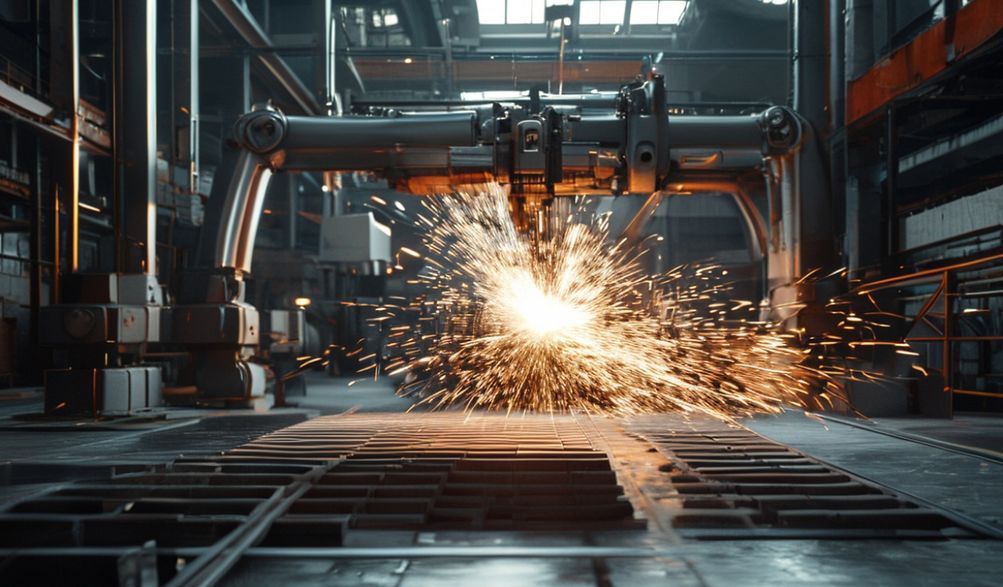
Maximizing Production with High Pressure Block Making Machines: A Deep Dive into FUDA Brick Making Factory
Введение
In the world of construction, a universal challenge persists: the relentless demand for consistent, high-strength, and affordable building blocks. The integrity of every structure, from a modest home to a towering skyscraper, hinges on the quality of its most fundamental components. For decades, manufacturers have sought solutions to balance volume, quality, and cost—often finding themselves compromising on one to achieve another.
Enter the industrial-grade answer: the high-pressure block making machine. This technology represents a paradigm shift, moving brick and block production from a craft into a precise, high-output science. By applying immense, controlled force, these machines create building materials of exceptional density and durability, directly addressing the core needs of modern construction.
But what does this look like in practice? At the Фабрика по производству кирпича FUDA, this isn’t just theoretical technology; it’s the operational heartbeat. With years of refined industry experience, FUDA stands as an exemplar, leveraging advanced high-pressure machinery to achieve results that set a benchmark for quality and efficiency. Their success story is a powerful case study in technological adoption done right.
The purpose of this comprehensive guide is twofold. First, to provide business owners, factory managers, and construction professionals with an expert-level understanding of high-pressure block making technology. Second, to translate that knowledge into practical insights by examining how FUDA integrates this machinery into a seamless, profitable production line. This article synthesizes technical specifications, industry best practices, and operational data to serve as your definitive resource.
What is a High Pressure Block Making Machine? The Core Technology Explained
At its essence, a high-pressure block making machine is a powerful press designed to compact raw materials into dense, uniform blocks using immense force. Unlike traditional methods that rely on vibration or lower-pressure shaping, these machines apply focused, extreme pressure to achieve superior material integrity.
The Principle of High-Pressure Compaction
The core science is straightforward yet powerful: extreme pressure creates extreme density.
- The Force: Machines utilize powerful hydraulic or mechanical systems to apply pressure measured in tons (e.g., 150-ton, 300-ton) or Megapascals (MPa). This force is concentrated directly onto the raw material mix within a mold.
- Преобразование: This intense pressure forcibly expels air voids and compresses the particulate materials (like cement, sand, aggregates, fly ash) together. The resulting inter-particle friction and bonding are significantly stronger than what is achieved through vibration alone.
- The Direct Correlation: There is a direct, measurable relationship between applied pressure and final block quality. Higher pressure yields:
- Greater Density: A tighter, less porous structure.
- Более высокая прочность на сжатие: A critical metric (measured in MPa) for load-bearing capacity.
- Повышенная долговечность: Improved resistance to weathering, water penetration, and freeze-thaw cycles.
Ключевые компоненты и их функции
Understanding the machine’s anatomy clarifies how it achieves this precision.
- The Mold & Pallet System: The custom-designed mold defines the block’s shape (solid, hollow, interlocking). A steel pallet sits beneath it, carrying the freshly pressed block through the production line for curing and stacking.
- The Hydraulic Power Unit: This is the machine’s “heart.” It consists of a pump, motors, valves, and hydraulic cylinders that generate and control the immense, smooth force required for compaction.
- The Control System (PLC – Programmable Logic Controller): The “brain” of the operation. This computerized system automates the entire pressing cycle—feeding, compacting, ejecting—ensuring pinpoint precision and repeatability for every single block.
- Система подачи и смешивания: While often a separate station, consistent production relies on a uniform supply of correctly proportioned and mixed raw materials, which is then accurately fed into the mold cavity.
Output Varieties: Beyond Standard Bricks
The versatility of these machines is a key advantage. By simply changing the mold, a single press can produce a diverse product catalog:
* Solid and Hollow Concrete Blocks
* Paving Stones and Slabs
* Interlocking Bricks for dry-stack construction
* Curb Stones and Landscape Elements
* Specialized shapes for architectural applications
Why Choose a High-Pressure System? Advantages for Your Business
Investing in a high-pressure block making machine is a strategic decision with tangible, long-term benefits that impact your product, your productivity, and your profitability.
Unmatched Product Quality and Consistency
This is the most significant advantage. High-pressure blocks are engineered materials.
* Структурное превосходство: They boast significantly higher compressive strength (often exceeding 10-15 MPa), meeting and surpassing stringent international building codes (ASTM, ISO).
* Lower Water Absorption: The dense structure minimizes water ingress, leading to better frost resistance and longevity in harsh climates.
* Точность размеров: PLC-controlled production ensures every block is identical, simplifying and speeding up the bricklaying process while reducing mortar use.
Exceptional Production Efficiency and Output
Automation and power translate directly into volume.
* Быстрые циклы производства: Modern machines can complete a press cycle in 10-20 seconds.
* High Hourly Output: Depending on the model, production can range from 1,000 to over 5,000 blocks per hour in a fully automated line.
* Оптимизация труда: Semi-automatic and fully automatic systems drastically reduce the number of operators required per shift compared to manual or low-tech methods.
Significant Cost Savings in the Long Run
The higher initial investment is offset by a compelling return on investment (ROI).
* Reduced Labor Costs: Automation minimizes the workforce needed for core production.
* Минимизация отходов материалов: Precision feeding and high yield rates ensure raw materials are converted into sellable product, not scrap.
* Энергоэффективность: Modern hydraulic systems are designed for optimal power use per block produced.
* Market Premium: Superior quality blocks can command better prices and secure contracts with quality-conscious developers and government projects.
Versatility and Adaptability
A high-pressure machine future-proofs your business.
* Материальная гибкость: They can efficiently process a wide range of raw materials, including eco-friendly options like fly ash, slag, or certain types of recycled aggregates.
* Product Agility: The ability to quickly switch molds allows you to respond to market trends and customer demands without major capital reinvestment.
Inside the FUDA Brick Making Factory: A Model of Modern Production
To see these advantages in action, let’s explore the FUDA Brick Making Factory—a facility built around the principles of precision and efficiency.
FUDA’s Operational Philosophy and Quality Standards
FUDA’s reputation is founded on a non-negotiable commitment to quality. Their philosophy views the block not as a commodity, but as a critical structural component. This mindset drives their adherence to rigorous internal standards that often exceed local requirements, aligning with international benchmarks like ASTM and ISO. Their choice of machinery is the first, and most critical, step in upholding this promise.
A Walkthrough of the Production Line
A tour of FUDA’s plant reveals a streamlined, logical flow where the high-pressure machine is the central protagonist:
- Raw Material Storage & Batching: Incoming cement, aggregates, and sand are stored separately. A computerized batching system precisely weighs each component according to the specific mix design.
- Смешивание: The batched materials are conveyed to a high-efficiency mixer, where water and any additives are blended in to create a homogeneous, consistent feed stock.
- High-Pressure Molding (The Core Stage): The mixed material is fed into the press. Here, the FUDA-operated machine executes its programmed cycle: the mold fills, the hydraulic ram applies immense, controlled pressure, and the freshly formed, dense block is ejected onto a pallet. This process is a study in rhythmic, precise repetition.
- Курение: Pallets of green blocks are moved to a controlled curing chamber. Here, optimal temperature and humidity conditions allow the cement to hydrate fully, developing its designed strength efficiently.
- Palletizing & Shipping: Once cured, blocks are automatically stacked, banded, and prepared for shipment. The empty pallets return to the press, completing the cycle.
How High-Pressure Machinery Fuels FUDA’s Success
The investment in this technology has been transformative for FUDA:
* Масштабируемость: It enables them to reliably fulfill large-scale, time-sensitive orders for major construction projects.
* Brand Reputation: Their consistent quality has made “FUDA Blocks” a trusted name, synonymous with reliability.
* Market Expansion: The ability to produce a wide range of high-specification products has allowed them to enter new markets, including commercial paving and specialized architectural supply.
Key Specifications to Evaluate When Selecting Your Machine
Choosing the right machine requires careful analysis of your specific needs. Here are the critical specifications to scrutinize.
Pressure Capacity: The Primary Metric
Pressure, measured in tons or MPa, is the defining characteristic.
* 150-200 Ton Range: Suitable for standard hollow blocks, paving stones, and lower-strength requirements.
* 300+ Ton Range: Necessary for producing high-strength solid blocks, heavy-duty curb stones, and interlocking blocks for load-bearing walls. Match the pressure to your target product’s compressive strength needs.
Degree of Automation: From Semi to Fully Automatic
This choice balances initial cost with long-term operational expense.
* Полуавтоматический: Requires operators to feed pallets and sometimes remove blocks. Lower upfront cost, higher labor requirement.
* Полностью автоматический: Integrated with automatic pallet feeders, stackers, and conveyors. Higher investment, but minimal labor and maximum output consistency. For high-volume operations like FUDA’s, full automation is typically essential.
Production Capacity (Blocks per Hour/Day)
Be realistic about your current and projected market demand. A machine’s rated capacity (e.g., 2,000 blocks/hour) must align with your business growth plan. Overbuying ties up capital; underbuying limits your revenue potential.
Power Requirements and Overall Footprint
These are crucial for factory planning.
* Electrical Load: Ensure your facility’s power supply can handle the machine’s motors and hydraulic system.
* Factory Layout: Account for the machine’s size, plus necessary space for material feed, block ejection, and maintenance access.
After-Sales Support: Service, Parts, and Training
This is arguably the most important long-term consideration. A machine is a long-term asset. Prioritize manufacturers or suppliers who offer:
* Comprehensive operator and maintenance training.
* A clear warranty and readily available spare parts inventory.
* Technical support, either remotely or through local service engineers. FUDA’s success is partly attributable to partnering with suppliers who provide this critical backbone of support.
Optimizing Your Block Production: Best Practices and Pro Tips
Owning the machine is just the start. Optimal performance comes from how you use and maintain it.
Perfecting the Raw Material Mix Design
The best press cannot compensate for a poor mix. Key guidelines include:
* Aggregate Gradation: Use a well-graded mix of fine and coarse aggregates to achieve maximum packing density before pressing.
* Cement Content: Sufficient cement is vital for strength, but the mix must be optimized for cost and workability.
* Water-Cement Ratio: This is critical. Too little water prevents proper hydration; too much reduces green strength and can cause sticking. Aim for a low, precise ratio suitable for compaction.
* Влажность: The raw mix should be damp, not wet or dry. A “ball-in-hand” test is a common practical check.
Maintenance Schedule for Peak Performance
Preventive maintenance is non-negotiable for uptime and machine lifespan.
* Ежедневно: Check hydraulic fluid levels, inspect for oil leaks, clean the mold and pallets, and ensure all safety guards are in place.
* Weekly: Lubricate all moving parts as per the manual, check and tighten bolts and fittings, inspect hydraulic hoses for wear.
* Monthly/Quarterly: Change hydraulic filters, conduct a thorough inspection of the mold for wear or damage, calibrate the pressure sensors if needed.
Устранение распространённых проблем
- Blocks Sticking in Mold: Likely causes are a worn mold, insufficient mold release agent, or an overly wet mix.
- Low Block Strength: Check the mix design (cement content, w/c ratio), ensure the machine is reaching its full set pressure, and verify the curing process.
- Surface Cracks on Blocks: Often caused by improper curing (too fast drying), vibration during the green state, or an incorrect mix with too much fine material.
Frequently Asked Questions (FAQ)
Q1: What is the typical lifespan of a high-pressure block making machine?
А: With proper maintenance and operation, a well-built high-pressure machine can have a productive lifespan of 15 to 20 years. The key factors are the quality of its construction, the intensity of use, and, most importantly, adherence to a rigorous preventive maintenance schedule.
Q2: Can these machines use recycled materials like crushed construction waste?
A: Yes, absolutely. Many modern high-pressure machines are engineered to accommodate a percentage of recycled aggregates. This supports sustainable construction practices. The crucial step is careful calibration of the mix design to account for the variable properties of recycled materials, ensuring the final block still meets strength and durability standards.
Q3: How does the initial investment compare to traditional brick-making methods?
А: The capital cost is undeniably higher than setting up a manual or small-scale vibration-based plant. However, the ROI analysis tells the full story. The investment is recouped through vastly superior production rates, dramatically lower per-block labor costs, the ability to sell a premium-quality product, and significant reductions in material waste. It is an investment in scaling and modernizing your business.
Q4: What kind of training do operators need?
А: Reputable equipment suppliers provide comprehensive training as part of the purchase. Operators need a good mechanical aptitude, attention to detail, and an understanding of safety protocols. Advanced engineering degrees are not required. The training focuses on machine operation, basic troubleshooting, routine maintenance, and quality control checks.
Q5: How does FUDA ensure consistent quality across all its blocks?
А: FUDA employs a multi-layered quality assurance system:
1. Machine Precision: Their PLC-controlled machines apply the exact same pressure and cycle time for every block.
2. Input Control: Strict specifications and checks on all incoming raw materials.
3. Process Control: Standardized mixing and controlled curing environments.
4. Output Verification: Regular sampling and testing of finished blocks for compressive strength and dimensional tolerance in their onsite lab.
Заключение
The adoption of high-pressure block making technology represents a fundamental leap forward for construction material manufacturers. It directly transforms the core economics of production by marrying unmatched product quality with industrial-scale efficiency and long-term cost savings. The journey from raw material to finished block becomes a controlled, precise, and highly profitable operation.
The FUDA Brick Making Factory stands as a powerful testament to this potential. Their success is not accidental; it is engineered through the strategic implementation of advanced machinery, coupled with an unwavering operational discipline focused on quality. They exemplify how the right technology, when integrated into a well-managed system, can build not just superior blocks, but a superior business reputation.
As you consider the future of your own operation, let this be your guiding principle: focus on your specific production goals, the quality standards your market demands, and the общая стоимость владения—not just the purchase price. The logical next step is to engage with reputable manufacturers and suppliers, those who align with the standards demonstrated by industry leaders like FUDA. Request detailed specifications, discuss your specific needs, and, if possible, arrange for factory visits or material demonstrations.
In the construction industry, trust is built on a foundation of reliability. Investing in advanced, well-supported machinery is more than a capital expense; it is a foundational decision for building a reputable, efficient, and enduring business that will stand the test of time.
<