
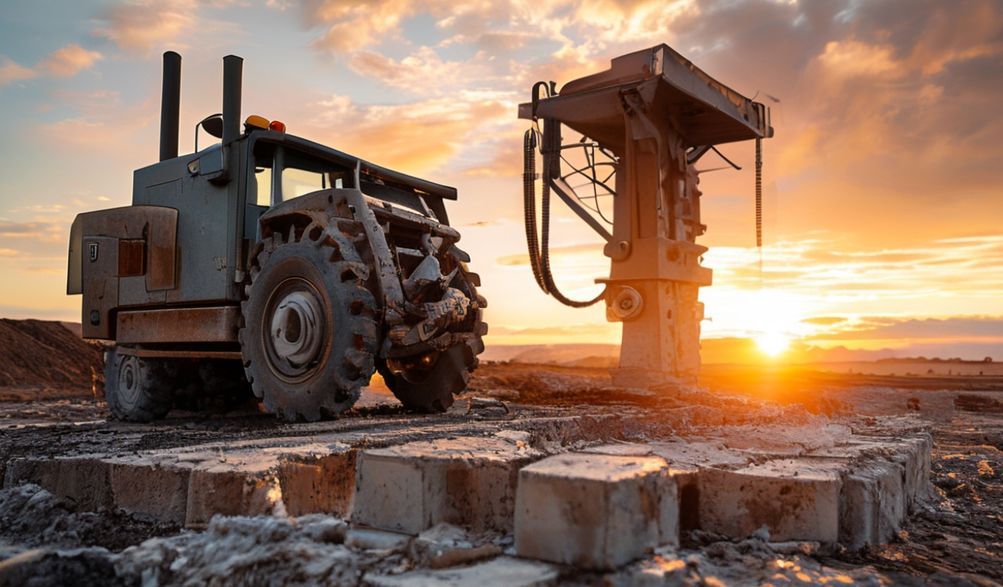
Полное руководство по машинам для производства дизельных блоков для кладки яиц: анализ эффективности и затрат
Введение
Представьте себе: у вас есть перспективный строительный проект в сельской местности или на развивающейся городской окраине. Спрос на доступное жильё высок, но так же высоки и затраты на традиционный кирпич. Чтобы усугубить ситуацию, электрическая сеть либо отсутствует, либо страдает от ежедневных непредсказуемых отключений. Доставка готовых блоков с удалённого производства съедает и без того небольшую прибыль. Этот сценарий — повседневная реальность для бесчисленных предпринимателей и застройщиков малого и среднего масштаба по всему миру.
Если это находит у вас отклик, то это подробное руководство станет вашим незаменимым ресурсом. Мы предоставим всесторонний, непредвзятый анализ ключевого инструмента для автономного и экономичного строительства:Машина для производства блоков для откладывания яиц на дизельном топливеСоставленное на основе детальных отраслевых спецификаций, прямых данных производителей и концентрированных практических знаний, это руководство призвано отделить суть от маркетингового шума.
Наша цель проста: вооружить вас знаниями, необходимыми для принятия уверенного и обоснованного инвестиционного решения. Мы не будем продвигать какой-либо конкретный бренд. Вместо этого мы всесторонне рассмотрим преимущества, недостатки, реальные эксплуатационные расходы и ключевые критерии выбора этих надёжных машин. К концу вы поймёте, подходит ли вамДизельный блок для укладки яицэто правильный движок для вашегорентабельный, автономное строительствопредприятие
Что такое дизельная машина для производства яйцевидных блоков?
В своей основе эта машина представляет собой мобильную автономную фабрику по производству бетонных блоков. Она сочетает дизельный двигатель с уникальной системой формования блоков, создавая универсальное решение для производства основных строительных материалов непосредственно на месте.
Основная функция и механизм «откладывания яиц» объяснены
Название "несущая яйца" идеально описывает принцип её работы. В отличие от стационарных машин для производства блоков, которые требуют деревянных или стальных поддонов для перемещения и отверждения каждого блока, эта машина формирует блок, а затем укладывает его прямо на ровную подготовленную поверхность земли — подобно тому, как курица откладывает яйцо.
Вот основной процесс:
1. Бетонная смесь (цемент, песок, заполнитель, вода) вручную загружается в бункер машины.
Смесь подается в форму (определенной блочной формы), установленную на вибростол.
Мощный дизельный двигатель приводит в действие вибратор, который уплотняет бетонную смесь с высокой частотой и амплитудой.
4. Одновременно гидравлический или механический домкрат оказывает давление сверху.
5. После уплотнения форма поднимается вертикально, оставляя свежесформированный блок аккуратно на земле.
Затем машину вручную перемещают или перетаскивают лебедкой на следующее место, и цикл повторяется.
Эта система без поддонов является ключом к её простоте, низкой начальной стоимости и портативности.
Роль дизельного двигателя
Дизельный двигатель — это сердце автономности этой машины. Он выполняет двойную функцию:
* Основной источник питания:Он обеспечивает всю необходимую механическую энергию для работы гидравлической системы, привода вибратора и механизма подачи материала. Это исключает любую зависимость от трехфазных или однофазных электрических сетей.
* Высокий крутящий момент для качества:Дизельные двигатели известны своим высоким крутящим моментом, особенно на низких оборотах. Это обеспечивает стабильную и мощную вибрацию, которая крайне важна для производства плотных, высокопрочных блоков с минимальным количеством пустот. Такая стабильная мощность играет ключевую роль в обеспечении однородного качества блоков на протяжении всего производственного цикла.
Общие выходные данные и типы блоков
Стандартная дизельная машина для производства яичных блоков обладает высокой универсальностью. Простая замена формы позволяет изготавливать различные виды блоков, включая:
* Пустотелые блоки: The most common output (e.g., 4″, 5″, 6″ thickness).
* Сплошные блоки: For foundations and high-load applications.
* Paving Blocks / Interlocking Pavers:Для подъездных путей, пешеходных дорожек и ландшафтного дизайна.
* Curved Blocks and other specialty shapes.
The machine’s output is typically measured in blocks per cycle (e.g., 3-4 blocks) and cycles per hour, leading to common production figures like 800-1500 blocks per standard 8-hour shift, depending on model and labor efficiency.
Key Advantages of Choosing a Diesel-Powered Model
Choosing a diesel engine over an electric model is a strategic decision that offers several compelling benefits, particularly in specific operational environments.
Unmatched Operational Independence
This is the paramount advantage. A Машина для производства блоков для откладывания яиц на дизельном топливе is completely immune to power cuts, low voltage issues, or the complete absence of an electrical grid. This makes it the undisputed champion for:
* Remote rural construction projects.
* Regions with unreliable infrastructure.
* Disaster recovery and rapid deployment construction.
Your production schedule depends on fuel availability, not the utility company.
Robust Power and Consistent Performance
Diesel engines are built for heavy-duty, continuous operation. They deliver:
* High Compression Force: Ensures blocks are well-compacted from the first to the last of the day.
* Stable Vibration: The engine’s consistent RPM under load leads to uniform vibration frequency, which is critical for the structural integrity and aesthetic finish of every block.
* Прочность: Well-maintained diesel engines (e.g., Lister-type, Changfa) are known for decades of service, outlasting many electric motors in harsh, dusty site conditions.
Portability and On-Site Production
The combination of a diesel engine (no power cords) and the egg laying design creates unparalleled mobility. You can produce blocks exactly where they are needed. This eliminates:
* Transport costs for finished blocks from a central plant.
* Handling damage during transit.
* Logistical delays.
The machine can be towed by a tractor or truck to different locations on a large site or between projects.
Long-Term Durability and Lower Maintenance (When Properly Serviced)
While the initial maintenance regimen is strict, the fundamental mechanics of a diesel engine are robust. With proper, timely servicing—regular oil changes, filter replacements, and coolant management—the core power unit can have a very long operational life with relatively predictable maintenance costs compared to complex electrical systems that can be vulnerable to moisture and dust.
Important Considerations and Potential Drawbacks
A trustworthy analysis must present a balanced view. Understanding these challenges is key to successful ownership.
Higher Operational Noise and Emissions
- Noise: Diesel engines are loud. Operating one in a densely populated urban area may lead to noise complaints and is often regulated. Ear protection for operators is mandatory.
- Emissions: The machine produces exhaust fumes. Adequate ventilation is crucial if operating in semi-enclosed spaces, and it is an environmental consideration.
Fuel Cost and Availability Factors
Your operational cost is directly tied to the diesel market.
* Price Volatility: Fluctuating diesel prices can impact your block production cost and profit margins.
* Supply Chain: You must ensure a reliable, on-site fuel supply. Running out of fuel halts production immediately. Secure storage for fuel is also a safety requirement.
Manual Handling and Labor Requirements
Do not mistake “semi-automatic” for “fully automatic.” These machines require significant manual labor:
* Feeding raw materials (sand, aggregate, cement) into the hopper.
* Mixing the concrete (often done in a separate pan mixer).
* Handling and stacking the freshly laid “green” blocks for curing.
* Moving the machine after each cycle (on some models).
A typical setup requires 3-4 workers for efficient, continuous operation.
Initial Investment and Comparison with Electric Models
Generally, the diesel version of an egg laying machine has a higher upfront cost than its equivalent electric model due to the cost of the engine itself. The decision is a trade-off:
* Electric Model: Lower upfront cost, lower per-hour “fuel” cost (electricity), but total dependence on a stable, powerful grid.
* Diesel Model: Higher upfront cost, higher per-hour fuel cost, but complete operational independence.
The right choice is purely determined by your site conditions and access to reliable, affordable electricity.
How to Choose the Right Machine for Your Project
Selecting the correct machine is where due diligence pays off for years. Use this framework for your evaluation.
Assessing Your Production Capacity Needs (Blocks Per Hour/Day)
Match the machine to your project’s scale and timeline.
* Small Projects/Startups: A machine producing 600-800 blocks/8-hour shift may suffice.
* Medium-Scale Commercial Projects: Look for models in the 1000-1500 blocks/shift range.
* Ключевой вопрос: Does the supplier’s claimed output account for realistic manual feeding and handling times, or is it a theoretical maximum?
Evaluating Diesel Engine Specifications
The engine is your primary investment. Scrutinize it.
* Бренд и репутация: Established brands (e.g., Changfa, Deutz, Lombardini) often have better parts availability.
* Horsepower (HP): 12HP to 24HP is common. More HP generally means more vibration power and the ability to handle stiffer mixes for faster demolding.
* Цилиндры: Single-cylinder engines are simpler; multi-cylinder engines often run smoother.
* Cooling System: Air-cooled is simpler; water-cooled may offer better temperature regulation in very hot climates.
Critical Machine Components to Inspect
Look beyond the engine. The machine’s construction determines block quality and longevity.
* Система вибратора: It should be a high-frequency, externally mounted eccentric vibrator. Ask about the bearing quality.
* Плесень: Check the steel thickness and hardness. Thicker, hardened steel molds resist wear and deformation, ensuring consistent block dimensions for thousands of cycles.
* Frame & Chassis: Must be heavy-duty welded steel to withstand constant vibration without cracking.
* Система смешивания: If it includes a mixer, check the paddle design and gearbox. Many operators prefer a separate, dedicated pan mixer for better mix consistency.
Verifying Supplier Reputation and After-Sales Support
This is the most critical step to mitigate risk.
* History: How long has the supplier/manufacturer been in business? Can they provide client references?
* Запчасти: Are wear-and-tear parts (molds, vibrator bearings, engine filters) readily available? Request a spare parts list and price catalog.
* Гарантия: What is covered (engine vs. machine frame)? What are the terms and duration?
* Техническая поддержка Do they offer installation guidance, operational training, and troubleshooting help? A reputable supplier will be willing to video call to help diagnose an issue.
Operational Best Practices and Maintenance Checklist
Success lies in daily discipline. Following these procedures will maximize uptime and machine life.
Daily Startup and Shutdown Procedures
- Startup: Check all fluid levels (engine oil, coolant, hydraulic oil). Ensure no tools or debris are in or around the mold. Run the engine at idle for a few minutes to warm up before engaging the vibrator.
- Shutdown: Let the engine idle for a minute to cool down. Clean all concrete residue from the mold, hopper, and feed system with water immediately after the last block. A hardened mix is incredibly difficult to remove.
Essential Routine Maintenance for the Diesel Engine
Follow the engine manufacturer’s manual strictly. Key tasks include:
* Checking and changing engine oil at recommended intervals.
* Cleaning or replacing air filters frequently (dusty sites demand daily checks).
* Replacing fuel filters.
* Checking coolant levels and belt tension.
* Draining water from the fuel sediment bowl.
Maintaining the Block Making Mechanism
- Ежедневно: Clean and lightly oil the mold interior and lifting mechanism to prevent rust.
- Weekly: Grease all lubrication points (zerk fittings) on the vibration table, guide rods, and moving parts.
- Monthly: Inspect bolts and nuts for tightness (vibration loosens them). Check the vibrator mounts for cracks.
Optimal Concrete Mix Design for Quality Blocks
The machine can only compact what you feed it. A poor mix leads to weak blocks.
* Standard Ratio: A common, strong mix is 1 part cement : 6 parts combined aggregate (a blend of sand and 3/8″ crushed stone).
* Water Content: This is critical. The mix should be just wet enough to bind when squeezed in your hand, with no excess water bleeding out. A too-wet mix will cause blocks to slump or crack during demolding.
* Последовательность: Use a consistent, measured mix for every batch. Variability is the enemy of uniform block strength.
Frequently Asked Questions (FAQ)
What is the average production output of a standard diesel egg laying machine?
A typical machine, operated by a crew of 3-4, can produce between 800 and 1500 blocks (of 4″ or 5″ size) in an 8-hour shift. Output depends on crew efficiency, mix preparation speed, and the specific machine model.
How much diesel fuel does it consume per hour or per 1000 blocks?
Consumption varies by engine size (HP) and load. A rough estimate is 1.5 to 2.5 liters of diesel per hour. Based on average output, this translates to approximately 10-20 liters of fuel per 1000 blocks produced.
Can this machine produce interlocking paving blocks or only hollow blocks?
Yes, it can produce interlocking paving blocks. You simply need to purchase and install the specific mold for the desired paver shape (e.g., zigzag, cobblestone, rectangle). The machine’s vibration and compaction process is the same.
What is the typical price range, and what factors cause variation?
Prices can range from $4,500 to $12,000+ (USD). Variation is driven by:
* Engine brand and power (HP).
* Build quality (steel thickness, component quality).
* Level of automation (e.g., hydraulic feed vs. manual).
* Included accessories (e.g., is a mixer included?).
* Supplier location and shipping costs.
What are the most common operational challenges, and how can I solve them?
- Block Breakage During Demolding: Usually caused by a concrete mix that is too dry or insufficient vibration time. Adjust water content slightly and ensure the vibrator runs for the full cycle.
- Poor Surface Finish/Weak Blocks: Caused by a mix that is too wet, insufficient cement, or a weak vibrator. Check the mix design and ensure the vibrator is functioning at full power.
- Machine Struggling to Lift Mold: Often due to a concrete mix that is too stiff (low water) or an underpowered hydraulic system. Adjust the mix and ensure the engine is at full operating RPM when engaging the lift.
Заключение
TheМашина для производства блоков для откладывания яиц на дизельном топливе stands as a powerful, independent solution for a specific set of challenges. Its ideal use case is clear: off-grid, remote, or power-unreliable construction projects where robust, on-site production is a necessity, not a luxury.
As we’ve outlined, this is a significant investment where the formidable advantages of fuel-based independence and portability must be carefully weighed against ongoing fuel costs, manual labor requirements, and a disciplined maintenance regimen.
Our final, most crucial recommendation is this: Prioritize a reputable supplier with proven after-sales support over the allure of the lowest price alone. A slightly more expensive machine from a partner who provides training, spare parts, and technical support will save you immense cost and frustration in the long run.
Use this guide as your checklist. Visit suppliers, inspect the machines, ask for client references, and, most importantly, request a live demonstration using your own local sand and aggregate. Seeing the machine produce a stack of solid blocks from your materials is the ultimate test of its suitability for your venture.
<