
Полное руководство по станкам для производства кирпичных блоков: виды, преимущества и как выбрать
Введение
Глобальная строительная отрасль ведет непрекращающуюся гонку со временем и бюджетом. В основе почти каждого проекта — от программ доступного жилья до обширных коммерческих комплексов — лежит фундаментальная потребность: надежные, экономичные поставки прочных строительных блоков. Десятилетиями это означало зависимость от крупных удаленных поставщиков, чьи расходы и логистика часто выходили из-под контроля. Сегодня мощное решение меняет правила игры для предпринимателей, инженеров и руководителей проектов: станок для производства кирпичных блоков. Эта технология позволяет взять под контроль цепочку поставок материалов, преобразуя сырье и недорогие компоненты в точные строительные блоки прямо на месте их использования.
Этот исчерпывающий справочник основан на фундаменте практических знаний отрасли. Мы объединили опыт инженеров-механиков, опытных операторов оборудования и владельцев успешных предприятий по производству блоков, чтобы предоставить вам ясный, всесторонний и надежный источник информации. Наша цель — выйти за рамки рекламных брошюр и предложить глубокое понимание, необходимое для серьезных инвестиций.
Будь вы строительным предпринимателем, стремящимся к вертикальной интеграции, гражданским инженером, подбирающим оборудование для масштабного проекта, или инвестором, оценивающим новое предприятие, это руководство предназначено для вас. Мы предлагаем детальное изучение того, что такое машины для производства кирпича и блоков, какие их типы существуют, какие ощутимые преимущества они дают и — что наиболее важно — ключевые факторы, которые необходимо учесть, чтобы выбрать идеальную машину для ваших конкретных целей. Давайте построим ваши знания с самого основания.
Что такое машина для производства кирпичных блоков? Основная функция и производительность
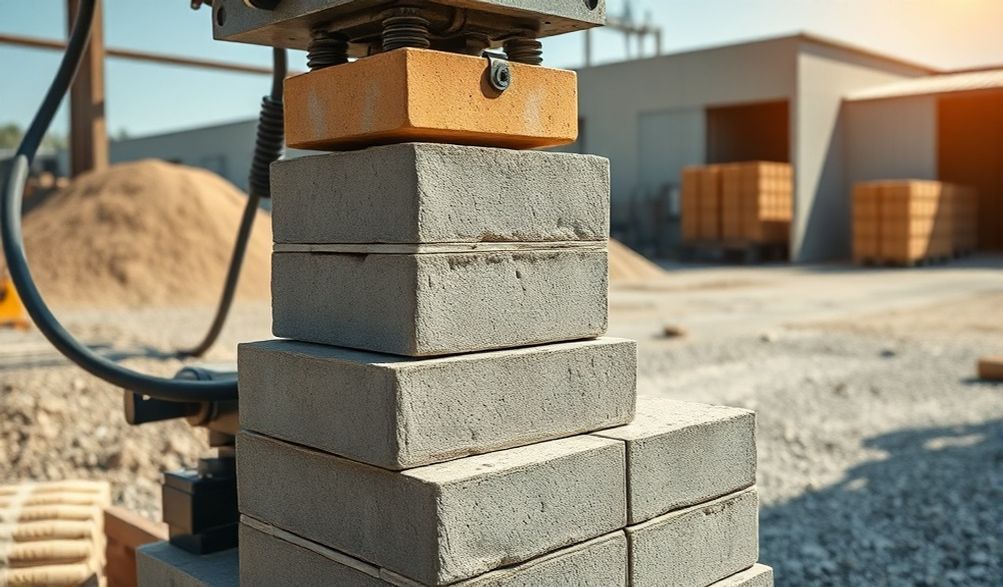
По своей сути, станок для производства блоков — это устройство, предназначенное для автоматизации и стандартизации изготовления строительных блоков. Он заменяет трудоемкое, нестабильное ручное формование механизированным процессом, который обеспечивает единообразие, прочность и эффективность. Основным продуктом теперь является не просто простой глиняный кирпич; современные машины производят огромный ассортимент бетонных стеновых блоков (CMU), которые формируют каркас современного строительства.
От сырья до готового блока: Основной процесс
Магия блочной машины заключается в последовательном повторении простого, но эффективного процесса:
- Смешивание:Сырьевые материалы смешиваются для получения суховатой бетонной смеси. Точное соотношение компонентов критически важно для конечной прочности блоков.
- Кормление:Эта смесь подается в полость формы машины (или в бункер, в автоматизированных системах).
- Уплотнение и формование:Здесь одновременно происходят два критически важных действия.Вибрацияприменяется на высокой частоте для удаления воздушных карманов и обеспечения заполнения смесью каждого угла формы. Одновременно огромноедавление(механическое или гидравлическое) воздействие применяется для плотного уплотнения материала.
- Выброс:Новый, сильно уплотненный блок выбрасывается из формы на поддон или на землю.
- Курение:Затем блоки перемещают в зону отверждения, где они набирают прочность в течение нескольких дней за счет контролируемого процесса гидратации.
Общие сырьевые материалыиспользуемые включают:
* Портландцемент (вяжущее вещество)
* Песок (мелкий заполнитель)
Щебень или гравий (крупный заполнитель)
* Fly ash (an industrial by-product that can enhance properties and reduce cement use)
Вода
Common Outputs: More Than Just Standard Bricks
By simply changing the mold, a single machine can produce a versatile portfolio of products:
* Пустотелые блоки: The most common type, used for walls. Their hollow cores reduce weight, improve insulation, and allow for rebar and concrete filling.
* Сплошные блоки: Dense and heavy, used for foundations, load-bearing walls, and paving.
* Тротуарная плитка и брусчатка: For driveways, walkways, and patios. Interlocking designs provide stability without mortar.
* Kerbstones & Grass Pavers: For road edging and eco-friendly parking areas.
* Специальные формы: Chimney blocks, partition blocks, and even decorative landscaping blocks.
Types of Brick Block Machines: Finding the Right Fit
Choosing the right type of machine is your first and most critical decision. The market caters to every scale of operation, from a community self-build project to a fully industrialized plant.
Manual Brick Block Machines
These are the simplest and most affordable entry point. Operation relies entirely on human labor for feeding mix, operating a lever to apply pressure, and removing the finished block.
- Идеальный сценарий использования: Very small-scale projects, startups with minimal capital, NGOs in remote locations, or for producing blocks for personal use.
- Выходная мощность: Typically 300-500 blocks per 8-hour day with a dedicated operator.
- Плюсы: Very low initial cost, no power requirement, simple to maintain and repair.
- Минусы: Labor-intensive, low output, product consistency heavily depends on operator skill, physically demanding.
Semi-Automatic Brick Block Machines
This category offers a significant leap in productivity. The machine uses an engine or electric motor to power the vibration and compaction process. Operators manually feed the mix and remove finished blocks, but the core forming process is mechanized.
- Идеальный сценарий использования: Small to medium-sized block-making businesses, dedicated on-site production for housing projects, and municipal works.
- Выходная мощность: Ranges from 1,000 to 4,000 blocks per 8-hour shift, depending on model and crew size.
- Плюсы: Good balance of cost and output, more consistent block quality than manual machines, reduces physical strain on workers.
- Минусы: Still requires a crew (typically 3-5 people for feeding, operation, and block handling), output is limited by human speed.
Fully Automatic Brick Block Machines
These represent the pinnacle of efficiency for high-volume production. They integrate the entire process: automatic batching and mixing of raw materials, conveyor-fed molding, high-pressure compaction, and automated block handling for stacking and curing.
- Идеальный сценарий использования: Large commercial block yards, major infrastructure projects requiring millions of blocks, and industrial-scale construction material suppliers.
- Выходная мощность: Can easily produce 10,000 to 30,000+ blocks per day with minimal crew.
- Плюсы: Maximum output and efficiency, exceptional consistency and quality control, low labor requirement per block, can operate nearly continuously.
- Минусы: Very high initial investment, requires significant space and stable power infrastructure, complex maintenance requiring specialized technicians.
Стационарные и мобильные станки для изготовления блоков
This is another crucial distinction related to your operational model:
- Стационарные станки: These are set up in a fixed factory or yard. Raw materials are transported to the machine. They are typically larger, more powerful, and form the heart of a permanent production facility.
- Mobile Block Machines (e.g., “Egg-Laying” Block Machines): These self-contained units can be towed directly to a construction site. They produce blocks and lay them directly on the prepared ground, eliminating the need for block transportation. This is a game-changer for large, remote projects like road construction or rural housing developments, as it slashes logistics costs.
Key Benefits of Investing in a Brick Block Machine
The decision to invest in a block machine is strategic. Here are the compelling advantages that drive this investment.
Significant Cost Reduction and Material Control
- Снижение стоимости за единицу продукции: Producing in-house dramatically reduces the cost per block by removing supplier margins and long-distance transport fees.
- Сокращение отходов: You produce exactly what you need, when you need it, minimizing breakage, theft, and surplus associated with delivered materials.
- Price Stability: You are insulated from market price fluctuations and supply chain disruptions from external suppliers.
Unmatched Production Speed and On-Demand Manufacturing
- Meet Aggressive Timelines: Never wait for deliveries again. Produce blocks around the clock to keep your project on schedule.
- Just-in-Time Production: Manufacture blocks as needed, reducing on-site storage space and inventory management costs.
- Custom Order Fulfillment: Quickly produce special blocks (e.g., a non-standard size or color) for a specific phase of the project without costly custom orders.
Высокое качество и стабильность
- Engineered Strength: Machine-controlled vibration and compaction force produce blocks with higher density and compressive strength than many manually produced alternatives, leading to more durable structures.
- Единообразные размеры: Every block is identical, resulting in straighter walls, less mortar use, faster bricklaying, and a better-finished appearance. This consistency is a key factor in meeting building code standards like ASTM C90.
Versatility and Customization Potential
- Одна машина, несколько продуктов: With a library of different molds, your single machine can produce an entire range of blocks, pavers, and specials, allowing you to diversify your product offering or meet all the needs of a complex project.
- Branding and Aesthetics: You can create custom-colored blocks (using pigments) or even embossed blocks for unique architectural finishes or branding opportunities.
Critical Factors for Choosing Your Brick Block Machine
Selecting a machine is not about buying the biggest or the cheapest. It’s about finding the perfect match for your specific context. Here is a practical framework for your decision.
Assessing Your Production Requirements: Capacity is Key
Start with the numbers. Calculate your peak block requirement.
* Блоков в час (БВЧ): How many blocks do you need at maximum output? Factor in project size, deadlines, and potential for selling surplus.
* Future Growth: Are you planning to scale? Buying a machine that operates at 100% capacity from day one leaves no room for growth. A good rule of thumb is to choose a machine that can meet your projected needs for the next 3-5 years.
Power Source: Electrical, Hydraulic, or Diesel?
- Электричество: Clean, quiet, and efficient for fixed locations with reliable grid power. Operational costs are predictable.
- Hydraulic: Provides immense, smooth compaction force. Often used in conjunction with an electric or diesel motor to power the hydraulic pump. Excellent for high-strength block production.
- Дизель: Essential for mobility and operation in areas with no electricity. Offers independence but comes with higher fuel costs, noise, and emissions.
Automation Level: Balancing Budget, Labor, and Output
Consider this simple decision matrix:
* Goal: Minimal Capital / High Labor Tolerance -> Manual Machine
* Goal: Balanced Investment / Moderate Output -> Semi-Automatic Machine
* Goal: Maximum Output / Minimized Labor / High Capital -> Fully Automatic Machine
In practice, the semi-automatic segment is where most small-to-medium businesses find the optimal balance.
Machine Durability and After-Sales Support
This is non-negotiable. A cheap machine that breaks down in six months is the most expensive machine you can buy.
* Качество сборки: Look for heavy-duty steel frames, reputable brand-name vibration motors and hydraulic components. The machine should feel robust, not flimsy.
* Brand Reputation & Local Support: Research the manufacturer’s history. A trustworthy supplier will offer:
* Clear technical documentation and parts manuals.
* Availability of wear parts (molds, springs, liners) locally or with short lead times.
* A clear warranty and access to technical support, either remotely or through local agents.
* Testimonials and References: Always ask for contact information of current owners in a similar climate and application. Their firsthand experience is invaluable.
Operating and Maintaining Your Machine for Longevity
Your machine is a productivity engine. Proper care ensures it runs smoothly for years, protecting your investment.
Essential Safety Protocols and Operator Training
- Never operate without safety guards in place.
- Ensure all operators are trained on start-up, running, and emergency shutdown procedures.
- Use appropriate personal protective equipment (PPE): safety glasses, hearing protection, and steel-toe boots.
- Lock-out/Tag-out procedures must be followed during any maintenance.
Ежедневный и периодический контрольный список технического обслуживания
A little routine care prevents major breakdowns.
Ежедневно:
* Clean the machine thoroughly at the end of each shift, removing hardened concrete mix.
* Check and tighten any loose bolts or nuts.
* Visually inspect hoses and electrical connections for wear.
Еженедельно/Ежемесячно:
* Lubricate all moving parts (pivots, bearings, guide rods) with the grease specified in the manual.
* Check hydraulic oil levels and look for leaks.
* Inspect mold liners and vibration tables for excessive wear or damage.
Устранение распространённых проблем
- Blocks Sticking in Mold: Causes: worn mold liners, insufficient mold release agent (often just a light oil or specialized spray), or a wetter-than-optimal mix.
- Poor Compaction or Weak Blocks: Causes: incorrect mix design (too little cement, poor aggregate grading), insufficient vibration time or pressure, or worn vibration motors.
- Surface Cracks on Fresh Blocks: Usually caused by improper curing—blocks drying out too quickly in hot/windy conditions. Keep blocks covered and moist for at least 3-7 days.
Frequently Asked Questions (FAQ) About Brick Block Machines
Q1: What is the average cost range for a brick block machine?
А: Prices vary enormously. A basic manual machine can start from a few thousand dollars. A quality semi-automatic machine may range from $15,000 to $50,000. Fully automatic production lines can cost from $100,000 into the millions. The only way to get an accurate price is to provide suppliers with your detailed capacity, automation, and power requirements for a formal quote.
Q2: Can I start a business with just a small, manual machine?
А: Absolutely. Many successful block yard owners began exactly this way. It allows you to validate the market, learn the process, and generate initial capital with minimal risk. The key is to have a clear plan for scaling up to a semi-automatic machine once demand exceeds what manual labor can profitably provide.
Q3: What is the typical payback period for this investment?
А: This depends entirely on your local market block price, your production volume, and operational efficiency. For a small semi-automatic operation selling directly to builders, a payback period of 12 to 24 months is often achievable. For example, a $25,000 machine producing 2,000 sellable blocks per day at a healthy profit margin can repay its cost surprisingly quickly.
Q4: Are there eco-friendly options for brick block production?
А: Yes. Many machines are perfectly suited for using industrial by-products like fly ash or slag, which reduce Portland cement consumption. Furthermore, on-site production with a mobile machine eliminates the carbon emissions associated with transporting heavy blocks over long distances, making the overall project footprint greener.
Q5: Where can I get reliable training on operating and maintaining the machine?
А: Reputable manufacturers should provide comprehensive training as part of the purchase package, either at their facility or on-site during commissioning. Additionally, local technical colleges, construction industry associations, and equipment dealer workshops often offer relevant courses in concrete technology and machinery maintenance.
Заключение
Choosing the right brick block machine is a strategic decision that hinges on a clear understanding of your production goals, budget constraints, and operational environment. From the hands-on manual press to the humming fully automatic plant, each machine type serves a distinct purpose in the construction ecosystem. The benefits—cost control, speed, quality, and versatility—are substantial and can provide a decisive competitive advantage.
Your due diligence is paramount. We strongly recommend you go beyond catalogs and websites. Visit manufacturers, see machines running under load, and, most importantly, speak to current owners about their real-world experiences with reliability and support. This firsthand research is the best way to ensure your investment is sound.
Ultimately, a brick block machine is more than just a piece of equipment; it’s a tool for building independence, efficiency, and long-term profitability. By bringing production in-house, you secure not just your supply of materials, but also the foundation for your project’s or business’s success.
Ready to specify your requirements? The next step is to contact 2-3 reputable suppliers with your detailed production needs, site details, and power availability to receive accurate consultations and comparative quotes.
<