
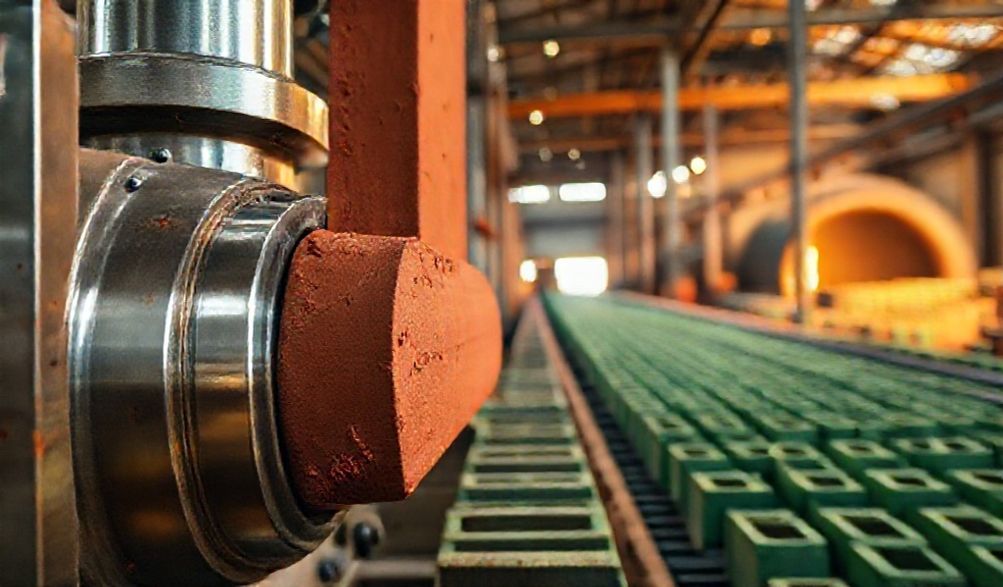
The Ultimate Guide to Clay Brick Making Machinery: Types, Processes & Modern Innovations
Введение
For millennia, clay bricks have formed the backbone of human civilization, from the ancient walls of Babylon to the modern skylines of today. This enduring legacy is built on a simple, natural material transformed by fire. However, the craft has undergone a profound industrial revolution. The shift from hand-molding to mechanized production hasn’t just increased output; it has redefined consistency, quality, and architectural possibility. Today, the heart of this transformation beats within Оборудование для производства глиняных кирпичей.
For manufacturers, builders, or entrepreneurs, selecting the right equipment is a pivotal decision that dictates efficiency, product quality, and ultimately, profitability. Yet, navigating the landscape of machinery—from simple manual presses to sprawling, fully automated plants—can be a daunting technical maze. How do you match the machine to your clay, your market, and your vision?
This comprehensive guide is designed to demystify that process. We will delve into the core principles of brickmaking, explore the full spectrum of machinery types, and break down the key components that make up a production line. More than just a catalog, this guide synthesizes industry knowledge, operational best practices, and technical insights to empower you to make a confident, informed decision for your project or business. Whether you’re scaling up an existing operation or laying the foundation for a new venture, understanding Оборудование для производства глиняных кирпичей is the first critical step.
Understanding Clay Brick Making: Core Principles & Material Prep
Before any machine is switched on, success is determined by the raw material and the fundamental process. True expertise in brick manufacturing starts with the science of the clay itself and the timeless stages of transformation.
The Role of Clay: Properties and Preparation
Not all dirt is created equal. The ideal brick clay is a balanced blend of:
* Silica (50-60%): Provides the skeletal structure and reduces shrinkage.
* Alumina (20-30%): Imparts plasticity, allowing the clay to be molded.
* Lime (≤ 5%): Lowers the fusion point and aids in binding silica.
* Iron Oxide (≤ 7%): Acts as a flux and gives the classic red color upon firing.
The journey from pit to production involves meticulous preparation:
1. Winning: The extraction of clay from quarries or pits.
2. Weathering: Exposing the clay to the elements to break down lumps and improve plasticity.
3. Blending: Mixing clays from different sources to achieve a consistent, optimal composition.
4. Tempering: Adding water and thoroughly mixing to achieve the precise moisture content required for forming. This is where machinery first engages, and the required moisture varies significantly—stiff extrusion demands as little as 12-15% water, while soft mud processes use much more.
From Raw Clay to Formed Brick: The Essential Stages
All brick production, regardless of scale, follows four universal stages. Modern machinery is engineered to optimize each one:
1. Подготовка: Crushing, grinding, screening, and mixing the clay into a homogeneous, workable body.
2. Forming: Giving the plastic clay its shape (this is the primary function of most brick-making machines).
3. Сушка: Slowly removing the water added for plasticity to prevent cracking and explosions in the kiln.
4. Увольнение: Sintering the dried bricks in a kiln at high temperatures (870°C – 1100°C) to achieve permanent strength and durability.
Types of Clay Brick Making Machinery: From Manual to Fully Automatic
The level of automation you choose is the single biggest factor influencing your capital investment, labor needs, and production capacity. Here’s a breakdown of the primary categories.
Manual & Semi-Automatic Machines (Small Scale/Low Investment)
These machines prioritize low cost and simplicity over high output.
* Описание: This category includes hand-operated presses (like the CINVA-Ram) or small, motorized machines that perform a single function, such as mixing or basic pressing. The forming process often requires significant manual labor for feeding and removing bricks.
* Лучше всего подходит для: Artisanal workshops, heritage brick production, small-batch specialty bricks, community-led projects, or areas with unreliable electricity. They are excellent for proof-of-concept or very low-volume needs.
* Pros and Cons:
* Плюсы: Very low initial investment, minimal infrastructure needs, easy to operate and maintain, highly flexible for custom shapes.
* Минусы: Very low output (often 500-2000 bricks per day), high labor intensity, inconsistent product quality dependent on operator skill, physically demanding work.
Automatic Brick Making Machines (Medium to Large Scale)
This is the workhorse of the commercial brick industry, offering a balance of automation, output, and cost.
* Описание: These are integrated systems where the core forming process is automated. A typical setup includes a feeder, a pugmill mixer, an extruder, and an automatic wire-cut or column-cut system. Bricks are formed continuously, cut to size, and conveyed to a stacking area, often with automated pallet placement.
* Ключевые компоненты:Thevacuum de-airing pugmill is critical here, removing air pockets to produce denser, stronger bricks. The extruder forces the clay through a die to form a continuous column, which is then cleanly sliced by the cutter.
* Output & Power: Output can range from 10,000 to 60,000 bricks per 8-hour shift, depending on the model and brick size. Power requirements typically range from 30 HP to over 100 HP for the main drive.
Fully Automatic Production Lines (Industrial Scale)
These represent the pinnacle of automation, designed for maximum output with minimal manual intervention.
* Описание: Think of this as a complete, computer-coordinated factory. It integrates automatic forming with automated handling systems that transport green bricks through controlled tunnel dryers and directly into and out of tunnel kilns. Robotic arms or stacker cranes handle the setting and unsetting of bricks on kiln cars.
* Особенности: Programmable Logic Controller (PLC) panels govern the entire process. Sensors monitor clay consistency, extrusion pressure, dryer humidity, and kiln temperatures. The goal is a “hands-off” production flow from raw material to finished, fired brick.
* Фокус: The emphasis is on unparalleled volume (often exceeding 100,000 bricks daily), exceptional consistency, and drastically reduced labor costs. The investment is substantial, but the efficiency and scale are transformative.
Key Machinery Components and Their Functions
Understanding the individual components demystifies the entire system and aids in maintenance and troubleshooting.
The Heart of the System: Clay Mixers and Pugmills
This is where the process truly begins. The mixer’s job is to homogenize the clay and water into a plastic mass. A pugmill takes it further—a twin-shafted mixer with knives that not only blends but also kneads and de-airs the clay.
* Vacuum Pugmills: The industry standard for quality brick production. They subject the clay to a vacuum chamber, removing entrapped air. This prevents laminations, reduces drying shrinkage, and dramatically increases the fired strength and frost resistance of the final brick.
Forming the Brick: Extruders and Molds
The extruder is the defining component of most modern brick plants.
* How It Works: The prepared clay is fed into a barrel containing a powerful, spiraling auger. This screw action compresses the clay and forces it through a tapered die at the end of the barrel. The die is a precision metal block that forms the clay into the desired cross-sectional profile (e.g., solid, perforated, or hollow).
* The Cutting Mechanism: As the continuous column of clay emerges, a cutting system slices it into individual bricks. This can be a series of taut wires (wire-cutting) for a soft, textured finish or a gang of blades for column cutting.
Auxiliary Equipment for a Complete Line
The forming machine is just the start. A efficient plant requires supporting systems:
* Brick Dryers: Green bricks must be dried slowly and evenly. Tunnel dryers (bricks move on carts through a controlled humidity/temperature zone) are standard for medium/large scale. Chamber dryers are used for smaller batches or specialty products.
* Handling & Stacking Systems: This includes palletizers, conveyor belts, cross-transfer cars, and forklifts designed to handle fragile green bricks. Automation here significantly reduces breakage and labor.
* Compatibility is Key: The output rate of the extruder must be matched to the capacity of the dryer and the kiln. A bottleneck at any point cripples efficiency.
How to Choose the Right Clay Brick Making Machinery
Selecting equipment is a strategic exercise, not just a purchase. Here’s a framework for your decision.
Assessing Your Needs: Key Selection Criteria
Answer these questions methodically:
* Производственные мощности: What is your realistic daily or weekly output target? Always factor in market demand and growth potential.
* Clay Type: Have your local clay tested. Its plasticity, shrinkage, and mineral content will determine the required preparation process and the suitability of certain extruders. A sandy clay, for instance, behaves very differently from a fat, high-alumina clay.
* Brick Type: What are you producing? Standard building bricks, paving bricks, or hollow blocks? Each may require different die designs and, sometimes, different forming pressures.
* Budget & ROI: Calculate the total cost of ownership: machine purchase, installation, power, labor, maintenance, and spare parts. Model a realistic payback period based on your production costs and selling price.
* Power & Space: Do you have reliable three-phase electrical supply? What is the footprint of the entire proposed line, including space for raw material storage, drying, and finished goods?
Supplier Evaluation: Ensuring Quality and Reliability
Your relationship with the machinery supplier is a long-term partnership.
* Reputation & Service: Prioritize suppliers with a proven track record. What does their after-sales service look like? Is technical support readily available?
* Due Diligence: Request a list of client references and, if possible, visit an existing installation to see the machine in operation. Ask the operator about performance and support.
* Запчасти: Ensure that critical wear parts (augers, dies, cutter wires, gearboxes) are standardized or readily available from the supplier. Downtime waiting for a unique part is a profit killer.
Modern Innovations and Sustainability in Brick Machinery
The industry is evolving, driven by efficiency and environmental responsibility.
Energy-Efficient and Eco-Friendly Technologies
- Alternative Material Use: Modern pugmills are designed to effectively mix industrial by-products like fly ash or bottom ash with clay, creating a valuable product from waste and improving brick properties.
- Reduced Consumption: Innovations include high-efficiency drives on extruders, improved insulation on dryers, and heat recovery systems that capture waste heat from the kiln to pre-heat the dryer.
- Water Management: Closed-loop water recycling systems in clay preparation areas are becoming standard, minimizing freshwater consumption and waste runoff.
Automation and Smart Technology Integration
- IoT & Monitoring: Sensors embedded in machinery can now feed real-time data on motor load, bearing temperature, and extrusion pressure to a central dashboard. This allows for predictive maintenance, preventing catastrophic failures.
- Precision Controls: Advanced PLC systems allow operators to save and recall exact recipes for different brick products, ensuring repeatable quality and simplifying changeovers.
Раздел часто задаваемых вопросов
Q1: What is the approximate cost range for a clay brick making machine?
А: The range is vast. A simple manual press can cost a few thousand dollars. A mid-range automatic extruder with basic auxiliary equipment can start from $50,000 to $200,000. A complete, fully automatic production line with drying and kiln handling can run into the millions. A detailed needs assessment is the only way to establish a meaningful budget.
Q2: What is the difference between a clay brick machine and a concrete block machine?
А: The core difference is the material and forming process. Clay brick machinery uses plastic, wet clay and forms it through экструзия. Concrete block machines use a dry, no-slump mix of cement, sand, and aggregate and form blocks through high vibration and compression in a rigid mold. They are fundamentally different technologies.
Q3: Can one machine produce different sizes and types of bricks?
А: Yes, but with qualification. By changing the extrusion die and adjusting the cutter spacing, most extruders can produce different sizes and profiles (e.g., solid to perforated). However, each changeover requires downtime, and extreme changes in clay formulation might also be needed. It’s a matter of flexibility versus dedicated, high-speed production.
Q4: How important is the drying process after the bricks are formed?
А: It is absolutely critical. Improper or rushed drying is a leading cause of cracks, warping, and defects that only become apparent after firing. Controlled drying in a dedicated dryer (chamber or tunnel) is essential for high yields and quality in any serious production setup.
Q5: What are the most common maintenance requirements for this machinery?
А: Consistent maintenance is key to longevity:
* Ежедневно: Clean all clay contact surfaces thoroughly to prevent hardened buildup.
* Weekly: Lubricate all bearings, gears, and moving parts as per the manufacturer’s manual.
* Monthly: Inspect wear parts: the extruder auger, the die liner, cutter wires/blades, and mixer blades for signs of wear.
* Ежегодно: Conduct a comprehensive check of electrical systems, motors, and hydraulic systems (if equipped).
Заключение
Choosing Оборудование для производства глиняных кирпичей is a strategic decision that reverberates through every aspect of your operation. It’s a balance of scale, material science, product ambition, and financial planning. From the manual press preserving an ancient craft to the fully automated plant shaping the cities of tomorrow, the right machinery is more than equipment—it’s an investment in the quality, consistency, and long-term viability of your enterprise.
As you move forward, let this guide serve as your foundation. Conduct thorough research, consult with multiple reputable suppliers, and don’t hesitate to ask for demonstrations and client testimonials. If you’re new to the industry, consider starting with a pilot-scale project to understand the process dynamics before a major commitment.
The future of brickmaking is being written by technological innovation, making production more efficient, sustainable, and precise than ever before. By making an informed choice today, you position yourself not just to build bricks, but to build a resilient and successful business.
<