
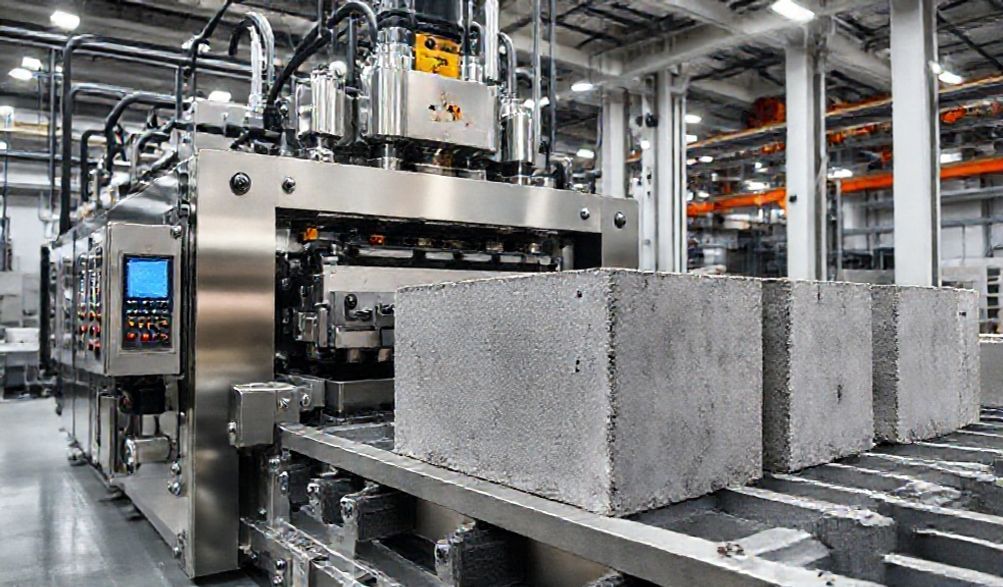
The Ultimate Guide to German Brick Machines: Engineering Excellence for Modern Construction
For generations, the phrase “German engineering” has stood as a global synonym for precision, reliability, and innovation. This reputation, forged in industries from automotive to industrial machinery, is no less potent in the world of construction equipment. Today, as the building sector grapples with demands for higher quality, greater efficiency, and more sustainable practices, the choice of production machinery becomes a critical strategic decision. This is where German brick and block making machines rise to the fore, offering not just equipment, but a complete production philosophy rooted in technical excellence.
Investing in a brick machine is a significant capital expenditure, and navigating the global market can be daunting. This guide serves as your authoritative resource, cutting through the noise to focus on the pinnacle of the industry: machinery engineered in Germany. We will delve beyond marketing claims to explore the tangible advantages, leading manufacturers, and key technical considerations. Our goal is to equip you with the expert knowledge needed to make an informed decision that aligns with your production goals, ensuring your investment delivers superior returns for years to come.
Why German Engineering Dominates the Brick Machinery Industry
The dominance of German manufacturers in the global brick machinery sector is not accidental. It is the direct result of a deeply ingrained culture of quality, a relentless drive for innovation, and a clear focus on delivering long-term value to the customer. Understanding this foundation is key to appreciating the premium associated with these machines.
传统与可靠的继承
The German approach to manufacturing is historically built on the principles of Специальные знания(экспертные знания) иGründlichkeit (thoroughness). This translates into a machine-building ethos where every component, from the heaviest steel frame to the smallest sensor, is selected, machined, and assembled with an uncompromising focus on precision.
- Cultural Emphasis on Quality: The concept of “value engineering” is paramount. The design goal is to create a machine that operates flawlessly for decades, not just to meet a minimum price point. This involves rigorous testing protocols, often simulating years of operation under extreme conditions before a model ever reaches the market.
- Long-Term Partnership Mindset: Reputable German manufacturers view each sale as the start of a long-term partnership. This perspective aligns their success with your machine’s uptime and productivity over its entire 20-30 year lifespan, fostering a built-in incentive for exceptional quality.
Innovation at the Core: Embracing Industrie 4.0
German industry is at the forefront of the fourth industrial revolution, known as Industrie 4.0. This is not just a buzzword; it’s a tangible reality in modern German brick machines, which are essentially smart factories in a compact form.
- Integrated Automation & IoT: These machines feature sophisticated Programmable Logic Controller (PLC) systems with intuitive Human-Machine Interface (HMI) panels. Integrated IoT sensors monitor everything from hydraulic pressure and vibration frequency to motor temperature and production counts in real-time.
- Tangible Benefits of Smart Technology:
- Predictive Maintenance: The system alerts operators to potential component wear before a failure occurs, scheduling maintenance during planned downtime.
- Real-Time Optimization: Data analytics can suggest adjustments to vibration frequency or pressure to optimize block density and surface finish for specific raw material batches.
- Reduced Downtime & Waste: Automated diagnostics and consistent process control minimize human error and product rejects, maximizing overall equipment effectiveness (OEE).
Unmatched Durability and Total Cost of Ownership (TCO)
While the initial investment in a German brick machine is often higher than alternatives, a true financial analysis must consider the Total Cost of Ownership (TCO). This holistic view almost always favors German engineering.
- Премиальные материалы: The use of high-grade, wear-resistant steels for molds and frames, coupled with components sourced from top-tier European suppliers (e.g., Siemens, Bosch Rexroth), ensures exceptional durability.
- The TCO Advantage:
- Снижение затрат на обслуживание: Robust construction and smarter systems mean fewer breakdowns and less frequent, less expensive repairs.
- Longer Lifespan: It is common for well-maintained German machines to remain in high-productivity service for over 25 years.
- Consistent Output Quality: Unwavering precision means every block meets specification, eliminating costly waste and protecting your brand’s reputation for quality. This consistent output directly translates to higher revenue and profitability over time.
Key German Brick Machine Manufacturers: An Expert Overview
The German brick machinery landscape is characterized by specialized, often family-owned enterprises that have honed their expertise over decades. Here is an overview of leading manufacturers, each with distinct strengths.
Industry Leaders and Their Specializations
- HESS Group: A global powerhouse and one of the most recognized names, Hess is renowned for its fully automatic, high-capacity stationary concrete block making plants. Their “Automatic” and “Super” series models are engineered for maximum output and versatility, often serving as the backbone of large-scale block yards and paving stone producers worldwide. Their philosophy centers on turnkey solutions with extreme automation.
- Zenith Maschinenfabrik GmbH: Another titan in the industry, Zenith is celebrated for its innovative engineering and comprehensive range. They offer everything from mobile single-pallet machines to colossal fully stationary plants. Zenith is particularly noted for its advanced vibration technology and press designs that ensure optimal compaction and surface quality for a vast array of concrete products.
- KNAUER Maschinenfabrik GmbH: Specializing in high-quality stationary machines, Knauer emphasizes robust construction and user-friendly operation. They are known for their efficient “C”-type machine design, which offers an excellent balance between footprint, output, and accessibility for maintenance. They cater strongly to medium to large-sized operations seeking reliability and German engineering.
- Masa GmbH: While Masa produces equipment for various building materials, their plants for aerated autoclaved concrete (AAC) are industry-leading. For producers specializing in lightweight, insulating AAC blocks, Masa represents the pinnacle of German technology in that specific, high-growth niche.
Decoding Model Ranges and Capabilities
German manufacturers typically offer a spectrum of machines to suit different scales of operation:
- Полностью автоматизированные стационарные установки: The flagships. These are pallet-circulating systems with automated raw material feeding, mixing, molding, curing, stacking, and packaging. Outputs can range from 10,000 to over 100,000 standard blocks per 8-hour shift.
- Mobile Machines (Egg-Layers): These self-contained units produce blocks directly on the ground or on a concrete slab. They are highly popular for on-site production, smaller businesses, and markets with lower labor costs. German versions stand out for their durability and more sophisticated controls compared to basic alternatives.
- Single-Pallet Stationary Machines: A middle ground, offering higher automation and output than mobile machines but with a smaller footprint and lower investment than full pallet-circulating plants. Ideal for medium-scale, specialized production.
Key Specifications for Comparison:
* Объем производства Measured in blocks per hour (for a standard 8″ block). Always compare based on the same product type.
* Сила давления Measured in Kilonewtons (kN). Higher force typically yields denser, stronger blocks.
* Вибросистема: Core to block quality. Look for frequency-controlled, multi-directional vibration for optimal compaction.
* Система управления: The “brain.” A modern, programmable PLC with a color touchscreen HMI is standard for German machines, allowing recipe storage and process monitoring.
The Importance of After-Sales Support and Training
The machine is only one part of the equation. The comprehensive support ecosystem is a critical differentiator for German manufacturers.
- Global Service Networks: Leading brands maintain a network of trained technicians and partners in key regions worldwide, ensuring support is accessible.
- Оригинальные запасные части: A guaranteed supply of original spare parts, engineered to exact specifications, protects your machine’s integrity and performance.
- Структурированное обучение: Extensive training programs for your operators and maintenance staff are typically provided during commissioning. This knowledge transfer is essential for achieving peak productivity and preventing operational errors.
Critical Factors When Choosing Your German Brick Machine
Selecting the right machine is a systematic process. A clear assessment of your own needs will guide you to the most suitable model and manufacturer.
Assessing Your Production Needs and Scale
Begin with a detailed internal analysis:
* Required Output Volume: Calculate your current and projected 5-year demand in blocks per shift. Be realistic.
* Портфель продуктов: List all products you need to make: solid blocks, hollow blocks, insulated blocks, paving stones, curbs, etc. Consider future diversification.
* Available Space & Infrastructure: Measure your factory floor space and consider requirements for raw material storage, curing areas, and finished product storage. Assess power (voltage, amperage) and water supply availability.
Technical Specifications Deep Dive
Move beyond basic output numbers to the engineering details that dictate performance:
* Время цикла: The total time to produce one pallet of blocks. A faster cycle time with consistent quality indicates superior hydraulic and control systems.
* Pressure Force & Vibration: Match the machine’s capabilities (e.g., 1,500 kN press, 6,000 RPM vibration frequency) to the strength and finish requirements of your target products.
* Sustainability Features: Modern German machines are designed for efficiency.
* Energy Recovery: Systems that capture energy from the decelerating press head.
* Water Recycling: Closed-loop systems for cleaning mixers and equipment.
* Noise & Dust Encapsulation: Creating a better, safer workplace environment.
Navigating the Investment: Cost vs. Value Analysis
Engage in transparent discussions with suppliers about pricing, which typically falls into tiers:
* Tier 1 (Premium): Fully automatic, high-output turnkey plants. Investment can range from €500,000 to several million Euros.
* Tier 2 (Mid-Range): Highly automated single-pallet machines or smaller stationary systems. Range from €150,000 to €500,000.
* Tier 3 (Entry-Point): Robust mobile machines or basic stationary units. From €50,000 to €150,000.
Framework for ROI Calculation:
ROI = (Net Profit from Machine / Total Investment) x 100
* Factors Increasing Net Profit: Higher production speed, lower labor costs due to automation, reduced waste (material savings), ability to command a price premium for superior product quality.
* Factors Reducing Costs: Lower maintenance, longer intervals between major overhauls, higher energy efficiency.
The Future of Brick Production: Trends Shaped by German Innovation
German manufacturers are not resting on their laurels; they are actively shaping the future of construction materials production.
Sustainable and Green Manufacturing Processes
- Advanced Raw Material Use: Machines are being optimized to handle higher percentages of recycled aggregates like fly ash, slag, and recycled concrete powder without compromising strength.
- Eco-Design: New models focus on reducing the carbon footprint through greater energy efficiency, lower water consumption, and designs that facilitate the use of alternative, low-carbon binders.
Advanced Automation and Robotics Integration
- Post-Production Handling: Robotic arms for precise stacking, interleaving, and packaging are becoming standard attachments, eliminating heavy manual labor and reducing product damage.
- AI-Driven Quality Control: Integrated camera systems using computer vision and artificial intelligence can now inspect every block for surface defects, dimensional accuracy, and color consistency in real-time, automating final QC.
Customization and Flexible Production Lines
- Modular Design: Machines are being built on modular platforms, allowing producers to start with a core unit and add automation modules (auto-feeder, robotic stacker) as their business grows.
- Quick Changeover Systems: Advanced mold carts and programmable recipes enable switching from producing paving stones to hollow blocks in minutes, supporting profitable small-batch and customized production runs.
Frequently Asked Questions (FAQ) About German Brick Machines
Q1: What is the typical price range for a German-made brick machine?
А: Prices vary dramatically based on type and automation. A robust mobile “egg-layer” machine can start around €50,000-€80,000. A semi-automatic stationary machine may range from €150,000 to €300,000. Fully automatic, high-capacity turnkey plants begin around €500,000 and can extend well into the millions. A detailed project quote from the manufacturer is essential.
Q2: How does the lead time and installation process work?
А: After order confirmation, manufacturing lead time typically ranges from 3 to 9 months for complex plants. The process is highly structured: factory acceptance test (optional), delivery, supervised installation by German engineers, commissioning, and comprehensive operator training. German companies are known for meticulous project management.
Q3: Are German machines suitable for markets outside of Europe?
А: Absolutely. German machinery is exported globally. Manufacturers engineer their machines to adapt to local conditions, such as different voltage standards (e.g., 480V/60Hz), varying climatic conditions, and specific characteristics of locally available raw materials (aggregate size, cement type).
Q4: Can these machines produce different types of blocks and pavers?
А: Yes, this is a key strength. Through quick-change mold systems and saved production “recipes” in the PLC, a single machine line can produce hundreds of different concrete products—from standard blocks to intricate landscaping pavers—with minimal downtime between product changes.
Q5: What kind of warranty and service support can I expect?
А: Standard warranties are typically 12-24 months on parts and manufacturing. Crucially, support includes access to remote diagnostic services, detailed technical documentation, and often the option for a customized service agreement. The goal is to ensure maximum machine uptime throughout its lifecycle.
Заключение
Choosing a German brick machine is far more than a simple equipment purchase; it is a strategic investment in engineering excellence, long-term operational stability, and the future-ready technology of Industrie 4.0. While the initial capital requirement is significant, the unparalleled durability, lower total cost of ownership, and capacity to produce a premium, consistent product deliver a compelling return on investment over decades of service.
Our final expert recommendation is to approach this decision methodically. Begin with a rigorous internal analysis of your production needs. Then, engage directly with the technical sales teams of leading German manufacturers. Present them with your detailed project specification and ask for virtual tours, case studies from similar applications, and transparent cost-benefit models.
The next step is yours. Prepare your project specifications and initiate conversations with these engineering partners. By aligning your vision with the legacy of German innovation, you are not just buying a machine—you are building a foundation for superior quality and profitability in the competitive world of construction.
<