
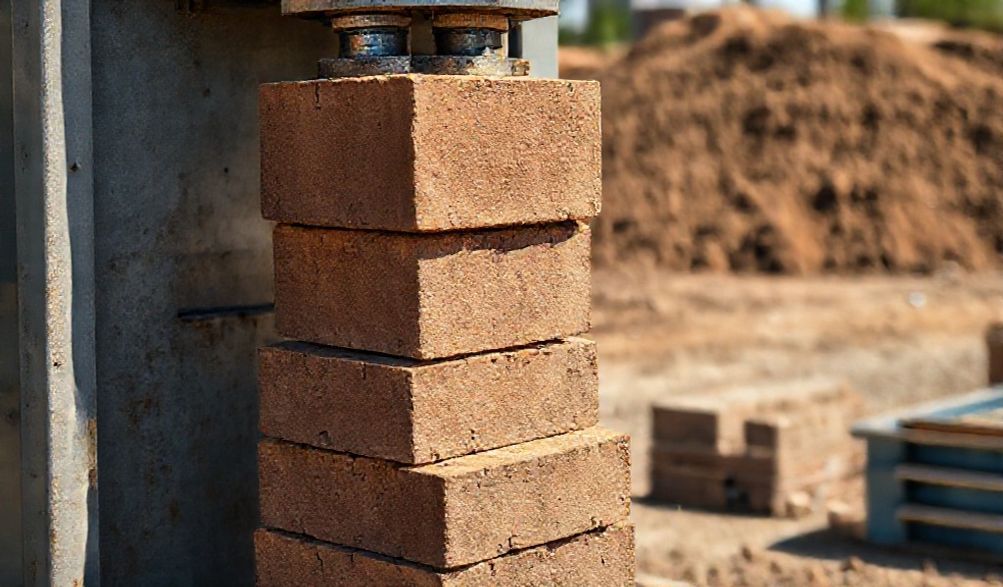
The Ultimate Guide to Hydraulic Press Eco Brick Machines: Build Sustainably
Введение
The global construction industry generates a staggering 2.2 billion tons of waste annually. Simultaneously, the production of traditional fired clay bricks is a leading source of carbon emissions and deforestation, consuming vast quantities of topsoil and fuel. For builders, developers, and communities worldwide, this presents a dual challenge: how to construct durable, affordable structures without exacerbating environmental degradation.
The solution lies not in a new material, but in reimagining the oldest one: earth. Enter the hydraulic press eco brick machine—a revolutionary piece of equipment that transforms locally sourced soil into high-strength building blocks. This technology empowers on-site production of Compressed Earth Blocks (CEBs), offering a practical pathway to sustainable construction.
This comprehensive guide synthesizes engineering principles, sustainable building practices, and real-world application data. We will demystify the hydraulic press eco brick machine, moving from core concepts to practical buying advice. You’ll learn how it works, why its benefits are transformative, and what critical features to evaluate for your project. Whether you’re planning an affordable housing development, an eco-resort, or a community center, this guide will equip you to make an informed decision and build a greener, more resilient future.
What is a Hydraulic Press Eco Brick Machine?
A hydraulic press eco brick machine is a mechanized device designed to produce compressed earth blocks (CEBs) or “eco bricks” by applying immense, controlled pressure to a damp mixture of soil and a small stabilizer. Unlike artisanal methods, it uses a hydraulic ram—powered by an electric motor, diesel engine, or manual pump—to compress the soil mix within a precision steel mold. The result is a dense, uniform, and incredibly strong building block, created without the need for kiln-firing.
Core Principle: The Power of Compaction
The machine’s effectiveness hinges on a simple physical principle: compaction. By applying high pressure (typically measured in tons), the machine forcibly reduces the air voids between soil particles. This dramatically increases the block’s density, which directly translates to:
- Более высокая прочность на сжатие: Suitable for load-bearing walls.
- Improved Durability: Better resistance to weathering and erosion.
- Dimensional Stability: Uniform blocks for faster, easier construction.
- Enhanced Thermal Performance: Greater mass for temperature regulation.
Чем это отличается от традиционного производства кирпичей
It’s crucial to understand how this technology stands apart from conventional methods.
- Vs. Fired Clay Bricks: Traditional bricks require high-temperature kilns (often fired with coal or wood) for days, leading to significant CO2 emissions and energy consumption. The hydraulic press process is cold-forming, requiring zero burning and slashing the embodied energy of the block by up to 90%.
- Vs. Manual or Mechanical Presses: While manual CEB presses exist, they rely on human leverage and produce lower pressure, resulting in blocks with lower strength and higher variability. Hydraulic systems deliver consistent, repeatable high pressure, ensuring industrial-grade quality and enabling higher production volumes.
Key Benefits of Using a Hydraulic Eco Brick Press
Adopting this technology is not just an environmental choice; it’s a smart economic and structural decision. The benefits cascade across multiple domains.
Environmental & Sustainability Advantages
The primary driver for many is the profound positive environmental impact.
- Ultra-Low Carbon Footprint: By eliminating the firing process and utilizing local materials, the carbon emissions associated with each block are minimal.
- Zero Burning & Energy Efficiency: The process requires no fossil fuels for curing, only the relatively small amount needed to power the hydraulic pump.
- Sustainable Material Sourcing: It uses subsoil, which is often readily available on or near the construction site, preserving valuable topsoil for agriculture and eliminating transportation costs and emissions from imported bricks.
- Waste Reduction Potential: The right mix design can incorporate certain recycled materials like finely crushed construction and demolition waste, promoting a circular economy.
Economic & Practical Benefits
The financial case for these machines is compelling, especially for medium to large-scale projects.
- Cost-Effective Construction: The largest cost component—the soil—is often free or very cheap. This can lead to savings of 30-50% on walling material costs compared to purchased fired bricks or concrete blocks.
- On-Site Production & Logistics: Producing blocks directly where they will be used eliminates supply chain delays, storage issues, and transport damage. You control your own supply.
- Reduced Labor & Increased Speed: While skilled operation is needed, the machine significantly accelerates block production compared to manual methods. A consistent block size and shape also speeds up the laying process for masons.
- Local Empowerment: The technology creates local jobs in machine operation, mix preparation, and masonry, fostering skill development and keeping capital within the community.
Structural & Performance Benefits
Don’t mistake “eco” for “weak.” A well-made compressed earth block is a high-performance building material.
- Высокая прочность на сжатие: Blocks produced by a robust hydraulic press can achieve compressive strengths ranging from 3 to over 10 Megapascals (MPa), making them suitable for multi-story buildings when engineered correctly.
- Отличная теплоемкость: Earth blocks absorb heat during the day and release it at night, naturally regulating indoor temperatures. This reduces reliance on mechanical heating and cooling, lowering a building’s operational energy for decades.
- Превосходная огнестойкость: Being made of mineral soil, CEBs are completely non-combustible, offering excellent fire ratings.
- Good Acoustic Insulation: The dense mass of the blocks provides effective sound dampening, contributing to quieter interior spaces.
Critical Features to Consider Before Buying
Selecting the right machine is paramount to your project’s success. Here are the key specifications and factors you must evaluate.
Machine Specifications & Capacity
- Pressure Rating (Tonnage): This is the most critical spec. Machines range from 10-ton models for small projects to 60-ton+ for industrial production. Higher tonnage directly correlates to higher block density and strength. For most permanent structures, a minimum of 20-30 tons is recommended.
- Объем производства Measured in blocks per hour. Consider your project timeline. A semi-automatic machine might produce 200-400 blocks/hour, while a fully automatic system with a conveyor can exceed 1,000.
- Block Size and Shape: Standard sizes are similar to conventional bricks (e.g., 295x140x90mm). Ensure the machine offers the mold size you need. Many manufacturers offer custom mold options for special shapes, like interlocking blocks or pavers.
Power Source & Operational Needs
Your site’s infrastructure will guide this choice.
- Электрический: Clean, quiet, and low-maintenance, but requires a reliable power source (often three-phase for larger models).
- Дизель: Offers complete independence from the grid, ideal for remote sites. However, it involves fuel costs, emissions, and more noise.
- Manual/Hydraulic Pump: A portable, low-cost option for very small-scale or community-led projects, but production is slow and labor-intensive.
Soil Compatibility & Mix Design
The machine is only half the equation. The soil mix is the other. Demonstrating expertise here is crucial for success.
- Soil Testing is Non-Negotiable: Not all soil is suitable. A simple sediment jar test can determine the approximate proportions of clay, silt, and sand. The ideal mix is often a “sandy-clay” or “gravelly-clay” soil.
- The Role of Stabilizers: A small percentage (typically 5-10%) of stabilizer is added to enhance strength and water resistance. Portland cement is most common, but lime can be used for certain soils. The optimal ratio must be determined through testing.
- Mixing Systems: Some machines come with integrated pan or paddle mixers, ensuring a homogenous blend. Others require a separate mixer. Consistent mixing is vital for consistent block quality.
The Step-by-Step Process: From Soil to Solid Block
Understanding the workflow will help you plan your project effectively.
1. Site Preparation & Soil Sourcing
Identify and excavate suitable subsoil from the site (or a nearby borrow pit). Remove visible organic matter like roots and grass. The soil is then spread out to weather and dry slightly before processing.
2. Soil Testing and Mix Preparation
Conduct soil tests to determine composition. Based on the results, prepare the final mix: sieved soil, the correct percentage of stabilizer (cement/lime), and water. The moisture content is critical—it should be at “optimum moisture” for compaction, typically around 10-15%.
3. Machine Operation & Compression Cycle
The mixed material is fed into the machine’s mold box. The hydraulic ram then compresses it with immense force. After a brief dwell time to allow stress relaxation, the block is ejected onto a pallet. The cycle repeats.
4. Curing and Quality Control
Freshly pressed blocks are fragile. They must be kept under plastic sheeting or in a shaded, humid environment for 7-14 days to allow the stabilizer (especially cement) to hydrate and gain strength. Proper curing is essential to achieve the design strength. Sample blocks should be tested at 28 days.
Applications and Project Suitability
Ideal Use Cases
Hydraulic press eco brick technology is remarkably versatile:
* Affordable & Social Housing Projects: Its low material cost is a game-changer for large-scale housing.
* Общественная инфраструктура: Schools, clinics, and community centers benefit from the material’s thermal comfort and natural aesthetics.
* Sustainable Commercial Buildings: Eco-resorts, wineries, offices, and retail spaces use CEBs for their green credentials and biophilic design appeal.
* Вспомогательные сооружения: Perfect for boundary walls, garden walls, landscaping features, and pedestrian pavers.
Evaluating if It’s Right for Your Project
Ask yourself this checklist:
* Масштаб: Do you need enough blocks to justify the capital investment (typically thousands of blocks)?
* Soil Availability: Do you have access to suitable soil on-site or very locally?
* Local Codes: Do your local building codes permit earth construction? (Many modern codes, like the International Building Code, have provisions for it).
* Анализ рентабельности инвестиций: Calculate the cost of the machine, operation, and labor versus the local price of conventional bricks over your project’s block count.
Frequently Asked Questions (FAQ)
Q1: How strong are bricks made from a hydraulic press eco brick machine?
А: Strength varies based on soil, stabilizer, and pressure. A well-made block from a 30-ton press with cement stabilization typically achieves 5-8 MPa. This is more than sufficient for two- and three-story load-bearing construction. For comparison, a standard fired clay brick is around 10-20 MPa, but the eco block’s performance is fully adequate when used correctly in design.
Q2: What type of soil is best for making eco bricks?
А: The ideal soil has a balanced mix: approximately 70-75% sand and gravel (for skeleton), 10-15% silt, and 10-15% clay (as a natural binder). Pure clay or pure sand will not work. Simple field tests, like the ribbon or drop test, can give initial indications, but professional lab testing for particle size distribution is recommended for large projects.
Q3: Can these bricks withstand rain and harsh weather?
А: Yes, absolutely. The combination of high compaction and chemical stabilization (with cement or lime) creates a water-resistant block. Crucially, as with most masonry, they must be protected with good architectural details: a solid foundation with damp-proof course, proper roof eaves to deflect rain, and a breathable plaster or render (like lime plaster) for the exterior walls.
Q4: What is the typical cost and ROI of such a machine?
А: Prices vary widely based on capacity, automation, and power source. A semi-automatic machine can range from $10,000 to $50,000. ROI is calculated on a per-block basis. If a locally purchased brick costs $0.50 and your machine can produce an equivalent block for $0.15 in material/operating costs, the savings per block is $0.35. On a project requiring 50,000 blocks, that’s a $17,500 material saving, quickly offsetting the machine investment.
Q5: Where can I get training to operate one of these machines?
А: Reputable manufacturers almost always provide comprehensive operational and mix-design training upon purchase. For independent learning, organizations like Good Earth Trust, Auroville Earth InstituteилиUN-Habitat offer workshops and resources on compressed earth block construction. Connecting with local sustainable building associations is also an excellent step.
Заключение
The hydraulic press eco brick machine is more than just a piece of equipment; it’s a catalyst for a more sustainable and equitable built environment. It marries ancient material wisdom with modern engineering, offering a proven solution to the intertwined crises of housing affordability and environmental impact. The technology empowers self-reliance, reduces carbon footprints, and creates beautiful, healthy buildings.
As the industry evolves, we see trends toward greater automation, IoT integration for monitoring production metrics, and hybrid systems that further optimize mix designs. This is not a fringe technology, but a forward-looking, practical choice for the 21st-century builder.
For developers, architects, NGOs, and community leaders, investing in this knowledge and technology represents a commitment to building structures that are not only durable and cost-effective but also stewards of our planet’s resources. The foundation for a greener future can literally be found beneath our feet.
Ready to explore specific models and get a quote from trusted suppliers? [Download our free comparison checklist] to organize your evaluation of pressure ratings, power sources, and manufacturer support.
Have more questions about soil suitability or a specific project? Share your thoughts in the comments below—let’s build the discussion.
<