
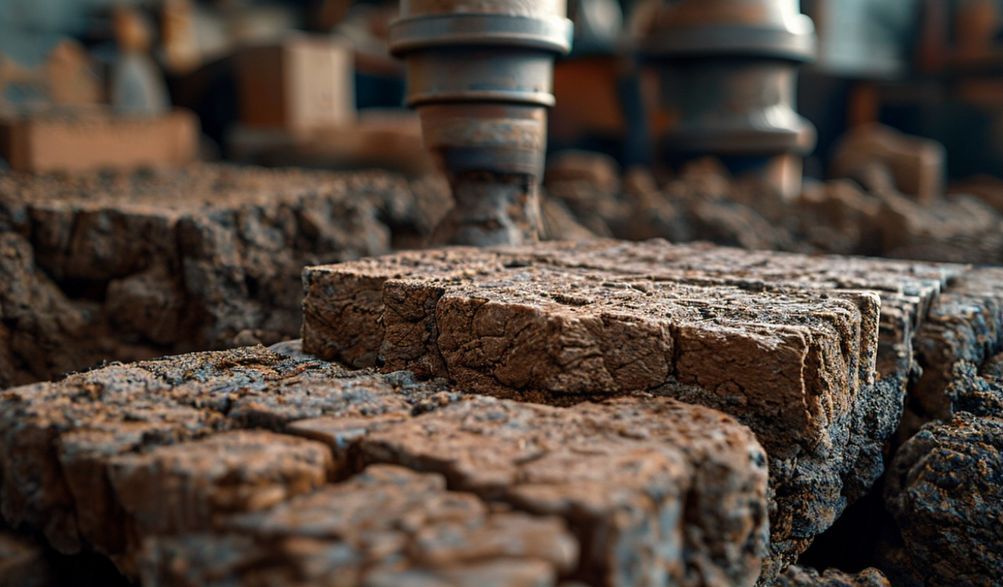
Полное руководство по машинам для производства блоков из переплетенной глины: стоимость, процесс и преимущества
Глобальная строительная отрасль стоит на перепутье. Поскольку мы сталкиваемся с острой необходимостью в климатически устойчивой инфраструктуре и доступном жилье, спрос на экологичные, долговечные и экономически эффективные строительные материалы достиг небывалых высот. Традиционные обожжённые кирпичи, хотя и привычны, наносят серьёзный экологический ущерб из-за огромного энергопотребления и вырубки лесов для топлива печей. В то же время обычные бетонные блоки зависят от углеродоёмкого цемента и часто требуют сложной логистики.
Вот революционное, но элегантно простое решение:Машина для производства блоков из переплетенной глиныЭта технология лежит в основе производства стабилизированных земляных блоков (CSEB) — строительного материала, который использует землю под нашими ногами для создания прочных, эстетичных и экологичных сооружений. Данное руководство создано на основе глубоких отраслевых знаний, инженерных принципов и практического опыта. Независимо от того, являетесь ли вы строителем, подрядчиком или предпринимателем, стремящимся освоить рынок экологичного строительства, наша цель — предоставить вам достоверную и практическую информацию для освоения этой преобразующей технологии.
В этом подробном руководстве вы узнаете:
* Что это за машины и как они работают, от ручных прессов до полностью автоматизированных систем.
* Подробный производственный процесс, от выбора почвы до отверждения.
* The compelling benefits that make interlocking clay blocks a superior choice.
* A practical buyer’s guide to help you choose the right machine for your needs.
What is an Interlocking Clay Block Making Machine?
At its core, an interlocking clay block making machine is a device that compresses a damp mixture of soil, a small percentage of stabilizer (like cement), and water into a high-density, precisely shaped block. The magic lies in the combination of immense pressure and intelligent design, eliminating the need for high-temperature firing.
Основные технологии объяснены
The process is a marvel of appropriate technology. A homogeneous mix is fed into a steel mold. The machine then applies intense mechanical or hydraulic pressure—often ranging from 5 to 30 tons—compacting the particles to remove air voids and create immediate “green strength.” The resulting block is dense, stable, and ready for curing.
The “interlocking” feature is a game-changer for construction efficiency. Each block is molded with precise ridges and grooves on its top and sides. When stacked, these protrusions and indentations fit together like puzzle pieces, creating a stable, aligned wall without the need for wet mortar joints. This “dry-stack” system is the key to faster build times and reduced skilled labor dependency.
Типы машин: от ручных до полностью автоматических
The market offers machines for every scale of operation, defined by their level of automation and output.
-
Ручные прессы:
- Профиль: Low-cost, human-powered, and portable. Ideal for community-led projects, self-build homes, or very small-scale production.
- Операция: An operator uses a lever to drive a piston that compresses the soil mix in a mold. Output is low (e.g., 50-100 blocks per day), but it offers ultimate simplicity and minimal investment.
-
Полуавтоматические станки:
- Профиль: The sweet spot for many small to medium enterprises (SMEs). They balance affordability with significantly improved productivity.
- Процесс: The feeding of raw mix is often manual, but the compression and block ejection are powered by an electric motor or diesel engine. Cycle times are faster, with outputs ranging from 200 to 600 blocks per hour.
-
Полностью автоматические машины:
- Профиль: High-volume production lines designed for commercial block yards. They represent a higher initial investment but offer the lowest cost per block at scale.
- Операция: These are integrated systems featuring automated material feeding, mixing, conveyor transport, compression, and even block stacking/palletizing. Output can exceed 1,000 blocks per hour with minimal manual intervention.
The Production Process: From Raw Soil to Building Block
Quality blocks begin long before the mix enters the machine. A disciplined, scientific process is non-negotiable for achieving structural integrity.
Soil Selection and Testing (The Foundation of Quality)
Not all soil is created equal. The ideal soil is a “loam” containing a balanced mix of:
* Глина: Provides cohesion and binding.
* Ил: Fills voids.
* Песок Provides skeletal strength and reduces shrinkage.
Simple Field Tests offer a good starting point:
* Drop Test: Form a ball of moist soil and drop it from waist height. If it crumbles, it’s sandy; if it flattens, it’s clayey; if it breaks into a few pieces, it may be suitable.
* Ribbon Test: Roll a moist soil sample into a thin ribbon. The length it holds before breaking indicates clay content.
For any serious project, professional laboratory testing (sieve analysis, Atterberg limits) is essential. It provides exact composition data and determines the optimal stabilizer percentage, ensuring your blocks meet required strength standards.
Mixing and Stabilization
Once the soil is prepared (sifted to remove stones and organic matter), it is mixed with a stabilizer and water.
* Stabilizer Role: Cement (typically 5-10% by volume) is the most common. It chemically reacts with water, binding the soil particles and providing long-term strength and water resistance. Lime is an alternative, especially for certain clay types.
* Mixing Process: Achieving a uniform, damp (not wet) consistency is critical. This can be done with a rotary drum mixer or a pan mixer. The mix should hold its shape when squeezed in a fist.
Compression and Curing
This two-stage process transforms the mix into a durable building block.
1. Сжатие: The homogeneous mix is fed into the machine’s mold cavity. The applied pressure (measured in tons per square inch) compacts it instantly, forming a block with high initial density and handling strength.
2. Курение: Unlike fired bricks, CSEBs gain strength through hydration. Freshly pressed “green” blocks are kept moist under plastic sheeting or by light sprinkling for 14 to 28 days. This allows the cement stabilizer to fully hydrate, reaching its design compressive strength. Proper curing is the single most important factor for block performance.
Key Benefits of Using Interlocking Clay Blocks
The advantages of this building system are multifaceted, impacting economics, environment, and building performance.
Unmatched Sustainability & Eco-Friendliness
- Низкая воплощенная энергия: Requires up to 90% less energy than fired bricks (no kiln).
- Local Material: Utilizes on-site or locally sourced soil, drastically cutting transport emissions.
- Minimal Waste: Production waste is near-zero, and blocks can be crushed and reused at end-of-life.
- Non-Toxic: Creates healthy indoor environments with no off-gassing.
Superior Cost-Efficiency
- Lower Material Costs: Soil is often free or very low-cost. Cement usage is minimal.
- Быстрое строительство: Dry-stacking is significantly quicker than bricklaying with mortar. Walls can be built 2-3 times faster.
- Reduced Labor Costs: Less skilled masonry labor is required.
- Долгосрочные сбережения: Excellent thermal mass regulates indoor temperatures, cutting heating and cooling energy bills by up to 30%.
Durability and Performance
- Высокая прочность: Properly made CSEBs can achieve compressive strengths of 3 MPa to over 10 MPa, suitable for multi-story load-bearing walls.
- Теплоизоляция: Their density provides high thermal mass, absorbing heat during the day and releasing it at night.
- Fire & Pest Resistant: Inorganic and compact, they are naturally fireproof and resist termites.
- Acoustic & Breathability: Excellent sound insulation and moisture permeability prevent condensation.
Design Flexibility and Aesthetics
- Machines can be fitted with different molds to produce various sizes, shapes (including curves), and surface textures.
- Natural pigments can be added to the mix for color.
- The finished walls have a warm, natural, and timeless aesthetic that appeals to modern design sensibilities.
A Practical Buyer’s Guide: Choosing the Right Machine
Investing in a block-making machine is a significant decision. A methodical approach will ensure you get the right tool for your job.
Assessing Your Needs: Project Scale & Output
Begin by asking:
* What is the scale of my project (personal home, housing development, commercial sale)?
* How many blocks do I need per day or week?
* What is my available budget for the machine and auxiliary equipment?
* What is my local power supply situation (3-phase electricity, generator only)?
Critical Machine Specifications to Compare
When evaluating models, scrutinize these key technical specs:
* Давление (тонны): Determines final block density and strength. For load-bearing blocks, aim for a minimum of 10-15 tons of compression force.
* Время цикла: The time to produce one block. Faster cycles mean higher output.
* Блоков в час (БВЧ): The practical output rating under working conditions.
* Требуемая мощность: Measured in HP or kW. Ensure your site can support it.
* Индивидуализация форм Can the supplier provide custom molds for special block designs?
* Качество сборки: Inspect the thickness of steel plates, welding quality, and robustness of moving parts.
Understanding the Total Investment Cost
The machine price is just one part of the equation. Your total startup investment includes:
* Machine Price (Manual: $1,000 – $3,000 | Semi-Auto: $5,000 – $20,000 | Full-Auto: $25,000+)
* Shipping, Insurance, and Import Duties
* Foundation/Installation costs
* Auxiliary Equipment: Soil siever/crusher, mixer, pallets, curing sheets
* Initial raw material stock (cement)
* Labor for operation
Always request detailed quotations that break down all these elements.
Vetting Manufacturers and Suppliers
Due diligence here protects your investment.
* Company History: How long have they been in business? Look for established manufacturers.
* Client References: Ask for contacts of previous buyers, especially in your region, and speak to them.
* Сертификаты: Check for relevant quality and safety certifications (e.g., CE, ISO).
* Warranty & Service: What is covered under warranty and for how long? Is after-sales technical support available? How readily available are spare parts?
* Обучение: Do they offer comprehensive training on machine operation, mix design, and block construction techniques?
Frequently Asked Questions (FAQ)
Q: What is the typical compressive strength of interlocking clay blocks?
А: With proper soil selection and 5-10% cement stabilization, compressive strengths typically range from 3 MPa to 10+ MPa. This is more than adequate for load-bearing walls in 1-3 story buildings. Always conduct lab tests on your specific soil mix to confirm.
Q: Can these blocks be used in wet climates or for foundations?
А: Properly stabilized blocks have good resistance to rain for wall construction. However, for foundations, plinth beams, or areas with constant water exposure, additional waterproofing measures are mandatory. These include robust plaster, a damp-proof course (DPC), and proper roof overhangs. Consulting a structural engineer is highly recommended.
Q: How does the cost compare to traditional bricks or concrete blocks?
А: The raw material cost per block can be 20-40% lower than conventional materials. The most significant savings, however, come from the construction process: faster building speed reduces labor costs, and the elimination of mortar saves material. Life-cycle energy savings add further financial benefit.
Q: Is special training needed to operate the machine and build with the blocks?
А: Basic machine operation and maintenance can be learned in a few days. The construction technique—laying the first course level, building corner leads, dry-stacking, and installing reinforcement—requires specific training. Reputable machine suppliers should provide this training as part of the purchase package or for a fee.
Q: Where can I buy an interlocking block machine?
А: Research manufacturers online, attend international construction and machinery expos, and seek recommendations from industry associations. Prioritize suppliers who can offer local or regional technical support. Always start by requesting a detailed catalog, and if possible, visit a working installation or begin with a small test order.
Заключение
The interlocking clay block making machine is more than just a piece of equipment; it’s a gateway to a more sustainable, resilient, and economically viable future for construction. By transforming abundant local earth into precision-engineered building blocks, this technology addresses critical challenges of cost, environment, and speed.
For builders and contractors, it represents a way to differentiate your services, reduce project timelines, and build structures of enduring quality. For entrepreneurs, it opens a door to a growing market hungry for green building materials.
Ваш следующий шаг:
* For Builders/Contractors: Begin with a professional soil test on your intended project site. Connect with a technical expert or engineer experienced in earth construction.
* Для предпринимателей: Conduct a detailed feasibility study, analyzing local material costs, labor, and market demand for alternative building products.
* For All: Don’t buy based on a brochure alone. Contact 3-5 reputable machine suppliers. Present them with your soil report and project specifics, and request tailored advice, performance guarantees, and comprehensive quotes.
This technology is poised to play a pivotal role in shaping the future of eco-construction, empowering communities and building a circular economy—one block at a time.
<