
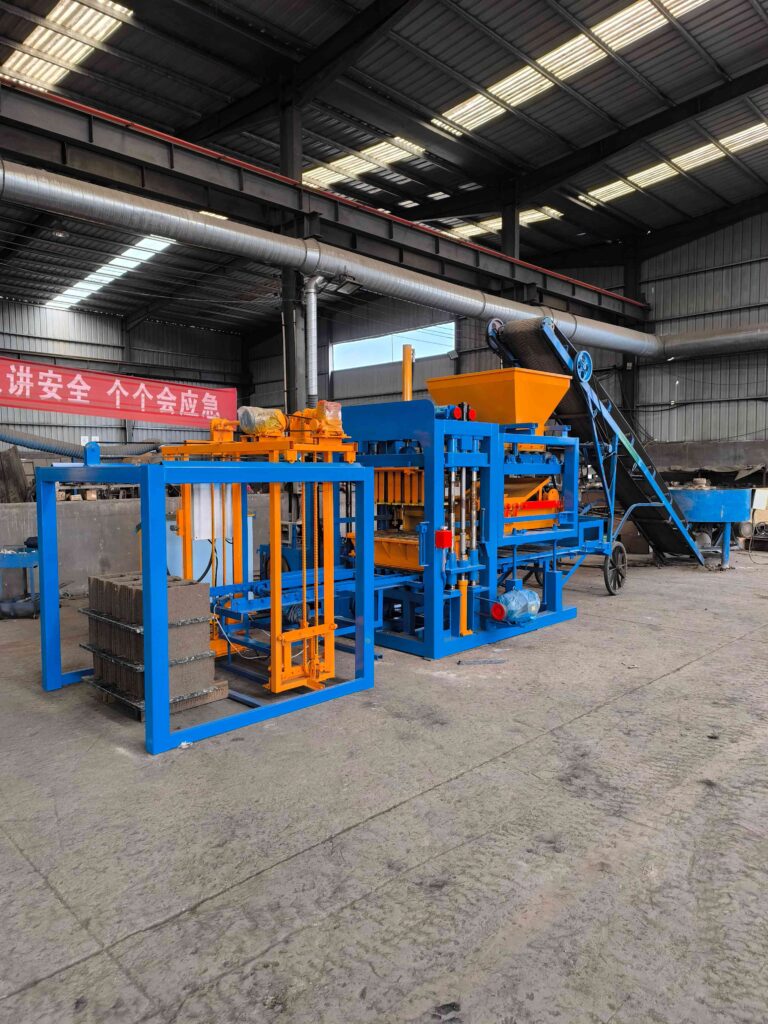
Evaluating Profitability in Block Production
This analysis moves beyond generic promises to dissect the key financial variables and operational factors that determine how quickly an investment can pay for itself and begin yielding net profits. By mastering this discussion, you equip your clients with the analytical tools to make confident investment decisions and position yourself as a knowledgeable partner invested in their long-term business success.
Framework for Calculating Return on Investment
Calculating a precise ROI requires building a detailed financial model that accounts for all costs and revenues. The core formula is straightforward: (Net Profit / Total Investment Cost) x 100 = ROI%. However, the complexity lies in accurately projecting the variables that feed into this equation over a realistic time horizon.
1. Core Investment Costs (The Denominator)
The initial outlay is more than the machine’s price tag. A comprehensive view includes:
- Direct Machinery Cost: The purchase price of the primary block forming machine.
- Ancillary Equipment: Essential supporting assets: concrete mixer, material handling conveyors or forklifts, pallets, curing racks, and potentially a power generator.
- Logistics and Installation: Costs for shipping, customs duties, insurance, on-site foundation preparation, machine installation, and commissioning.
- Initial Working Capital: Funds required to purchase the first batches of raw materials (cement, aggregates) and cover operating expenses (labor, utilities) until revenue from block sales is realized.
2. Key Revenue Drivers and Operational Costs (The Numerator)
The net profit is the engine of ROI, determined by the balance between income and ongoing expenses.
- Revenue Factors:
- Производственные мощности: The theoretical output of the machine (blocks/shift).
- Effective Utilization Rate: No machine runs at 100% capacity continuously. A realistic rate (e.g., 70-85%) accounts for mold changes, maintenance, and market demand fluctuations.
- Sales Price per Unit: The market-driven selling price for each block type. Diversifying into higher-value products like pavers or decorative blocks can significantly increase average revenue per unit.
- Operational Cost Factors:
- Сырье: The largest recurring cost, based on local prices for cement, sand, and aggregate.
- Труд: Wages for machine operators, mixers, and yard laborers.
- Utilities: Electricity consumption of the machine, mixer, and lighting.
- Maintenance and Spare Parts: An annual reserve for routine servicing and replacement of wear parts like mold liners.
- Overheads: Rent, administrative costs, marketing, and transportation of finished goods.
3. Strategic Variables Impacting ROI Timeline
Beyond the basic math, several strategic choices profoundly influence the payback period.
- Machine Selection and Automation Level: A higher initial investment in a semi- or fully-automatic machine typically reduces the variable cost per block through labor savings and higher efficiency, often leading to a faster ROI despite the greater upfront cost compared to a manual machine.
- Market Strategy and Product Mix: A business focusing on commoditized standard blocks competes on price and volume, often with thinner margins. A strategy incorporating specialty or architectural products can command higher margins, accelerating ROI.
- Операционная эффективность: Management practices that maximize machine uptime, optimize raw material mix with minimal waste, and ensure strict quality control to reduce reject rates directly boost net profit.
Conclusion: ROI as a Dynamic Business Metric
The return on investment for a block making machine is not a static number provided by a supplier; it is a dynamic goal shaped by the purchaser’s business acumen and market conditions. For the distributor, the role is to provide clients with a realistic framework and industry benchmarks while emphasizing the levers within their control. The most successful operations view ROI not just as a payback calculation but as an ongoing pursuit of operational excellence. By guiding clients to consider total cost of ownership, market differentiation, and efficient production management, you help them build a business model where the machine becomes a prolific profit center. Ultimately, a well-calculated and achieved ROI is the strongest testament to the value of both the equipment and the strategic partnership you offer.
Frequently Asked Questions (FAQ)
Q1: What is a typical or “good” ROI period for a block making machine?
А: While highly variable, a well-run operation with a semi-automatic machine in a stable market can often target an ROI period between 18 to 36 months. Fully automatic lines, with higher output, may see ROI in 2 to 5 years based on scale. Manual machines have lower upfront cost but longer ROI due to higher per-unit labor costs and lower output. The “goodness” of an ROI period is relative to local alternatives and industry benchmarks.
Q2: How sensitive is the ROI calculation to the selling price of blocks?
А: Extremely sensitive. Selling price is a direct multiplier of revenue. A fluctuation of just a few cents per block, when multiplied by tens of thousands of units, has a massive impact on annual net profit. Therefore, understanding and periodically reviewing local market pricing is crucial for accurate projections.
Q3: Can I calculate ROI before purchasing a machine?
А: Absolutely, and you should. Creating a detailed pro forma financial model is essential. This involves researching all cost inputs (local material, labor, utility costs), conservatively estimating your production output and sale price, and projecting monthly cash flows. This exercise is the best way to validate the business case.
Q4: How does machine durability and maintenance affect long-term ROI?
А: Profoundly. A machine with a robust design and accessible service support may have a higher purchase price but will experience less downtime and lower lifetime repair costs. A cheaper machine prone to frequent breakdowns erodes profits through lost production and high spare part costs, severely damaging long-term ROI and total lifetime profitability.
Q5: What are the most common mistakes that delay ROI?
А: Key pitfalls include:
- Overestimating Production Capacity: Using theoretical maximum output without factoring in realistic utilization rates.
- Underestimating Operational Costs: Neglecting adequate reserves for maintenance, power, or labor inflation.
- Ignoring Working Capital Needs: Not having sufficient cash to operate for the first 3-6 months before consistent revenue flows.
- Poor Market Research: Producing blocks without confirmed demand or in an oversaturated market, leading to low sales volume or price undercutting.

- автоматическая машина для изготовления блоков7 products
- Глиняный блокоформительный станок4 products
- передвижная машина для изготовления блоков4 products
- другое строительное оборудование5 products
- полуавтоматическая машина для производства блоков4 products