
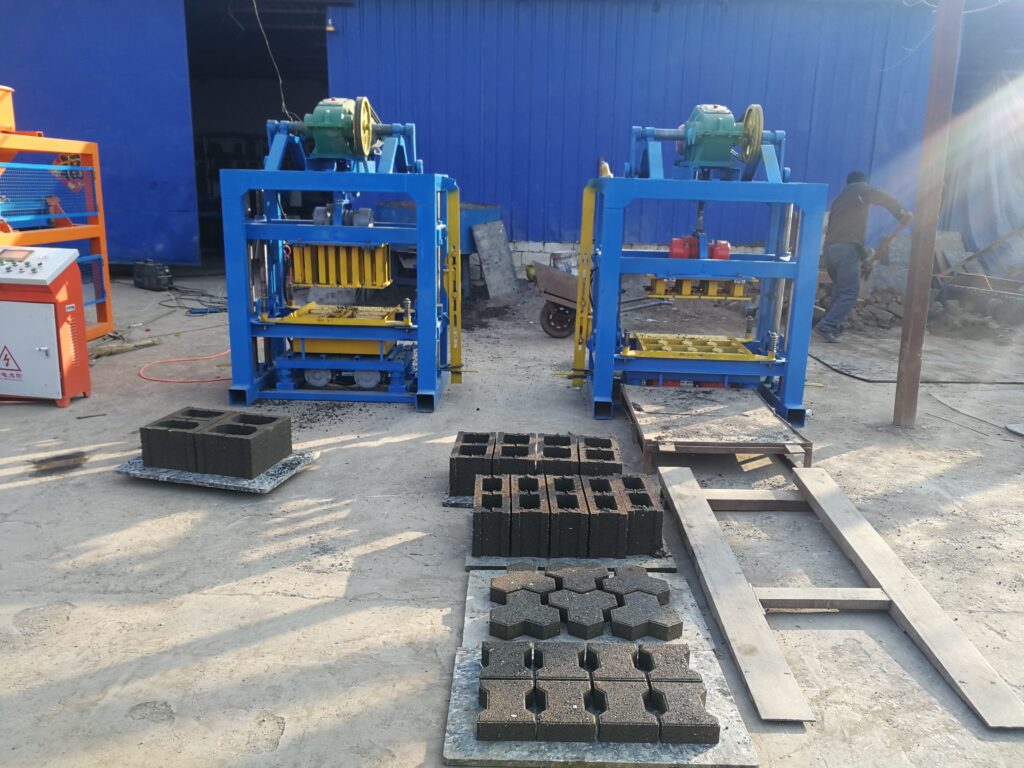
Сравнительный финансовый анализ окупаемости инвестиций в ручные и автоматические кирпичные станки
Сравнительный анализ окупаемости инвестиций (ROI) ручных и автоматических кирпичных станков представляет собой стратегическую развилку для любого бизнеса, входящего в этот сектор или масштабирующегося в нём. Данный анализ выходит за рамки простых сроков окупаемости и исследует тонкое взаимодействие капиталоёмкости, операционной масштабируемости, экономики труда и рыночного позиционирования. Понимание этих финансовых механизмов необходимо для предоставления консультационных рекомендаций, которые согласуют капитал, производственные мощности и долгосрочные амбиции клиента с подходящим технологическим решением.
Определение парадигм инвестиций и доходности
ROI в данном контексте измеряет эффективность капитала, вложенного в оборудование, путем сравнения чистой прибыли, полученной от этих инвестиций, с их первоначальной стоимостью. Однако характер «доходности» кардинально различается между двумя моделями.
- Доходность ручных станков: модель жизнеобеспечения и микропредприятий
- Инвестиции:Очень низкие первоначальные капитальные затраты. Стоимость практически равна цене самого ручного пресса.
- Философия возврата:ROI рассчитывается на основе用简单的工具辅助体力劳动Перевод: «Доход измеряется как прирост по сравнению с чисто ручной формовкой, с высокой зависимостью от непрерывных физических усилий оператора. Упор делается на немедленную генерацию денежных средств с низким уровнем риска и минимальной задолженностью.»
- Автоматическая машина ROI: модель промышленного капитального актива
- Инвестиции:Значительные капитальные затраты включают машину, зачастую вспомогательное оборудование (смеситель, конвейеры) и подготовку площадки.
- Философия возврата:ROI рассчитывается на основе用稳定、高产的自动化生产替代和倍增人类劳动Рост доходов обусловлен эффектом масштаба, снижением затрат на единицу продукции и возможностью заключать более крупные контракты. Основное внимание уделяется наращиванию стоимости активов и собственного капитала бизнеса с течением времени.
The Manual Machine ROI Calculation: Factors and Limitations
The financial profile of a manual operation is characterized by low barriers to entry but tightly constrained scalability.
- Key Investment (Cost) Factors:
- Machine Purchase Price: The primary and often sole capital cost.
- Minimal Tooling: Basic molds.
- Negligible Infrastructure: Can operate in a small, open shed or even outdoors.
- Key Return (Revenue) and Profit Factors:
- Extremely Low Output: Production is limited to a few hundred bricks per day per operator, heavily influenced by fatigue.
- High Variable Labor Cost Percentage: While absolute wages may be low, labor constitutes the overwhelming majority of the cost per brick.
- Inconsistent Quality and Low Product Value: Bricks often fail to meet formal engineering standards, limiting market options to informal, low-price segments.
- Vulnerability to Market Fluctuations: With no scale or cost advantage, the operation is a price-taker with thin, volatile margins.
- Sample ROI Scenario (Manual):
- Инвестиции: $1,500 (machine).
- Daily Net Profit (after material & labor): $15 (highly optimistic, assuming consistent labor).
- Annual Operating Days: 250.
- Annual Net Profit: $3,750.
- Simple Payback Period: ~5 months. ROI (Year 1): 250%.
- Analysis: The ROI percentage appears spectacularly high due to the tiny capital base. However, the absolute annual profit ceiling is low ($3,750), and it is entirely dependent on one operator’s continuous labor. There is no path to grow profits without linearly adding more manual machines and laborers.
The Automatic Machine ROI Calculation: A Systems-Based Approach
The financial profile of an automatic operation requires a business plan, with higher risk but a fundamentally higher profit ceiling.
- Key Investment (Cost) Factors:
- Machine System Price: From $50,000 to $200,000+ for a full line.
- Вспомогательное оборудование: Mixer, conveyor, pallets, stacker – can be 30-50% of machine cost.
- Infrastructure: Cost of a proper shed, concrete foundation, three-phase power installation.
- Working Capital: Funds for raw material inventory, labor payroll before customer payment.
- Key Return (Revenue) and Profit Factors:
- High, Consistent Output: Thousands of bricks per shift, unaffected by operator fatigue.
- Low Variable Cost per Unit: Economies of scale in material purchasing and drastically reduced labor content per brick.
- High and Consistent Quality: Enables access to commercial, government, and contractor markets where specifications and volume are required, commanding higher prices.
- Business Value Appreciation: The operation evolves from a labor-centric activity to a saleable industrial asset with a customer base and reputation.
- Sample ROI Scenario (Automatic – Medium Scale):
- Total Capital Investment: $100,000 (machine & basic auxiliaries).
- Ежедневное производство: 5,000 standard blocks.
- Net Profit per Block: $0.05 (lower margin per unit but massive volume).
- Annual Operating Days: 250.
- Annual Net Profit: $0.05 * 5,000 * 250 = $62,500.
- Simple Payback Period: ~1.6 years. ROI (Year 1): 62.5%.
- Analysis: The ROI percentage is lower than the manual example, but the absolute annual profit is over 16 times greater. After the payback period, the $62,500+ annual profit is largely liberated from direct labor constraints, representing a transformative return on the invested capital.
Strategic Comparative Analysis: Beyond the Numbers
The choice is not merely financial but strategic, reflecting the client’s vision and context.
- Labor Economics and Scalability
- Инструкция: Profits scale linearly with the number of laborers and machines. Growth means managing more people, not building a system.
- Автоматический: Profits scale with machine utilization and market demand. Growth involves optimizing a system, potentially adding shifts or additional automated lines, leveraging the same core team.
- Market Access and Risk Profile
- Инструкция: Serves a limited, price-sensitive local market. High risk from labor unavailability or health issues of key individuals.
- Автоматический: Can compete for institutional contracts, supply construction companies, and build a brand. Risk shifts from labor dependency to market demand, operational expertise, and maintenance of complex equipment.
- The “Sweat Equity” vs. “Financial Equity” Trade-off
- A manual machine requires the investor’s (or hired worker’s) continuous sweat equity to generate returns. The machine itself has little residual value.
- An automatic machine requires significant financial equity upfront but then builds business equity. The ongoing “sweat” is managerial and technical, not physical. The asset retains significant value.
The Bridging Role of Semi-Automatic Machines
Financially and operationally, semi-automatic machines occupy the middle ground. They offer a meaningful step up in output and labor productivity from manual machines, with an investment cost significantly below a full automatic line. Their ROI profile often presents the most attractive and manageable risk-reward balance for a small to medium enterprise (SME) seeking to professionalize and grow, serving as a critical stepping stone toward full automation.
Заключение
The ROI comparison between manual and automatic brick machines is a tale of two fundamentally different business philosophies. The manual machine offers a path to self-employment and immediate, labor-bound cash flow with minimal capital risk. Its high ROI percentage is a function of its tiny capital base, not its potential for wealth creation. In contrast, the automatic machine represents a strategic capital investment in a scalable manufacturing business. Its lower initial ROI percentage belies its vastly higher absolute profit potential and its capacity to build enduring enterprise value.
For the distributor, the critical role is to guide the client through this strategic self-assessment. Key questions include: Is the goal a personal livelihood or building a company? What is the access to and cost of skilled versus unskilled labor? What is the scale and quality requirement of the target market? By moving the conversation from a simplistic “which pays back faster?” to a holistic analysis of “which builds the future you want?”, the distributor acts as a true business advisor. This ensures the chosen machinery becomes not just a purchased asset, but the correct engine for the client’s defined version of success, whether that is sustainable personal income or scalable industrial growth.
Frequently Asked Questions (FAQ)
Q1: Can a manual machine ever generate a higher total profit than an automatic machine?
А: In theory, only through implausible scaling. To match the $62,500 annual net profit in our automatic example, a manual operation would need approximately 17 machines and 17 full-time, consistently productive operators (each generating $3,750 profit). The management complexity, space, and sheer operational chaos of this scenario make it economically and practically infeasible. The automatic machine achieves this profit in a controlled, system-based manner with 2-4 personnel.
Q2: How sensitive is automatic machine ROI to fluctuations in production volume?
А: It is highly sensitive due to high fixed costs (depreciation, loan interest, salaried staff). A 20% drop in production volume does not lead to a 20% drop in costs, so profits can fall disproportionately. This is the key financial risk. Manual operations, with their low fixed costs, have profit that falls more linearly with reduced output. Therefore, securing consistent market demand is the paramount requirement for achieving the projected ROI on an automatic system.
Q3: Does the higher ROI of a manual machine make it a “better” investment?
А: Not necessarily. “Better” is defined by the investor’s objectives. If the objective is to deploy a very small amount of capital to create a job, the manual machine can be an excellent tool. If the objective is to build a business with significant profit potential and asset value, the manual machine is a dead end. The high ROI percentage is a metric of capital efficiency on a small scale, not an indicator of superior wealth-building potential.
Q4: How do financing costs impact the ROI comparison?
А: They dramatically widen the strategic gap. A manual machine can often be purchased with cash. Financing a $100,000 automatic line adds substantial interest expense, extending the payback period and reducing net profit in the early years. This makes the initial ROI calculation for the automatic machine less attractive. However, if the financed automatic line enables the business to capture large, profitable contracts that would otherwise be impossible, the long-term value creation still justifies the cost of capital. The business case must be strong enough to service the debt and still generate attractive equity returns.
Q5: What is the single most important financial metric to watch after making an automatic machine investment?
А: Cost per Thousand Bricks (or Blocks). This metric synthesizes all operational efficiency: material waste, labor productivity, energy use, and machine uptime. Continuously driving this cost down while maintaining quality and volume is the direct operational lever that maximizes ROI. For a manual operation, the equivalent metric is essentially the daily wage divided by output, which is far more difficult to improve systematically.
