
Полное руководство по формовочным машинам для блоков: от выбора до эксплуатации
Введение
In the world of construction and manufacturing, consistency and efficiency are the cornerstones of success. At the heart of producing the very building blocks of our infrastructure—quite literally—lies a critical piece of equipment: the block molding machine. These powerful machines transform raw materials like concrete mix into precise, durable masonry units, from standard hollow blocks to intricate paving stones.
For contractors, builders, and entrepreneurs, the choice of a block molding machine is far from trivial. It’s a capital investment that directly influences project timelines, product quality, and ultimately, your bottom line. A well-chosen machine can streamline operations and boost profitability, while an ill-suited one can lead to costly downtime and subpar results.
This comprehensive guide is designed to cut through the complexity. Drawing on industry expertise, we provide a clear, trustworthy overview of everything you need to know. We’ll explore the different types of machines, demystify how they work, and offer practical advice on selecting, operating, and maintaining the right equipment for your specific needs. Whether you’re starting a small block-making venture or scaling up a large production plant, this guide delivers actionable knowledge to inform your decision.
Понимание машин для формования блоков
Before diving into specifications and models, it’s essential to grasp the fundamental principles behind these machines. This foundational knowledge will empower you to evaluate options with a more critical and informed eye.
Что такое машина для блочного формования?
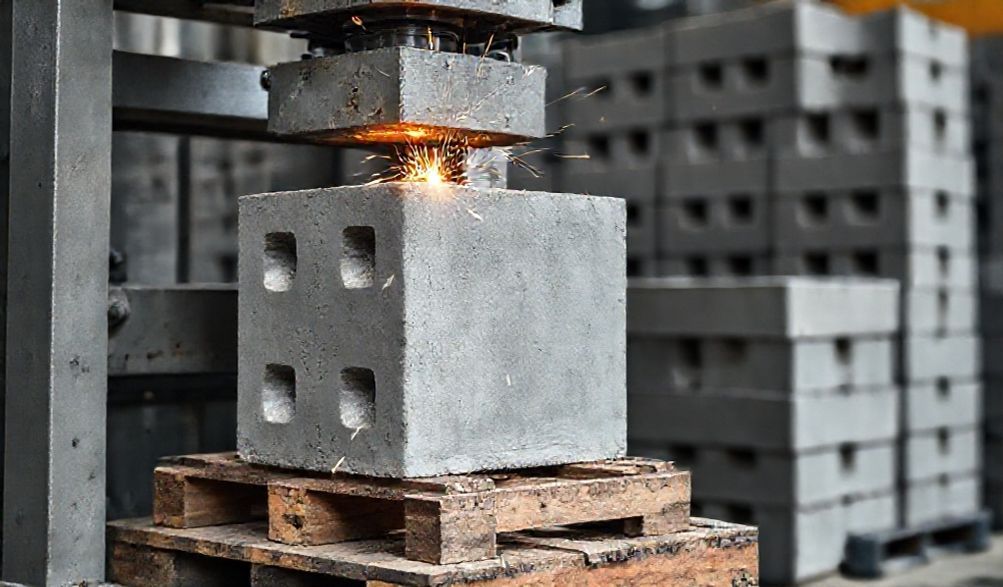
A block molding machine is a mechanical or electro-mechanical device designed to compact raw material into a specific, predefined shape within a mold cavity. Its core function is to apply force—through vibration, hydraulic pressure, or a combination of both—to a semi-dry concrete mix, transforming it into a dense, solid block.
- Primary Role: To manufacture uniform, high-strength building components with repeatable precision.
- Ключевые результаты: Concrete hollow blocks, solid blocks, paving stones, curbstones, and other interlocking masonry units.
- Industry Impact: These machines are indispensable in modern construction, enabling the rapid, cost-effective production of the essential elements used in everything from residential homes to large-scale civil engineering projects.
How Does a Block Molding Machine Work?
The operation of a block molding machine follows a logical, cyclical process. While automation levels vary, the core steps remain consistent:
- Кормление: The cycle begins with loading the raw material—typically a dry or semi-dry concrete mix of cement, sand, aggregate, and a minimal amount of water—into the machine’s feed hopper.
- Уплотнение: The mix is directed into the mold box. Here, it is subjected to intense compaction. This is usually achieved through:
- High-frequency vibration to settle the material and remove air pockets.
- Гидравлическое давление from a ram that presses down with significant force (measured in tons).
- A combination of both methods for superior density and strength.
- Формование: Under this pressure, the material fully occupies the mold cavity, taking on its exact shape and surface texture.
- Выброс/Отверждение: The compacted block is then ejected, usually onto a wooden or steel pallet. The block, now able to hold its shape, is transferred to a curing area where it gains strength over time through hydration, often in a controlled environment.
Виды машин для формования блоков
The market offers a range of machines tailored to different scales of operation, budgets, and output requirements. Understanding these categories is the first step in narrowing down your choice.
Ручные формовочные машины для блоков
These are the most basic and entry-level models, relying heavily on human labor.
- Операция: The filling, compaction (often via a lever-operated press), and ejection processes are performed manually.
- Плюсы:
- Очень низкая начальная стоимость инвестиций.
- Простота в понимании и управлении с минимальным обучением.
- No requirement for electrical power in purely mechanical models.
- Минусы:
- Very low production output (e.g., 100-500 blocks per day).
- Labor-intensive and physically demanding.
- Inconsistency in block quality due to human variables.
- Лучше всего подходит для: Small-scale, personal projects, startups with severe budget constraints, or remote locations with no power.
Полуавтоматические машины для формования блоков
This category strikes an optimal balance for many businesses, automating the core molding cycle while requiring some manual intervention.
- Операция: The pressing and ejection cycles are automated (often via hydraulic systems and vibration). Operators typically handle feeding the raw material and removing finished blocks/pallets.
- Плюсы:
- Significantly higher output than manual machines (e.g., 1000-5000 blocks per 8-hour shift).
- Good balance between productivity, cost, and versatility.
- More consistent block quality due to automated pressure/vibration.
- Минусы:
- Higher upfront cost than manual machines.
- Requires a stable power source (electric or diesel).
- Still involves considerable manual labor for feeding and handling.
- Лучше всего подходит для: Small to medium-sized block production yards, growing businesses, and contractors needing a reliable output for multiple projects.
Полностью автоматические машины для формования блоков
These are high-end production lines designed for maximum output with minimal human labor.
- Операция: The entire process—from raw material feeding and mixing to molding, curing, and even block stacking—is automated and controlled by a central computer (PLC).
- Плюсы:
- Very high, consistent output (e.g., 10,000+ blocks per shift).
- Exceptional product consistency and quality control.
- Dramatically reduced labor costs and physical strain.
- Минусы:
- Very high capital investment.
- Requires significant space and infrastructure.
- Complex maintenance requiring specialized technicians.
- Лучше всего подходит для: Large-scale commercial block manufacturing plants, industrial operations, and businesses where volume and efficiency are paramount.
Стационарные vs. Мобильные установки для производства блоков
This is another crucial distinction based on the machine’s placement and workflow.
- Стационарные блочные установки: These are fixed installations. Blocks are molded and then transported (via conveyor or forklift) to a separate curing area (like a curing rack or chamber). They typically offer higher output and are the standard for semi- and fully-automatic systems.
- Мобильные блок-машины (тип "несушка"): These machines move on wheels or tracks. They produce blocks and deposit them directly onto a level ground surface (the “bed”), then move forward to lay the next batch. The blocks cure in place.
- Преимущество: Eliminates the need for pallets and extensive handling equipment. Ideal for on-site production for large projects.
- Disadvantage: Output is generally lower than stationary plants, and quality can be more susceptible to ground conditions.
Key Factors to Consider When Choosing a Machine
Selecting the right machine is a strategic decision. Focus on these critical, experience-based factors to align your investment with your business goals.
Production Capacity and Output Requirements
Your business plan should dictate the machine’s capacity, not the other way around.
* Рассчитайте свои потребности: Estimate your average daily or weekly block requirement based on current orders and projected growth. Don’t just consider peak demand.
* Понять время цикла. A machine’s output is measured in cycles per hour. Know how many blocks it produces per cycle (e.g., 4, 6, 10) to calculate its true hourly output.
* Plan for Growth: Consider a machine with 20-30% more capacity than your current need to accommodate future expansion without an immediate reinvestment.
Block Type, Size, and Design Flexibility
Your product line determines your machine’s required capabilities.
* Mold Interchangeability: Ensure the machine supports easy and quick mold changes. How long does it take to switch from producing hollow blocks to paving slabs?
* Pressure & Vibration Specifications: Different block types require different compaction forces. Producing a dense, solid curbstone requires more power than a standard hollow block. Verify the machine’s capability matches your product range.
* Индивидуальные дизайны: If you plan to make specialty or architectural blocks, discuss custom mold feasibility and cost with the manufacturer.
Источник питания и эксплуатационные расходы
The running costs are a lifelong commitment.
* Электрические модели: Cleaner, quieter, and generally more efficient where grid power is stable and affordable. Higher upfront torque for vibration systems.
* Дизельные модели: Essential for locations with unreliable electricity. Offer mobility but come with higher fuel costs, noise, and emissions.
* Гибридные модели: Some offer dual power sources (electric/diesel) for flexibility.
* Общая стоимость владения: Factor in energy consumption, maintenance costs, and the price of spare parts over the machine’s expected lifespan.
Machine Durability, Build Quality, and After-Sales Support
This is where reputable manufacturers separate themselves from the competition.
* Строительство: Look for heavy-duty steel frames, branded hydraulic components (like Bosch Rexroth or Parker), and precision-machined parts. Weight can be a good indicator of material quality.
* Послепродажная поддержка: This is non-negotiable. Does the supplier offer installation, training, and a clear warranty? What is their spare parts availability and lead time? Can they provide remote troubleshooting?
* Репутация: Seek out client references, read case studies, and if possible, visit an existing installation to see the machine in operation.
Essential Features for Efficiency and Quality
Beyond basic specifications, these technical features significantly impact daily performance and long-term value.
Vibration and Compaction System
The heart of block quality lies in the compaction process.
* Dual-Process Systems: The most effective machines combine high-frequency, amplitude-adjustable vibration with synchronized hydraulic pressure. This ensures optimal density throughout the block, leading to higher compressive strength.
* Преимущество: Achieves maximum strength with optimal cement content, reducing material costs and improving product quality.
Control System and Automation Level
The “brain” of the machine dictates its ease of use and consistency.
* Системы ПЛК (Программируемые Логические Контроллеры): Standard on better semi-automatic and all automatic machines. They allow for:
* Precise control over vibration time, pressure, and cycle sequence.
* User-friendly touchscreen interfaces for operators.
* Diagnostic functions and error logging for easier troubleshooting.
* Интеграция автоматизации: Consider machines that can be integrated with automated pallet feeders and stackers to further reduce labor.
Pallet and Feeding System Design
Smooth material flow is key to minimizing downtime.
* Обращение паллет: A robust system that cleanly transfers pallets in and out of the press without jamming is critical for continuous operation.
* Feeding Mechanism: Look for a feeding system that evenly distributes the mix into all mold cavities to prevent uneven block density. Automated, sensor-controlled feeders are a major upgrade in consistency.
Operational Best Practices and Maintenance
Your machine is only as good as the operation behind it. Follow these expert guidelines to ensure safety, longevity, and consistent output.
Proper Raw Material Preparation
The quality of the input defines the quality of the output.
* Проектирование состава смеси. Use a consistent, well-graded mix. The ideal ratio of cement, sand, and aggregate (e.g., 1:3:5 for hollow blocks) depends on your desired block strength.
* Aggregate Size: Should be less than one-third the thickness of the block’s smallest section.
* Влажность: This is critical. The mix should be semi-dry—just enough water for hydration (typically 5-8% by weight). A simple “ball test” (the mix should hold its shape when squeezed) is a good field check.
Routine Maintenance Checklist
Preventative maintenance is far cheaper than major repairs.
Ежедневно:
* Clean the machine thoroughly, removing all concrete residue, especially from molds and the feed system.
* Check hydraulic oil levels and look for leaks.
* Lubricate all moving parts as per the manual.
Weekly:
* Inspect and tighten all bolts, nuts, and vibrator mounts.
* Check wear parts like mold liners, feedbox shoes, and pallet surfaces.
* Inspect electrical connections for tightness.
Monthly:
* Change hydraulic oil and filters as recommended.
* Conduct a thorough inspection of hydraulic hoses and cylinders.
* Calibrate pressure settings if needed.
Common Troubleshooting Tips
-
Problem: Blocks sticking to the mold.
- Cause: Worn mold liners, insufficient mold release agent, or incorrect moisture content.
- Solution: Polish or replace mold liners, apply a proper release agent (like oil), and adjust mix moisture.
-
Problem: Poor surface finish or broken edges.
- Cause: Under-compaction, low vibration time/pressure, or a worn-out mold.
- Solution: Increase vibration time/pressure, ensure the feed box is full, and inspect the mold for damage.
-
Problem: Low block density/strength.
- Cause: Incorrect mix design (too much sand, not enough cement), inadequate compaction, or excessive water.
- Solution: Re-evaluate mix ratios, increase compaction pressure, and strictly control water content.
FAQ: Your Block Molding Machine Questions Answered
Q: What is the average cost range for a block molding machine?
А: Prices vary astronomically based on type and capacity. Basic manual machines can start from $2,000 – $5,000. Productive semi-automatic models typically range from $15,000 – $50,000. Fully automatic production lines begin around $70,000 and can exceed $300,000 for large, sophisticated systems.
Q: Can one machine produce different types of blocks?
А: Yes, this is a standard feature. The key is interchangeable molds. Ensure the machine you purchase has a readily available catalog of molds (hollow block, paving, curb, etc.) and that changing them is a straightforward process, often taking 30 minutes or less.
Q: How much space is needed to install and operate a block making plant?
А: Space needs are highly variable. A small semi-automatic operation with curing space might require 2,000 – 5,000 square feet. A full automatic line with raw material storage, production area, and organized curing racks can easily require 15,000 – 30,000 square feet or more for efficient workflow.
Q: What is the typical lifespan of a well-maintained block machine?
А: With proper maintenance and operation, a high-quality block molding machine from a reputable manufacturer can have a productive lifespan of 15 to 25 years. Critical components like hydraulic systems may require overhaul or replacement within that timeframe, but the core frame should last indefinitely.
Q: Are there specific safety precautions for operators?
А: Absolutely. Safety is paramount. Key rules include: always wear Personal Protective Equipment (PPE) like safety glasses, gloves, and hearing protection; never bypass machine safety guards or interlocks; follow strict lock-out/tag-out procedures before performing any maintenance; and ensure all operators are thoroughly trained on the machine’s specific functions and hazards.
Заключение
Investing in a block molding machine is a significant step that lays the foundation for your construction or manufacturing business’s success. The journey from a manual starter unit to a fully automated plant reflects a path of growth, each machine type serving a distinct and valuable role in the industry’s ecosystem.
The right choice hinges on a clear-eyed assessment of your production goals, budget constraints, and technical readiness. By prioritizing robust build quality, unwavering after-sales support, and operational efficiency—as detailed throughout this guide—you are investing in more than just metal and hydraulics. You are investing in the reliability, reputation, and scalability of your enterprise.
Always conduct due diligence: source equipment from established, reputable manufacturers, request live demonstrations using your own mix if possible, and speak to existing clients about their experiences. With the correct machine operated under best practices, you are well-equipped to build a future of consistent, high-quality block production, one block at a time.
<