
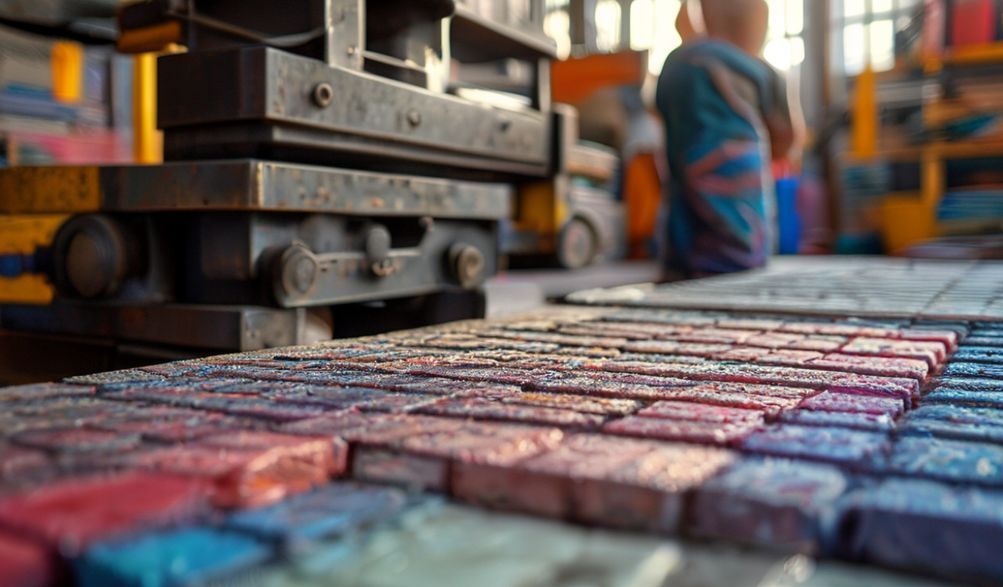
Ваше руководство по поиску надежной и недорогой машины для изготовления цветной тротуарной плитки
Облик наших домов, парков и городов преображается. Ушли в прошлое серые бетонные плиты. Сегодня яркие цветные тротуарные блоки стали стандартом для подъездных путей, пешеходных дорожек, патио и общественных пространств, предлагая непревзойденную прочность, эстетическую привлекательность и гибкость дизайна. Этот растущий спрос открывает золотые возможности для предпринимателей, подрядчиков и владельцев малого бизнеса, желающих выйти на рынок строительных материалов или расширить свое присутствие в нем.
Однако первое препятствие может казаться пугающим: оборудование. Мечта о запуске собственного производства тротуарной плитки часто сталкивается с реальностью инвестиционных затрат. Быстрый поиск в интернете «дешёвый станок для изготовления цветной тротуарной плитки» выявляет ошеломляющее множество вариантов — от подозрительно дешёвых моделей до премиальных брендов с запредельными ценами. Как ориентироваться на этом рынке, не попав в ловушку ложной экономии, когда низкая закупочная цена оборачивается высокими долгосрочными расходами и эксплуатационными проблемами?
Этот всеобъемлющий гид — ваша дорожная карта. Мы выходим за рамки упрощённого понятия «дешёвый», чтобы исследовать концепцию真实价值Эта статья, основанная на отраслевом анализе, технических обзорах и понимании проблем мелкосерийного производства, предоставит вам знания, необходимые для выбора станка, который сочетает доступность с надежностью, производительностью и высокой окупаемостью инвестиций (ROI). Ваша цель — не просто купить станок, а вложить средства в основу прибыльного бизнеса.
Понимание понятия "дешевый" в контексте машин для производства тротуарной плитки
Слово «дешёвый» привлекает внимание, но может стать ловушкой для покупателей. В сфере капитального оборудования, такого как станки для производства тротуарной плитки, указанная цена — это лишь начало финансовой истории.
Цена против совокупной стоимости владения (TCO)
The most critical concept you must grasp is Общая стоимость владения (TCO). TCO is the sum of all expenses associated with a machine over its operational life.
- Первоначальная стоимость покупки: The invoice amount.
- Shipping, Customs, and Installation: Often overlooked, these can add 20-40% to the landed cost for imported machinery.
- Потребление энергии An inefficient vibration motor or hydraulic system will drain profits through your electricity bill.
- Техническое обслуживание и ремонт: The frequency and cost of replacing wear parts (molds, springs, bearings).
- Простой: This is the silent profit-killer. A machine that frequently breaks down halts production, delays orders, and damages your reputation.
A truly “cheap” machine is one with a low TCO, not necessarily the lowest initial price. A robust, slightly more expensive machine that runs for years with minimal downtime often proves far cheaper in the long run.
The Spectrum of Machine Types & Price Ranges
“Cheap” options typically reside at the lower end of this automation spectrum:
- Manual/Hydraulic Press Machines: Lowest upfront cost. Entirely reliant on manual labor for mixing, filling, coloring, and pressing. Output is very low (100-300 blocks/day), quality is inconsistent, and labor costs are high.
- Полуавтоматические станки: The sweet spot for many small to medium businesses. Operators load the raw mix and activate the cycle. The machine handles vibration, compaction, and ejection. Output ranges from 800 to 3,000 blocks per 8-hour shift. This is where the most meaningful value-for-money decisions are made.
- Полностью автоматические машины: High-output machines (4,000+ blocks/day) with automated material feeding, mixing, coloring, and block handling. These command a premium price and are suited for large-scale production.
Key Trade-offs to Consider
Lower-priced machines often involve conscious compromises. Being aware of them helps you make an informed choice:
- Объем производства A cheaper machine will be slower.
- Уровень автоматизации: Color application may be manual (sprinkling powder) versus an integrated feeder, affecting consistency.
- Технология вибраций: May use a single, less powerful motor instead of a dual-vibration system, impacting block density.
- Строительство: Frames may use lighter-gauge steel, which can warp or crack under constant stress.
- Standard Features: May lack safety guards, digital controllers, or easy-adjustment systems.
Core Components of a Color Paver Block Machine: What to Inspect
To judge value, you must look under the hood. Here are the components where quality cannot be compromised.
Vibration System (The Heart of the Machine)
The vibration system is what transforms loose concrete mix into a dense, strong paver block. It’s responsible for the block’s compressive strength (measured in MPa).
- Look For: A dual-vibration system (platform and head vibration) is superior for uniform density.
- Motor Power & Frequency: Don’t just look at horsepower (HP). Ask about the vibration frequency (RPM). A well-engineered system with the right frequency is more important than raw power alone.
- Mounting: Vibration motors should be securely mounted with high-grade bolts and shock absorbers to prevent damage to the frame.
Mold & Pallet Quality
The mold is the soul of your product. Its precision defines the block’s shape, dimensional accuracy, and surface finish.
- Материал: Insist on hardened steel or high-chrome steel molds. “Cheap” mild steel molds will wear out after a few thousand cycles, losing definition and requiring expensive replacement.
- Обработка: Molds should be CNC-machined for perfect consistency.
- Поддоны: The trays that hold the block during curing. They must be perfectly flat and made of durable steel to prevent warping.
Color Mixing & Feeding Mechanism
This is the key differentiator for a color paver block machine. Inconsistent color is a major sign of unprofessional production.
- Инструкция: Cheapest method. Laborer sprinkles dry pigment onto the mix in the mold. Highly inconsistent, labor-intensive, and wasteful.
- Semi-Automatic Color Feeder: A hopper meters a precise amount of color powder onto the mix. Offers a good balance of cost and consistency.
- Integrated Mixer/Feeder: The gold standard. Color is automatically mixed with a portion of sand/cement in a small mixer and then uniformly spread. Ensures vibrant, consistent, color-fast blocks.
Frame and Build Structure
The frame must withstand relentless vibration for years. A flimsy frame will lead to misalignment, cracks, and catastrophic failure.
- Inspect: Look for thick steel channels and plates (e.g., 8mm+). All welds should be clean, continuous, and robust.
- Reinforcement: Critical stress points (like where the vibration motors attach) should have additional gussets or reinforcement.
How to Source a Cost-Effective Machine: A Strategic Approach
With the right knowledge, your sourcing process becomes a strategic exercise, not a gamble.
Defining Your Exact Requirements
Before you talk to a single supplier, answer these questions:
- Daily Production Target: How many blocks do you need to produce? (Be realistic about your market).
- Типы блоков: Which products? (e.g., interlocking, garden tiles, curb stones).
- Сырье: What is your primary mix? (Virgin concrete, fly-ash based)?
- Available Space & Power: Do you have a 3-phase electrical connection? What is your factory floor space?
Researching Reputable Manufacturers & Suppliers
Move beyond generic B2B marketplaces.
- Специализация: Seek companies that specialize in block making machines, not general machinery exporters.
- Трек-рекорд: Look for a history of 10+ years. Ask for videos of their factory floor and assembly process.
- Сертификаты: While not a guarantee, ISO or CE markings indicate a focus on quality management systems.
- Direct vs. Local Agent: Consider dealing directly with a manufacturer for better pricing, but weigh it against the support offered by a knowledgeable local agent.
The Critical Role of After-Sales Support
For a budget machine, after-sales support is не подлежит обсуждению. It’s your safety net.
- Запчасти: Are they readily available? Request a spare parts price list. Exorbitant part prices are a major red flag.
- Техническая документация: You should receive clear assembly drawings, wiring diagrams, and an operation manual.
- Гарантия: What is covered (parts, labor)? For how long? What is the process for a claim?
- Technical Assistance: Is remote/video support available? Will they provide training?
Requesting and Evaluating Quotations
A professional quote reflects a professional company. It should detail:
- Machine Specifications: Model, production capacity, mold size, motor power, voltage.
- Price Breakdown: FOB price, shipping cost, insurance, estimated customs duties.
- Scope of Supply: Does the price include installation, training, a starter set of molds and pallets?
- Payment Terms: Typical terms are 30% advance, 70% before shipment.
- Delivery Timeline: From order to shipment.
Maximizing Value and Avoiding Costly Pitfalls
Your machine is only one part of a successful operation.
The Importance of Raw Material Preparation
A world-class machine cannot fix poor-quality inputs.
- Consistency is Key: Use well-graded sand and aggregates. Invest in a simple pan or planetary mixer to ensure a homogeneous concrete mix.
- Pigment Quality: Use high-quality, UV-stable iron oxide pigments. Cheap pigments will fade quickly.
- Курение: Plan for a covered curing area. Proper curing is essential for final block strength.
Calculating Your Realistic ROI
A simple framework to justify your investment:
- Total Machine Landed Cost: (Purchase + Shipping + Installation).
- Daily Production Capacity: (e.g., 2,000 blocks).
- Estimated Operational Cost per Block: (Raw materials + labor + electricity).
- Selling Price per Block: (Your local market rate).
- Gross Profit per Block: (Selling Price – Operational Cost).
- Daily Gross Profit: (Gross Profit per Block x Daily Production).
- Payback Period (Days): Total Landed Cost / Daily Gross Profit.
This exercise shifts the conversation from “cost” to “investment return.”
Red Flags When Buying “Cheap” Machinery
- Vague or Missing Specifications on the quotation.
- No verifiable physical address or factory videos.
- Unwillingness to provide references from customers in your region.
- Pressure for 100% advance payment.
- A price drastically lower (e.g., 40% less) than all other comparable offers.
- No meaningful warranty or a warranty that is impossible to enact.
Considering Refurbished or Local Machinery
This can be a brilliant high-value strategy.
- Refurbished: A reputable dealer can overhaul a used machine with new motors, bearings, and paint, offering near-new performance at a fraction of the cost. Always insist on a test run with your own raw materials.
- Local Used Machine: The major advantage is you can inspect it thoroughly, and support/logistics are simplified.
Frequently Asked Questions (FAQ)
Q1: What is the cheapest type of color paver block machine available?
А: The absolute cheapest is a manual press machine. However, its output is extremely low (100-300 blocks/day) and quality heavily depends on the operator’s skill. It’s only suitable for tiny, non-commercial projects. A small semi-automatic machine offers a far better balance of cost and commercial viability.
Q2: Can a cheap machine produce high-quality, color-fast pavers?
А: Yes, but the burden of quality shifts to you. The machine must have a competent vibration system. You must then use a precise, strong concrete mix design and premium oxide pigments. The cheaper the machine, the more meticulous your process control must be to achieve consistency.
Q3: How much should I budget for a semi-automatic machine?
А: Prices vary wildly by configuration, region, and brand. As a very general ballpark, a new semi-automatic machine capable of 1,500-2,500 blocks per day can range from $8,000 to $25,000 (FOB). The final landed cost with shipping, duties, and installation will be higher. Always get detailed, itemized quotes.
Q4: Is it better to buy a machine locally or import it directly?
А: For first-time buyers, a local supplier is strongly recommended. The price may be 15-30% higher, but you gain invaluable local support, faster spare parts access, and someone who understands your market’s regulations. Importing directly is for experienced buyers who can manage international logistics and technical troubleshooting.
Q5: What are the most common maintenance issues with budget machines?
А:
* Loose Bolts/Nuts: Constant vibration will loosen them. A daily “bolt tightening” check is essential.
* Mold Face Wear: Even good molds wear. Inspect regularly for loss of detail.
* Electrical Faults: Loose connections in limit switches or control panels.
* Hydraulic Leaks (if hydraulic): From worn seals or hoses.
A simple, disciplined daily maintenance checklist can prevent 95% of major breakdowns.
Заключение
Finding a reliable and cheap color paver block making machine is a journey of smart value engineering, not a hunt for the lowest price tag. It’s about understanding that true economy is measured over years of service, not at the moment of purchase.
Your path forward is clear: prioritize build quality, supplier reputation, and after-sales support above all else. Let your clearly defined business requirements—your production goals, product mix, and budget—guide your conversations with suppliers, not the other way around. Furthermore, consider future-proofing your investment; a machine with 20-30% more capacity than you currently need allows for growth without another capital-intensive upgrade.
Finally, build trust through verification. If possible, visit the manufacturer’s workshop. Demand a live video demonstration of the exact model you’re considering, producing blocks. Most importantly, speak to their existing customers. There is no better insight into the real-world performance and support of a machine than from someone who uses it daily.
By applying the strategic approach outlined in this guide, you can confidently make an investment that lays a solid, profitable foundation for your paver block manufacturing business.
<