
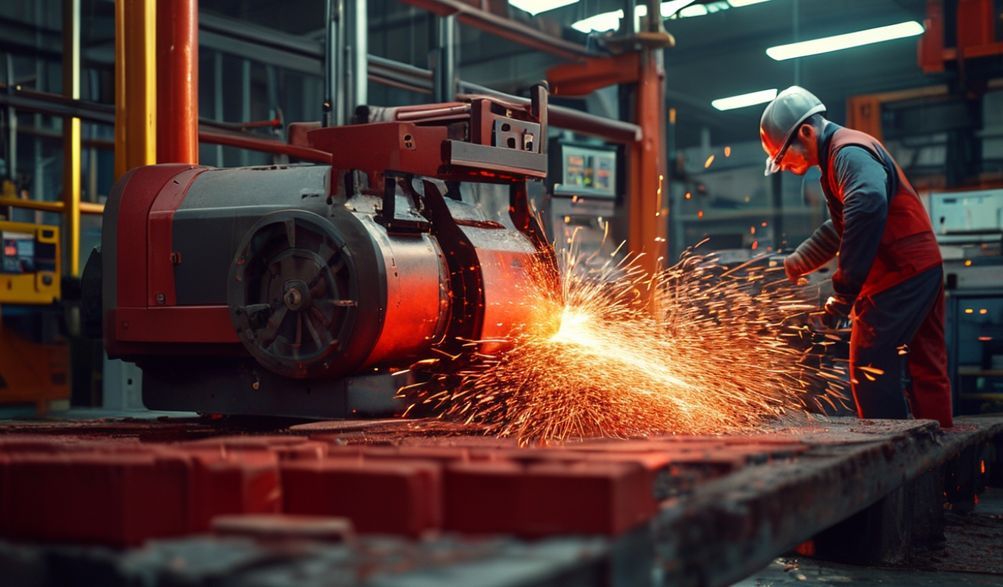
Ваше полное руководство по выбору надежного производителя кирпичных машин
Введение
Каждый строительный проект, будь то скромный дом или обширный городской ландшафт, начинается с фундаментальной задачи: поиска прочных, качественных и доступных строительных материалов. Веками это означало зависимость от крупных кирпичных заводов и сложных цепочек поставок. Сегодня современное решение находится прямо в руках строителя, предпринимателя или инвестора — это станок для производства кирпича.
Но эта мощная возможность сопряжена со значительным риском. Рынок переполнен вариантами, и выбор неподходящегопроизводитель кирпичных машинМожет привести к каскаду проблем — машина, которая выходит из строя под нагрузкой, производитель, исчезающий после продажи, дорогостоящие простои и разрушенная окупаемость инвестиций. Ваш выбор производителя определяет не только качество ваших кирпичей, но и жизнеспособность всей вашей деятельности.
Опираясь на многолетний анализ отрасли, изучение технических характеристик и опыт успешных предприятий по всему миру, это руководство создано, чтобы отделить важное от второстепенного. Мы предоставим вам — будь вы строительный предприниматель, инженер-проектировщик или инвестор, создающий производственный объект, — ключевые критерии для выбора по-настоящему надежного партнера. Речь идет не просто о покупке оборудования, а о стратегических инвестициях в основу вашего бизнеса. Давайте вместе позаботимся о том, чтобы ваше решение было мудрым.
Что выделяет производителя кирпичных машин? Ключевые качества, на которые стоит обратить внимание
В отрасли, где оборудование подвергается огромным нагрузкам и непрерывному использованию, репутация производителя решает всё. Надёжныйпроизводитель кирпичных машинОни определяются не только глянцевым буклетом; их определяют основополагающие качества, которые гарантируют производительность и партнерство.
Проверенный отраслевой опыт и послужной список
Долголетие в этой сфере — безмолвное свидетельство надёжности. Производитель, работающий десять и более лет, вероятно, прошёл через технологические перемены, усовершенствовал свои разработки и создал репутацию.
- Диверсификация портфеля:Ищите производителя с широким ассортиментом оборудования (гидравлические, вибрационные машины, различные уровни автоматизации). Это говорит о глубоких инженерных знаниях, а не об узкой ориентации на один продукт.
- Глобальная клиентская база:Присутствие в нескольких странах, особенно с жесткими строительными стандартами, является сильным позитивным сигналом. Это демонстрирует способность адаптироваться к различным материалам и климатическим условиям.
- Проверяемое доказательство: Seek out detailed case studies, project photos, and video testimonials. A confident manufacturer will showcase their machines in action at real client sites.
Техническая экспертиза и инновации
The best manufacturers are engineers first, salespeople second. They invest in the future of the technology.
- Внутренние исследования и разработки (НИОКР): Does the company have a dedicated research and development team? This is crucial for incremental improvements in energy efficiency, automation, and wear-part longevity. It’s the difference between an innovator and a copycat assembler.
- Знания в области материаловедения: A great partner understands the raw materials—cement, soil, fly ash, aggregates. They should advise you on optimal mix designs for your local resources to achieve the best brick quality.
Comprehensive Manufacturing and Quality Control
Never buy from a “trading company” masquerading as a maker. The integrity of the machine is born on the factory floor.
- Own Production Facility: The manufacturer should control the entire production process, from steel cutting and welding to assembly and painting. This ensures accountability at every stage.
- Certifications Matter: Look for international quality certifications like ИСО 9001 and safety marks like CE. These are not just stickers; they represent adherence to rigorous, audited management and production systems.
- Качество компонентов: Inquire about the source of critical components like hydraulic systems, PLCs, and motors. Reputable brands (e.g., Siemens, Schneider, Rexroth) for these parts are a sign of quality investment.
Transparency and Clear Communication
Trust is built on clarity. From the first contact, you should feel informed, not sold to.
- Detailed Documentation: Technical specifications should be exhaustive and easy to find—cycle times, pressure ratings, motor power, dimensional accuracy. Vague promises like “high production” are red flags.
- Honest Consultations: A good sales engineer will ask detailed questions about your project, budget, and local materials before recommending a machine. They should be willing to explain why one model is better for you than another.
- Clear Contracts: The quotation, warranty terms, and delivery scope should be unambiguous, with all costs (FOB, CIF, installation) clearly stated to avoid hidden surprises.
A Deep Dive into Brick Machine Types and Applications
Choosing the right type of machine is as critical as choosing the right maker. Your material, final product, and business scale will dictate the optimal technology. A trustworthy manufacturer will guide you through this decision.
Hydraulic Press Machines (for High-Density Bricks/Pavers)
These machines use immense, controlled hydraulic pressure to compact material into a mold.
- Как они работают: A hydraulic cylinder applies steady, high pressure (often measured in tons) to the raw mix, compressing it to a very low void ratio.
- Ключевые преимущества:
- Superior Strength & Density: Produces bricks and pavers with extremely high compressive strength, ideal for heavy-duty applications like roads and industrial floors.
- Отличное качество поверхности: Creates smooth, precise edges and consistent coloration.
- Versatility in Design: Excellent for complex shapes like interlocking pavers, garden kerbs, and decorative stones.
- Идеальные области применения: Interlocking paving stones, curb stones, high-strength solid bricks, and specialty architectural products.
Vibrating Press Machines (for Hollow Blocks & Standard Bricks)
These machines combine vibration with lower pressure to consolidate concrete or clay mix in a mold.
- Как они работают: A vibrating table shakes the mold vigorously, causing the material to settle and release air bubbles, while a press head applies supplementary pressure.
- Ключевые преимущества:
- High Production Speed: Generally faster cycle times than hydraulic presses, making them ideal for high-volume output.
- Экономическая эффективность: Often have a lower initial investment for comparable output capacity.
- Efficiency for Hollow Blocks: The vibration is exceptionally effective at filling the intricate molds of hollow blocks.
- Идеальные области применения: Standard hollow blocks, solid concrete bricks, lightweight aerated concrete blocks, and landscaping blocks.
Mobile vs. Stationary Plants: Choosing Your Setup
- Mobile Brick Making Plants:
- Плюсы: Mounted on a trailer for easy transport. Perfect for on-site production, eliminating transport costs for finished bricks. Ideal for remote projects, disaster relief, or contractors moving between sites.
- Минусы: Typically have lower output capacity than large stationary plants.
- Stationary Brick Making Plants:
- Плюсы: Designed for fixed-factory, large-scale production. Allow for higher levels of automation, integrated curing systems, and maximum output (thousands of blocks per shift).
- Минусы: Require a dedicated site and significant setup. Not movable.
- The Choice Depends On: Project duration, scale of demand, investment capital, and whether your business model is project-based or product-based.
Automation Level: Manual, Semi-Automatic, and Fully Automatic
This is a primary driver of both cost and productivity.
- Ручные станки: Operator controls every step (feeding, pressing, ejecting). Lowest cost, highest labor requirement. Suitable for very small-scale or start-up operations.
- Полуавтоматические станки: Automate key processes (e.g., pressing and ejection), but require manual feeding of raw material or pallet placement. Excellent balance of cost and productivity. Reduces labor fatigue and increases consistency.
- Полностью автоматические машины: Integrated with automatic feeders, conveyors, and stackers. Often controlled by a PLC. Highest initial investment, lowest labor cost per block. Essential for large-scale, competitive production where consistency and volume are paramount.
The Non-Negotiables: After-Sales Support and Service
The true character of a производитель кирпичных машин is revealed not during the sale, but in the years that follow. Consider after-sales support as critical as the machine’s steel.
Installation, Commissioning, and On-Site Training
A machine is just a collection of parts until it’s properly set up and understood.
- Expert Installation: Insist that the manufacturer sends technicians to install and commission the machine. This ensures it is perfectly leveled, calibrated, and tested with your local materials before handover.
- Комплексное обучение: The maker should provide thorough training for both operators (daily procedures, safety) and maintenance staff (troubleshooting, wear-part replacement). This knowledge transfer is invaluable for smooth operations.
Availability of Spare Parts and Maintenance Support
Downtime is lost revenue. Your manufacturer’s logistics network must be part of your risk mitigation.
- Parts Inventory: A reliable maker maintains a robust inventory of wear parts (molds, liners, seals) and critical components. Ask for their parts catalog and lead times for common items.
- Logistics Network: Do they have established channels (DHL, FedEx, local agents) to get parts to you quickly? For international buyers, this is crucial.
- Условия гарантии: Scrutinize the warranty. What is covered (parts, labor)? What is the duration? A clear, fair warranty is a sign of confidence in product quality.
Technical Support Lifeline
When an issue arises at 2 PM on a Friday, you need a lifeline.
- Multiple Contact Channels: Support should be available via phone, email, and modern platforms like WhatsApp or video call for remote diagnostics.
- Подробные руководства: The machine should come with exhaustive, well-illustrated operation and maintenance manuals in your language.
- Lifecycle Commitment: The best manufacturers view their relationship with you as a long-term partnership, offering support and upgrades throughout the machine’s operational life.
The Step-by-Step Guide to Vetting a Brick Machine Manufacturer
Armed with the right criteria, follow this actionable, experience-based process to separate the contenders from the pretenders.
Step 1: In-Depth Online Research and Shortlisting
- Website Analysis: Go beyond the homepage. Look for technical data sheets, engineering drawings, video demonstrations of actual production, and a dedicated “projects” or “case studies” section.
- Third-Party Verification: Check their profiles on B2B platforms like Alibaba or Made-in-China, but pay more attention to detailed, verified reviews. Search for the company name on independent construction equipment forums.
Step 2: The Initial Inquiry – Asking the Right Questions
Your first email or call is a test. Prepare a checklist:
* “Can you provide a detailed specification sheet for the [Model XYZ]?”
* “What is the lead time for the core wear parts for this model?”
* “Do you offer on-site installation and training, and what is the cost?”
* “Can I provide a sample of my local raw materials for your technical assessment?”
* “May I speak to a reference client in a country with similar conditions to mine?”
Gauge the depth, speed, and technical accuracy of their response.
Step 3: Requesting and Analyzing Documentation
Formalize the process. Request:
* Аformal, itemized quotation (Proforma Invoice).
* Thedetailed technical specification sheet.
* Thewarranty certificateиafter-sales service terms.
* Packing listиdelivery terms (Incoterms).
Compare these documents across your shortlisted makers. Inconsistency or vagueness is a major red flag.
Step 4: The Factory Visit or Virtual Tour (The Gold Standard)
If possible, visit the factory. If not, demand a live video tour.
What to Observe:
* Production Flow: Is the workshop organized? Is welding and machining done professionally?
* Контроль качества: Look for quality control stations. Are parts being measured and inspected?
* Material Stock: Do they have quality steel stock and branded components on hand?
* Live Test: The most powerful step. Request they run a production test using a mix formula that simulates your local materials. Witness the machine’s performance, brick output quality, and noise/vibration levels firsthand.
Frequently Asked Questions (FAQ) About Brick Machine Makers
Q1: What is the typical price range for a brick-making machine?
А: Prices vary dramatically based on type, automation, and capacity. A small manual machine can start from $5,000 – $15,000. A semi-automatic stationary plant may range from $30,000 – $80,000. Large, fully automatic production lines can cost $150,000 to over $500,000. Remember, the cheapest capital cost often leads to the highest operating cost through downtime and repairs.
Q2: Can I use local soil/clay to produce bricks with these machines?
А: Absolutely. Most machines are engineered for this purpose. A reputable производитель кирпичных машин will often ask for samples of your local soil, fly ash, or aggregate to analyze and recommend the optimal machine settings and mix formula to ensure quality output.
Q3: How important is the production capacity (blocks per hour) specification?
А: It’s critical, but must be understood contextually. Manufacturers often state a “theoretical” maximum. Ask for the practical, 8-hour shift capacity considering time for mold changes, cleaning, and breaks. Always buy capacity that matches your realistic market demand with room for growth.
Q4: What are the most common maintenance requirements?
А: Daily tasks include cleaning excess material and visual inspections. Weekly tasks involve lubricating all moving parts. Periodic maintenance (every few months) includes checking hydraulic fluid, tightening bolts, and inspecting wear parts like molds and press heads. A good manufacturer provides a clear maintenance schedule.
Q5: How do I handle machine breakdowns or technical issues?
А: This is where your due diligence on after-sales support pays off. The ideal process is: 1) Contact their 24/7 support line for remote troubleshooting. 2) If a part is needed, they dispatch it immediately with clear instructions. 3) For complex issues, they deploy a technician. Your pre-purchase agreement should outline this process clearly.
Заключение
Selecting a производитель кирпичных машин is a defining decision that extends far beyond a simple purchase. It is the choice of a long-term partner for your business’s productive core. As we’ve outlined, this choice rests on four pillars: evaluating the maker’s inherent Quality and Expertise, matching their Product to your specific Application, securing ironclad After-Sales Support, and conducting thorough, step-by-step Due Diligence.
In the competitive world of construction materials, the temptation to opt for the lowest upfront cost is strong. Resist it. Prioritize long-term value, reliability, and partnership. A reliable brick-making machine is a profit-generating asset that pays for itself. An unreliable one becomes a constant, draining liability. Use the insights and checklist from this guide to structure your search. Start conversations with manufacturers who demonstrate transparency, showcase their work proudly, and understand that your success is ultimately their best testimonial.
<