
Your Ultimate Guide to Choosing a Trusted Interlocking Block Making Machine Manufacturer
Введение
The global construction landscape is undergoing a quiet revolution. As the industry grapples with the dual demands of sustainability and cost-efficiency, a humble yet powerful solution is rising to the fore: the interlocking stabilized soil block (ISSB). These innovative blocks, produced without firing and with minimal cement, are reshaping how we think about building. However, the backbone of this revolution isn’t just the block—it’s the machine that makes it. And the linchpin of your success isn’t just the machine; it’s the interlocking block making machine manufacturerвы выбираете, с кем сотрудничать.
Many businesses, eager to capitalize on this market, fall into a critical trap. They source machinery based on a glossy brochure or the lowest online price, only to encounter a nightmare of hidden costs, mechanical failures, and vanishing after-sales support. The real cost emerges not at purchase, but in unreliable production, poor block quality, and crippling downtime.
This guide exists to change that narrative. Choosing a true manufacturer—a partner invested in your long-term operational success—is the single most important decision you will make. It’s the difference between a piece of equipment and a profitable, growing enterprise. Crafted from deep industry experience and technical expertise, this comprehensive framework will arm you with the knowledge to evaluate, question, and select a manufacturer with confidence. Let’s break down exactly what to look for, moving beyond price to uncover true value and partnership.
What is an Interlocking Block Making Machine? Core Technology Explained
Before evaluating who builds the machine, it’s crucial to understand what it does and why its engineering matters. This isn’t just a simple press; it’s a precision instrument for sustainable construction.
The Principle of Interlocking Stabilized Soil Blocks (ISSB)
At its core, the technology leverages a simple, ancient principle: compaction. The machine applies immense, controlled pressure to a mixture of locally available soil (often 85-90%), a small percentage of cement (5-10%), and water.
* Наука: This dynamic compaction and stabilization process creates a dense, coherent block. The cement hydrates, binding the soil particles together, resulting in a block with high compressive strength. The key differentiator is the переплетающийся дизайн—tongue-and-groove or puzzle-like edges—which eliminates the need for vertical mortar joints.
* The Benefit: Compared to traditional fired bricks or concrete blocks, ISSBs require no burning (saving trees and reducing CO2 emissions), use far less cement, and offer superior speed in construction due to their dry-stacking nature.
Ключевые компоненты и принцип работы машины
Understanding the machine’s anatomy reveals where manufacturing quality is paramount:
1. Бункер для подачи корма Where the raw soil-cement mixture is loaded. Consistency in feed is critical for block uniformity.
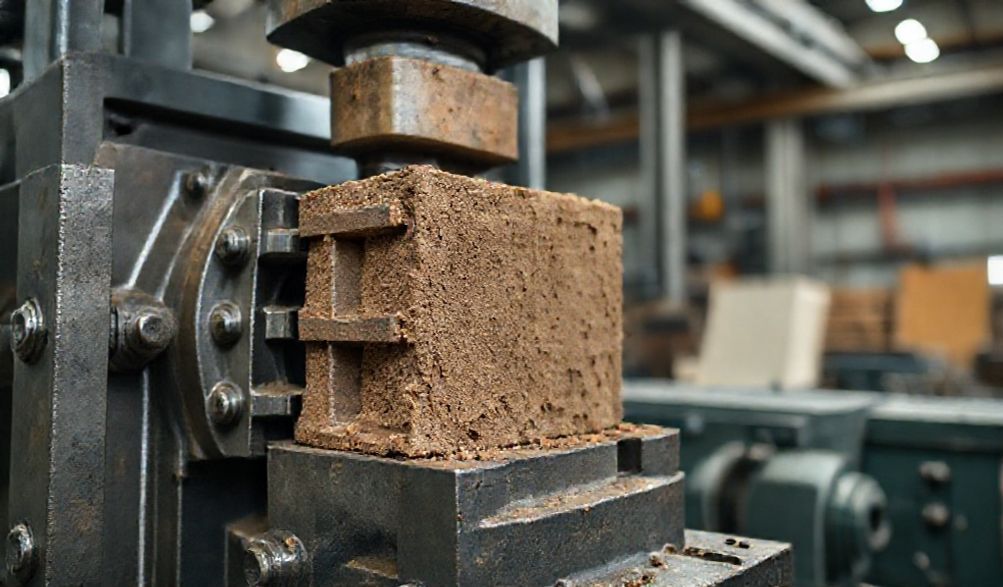
2. Камера сжатия и пресс-форма/штамп The heart of the machine. Here, a hydraulic ram or manual lever applies pressure (often measured in tons) to the mixture within a precision-engineered mold. The mold’s design dictates the block’s shape and interlocking pattern.
3. Механизм выброса: After compression, the formed block is ejected onto a pallet or rack. A smooth, consistent ejection prevents damage to the fragile green block.
4. Система управления: From simple levers to advanced Programmable Logic Controllers (PLCs), this governs the machine’s cycle, pressure, and timing.
Primary Outputs: From Pavers to Load-Bearing Walls
A versatile manufacturer will offer machines or interchangeable molds for a wide product range:
* Стандартные блоки с замковым соединением: For load-bearing walls in housing, schools, and commercial buildings.
* “Lego-Style” Blocks: Often used for rapid construction of retaining walls or temporary structures.
* Pavers and Landscaping Blocks: For driveways, walkways, and garden edging.
* Специальные формы: Curved blocks, chimney blocks, or custom designs for architectural features.
Why Your Choice of Manufacturer Matters More Than the Machine Price
It’s tempting to let the initial price tag dictate your decision. However, in heavy machinery, the cheapest option is almost always the most expensive in the long run. Your manufacturer defines your total cost of ownership and operational ceiling.
Total Cost of Ownership (TCO) vs. Initial Purchase Price
Consider these hidden costs a low-quality machine introduces:
* Frequent Breakdowns & Downtime: Every hour your machine is idle is lost revenue.
* Высокие эксплуатационные расходы: Poor-quality seals, hydraulics, and electrical components fail faster and are costly to replace.
* Energy Inefficiency: An poorly engineered hydraulic system can draw significantly more power, inflating your daily operating costs.
* Короткий срок службы оборудования: A machine that lasts 3 years versus 10+ years has a radically different annual cost.
The Direct Link Between Manufacturer Quality and Block Quality
The block is only as good as the machine that makes it. Precision in manufacturing ensures:
* Точность размеров: Consistent block size is non-negotiable for smooth, fast dry-stacking. Imperfect molds lead to misaligned walls.
* Равномерная прочность на сжатие Inconsistent pressure application creates weak spots, compromising the entire wall’s structural integrity.
* Density and Finish: A well-made block has a smooth, professional finish right out of the machine, reducing waste and finishing labor.
Long-Term Partnership for Business Growth
You’re not buying a product; you’re initiating a relationship. A true manufacturer acts as a strategic partner, providing:
* Техническая эволюция: Access to new mold designs, automation upgrades, and process improvements.
* Обучение операторов: Well-trained staff produce more, waste less, and maintain equipment better.
* Масштабируемость бизнеса: The ability to move from a manual to a semi-automatic to a fully automatic plant with a trusted advisor.
8 Critical Factors to Evaluate an Interlocking Block Machine Manufacturer
Use this actionable checklist as your due diligence framework. Don’t just take their word for it—ask for evidence.
1. Proven Industry Experience and Track Record
- Ask: “How long have you been designing and building these specific machines?” A company with a 15-year legacy has likely seen and solved the problems you haven’t yet encountered.
- Look For: A documented history, photos of older machines still in operation, and a focus on machinery manufacturing, not just general equipment trading.
2. In-House Engineering and R&D Capability
- The Red Flag: The “manufacturer” who can’t explain the engineering principles or only sells cookie-cutter models.
- The Green Flag: A team of mechanical and civil engineers who can customize a machine for your specific soil type, output goals, or power constraints. They innovate, not just assemble.
3. Manufacturing Facility & Quality Control Processes
- The Non-Negotiable: Request a video tour or visit the facility. A true manufacturer will be proud to show it off.
- Look For: Organized workshops, modern welding and machining equipment, and structured assembly lines. Ask about their QC checks: Are raw materials (steel plate, hydraulic cylinders) tested? Is every machine test-run before shipping? Certifications like ISO 9001 are a strong indicator of a systematic approach to quality.
4. Machine Durability & Component Quality
Drill down into the specifics. A quality quote will detail component brands.
* Рамка: Thickness and type of steel (e.g., reinforced box-section).
* Гидравлика: Brand of pumps, valves, and cylinders. Reputable brands ensure reliability.
* Electrics: Quality of motors, switches, and PLCs. Are they suited for harsh, dusty site conditions?
* Защита от коррозии: Is it just paint, or a proper primer and paint system for longevity?
5. Comprehensive After-Sales Support Ecosystem
This is where partners are separated from sellers. The support must be detailed in writing.
* Установка и ввод в эксплуатацию: Will they send a technician to set up the machine and ensure it produces perfect blocks on your site?
* Программы обучения: Is training for your operators included? Is it on-site or at their facility?
* Parts Inventory & Warranty: Be specific. What is the warranty period (e.g., 12 months on parts, 6 months on labor)? What is excluded? Do they maintain a ready inventory of wear-and-tear parts?
* Technical Support Responsiveness: What are the channels (phone, WhatsApp, email)? What is the guaranteed response time? Do they have the capability for remote diagnostics or dispatching regional technicians?
6. Portfolio of Successful Projects & Client Testimonials
- Go Beyond Photos: Ask for detailed case studies that outline the client’s challenge, the solution provided, and the results achieved.
- Seek Verifiable References: Request contact information for 2-3 clients in a similar climate or region who have used the machine for over a year. A confident manufacturer will provide this.
7. Transparency in Quotations and Communication
- Beware of Vague Quotes: A professional proposal is itemized: machine cost, mold cost, spare parts package, packaging, inland freight, international shipping, insurance, and estimated duties.
- Clarity on Responsibilities: Who handles export documentation? Who is the point of contact for shipping updates? Ambiguity here leads to frustration and unexpected costs later.
8. Environmental and Safety Standards Compliance
- Sustainable Production: The machine itself should be efficient. Does it recycle water? Is it designed for low energy consumption?
- Operator Safety: Look for safety guards on moving parts, emergency stop buttons, and clear safety manuals. CE marking or other regional safety certifications are a significant plus.
Key Questions to Ask Potential Manufacturers During Your Inquiry
Arm yourself with these direct questions. The quality of the answers will tell you everything.
About the Machine:
* “What is the real-world, sustained production output (blocks per 8-hour shift) for this model, accounting for loading, mixing, and curing handling?”
* “Can you provide a third-party test report for the compressive strength of blocks produced by this machine using a standard soil mix?”
* “What are the most common points of failure on this model, and what is your design solution to mitigate them?”
About the Company:
* “Can I speak to two clients who purchased a similar model over two years ago to discuss long-term performance and support?”
* “What is your exact procedure if a critical hydraulic component fails in the first month of operation under warranty?”
* “Can you share your engineering drawings for the main frame to assess the design and material specifications?”
About Logistics & Support:
* “What is the full, door-to-door delivered cost to [Your City/Port], and what is the realistic timeline from confirmed order to commissioning on my site?”
* “Do you have a certified technician or service partner in my country or region for emergency support?”
* “What is included in your standard training program, and is it conducted in my local language?”
Common Pitfalls to Avoid When Sourcing Your Machine
Forewarned is forearmed. Steer clear of these costly mistakes.
- Choosing Based Solely on the Lowest Online Price: This is the #1 trap. The price difference is always in the quality of components, engineering, and support you don’t see.
- Overlooking the Importance of Local Climate Adaptations: A machine designed for a temperate climate may fail rapidly in a coastal, salt-laden atmosphere or a desert environment with extreme temperature swings and dust. Ask how their machine is protected.
- Neglecting to Verify “Manufacturer” Claims: Many websites are run by traders or resellers. Verify by asking for factory location details, manufacturing license copies, and insisting on a live video from the workshop floor.
- Underestimating Power Requirements and Site Preparation Needs: A common oversight is not checking the voltage stability requirements. A 3-phase machine may need a voltage stabilizer in areas with poor grid supply. Ensure your site has the necessary foundation, space, and material handling area ready.
Раздел часто задаваемых вопросов
Q1: What is the average production capacity of a standard interlocking block machine?
Capacity varies widely. A manual machine may produce 300-500 blocks per day, a semi-automatic stationary machine 1,500-3,000 blocks per 8-hour shift, and a fully automatic machine 5,000+ blocks. Always ask for real-world, not theoretical, numbers.
Q2: Can the same machine produce different block shapes and sizes?
Yes, but typically by changing the mold/die. A reputable manufacturer will offer a range of interchangeable molds for their machine models. Ensure the machine’s pressure and feed system are compatible with the new mold design.
Q3: What is the typical lead time from order to delivery for such machinery?
For standard models, expect 4-8 weeks for manufacturing, plus 4-6 weeks for sea shipping, depending on destination. Customized machines or complex logistics can extend this. Get a written timeline.
Q4: What kind of soil is suitable, and can the manufacturer advise on this?
Generally, a well-graded soil with a mix of sand, silt, and a small amount of clay is ideal. The best manufacturers will often ask for a sample of your local soil for preliminary testing and can advise on mix ratios.
Q5: How many operators are needed to run a semi-automatic machine efficiently?
Typically, 3-4 people: one for feeding the mixer/hopper, one for operating the machine, and one or two for handling and stacking the freshly produced “green” blocks.
Q6: What are the most common maintenance tasks?
Daily: Cleaning the mold, hopper, and checking for loose bolts. Weekly: Checking hydraulic fluid levels and looking for leaks. Periodic: Replacing wear parts like mold liners, hydraulic seals, and cleaning filters.
Q7: Do reputable manufacturers offer financing options or partnerships?
Some larger, established manufacturers do offer financing plans or can connect you with export credit agencies. It’s always worth asking, especially for larger, automated plant purchases.
Заключение
Выбор подходящегоinterlocking block making machine manufacturer is a strategic decision that reverberates through the life of your business. It is an investment not just in a piece of equipment, but in the quality of your product, the reliability of your production, and the foundation of your reputation. By applying the rigorous framework outlined here—focusing on engineering depth, manufacturing transparency, and an ironclad after-sales ecosystem—you move from a vulnerable buyer to an informed partner.
Let this guide be your starting point. Begin your evaluation with a list of detailed, technical questions. Demand evidence in the form of test reports, client references, and factory visibility. Prioritize the long-term partnership over the short-term transaction. When you make this choice with due diligence, you do more than purchase a machine; you align your business with sustainable construction progress and build the foundation for a resilient, profitable enterprise that stands the test of time.
<