
Ingamba yo Guhindura Amakara y’Amatafari: Ubwoko, Igiciro n’Uburyo Bwo Gutoranya
Intangamarara
In an era of booming global construction, the demand for reliable, high-quality building materials has never been higher. Yet, for builders and entrepreneurs, securing a consistent supply of cement blocks can be a major bottleneck, leading to project delays and eroded profit margins. What if the solution wasn’t just buying blocks, but producing them?
Drawing from over two decades of experience in construction machinery manufacturing and consulting, we’ve identified the key factors that separate a profitable, efficient block-making operation from a struggling one. The heart of this operation is the cement block production machine—a pivotal investment that requires careful consideration.
This comprehensive guide is designed to demystify these machines. We’ll move from core principles to advanced automation, providing you with the knowledge to make an informed purchase decision, accurately project operational costs, and optimize your production line for long-term success. Whether you’re a small-to-medium entrepreneur entering the construction materials market, a construction company looking to vertically integrate your supply chain, or a civil engineering professional specifying equipment, this guide is for you.
What is a Cement Block Production Machine? Core Principles Explained
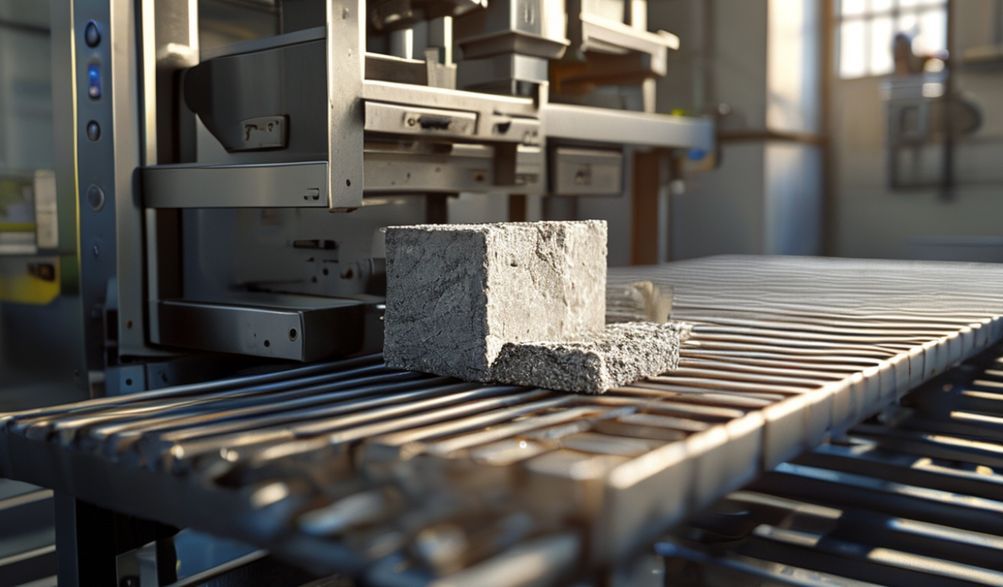
At its core, a cement block production machine automates and standardizes the process of creating concrete masonry units (CMUs). It transforms a raw mix of cement, aggregates (like sand and gravel), and water into dense, uniform blocks of precise dimensions and strength.
Uburyo Bw'ibanze Bwo Gukora
The fundamental process is consistent across most machines, involving four key stages:
- Gukomatanya: Dry ingredients are combined with water to form a homogeneous, semi-dry concrete mix.
- Gukora ibikoreshoIyi mivange ihanwa mu gashyamba k’imiterere y’ibyumba bya buri bwoko.
- Gukosora: High-frequency vibration and, often, hydraulic pressure are applied to remove air pockets and densely pack the material into the mold.
- Gukuraho ibikoresho bya silicone no kubyumisha: The freshly formed (or “green”) block is ejected from the mold and transferred to a curing area, where it gains strength over time through controlled hydration.
Ingingo Nyamukuru n'Imikorere Yazo
Understanding the machine’s anatomy reveals what drives quality and output:
- Hopper: The entry point for the raw concrete mix. A well-designed hopper ensures consistent material flow.
- Mikseri: Integrates the raw materials. Paddle or pan mixers are common, ensuring an even distribution of cement and water for uniform block strength.
- Imbeba cyangwa Agasanduku k’imbeba: The heart of the machine. This interchangeable steel component defines the block’s shape (hollow, solid, paving, etc.). Precision here dictates dimensional accuracy.
- Vibrator System: Typically an electric or hydraulic vibrator mounted on the mold table. Its intensity and frequency are critical for proper compaction and a smooth surface finish.
- Sisitemu ya Hydraulique: In semi- and fully-automatic machines, hydraulic cylinders provide the powerful pressure needed for compaction and demolding. System reliability is paramount.
- Paneli yo Gucunga: Ranges from simple manual switches to advanced PLC (Programmable Logic Controller) systems that automate the entire cycle, ensuring repeatability.
From Raw Material to Finished Block
A simplified production cycle looks like this:
1. Raw materials are batched and mixed to a specific, semi-dry recipe.
2. The mix is conveyed or fed into the machine’s hopper.
3. The machine cycles: the mold fills, vibrates under pressure, and the compacted block is lifted or pushed out onto a pallet or conveyor.
4. The “green” blocks on pallets are moved to a curing rack or chamber.
5. After initial setting (often 24 hours), blocks are cured for 7-28 days, typically via steam curing for speed or water sprinkling, to achieve their full compressive strength.
Types of Cement Block Making Machines: Finding Your Perfect Match
Choosing the right type of machine is your most critical decision. It balances initial investment, labor, output, and your business goals.
Imashini z’ubukoresha z’ubwubatsi
Ayo ni amapreseri asanzwe cyane, akoreshwa n’abantu.
- Ibyakozwe: Workers manually fill the mold with mix, engage a lever to apply compaction pressure, and then demold the block by hand.
- Inziza: Extremely low capital cost, simple mechanics with minimal maintenance, no power requirement, perfect for remote locations.
- Ibibi: Very low output (100-500 blocks per day), highly labor-intensive, product consistency depends entirely on operator skill, limited to simpler block designs.
- Byiza Kuri: Individual builders for personal projects, ultra-small-scale startups in regions with very low labor costs, or producing specialty blocks in tiny quantities.
Ibirarishushanya bya Semi-Otomatiki byo Gukora Ibikoresho bya Bloki
This category offers the best balance for growing businesses, automating the critical compaction and demolding phases.
- Ibyakozwe: The machine automates vibration, compaction, and block ejection, often via a hydraulic system. Operators manually feed the mixer, load pallets, and remove finished blocks. Some models include a mechanical pallet feeder.
- Inziza: Significantly higher and more consistent output than manual machines (1,000 – 5,000 blocks per 8-hour shift), good quality control, moderate investment, more efficient use of labor.
- Ibibi: Still requires a small crew, output is limited by manual handling steps.
- Byiza Kuri: Small-to-medium block manufacturing businesses, construction firms supplying their own sites, and entrepreneurs with a stable local market.
Imashini Zikora Imigere Iteganyijwe
These are complete, computer-controlled production lines designed for maximum efficiency.
- Ibyakozwe: From batching and mixing to molding, curing, and even stacking/palletizing, the process is automated. A central PLC controls conveyors, robotic arms, and precise material dosing. Often integrated with automatic steam curing chambers.
- Inziza: Maximum output (10,000+ blocks per shift), exceptional product consistency, dramatically reduced direct labor needs, high efficiency with minimal waste.
- Ibibi: Very high initial capital investment, requires reliable utilities (power, water), more complex maintenance needing skilled technicians, significant factory space.
- Byiza Kuri: Large-scale commercial block yards, major construction material suppliers, and industrial projects with massive, predictable block demand.
Mobile vs. Stationary Block Machines
This is a crucial strategic choice related to your operational model.
-
Imashini z'ibikoresho bya Mobile Block: Mounted on a trailer or truck bed. Designed for on-site production at large construction projects (e.g., housing developments, remote infrastructure).
- Inyungu: Eliminates transport costs for finished blocks, provides just-in-time production, reduces block breakage during transit.
- Icyitonderwa: Generally lower output than large stationary plants, may have size/weight limitations.
-
Imashini z'ibikoresho byo gusiga amabuye Installed in a fixed factory setting.
- Inyungu: Higher stability allows for larger, more powerful systems and greater output. Enables optimized workflow layout, integrated curing systems, and easier quality control.
- Icyitonderwa: Requires a dedicated site and involves the cost and logistics of transporting finished blocks to customers.
Ibyo Ukwiriye Gukora Mbere yo Kugura
Beyond the machine type, drill down into these specifics to find your ideal match.
Ubushobozi bwo Gukora (Ibibumbe ku Isaha / Ku Munsi)
Don’t just buy the biggest machine. Calculate realistically:
* Isoko ry’ubucuruzi: What can you sell consistently?
* Umushinga wo Kubarurira If supplying your own projects, what is your peak consumption?
* Shift Model: Will you run one 8-hour shift or two? Always factor in downtime for maintenance and mold changes.
* Rule of Thumb: It’s often wiser to start with a machine that meets your baseline demand and plan for a second shift or a future upgrade, rather than being saddled with an underutilized, expensive asset.
Block Types and Sizes
Versatility can open multiple revenue streams.
* Umutungo w'ibicuruzwa: Can the machine produce hollow blocks (6″, 8″), solid blocks, paving slabs, interlocking blocks for landscaping, or even curbstones?
* Interchangeable Molds: This is key. How quickly and easily can molds be changed? What is the cost of additional molds? A versatile machine with a quick-change mold system offers great flexibility to meet changing market needs.
Power Source: Electric, Diesel, or Hybrid?
Your local infrastructure dictates this choice.
* Umuriro w'amashanyarazi Cleaner, quieter, and generally lower operating cost per hour. Requires a stable and powerful grid connection. Ideal for stationary factory settings.
* Diesel: Offers complete independence from the grid. Essential for mobile operations or regions with frequent power outages. Higher fuel costs and noise/pollution are trade-offs.
* Hybrid: Some mobile units offer a diesel generator to power electric motors, providing flexibility.
Automation Level and Labor Requirements
This is a direct capital expenditure (CAPEX) vs. operational expenditure (OPEX) calculation. A fully automatic machine has high CAPEX but very low ongoing labor OPEX. A manual machine has negligible CAPEX but very high labor OPEX and limited scalability. Model your costs over a 3-5 year period.
After-Sales Support & Service Network
This is non-negotiable. A machine is a long-term asset.
* Ibigabanyabugenamashini: Are common wear parts (hydraulic seals, vibrator motors, mold liners) readily available locally or via fast shipping?
* Ubufasha bwa tekiniki Does the supplier offer installation supervision, operator training, and troubleshooting support (remote or on-site)?
* Warranty: What is covered and for how long? A reputable manufacturer stands behind their equipment.
Understanding the Investment: Cost Analysis & ROI
A clear financial picture is essential for business planning.
Initial Machine Cost Ranges
Prices are broad estimates and vary hugely by configuration, brand, and region.
* Imashini z'ibikorwa by'amaboko: $1,000 – $5,000 USD.
* Imitungo Imigendeshwa n'ikiremwamuntu: $15,000 – $50,000 USD.
* Imirongo yikora byimazeyo: $80,000 – $500,000+ USD.
Always get a detailed, itemized quotation that includes delivery, installation, and initial training.
Operational Costs Breakdown
Your ongoing expenses include:
1. Raw Materials (60-70% of cost): Cement, sand, aggregate, water. Local sourcing is critical.
2. Power/Fuel: Based on your machine’s consumption and local utility rates.
3. Umurimo: Wages for operators, mixers, and forklift drivers.
4. Maintenance & Spares: Typically 2-5% of the machine’s initial cost annually.
5. Space/Facility: Rent or cost of your production yard and curing area.
Calculating Your Potential Return on Investment (ROI)
A simplified framework:
1. Calculate Revenue per Block: Selling Price – Raw Material Cost per Block.
2. Calculate Gross Daily Profit: (Revenue per Block) x (Daily Production Output).
3. Subtract Daily Overheads: Labor, power, maintenance, rent.
4. Determine Net Daily Profit.
5. ROI Time (in days) = Total Machine Investment Cost / Net Daily Profit.
Key Profitability Drivers: Your block selling price, operational efficiency (minimizing waste and downtime), and consistent market demand.
Financing and Supplier Options
Don’t assume you must pay upfront in cash.
* Supplier Financing: Some manufacturers offer installment plans.
* Equipment Leasing: Preserves capital for raw materials and marketing.
* Bank Loans: For established businesses.
* Crucial Step: Obtain and compare at least 3-5 detailed quotations from different suppliers. Look beyond price to the total value proposition.
Best Practices for Operation and Maintenance
Protect your investment and ensure consistent quality with disciplined operations.
Urutonde rw'Ibyo Bikurikiranwa mu Kubungabunga buri munsi no buri cyumweru
- Buri munsi: Lubricate all moving parts as per manual, check hydraulic oil level and for leaks, clean the mold and hopper thoroughly after the last shift, inspect vibrator mounts.
- Buri cyumweru: Check and tighten all bolts and nuts (vibration loosens them), inspect electrical connections, clean hydraulic filters, check wear parts like mold liners and feeder scrapers.
Optimizing Your Raw Material Mix
The machine can only be as good as the mix you feed it.
* Ingano y'Umubare w'Abantu: Well-graded, clean aggregates (e.g., a mix of coarse and fine sand) compact better.
* Cement Grade: Use the recommended grade (e.g., 42.5R) consistently.
* Igitigiri cy’Amazi na Sima: This is critical. A semi-dry mix (low water content) is used for immediate demolding. Too much water weakens the block; too little leads to poor compaction and “crumbly” blocks. Conduct mix trials.
Proper Curing for Maximum Strength
Curing is not drying—it’s controlled hydration.
* Steam Curing: Blocks are placed in a chamber and exposed to steam at 60-80°C for 8-12 hours. This accelerates strength gain, allowing blocks to be sold or used in 24-48 hours. Ideal for high-throughput factories.
* Water Curing: Blocks are sprinkled with water or immersed in tanks for 7-28 days. Lower cost but ties up inventory and space for longer.
* Neglecting curing is the #1 cause of delivering under-strength blocks, leading to structural failures and reputational damage.
Troubleshooting Common Issues
- Block Breakage: Often due to improper mix (too dry/too much water), insufficient vibration, or rough handling of green blocks.
- Poor Surface Finish: Worn mold liners, incorrect vibration frequency, or a dirty mold.
- Machine Jams: Usually caused by an overly wet mix, foreign objects in the hopper, or a misaligned pallet.
Cement Block Machine FAQ
Q1: What is the average lifespan of a cement block production machine?
A: With proper maintenance and operation, a quality machine from a reputable manufacturer can last 10-20 years. The lifespan is directly tied to build quality, usage intensity, and adherence to maintenance schedules.
Q2: Can one machine produce different block types and sizes?
A: Yes, most machines support interchangeable molds. This is a key feature. However, consider the time it takes to change molds (affecting output) and the additional investment required for each mold set. Discuss your product portfolio needs with your supplier upfront.
Q3: What is the typical lead time for delivery and installation?
A: This varies dramatically. Standard models may ship in 4-8 weeks. Customized or large fully automatic lines can take 12-16 weeks or more, factoring in manufacturing, sea freight, and customs. A reliable supplier will provide a clear project timeline.
Q4: How important is operator training?
A: Absolutely critical. An untrained operator will produce low-quality blocks, cause frequent machine breakdowns, and create safety hazards. Comprehensive training from your supplier on operation, basic maintenance, and safety procedures is a must and should be part of your purchase agreement.
Q5: Are there eco-friendly or “green” block production options?
A: Yes. On the material side, many block mixes incorporate industrial by-products like fly ash (from coal plants) or slag, reducing cement content and utilizing waste. On the machine side, look for energy-efficient motors, systems designed to reduce water consumption, and machines capable of using recycled aggregates.
Ibyo byose
Choosing a cement block production machine is a strategic decision that forms the foundation of your business or project’s material supply. The journey begins with a clear assessment of your needs—scale, budget, and product goals—which then guides you to the appropriate machine type: manual, semi-automatic, or fully automatic. Remember to factor in not just the purchase price, but the total cost of ownership, including power, labor, and maintenance.
Partnering with an experienced, reputable manufacturer is as important as the machine itself. Their expertise, reliable after-sales support, and quality of construction will pay dividends for years. Whenever possible, visit a working plant using the equipment you’re considering and request block samples from their machine.
Ready to move from planning to production? Contact our team of engineering specialists today for a free, no-obligation consultation. We’ll help you analyze your requirements and provide a detailed quote for the right cement block production machine to build your success.
Investing in the right machine is ultimately an investment in the quality, reliability, and reputation of your construction business.
<