
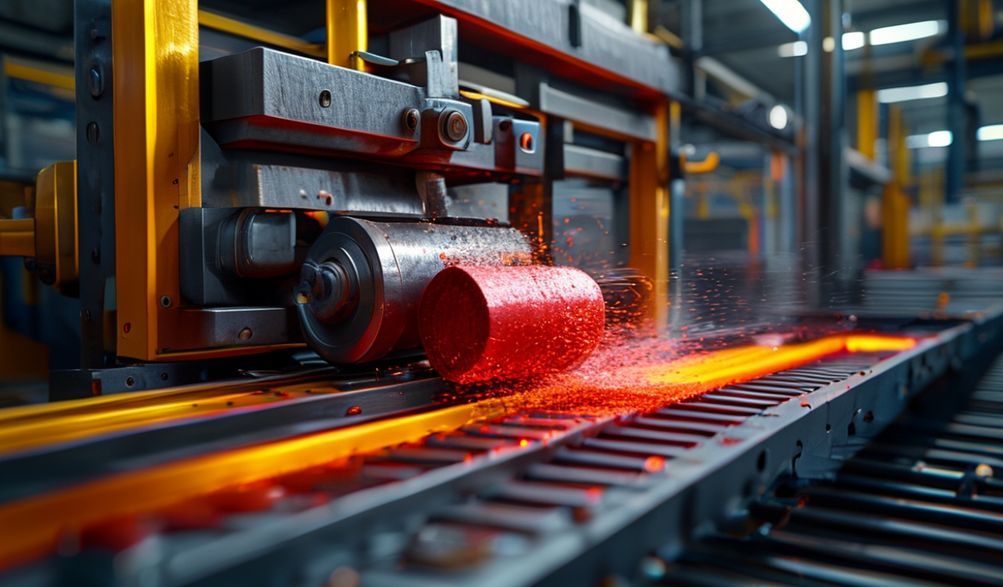
Ingamba yo Gukora Amatafari mu Binyabiziga bya Hydraulic Press: Ubushobozi, Ibyoko & Uko Bihitamo
Intangamarara
Mumenye ko inganda z’ubwubatsi ku isi zikoresha amatafari arenga ibiriyari 1.5 buri mwaka? Kubona uko zikomezwa ibyo bisaba bikomeye bikoresheje uburyo bwa kera, bwo gukoresha abantu benshi, ntibishobora gukomeza ndetse nta n’ubukungu buhabwa. Iseswa ry’ibi bintu ni ugukoresha imashini, kandi mu gihe cy’iyi ngaruka, hari igikoresho kimwe gikomeye cyane:mashini ya brikiti ya hydraulic press.
Iyi gahunda yuzuye yateguwe kugira ngo ibe umutungo wawe w’ingenzi. Niba uri umuyobozi w’ikigo ry’ubukorikori, umunyamabanga w’ubucuruzi bw’ubwubatsi ushaka guhuza ibikorwa, cyangwa umubyeyi w’ubucuruzi winjira mu rwego rw’ibikoresho by’ubwubatsi, intego yacu ni ugukugira ubumenyi bw’inzobere. Ibi birebana hano byakozwe mu buryo bworoshye bigendeye ku byerekeye imikorere, ibyigisho by’ingamba z’imikorere, n’ubushakashatsi bw’imibereho y’ubukungu bw’iyi ndustiri.
Intego yacu ni ugutanga ubumenyi bwo gufata icyemezo gikwiye, gikabije, kandi gihagije. Tuzasobanura neza ubu bukoresha, tugasuzuma inyungu zibigaragaza, kandi tugaha uburyo bugaragara bwo guhitamo no gukoresha mashini ikwiye ku byo ukeneye. Nyuma y'uyu mwongozo, uzasobanukirwa impamvu inganda z'ibyuma zikoresha amashanyarazi bigira uruhare runini mu gukora amatafari y'ubwoko bwa hano mu gihe cyacu.
Tuzakuganirira:
* Inshingiro z'umurimo n'ibice ngenderwaho by'ingenzi.
* Amagambo atashidikanywaho ku bijyanye n'inyungu zihambaye kuruta uburyo bwa kera.
* Ubwoko butandukanye bw'imashini ziboneka.
* A detailed buyer’s checklist for selection.
* Essential operational and maintenance best practices.
What is a Hydraulic Press Brick Machine and How Does It Work?
At its essence, a hydraulic press brick machine is a device that uses immense, controlled fluid pressure to compact raw materials into dense, precisely shaped bricks or blocks. It replaces the variable force of manual labor or mechanical stamping with consistent, programmable hydraulic power.
Core Operating Principle
The machine operates on Itegeko rya Pascal: pressure applied to a confined fluid is transmitted undiminished in all directions. In practice:
1. A small force is applied to a piston in a small area (the hydraulic pump).
2. This creates high pressure in the hydraulic fluid.
3. The fluid transmits this pressure to a much larger piston (the main ram).
4. This results in a massively amplified force—often hundreds of tons—being applied to the material in the mold.
The production cycle is a consistent, repeatable process:
* Kurisha: The prepared raw material (e.g., damp clay, fly ash mix) is fed into the mold cavity.
* Gukanya The main hydraulic ram descends, applying immense pressure to the material.
* Holding: The pressure is maintained for a set duration to allow for proper compaction and shape retention.
* Guhagarika The ram retracts, and the freshly pressed brick is ejected onto a pallet or conveyor.
Ingingo Nyamukuru n'Imikorere Yazo
Understanding the major components clarifies the machine’s reliability and capabilities:
- Paki y'ingufu ya hydroliki: The “heart” of the system. It consists of an electric motor, hydraulic pump, valves, and an oil reservoir. It generates and regulates the fluid power needed for the press cycle.
- Main Cylinder and Ram: The “muscle.” This is the large-diameter cylinder that houses the ram (piston). It converts hydraulic pressure into the massive linear force that compacts the brick.
- Urubari rw’udukoko (Die) n’Uburyo bw’Ibikoresho (Ipallet): The “form.” The mold is a precision-engineered steel cavity that defines the brick’s shape (solid, hollow, interlocking). Pallets provide a moving base for the brick during and after pressing.
- Sisteme yo Gucunga The “brain.” This ranges from simple manual levers to advanced Programmable Logic Controllers (PLCs) with touchscreen interfaces. It governs the cycle sequence, pressure settings, and timing.
- Igishushanyo n'Umubare The “skeleton.” A heavy-duty, welded steel frame that must withstand immense cyclic loads without deformation, ensuring long-term precision and operator safety.
Top Advantages of Using a Hydraulic Brick Press
Shifting from traditional methods to a hydraulic press offers transformative benefits that impact product quality, operational efficiency, and your bottom line.
Superior Product Quality & Density
This is the most significant advantage. The static, high-pressure compaction creates bricks with:
* Extremely Low Porosity: This leads to higher water resistance and better frost resilience.
* Ubushobozi Bwinshi Bwo Gukandagira: Hydraulically pressed bricks routinely achieve strengths 30-50% higher than those made by vibration or manual methods, often exceeding 15-20 MPa.
* Uniform Dimensions and Sharp Edges: Consistent pressure ensures every brick is identical, simplifying bricklaying and reducing mortar use.
Remarkable Production Efficiency & Output
Hydraulic presses bring automation and speed to brick production.
* Automated Cycles: Once set, the machine repeats the perfect press cycle tirelessly.
* Ingano Zikomeye Z’Ibisohoka: A semi-automatic machine can produce 1,000 to 3,000 bricks in an 8-hour shift, while fully automatic lines can exceed 10,000.
* 24/7 Ubushobozi: With robust construction and automated material handling, these machines can operate continuously with minimal supervision.
Unmatched Material Versatility
Unlike many traditional methods, hydraulic presses can efficiently process a wide array of materials:
* Gakondo: Clay, soil.
* Industrial By-products: Fly ash, slag, bottom ash.
* Modern Mixes: Cement-stabilized soil, concrete.
* Recycled Materials: Crushed construction waste.
This versatility is key to sustainable, cost-effective construction, allowing producers to use locally available and often lower-cost materials.
Cost-Effectiveness & ROI
The initial investment is offset by substantial long-term savings:
* Lower Labor Costs: One operator can manage a machine that does the work of dozens of manual laborers.
* Gutubya Imyanda: Precise compaction and uniform quality drastically lower the reject rate.
* Ubushobozi bwo Gukoresha Ingufu: Hydraulic systems consume power primarily during the compression stroke, unlike constantly running motors in some other machines.
* Durable Output: The high-quality bricks command better market prices and reduce call-backs due to failure.
Operational Safety and Ease of Use
Modern hydraulic presses are designed with safety as a priority.
* Enclosed Systems: The high-pressure fluid is contained within hoses and cylinders.
* Safety Interlocks: Guards and sensors prevent the machine from operating if a door is open or a pallet is misplaced.
* Simplified Controls: PLC interfaces allow operators to control the entire process with simple touch commands and monitor system status easily.
Types of Hydraulic Press Brick Machines
The market offers various configurations to suit different production scales and product lines.
By Automation Level
- Manual Hydraulic Press: The operator manually feeds material and initiates each press cycle. Lowest cost, suitable for very small-scale or custom production.
- Semi-Automatic Hydraulic Press: Material feeding is manual (or partially mechanized), but the press, holding, and ejection cycles are automatic. The best balance of productivity and affordability for small to medium businesses.
- Fully Automatic Hydraulic Press Line: Integrates automatic material feeding, pressing, brick handling, stacking, and pallet return. Requires significant investment but delivers maximum output with minimal labor.
By Product Output
- Solid Brick Making Machine: Produces dense, solid bricks for general construction.
- Hollow Block Making Machine: Creates lightweight, insulating blocks with cavities. Requires a mold with core rods.
- Paver/Interlocking Brick Machine: Manufactures paving stones and interlocking bricks for landscaping and roads, often with textured molds.
- Curbstone Making Machine: Designed for producing long, heavy curbstones, typically with a specialized mold and handling system.
By Mobility
- Stationary Hydraulic Press: The standard industrial setup, installed on a solid concrete foundation for high-volume, permanent production.
- Mobile Hydraulic Brick Making Machine: Mounted on a trailer, allowing on-site production for large projects, eliminating transport costs for finished bricks.
How to Choose the Right Hydraulic Press: A Buyer’s Checklist
Selecting the ideal machine is critical. Use this expert checklist to guide your evaluation.
Assess Your Production Requirements
Start by answering these foundational questions:
* What is your target daily output (bricks per shift)?
* What type and size of bricks/blocks do you need to produce? (Have sample drawings ready).
* What are the characteristics of your primary raw material? (e.g., particle size, moisture content, abrasiveness).
Evaluate Technical Specifications
Scrutinize these key metrics on supplier datasheets:
* Pressure Capacity: Rated in tons (e.g., 150T, 300T). Higher tonnage generally produces denser bricks and allows for larger block sizes.
* Igihe cyo gukora The time for one complete press operation (e.g., 15-30 seconds). Faster cycles mean higher output.
* Mold Size & Customization: Ensure the standard or customizable mold fits your desired product dimensions.
* Ibarafu ry’ingoma: Rated in kW. Indicates the machine’s power draw and overall capability.
Consider Build Quality and Durability
The machine’s construction dictates its lifespan.
* Ikadiri Look for heavy-duty, welded steel plate construction, not lightweight channel frames.
* Hydraulic Components: The quality of cylinders, pumps, and valves is paramount. Reputable brands like Bosch Rexroth, Yuken, or Parker indicate a higher-quality system.
* Surface Treatment: Paint or powder coating should be robust to resist corrosion in industrial environments.
Examine the Control System and Automation
The control panel is your primary interface.
* PLC with Touchscreen is the modern standard, offering precision control, recipe storage, fault diagnostics, and production data logging.
* Assess the level of automation you truly need. Can you justify the cost of a fully automatic line, or will a semi-automatic model meet your needs with a manageable labor input?
Factor in After-Sales Support and Service
This is often the most overlooked yet critical factor. A machine is a long-term asset.
* Supplier Reputation: Research the manufacturer’s history, client testimonials, and industry presence.
* Kuboneka kwa Bice byo Gusimbura Ensure common wear parts (seals, hoses, filters) are readily available locally or via swift shipping.
* Warranty: Understand the terms and scope of the warranty.
* Technical Training: Does the supplier offer comprehensive training for your operators and maintenance staff?
* Kugenzura: Ask for references and, if possible, visit an existing installation to see the machine in operation.
Operational Best Practices and Maintenance Tips
Proper care ensures peak performance, longevity, and safety. Industry practice shows that disciplined maintenance is the single biggest factor in machine uptime.
Imikorere y’Umutekano ya Buri munsi na Buri cyumweru
- Buri munsi:
- Check hydraulic oil level and temperature.
- Inspect for any visible oil leaks.
- Clean the mold and pallets to prevent material buildup.
- Listen for unusual noises from the pump or motor.
- Weekly/Monthly:
- Check and tighten critical bolts and nuts on the frame and mold.
- Lubricate all guide rods and moving points as per the manual.
- Inspect hydraulic filters and air breathers.
- Check the condition of electrical connections.
Ibibazo Byakunze Kuboneka mu Gukora no Kugenzura
- Amapfurake y'umwuka Make/Amatafari Adafite Imbaraga Likely caused by low hydraulic oil, a worn pump, or internal valve leakage. Check oil level first, then system pressure gauges.
- Oil Leaks: Identify the source (hose fitting, cylinder seal). Replace seals or hoses immediately with correct-grade components.
- Uneven Brick Height: Usually indicates an uneven feed of material into the mold or a worn/misaligned mold. Check the feeding system and mold condition.
- Brick Sticking in Mold: Caused by a worn/damaged mold, insufficient mold release agent, or incorrect moisture content in the raw material.
Ingamba z'umutekano ku bakozi
Safety must be non-negotiable.
* Ibikoresho byo kwirinda (PPE) Birakenewe: Safety glasses, steel-toe boots, and hearing protection.
* Guhagarika no Gutaga (LOTO): Always follow LOTO procedures before performing any maintenance or clearing a jam.
* Never Bypass Safety Guards or Interlocks: These are installed for a critical reason.
* Formal Training: Ensure every operator is fully trained on both normal procedures and emergency shutdowns.
Bibazo Byinshi Byibazwa (FAQ)
Q1: What is the average production capacity of a standard hydraulic press brick machine?
A: Capacity varies widely. A semi-automatic model typically produces 1,000 to 5,000 bricks per 8-hour shift, depending on brick size and cycle time. Fully automatic lines can produce 8,000 to 15,000+ bricks per shift. Always base estimates on the specific machine’s cycle time.
Q2: Can I use locally available soil or clay in a hydraulic press?
A: Yes, and this is a major advantage. However, for optimal results, the material often needs screening to remove large stones and may require mixing with a stabilizer (like 5-10% cement or lime) to achieve the necessary strength and reduce cracking. Controlling moisture content is also crucial.
Q3: What is the typical power consumption of these machines?
A: Motor power typically ranges from 7.5 kW for small models to 37 kW or more for large, fully automatic lines. Importantly, consumption is intermittent—the motor loads primarily during the compression stroke—making them relatively energy-efficient for their output.
Q4: How long does it take to see a return on investment (ROI)?
A: The ROI period depends on your local brick market price, production scale, operational efficiency, and machine utilization. For a well-utilized machine in a stable market, a typical ROI period ranges from 18 months to 3 years. A detailed business plan factoring in all costs and revenues is essential.
Q5: What is the key difference between hydraulic and vibration press brick machines?
A: The core difference is the compaction method. Hydraulic presses apply high, static pressure, excelling at producing very dense, high-strength solid bricks (e.g., fly ash bricks). Vibration presses use a combination of vibration and compaction force, and are often better suited for producing hollow blocks and lightweight products where extreme density is not the primary goal.
Ibyo byose
The hydraulic press brick machine stands as a transformative technology in the construction materials sector. It elevates brick production from a variable, labor-intensive craft to a precise, efficient, and scalable industrial process. The benefits—unmatched product density, material versatility, and strong long-term economics—make it a compelling investment for forward-thinking businesses.
As you move forward, use the detailed checklist provided here to guide your conversations with suppliers. Prioritize build quality, transparent technical specifications, and, above all, a supplier with a proven track record of robust after-sales support. The right partnership is as important as the machine itself.
Looking ahead, trends like increased IoT integration for predictive maintenance and the growing use of recycled aggregates will further enhance the value proposition of these machines, cementing their role in the future of sustainable construction.
Ready to specify your project requirements? Contact a reputable supplier with your production goals and raw material details to request a detailed, machine-specific quotation and a discussion on operational training.
<