
The Complete Guide to Small Clay Brick Machines: Selection, Operation & Benefits
Intangamarara
Imagine you’re a contractor with a small residential project, a homesteader planning a garden wall, or a community leader in a remote area. You need durable, affordable building materials, but commercial bricks blow your budget, and shipping costs are prohibitive. The solution might be sitting right beneath your feet: clay. The tool to transform that raw material into reliable building blocks is a mashini nto yo kubaka amatafari y'ibumba.
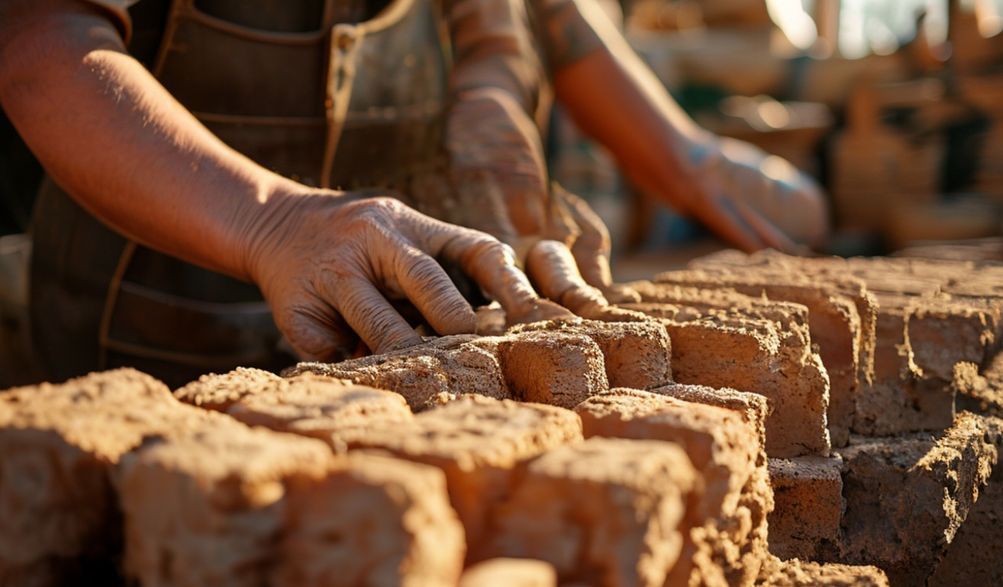
A small clay brick machine is a compact, often manual or semi-automatic device designed to produce solid or hollow clay bricks on a manageable scale. It democratizes brickmaking, turning a traditionally industrial process into something achievable for individuals and small teams.
This guide is born from hands-on industry experience and technical knowledge. Our purpose is to cut through the marketing hype and provide you with expert, practical, and trustworthy advice. We’ll help you understand if this technology is right for you, how to choose the best machine, and how to use it effectively to avoid costly and frustrating mistakes.
Uzamenya:
* Who truly benefits from a small clay brick machine.
* Ibintu by'ingenzi byakirwamo mbere yo kugura.
* A detailed, step-by-step walkthrough of the production process.
* The compelling economic and environmental benefits.
* Answers to the most common questions from first-time users.
Reka dushyigikire ishingiro ry’ubumenyi.
What is a Small Clay Brick Machine and Who is it For?
Umubare w'ingenzi n'ibisohoka
At its heart, a small clay brick machine is a mechanical press. It takes prepared clay or soil mix and, through significant mechanical pressure, compresses it into a dense, uniform brick shape (known as a “green brick”). The machine uses interchangeable steel molds to define the brick’s size and form.
Types of bricks produced include:
* Amatafari Y'imigano: Standard, rectangular blocks used for load-bearing walls.
* Perforated Bricks: Bricks with vertical holes, lighter and with better thermal insulation.
* Amakaduriro: Larger blocks with significant cavities, used for faster construction and enhanced insulation.
Abakoreshwa B’Ibyiza n’Imikoreshereze
This technology isn’t for mass-producing bricks for skyscrapers. Its power lies in targeted, localized applications.
- Small Construction Firms & Contractors: Perfect for custom projects, remote sites, or when clients desire sustainable materials. It reduces supply chain dependency and material costs.
- DIY Homebuilders & Homesteaders: For those building sheds, garden walls, small homes, or earth ovens. It offers immense satisfaction and control over the building process.
- Community Development & Humanitarian Projects: In areas with limited infrastructure, these machines enable communities to build schools, clinics, and homes using local resources, fostering self-reliance.
- Sustainable Building Initiatives: Architects and builders focused on natural building, earth construction, and reducing embodied carbon find these machines indispensable for creating high-performance compressed earth blocks (CEBs).
Key Advantages Over Large-Scale Production
Why choose small-scale over just buying from a large plant?
* Kugira ingengo y'imari nke A fraction of the cost of industrial equipment.
* Mobility & Minimal Space: Can be operated in a backyard or on a job site.
* Gukuraho Imbaraga Zishya: Manual and semi-auto models use little to no electricity compared to massive kiln-fired operations.
* Hyper-Local Production: Source clay on-site or nearby, eliminating transport costs and emissions. Your supply chain is your own land.
Key Considerations Before Choosing Your Machine
A poor purchase decision leads to wasted money and effort. Let’s align the machine with your actual needs.
Gusuzuma Ibisabwa bya Serivisi zawe
Start by asking two key questions:
1. What is my required output? Be realistic. Are you making 200 bricks for a patio or 5,000 for a small house? Output is measured in bricks per day.
2. What brick size and type do I need? Standard sizes vary by region. Determine if you need solid bricks for structural walls or hollow blocks for infill.
Types of Small Clay Brick Machines
There are two primary categories, each with distinct trade-offs.
-
Manual Presses (e.g., Cinva Ram style): Operated entirely by human leverage on a hand lever.
- Inziza: Very low cost, no need for electricity, simple mechanics, portable.
- Ibibi: Labor-intensive, slower output, requires more operator effort for consistent pressure.
-
Semi-Automatic/Electric Machines: Use an electric motor to drive a hydraulic or mechanical press.
- Inziza: Higher, more consistent output, uniform pressure for stronger bricks, less physical labor.
- Ibibi: Higher initial cost, requires a reliable power source (grid or generator), slightly more complex maintenance.
Comparison Table: Manual vs. Semi-Automatic
| Feature | Manual Press | Semi-Automatic Press |
| :— | :— | :— |
| Igiciro | Very Low ($500 – $2,000) | Moderate ($2,000 – $8,000+) |
| Daily Output | 200 – 500 bricks | 800 – 2,000+ bricks |
| Power Required | None | Electric (Single/Three-Phase) |
| Labor Intensity | High | Moderate |
| Byiza | DIYers, very small projects, off-grid locations | Small businesses, larger projects, consistent production |
Critical Machine Specifications to Examine
Don’t just buy based on price. Inspect these details:
- Pressure Force (Tonnage): This is crucial. Pressure, measured in tons, determines brick density and compressive strength. For stable earth blocks, 10-20 tons is common. Higher tonnage generally means stronger bricks.
- Ubushobozi bwo Gukora Imiterere Ibyahinduka: Can you easily change molds to produce different brick types? Are custom molds available from the supplier?
- Ubwiza bwo Kubaka Look for a robust, welded steel frame. Stamped or thin metal will bend under pressure. Check the quality of the hydraulic system (if applicable) and the piston.
- Safety & Ease of Use: Are there safety guards? Is the operation intuitive? A well-designed machine minimizes pinch points and strain on the operator.
The Clay Brick Production Process: A Step-by-Step Guide
Understanding the full process is key to success. The machine is just one part of the system.
Step 1: Sourcing and Preparing the Raw Clay
The adage “garbage in, garbage out” applies perfectly. Brick quality is 70% soil preparation.
- Identifying Suitable Clay: Not all dirt is suitable. You need a mix with ibumba (binder), Ikirerenasand (aggregate). Simple field tests:
- Ribbon Test: Moisten soil and roll it into a pencil-thin ribbon. If it holds together for 2+ inches before breaking, clay content is sufficient.
- Jar Test: Place soil in a jar of water, shake, and let it settle. Layers will show approximate ratios of sand, silt, and clay.
- Crushing, Screening & Mixing: Remove stones and organic matter. Soil must be finely screened (≤1/4 inch). The moisture content is critical—aim for a “plastic” consistency where the mix holds its shape when squeezed without dripping water. A cement mixer is ideal for homogenizing soil and any stabilizers (like 5-10% cement).
Step 2: Operating the Machine for Optimal Results
With prepared mix ready, the machine cycle begins.
- Kuremera Fill the mold box with the exact amount of soil mix. Consistency here is key for uniform brick weight and size.
- Gukanya Engage the press. For manual machines, this is a firm, full stroke of the lever. For semi-auto, activate the cycle. The pressure is applied for a moment to compact the soil.
- Guhagarika The newly formed “green brick” is ejected onto a pallet or board. Handle it with care, as it is still fragile.
Step 3: Drying and Curing for Maximum Strength
This is where patience pays off. Improper drying causes cracks and weak bricks.
- Proper Drying Techniques: Bricks must dry slowly and evenly. Stack them in a well-ventilated, shaded area. Cover them with plastic sheeting or burlap to slow moisture loss and prevent rain damage.
- Sun-Drying vs. Sheltered Drying: Direct sun can cause the exterior to crust over while the interior stays wet, leading to cracking. Sheltered, air-drying is almost always better.
- Firing vs. Stabilizing: Traditional clay bricks are fired in kilns at high temperatures. Most small clay brick machines produce Compressed Stabilized Earth Blocks (CSEBs). They gain strength from the compression and from a small amount of stabilizer (e.g., cement or lime), which cures over 4-6 weeks. They do not require firing.
Top Benefits of Using a Small Clay Brick Machine
The investment in a machine pays dividends across multiple fronts.
Economic and Financial Benefits
- Kugabanya cyane igiciro cy'ibikoresho: The primary cost becomes labor and a small amount of stabilizer. Your raw material (soil) is often free.
- Low Overhead: No large factory, minimal energy costs, and small-team operations.
- Micro-Business Potential: The ability to produce and sell bricks locally can create a viable small enterprise, especially in developing regions.
Construction and Performance Benefits
- Gutanga ku Bipimo Bikenewe: Never wait for deliveries or face stock-outs. Produce bricks as your project timeline requires.
- Ubushakashatsi bw'ibicuruzwa: You control the soil mix, compression, and curing, ensuring a consistent, high-quality product.
- Superior Building Physics: Clay bricks have high thermal mass, absorbing heat during the day and releasing it at night, naturally regulating indoor temperature. They are also fireproof and have excellent sound insulation properties.
Environmental and Sustainability Benefits
- Local Materials: Eliminates the massive carbon footprint associated with transporting heavy building materials over long distances.
- Energie Yigize Nkeya: The production process uses minimal processed energy compared to fired bricks or concrete blocks.
- Non-Toxic & Recyclable: Clay is a natural, inert material. At end-of-life, unfired bricks can simply be returned to the earth or crushed and reused.
Bibazo Byinshi Byibazwa (FAQ)
What is the average production output of a small manual machine?
With a skilled operator and a well-organized workflow (including soil prep), a manual press can produce between 200 and 500 bricks in an 8-hour day. Output depends heavily on operator stamina and the efficiency of the supporting team handling material preparation and brick stacking.
Can I use any type of soil with these machines?
No. Pure sand will not bind, and pure clay will shrink and crack excessively. You need a balanced mix. If your local soil is too sandy, you may need to add clay. If it’s too clay-rich, you need to add sand or aggregate. For sub-optimal soils, stabilizing agents like Portland cement (5-10%) or lime are essential to achieve waterproof and durable bricks.
Do the bricks need to be fired in a kiln?
Not necessarily. This is a common point of confusion. Machines designed for Amabuye y'Ubutaka Yakuweho Umwuka (CEBs)cyangwaAmabuye y'ubutaka yakuwe mu butaka y'umushinga w'ubutaka (CSEBs) produce bricks that gain their strength from high-pressure compaction and the chemical curing of a stabilizer (like cement). They are air-cured, not fired. True ibumba bricks for all-weather exposure are kiln-fired, but that is a different, more complex process.
What maintenance does the machine require?
Regular maintenance ensures longevity and safety:
* Clean thoroughly after each use to prevent soil from hardening in the mold or on moving parts.
* Check and tighten all bolts, nuts, and connections regularly, as vibration can loosen them.
* Lubricate all moving pivot points and the piston shaft as per the manufacturer’s instructions.
* Store molds in a dry place to prevent rust.
Where can I buy a reliable small clay brick machine?
Focus on supplier reputation, not just price.
* Research Manufacturers: Look for companies with a long history and specialized in earth-building technology.
* Seek Reviews & Testimonials: Can you find independent user feedback or case studies?
* Verify Support: A reliable supplier offers clear technical documentation, a meaningful warranty, and readily available spare parts (especially for molds and wear items). Attend trade shows or workshops on natural building to see machines in person.
Ibyo byose
A mashini nto yo kubaka amatafari y'ibumba is far more than a simple tool; it’s a gateway to affordable, sustainable, and self-reliant construction. It empowers you to turn a fundamental resource—the earth—into durable, high-performance building blocks.
The value proposition is clear: significant cost savings, complete creative and quality control, and a dramatically reduced environmental footprint. Whether you’re a builder, a DIY enthusiast, or a community advocate, this technology puts the power of production in your hands.
Your next step is to move from consideration to action. Thoroughly assess your soil, calculate your brick needs, and begin researching reputable suppliers. Consider starting with a small test batch to understand the material and process. For deeper dives into soil science or advanced curing techniques, explore our further resources.
Embrace the opportunity to build not just structures, but resilience and sustainability from the ground up.
<