
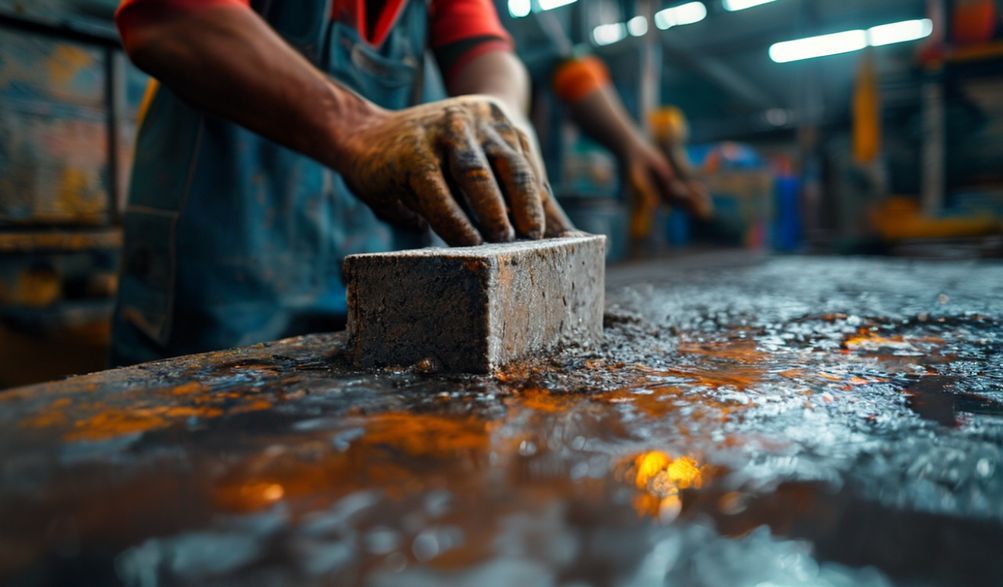
Block Gal Machine Igiciro muri Sri Lanka 2026: Umuyoboro Wuzuye W'abaguzi
Imiterere y’ubwubatsi muri Sri Lanka irahinduka mu buryo butangaje. Kuva mu bikorwa by’ibikorwa remezo bikomeye kugeza ku gusabwa guhoraho k’imirimo y’ubuturo n’ibikorwa by’ubucuruzi, iterambere ry’umushinga riragaragara. Ku mutima w’iyi nzira y’ubwubatsi, hari igikoresho cy’ingenzi: mashini ikora amatafari (block gal machine). Kubakora, abashoramari, ndetse n’abubaka b’ishyamba (DIY builders) bashishikaye, gushaka mashini ikwiye ni igitekerezo cy’ingenzi. Nyamara, gushakisha mu rubuga rwa interineti “igiciro cya mashini y’amatafari (block gal machine) muri Sri Lanka” bikunze kuyobora mu rujijo aho kugira ngo bitange umusaruro, ibiciro bikaba bitandukanye cyane, n’ibisobanuro bikaba byuzuyemo amagambo y’ubwenge.
Ubu bukurikirane bukuraho urujijo. Intego yacu ni ugutanga inkunga yuzuye, yizewe, kandi ikorwa mu gucunga isoko ry’imashini z’amafagi muri Sri Lanka. Twahujije amakuru y’isoko yemejwe, ubumenyi bw’abahanga mu nganda, n’ibitekerezo bifatika by’imari kugira ngo dushyireho umurongo ukurikirwa mu kugura kwawe. Waba uri umwubazi muto ushaka gutunganya ibikorwa byawe cyangwa umushoramari utangiza ubucuruzi bw’imashini z’amafagi, gusobanukirwa igiciro nyacyo—kirenze umubare w’igiciro—ni intambwe ya mbere y’ubushoramari butanga inyungu kandi burambye.
Kubera Gutahura Imashini za Block Gal n’Akamaro kazo
Mbere yo kureba rutonde rw’ibiciro, ni ngombwa kumenya neza icyo ushora imari muri. Imashini ikora amatafari (block gal machine) si igikoresho gusa; ni sisitemu yo gukora igena ubuziranenge, ubunini, n’ubushobozi bw’umusaruro w’amatafari ya sima.
Ni iki cyuma cya Block Gal?
Mu by'ingenzi, imashini ikora amabati (cyangwa gukora amabati) ni igikoresho gikandagiza ivange ritumye rya sima, umusenyi, n’ibikoresho by’ubwubatsi mu buryo butunganye bugira amabati ya beto afite ubucucike bwinshi. Aya mabati ashobora kuba afite imyenge (mu nzu zitera inkunga) cyangwa akomeye (mu kubaka inzira, gutaka ahantu, no mu bikorwa bimwe na bimwe by’ubwubatsi).
The working principle typically involves:
* Ubunebwe:Kunyeganyega kw'umuvuduko mwinshi gukuraho ibicu by'umwuka kandi bigatuma ivange riba ryuzuye neza mu gitereko.
* Gukanya A hydraulic or mechanical press applies significant pressure to form a sturdy, well-compacted block.
* Gukora ibikoresho Interchangeable molds define the block’s final shape and size (e.g., 4″, 5″, 6″, interlocking pavers).
This process transforms raw materials into standardized, durable building components that are the backbone of modern construction in Sri Lanka.
Types of Block Making Machines Available in Sri Lanka
The Sri Lankan market offers a spectrum of machines, categorized primarily by their level of automation and output capacity. Your choice here will be the most significant determinant of your budget.
-
Manual Block Gal Machines: Operated entirely by hand levers for compression and mold removal. They have the lowest output but are highly portable and affordable.
- Byiza kuri: Very small, personal projects, or remote locations with no power.
- Price Indicator: Lowest initial cost, but highest labor cost per block.
-
Imitungo Imigendeshwa n'ikiremwamuntu: These are the workhorses of the small-to-medium business sector. They use electric motors for vibration and hydraulic systems for compression, but block ejection and pallet cycling often require some operator intervention.
- Byiza kuri: Small block yards, growing contractors, and most startup block manufacturing businesses.
- Price Indicator: Offers the best balance between investment and production efficiency.
-
Imashini zikora amabuye y’ubatswe mu buryo bwikora: These are complete production lines with automated material feeding, mixing, block making, curing, and stacking. They require substantial space and investment.
- Byiza kuri: Large-scale commercial block manufacturing plants supplying major projects or regional distributors.
- Price Indicator: Represents a major capital investment with the lowest cost per block at high volumes.
-
Imashini z'ibikoresho bya Mobile Block: Mounted on a trailer, these machines can be towed directly to a construction site.
- Byiza kuri: Large-scale projects (like housing developments) where producing blocks on-site drastically reduces transport costs and logistics.
- Price Indicator: Premium priced due to specialized design and mobility.
Key Factors Determining Block Gal Machine Price in Sri Lanka
The price variation isn’t arbitrary. It’s a direct reflection of the machine’s capabilities, durability, and the support that comes with it. Let’s dissect the key variables.
Ubwoko bw'Imashini na Urwego rw'Imikorere y'Imashini
As outlined above, this is the primary cost driver. Moving from manual to semi-automatic to fully automatic systems involves exponential increases in complexity, component quality, and production speed, which is reflected in the price.
Ubushobozi bwo Gukora (Amabara ku Isaha)
Capacity is directly tied to price. A machine producing 500 blocks per hour will cost significantly less than one producing 2,000 blocks per hour. Consider your current demand and realistic growth over the next 3-5 years. Overbuying strains your capital, while underbuying limits your earning potential.
Igihugu n'Igihugu cyavukiye
- Imported Brands (Chinese, Indian, European): The market is dominated by Chinese and Indian machinery, offering a wide price range. European machines (e.g., German) are less common, represent the premium segment, and are known for exceptional durability.
- Locally Assembled Machines: Some Sri Lankan suppliers assemble machines using imported components. This can offer a good middle ground—potentially better local adaptation and slightly more accessible service.
- The Critical Factor: Regardless of origin, the local dealer or supplier is paramount. A reputable dealer for a mid-tier brand is almost always a better choice than an unknown importer of a “cheaper” premium brand. After-sales service, technical support, and spare parts availability in Sri Lanka are non-negotiable.
Block Size and Mold Configuration
The standard mold included might be for a 6″ hollow block. If you need to produce 4″ blocks, solid blocks, or decorative paving stones, you will need additional molds. Each custom mold is an added cost (typically ranging from LKR 50,000 to LKR 200,000+). Factor this into your total investment if your business plan requires product variety.
Raw Material Requirements & Power Consumption
A machine’s specifications dictate the grade of raw materials needed and its power draw. A heavier, more powerful machine might produce superior blocks but require a robust three-phase power connection and consume more electricity. These operational costs impact your long-term profitability and must be considered alongside the purchase price.
Current Price Range Overview for Sri Lanka (2026)
Please note: The following price ranges are approximate estimates for early 2026 based on current market trends, import duty structures, and forex projections. They are intended to provide a budgetary framework. Prices are subject to change due to currency fluctuations, government tax policies, and individual dealer promotions. Always obtain a formal, itemized quotation from your supplier.
Entry-Level / Manual Machine Prices
- Igiciro: LKR 150,000 – LKR 400,000
- Typical Use Case: Ideal for individuals building their own home, very small-scale rural construction, or as a secondary, low-volume production tool. Output is limited, and the process is labor-intensive.
Mid-Range / Semi-Automatic Machine Prices
- Igiciro: LKR 500,000 – LKR 2,500,000
- Detailed Breakdown: This is the most dynamic segment. On the lower end (LKR 500,000 – LKR 1.2 million), you find basic single-vibrator, 2-3 block per cycle models. The mid-to-upper range (LKR 1.2 million – LKR 2.5 million) includes robust 4-6 block per cycle machines with double vibration systems, better hydraulics, and higher durability. These are the models most commonly purchased by serious startups and small businesses aiming for consistent commercial production.
High-Capacity / Fully Automatic Plant Prices
- Igiciro: LKR 3,000,000 and above
- Guhagarara: This is a major industrial investment. Prices can extend to LKR 10 million+ for large, computerized plants with automated pallet return systems and high-pressure curing chambers. Financing and a detailed business plan are essential at this level.
Beyond the Price Tag: Critical Considerations for Your Purchase
The cheapest machine can become the most expensive asset if it leads to downtime, poor quality blocks, or a lack of support. Value, not just cost, should guide your decision.
Assessing Your Business Needs and Project Scale
Ibaza.
* What is my average daily or monthly block requirement?
* Do I have consistent orders, or is demand seasonal?
* What is my available space, power supply, and workforce?
* Am I supplying my own projects or selling to the open market?
Your answers will point you toward the appropriate machine type and capacity.
The True Cost of Ownership: Service and Spare Parts
A machine will require maintenance. The availability of a skilled technician and genuine spare parts within Sri Lanka is crucial. Before purchasing:
* Inquire about the warranty period and what it covers.
* Ask for a list of common spare parts and their local stock availability.
* Understand the supplier’s service response time.
Supplier Verification and Due Diligence
- Check Reputation: How long has the supplier been in business? Search for their company name online alongside keywords like “review” or “service.”
- Ask for References: A confident supplier will provide contacts of past clients. Make the call and ask about their experience.
- Visit a Showroom: If possible, inspect the machine physically. See it in operation. Assess the company’s professionalism.
Site Preparation and Installation Costs
The machine price rarely includes:
* A strong, level concrete foundation.
* Electrical work for three-phase connection.
* Initial operator training.
* Potential costs for a shelter or shed.
Budget an additional 10-15% of the machine’s cost for these essential setup expenses.
Where to Buy Reliable Block Gal Machines in Sri Lanka
Reputable Local Machinery Suppliers and Dealers
Look for established machinery suppliers and dealers in major industrial hubs. Colombo, Gampaha, Kurunegala, and Kandy are key locations. These companies often have showrooms, service workshops, and spare parts inventories. They act as your local partner, not just a seller.
Direct Import vs. Buying Local: Pros and Cons
- Direct Import: May seem cheaper initially.
- Ibibi: High logistical complexity, unpredictable customs delays and charges, no installation support, zero after-sales service, and massive difficulty sourcing spare parts.
- Buying Local: Higher sticker price.
- Inziza: All-inclusive price (CIF, clearance, delivery), professional installation, operator training, warranty honored locally, and immediate access to service and parts.
For all but the largest corporations, the security and support of a local dealer far outweigh the potential savings of a direct import.
Evaluating Used or Second-Hand Machines
Buying used can be a savvy move but carries risk.
* Ask Why: Why is the owner selling? Are they upgrading, or is the machine problematic?
* Inspect Thoroughly: Check for cracks in the frame, leaks in the hydraulic system, and wear on the mold and vibration table. It is highly advisable to bring a knowledgeable mechanic.
* Test Under Load: The machine should be demonstrated producing blocks with full pressure.
* Verify Parts Availability: Ensure the model is not obsolete and that spare parts are still available in the market.
Bibazo Byinshi Byibazwa (FAQ)
Q1: What is the cheapest block gal machine available in Sri Lanka?
A: Basic manual machines are the cheapest, often starting around LKR 150,000. However, they have very low output and are labor-intensive, making them unsuitable for any commercial production. They are a tool for specific, small-scale situations.
Q2: How much profit can I make from a block making business?
A: Profitability depends on multiple factors: your machine’s efficiency, local block selling prices, cost of raw materials (cement, sand), overheads (power, labor, rent), and most importantly, consistent demand. A well-run semi-automatic operation can see a healthy margin, but a detailed local market and cost analysis is essential before projecting profits.
Q3: Are Chinese block making machines in Sri Lanka good quality?
A: Chinese machinery spans a vast quality spectrum. Many offer excellent value for money and are perfectly suited for the Sri Lankan market. The critical factor is not just the “Chinese” label, but the specific brand’s reputation and, more importantly, the credibility and capability of the Sri Lankan dealer who imports and supports it.
Q4: What is the most popular block machine model for small businesses?
A: Semi-automatic machines that produce 3 or 4 blocks per cycle (like a 3-block or 4-block machine) are extremely popular. They offer the ideal balance of affordable investment, manageable power requirements, and output sufficient to supply small-to-medium projects or start a block yard.
Q5: Do suppliers offer installation and training?
A: Reputable local suppliers almost always include basic installation, commissioning, and operator training as part of the purchase package. This should be a stated requirement in your purchase agreement. Never assume it’s included; always confirm.
Ibyo byose
Navigating the “block gal machine price in Sri Lanka” is a journey that begins with understanding your own needs and ends with securing a partnership for growth. The initial purchase price is merely the entry ticket. The real value of your investment is measured in the machine’s reliability, the quality of blocks it produces, and the strength of the after-sales support behind it.
As Sri Lanka’s construction sector continues its upward trajectory, the demand for quality building materials remains steadfast. By conducting thorough research, obtaining multiple quotations from established suppliers, and prioritizing total lifecycle value over the lowest bid, you position yourself—and your business—to build not just structures, but a foundation for long-term success. Make your investment a calculated step toward shaping the future.
<