
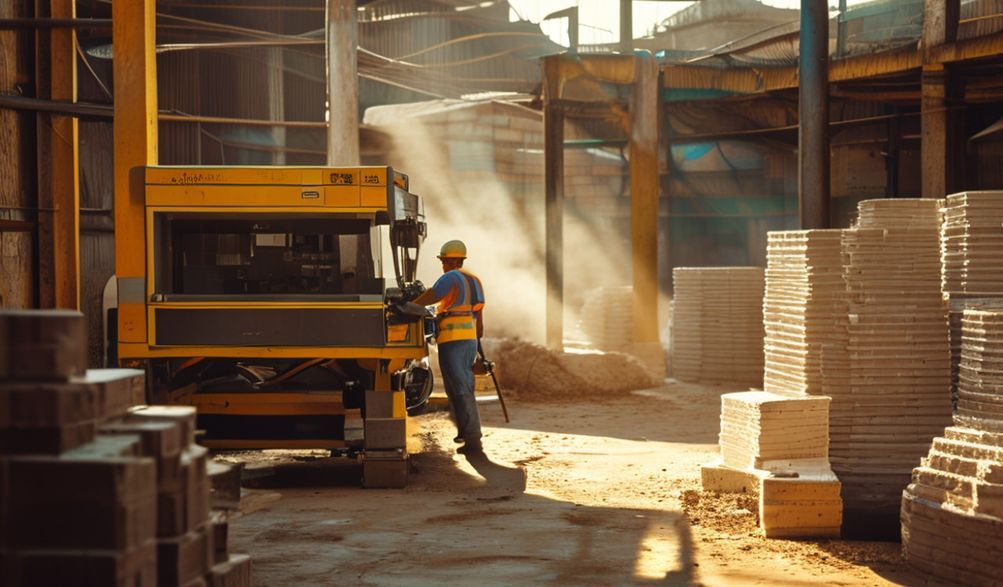
Your Ultimate Guide to Block Machines in Ghana: Types, Prices, and Top Suppliers (2026)
Intangamarara
Ghana’s skyline is transforming. From the bustling streets of Accra to the growing urban centers of Kumasi and Tamale, a construction boom is underway, fueled by population growth, urbanization, and significant infrastructure projects. At the heart of nearly every one of these structures—from residential homes to commercial complexes—lies a fundamental component: the concrete block. Yet, for builders, contractors, and entrepreneurs, a critical challenge persists: sourcing reliable, efficient, and affordable machinery to produce these essential building blocks.
Navigating the market for block machines in Ghana can be daunting. Between varying price points, technical specifications, and supplier promises, making an informed investment decision is complex. This comprehensive guide is designed to cut through the noise. We provide expert-backed, practical information, synthesizing industry data, supplier insights, and hard-won operational knowledge. Whether you’re a contractor looking to cut costs, a startup entrepreneur eyeing a lucrative opportunity, or a project manager for a large-scale development, this guide serves as your definitive resource for understanding, selecting, and operating a block machine in Ghana.
Understanding Block Machines: The Engine of Ghana’s Construction
Before diving into models and prices, it’s crucial to understand the fundamental role this equipment plays.
What is a Block Machine and Why is it Essential?
A block machine is a device used to manufacture concrete blocks by compacting a mixture of cement, sand, aggregate, and water into a mold. They range from simple manual lever-operated presses to sophisticated, computer-controlled fully automatic production lines. Their core function is to apply pressure and vibration to produce dense, uniform, and strong blocks.
In Ghana’s construction ecosystem, these machines are more than just tools; they are engines of progress. They empower users to move away from the inconsistency and higher costs of purchased blocks, enabling on-site or commercial production that guarantees quality, controls timing, and significantly reduces overall project expenditure.
Key Benefits of Using a Block Machine in Ghana
- Guhunika Amafaranga Menshi: Producing blocks in-house or for sale eliminates middlemen markups. Over the course of a project or business, the return on investment can be dramatic.
- Ubushobozi Budasubirwaho mu Gukora Icyiza: You dictate the mix design, ensuring optimal cement content and aggregate quality for stronger, more durable blocks suited to specific project needs.
- Elimination of Project Delays: No more waiting for supplier deliveries. Produce blocks on-demand, keeping your construction timeline firmly in your hands.
- Umusanzu Ubasha Kugurisha: Beyond personal use, a block machine is a revenue-generating asset. You can establish a profitable venture supplying high-quality blocks to other construction sites in your community.
Types of Block Machines Available in Ghana
The Ghanaian market offers a spectrum of machines, each catering to different scales of operation and investment capacity.
Manual Block Machines (Hand Press)
- Ibisobanuro n'Uko bikorwa: These are non-powered, human-operated machines. A lever is used to manually compress the concrete mix within a mold. They are simple, portable, and often produce one block at a time.
- Inziza:
- Gahunda y'ibikoresho nke cyane:Inzira yoroheje cyane yo kwinjira mu gukora ibikozwe muri blockchain.
- Zero Operating Energy: No electricity or fuel required.
- Simple Maintenance: Robust design with few moving parts.
- Ibibi:
- Byakoresha abakozi benshi Requires significant physical effort, limiting daily output.
- Ubwiza budasobanutse: Block strength and uniformity depend heavily on the operator’s technique.
- Low Production Output: Typically produces 200-500 blocks per day.
- Byiza Kuri: Individuals undertaking very small personal projects (e.g., a single house), startups in rural areas with unreliable electricity, and those testing the business waters with minimal capital.
Semi-Automatic Block Machines
- Ibisobanuro: These electrically powered machines represent a significant technological leap. They incorporate a hydraulic system for compression and a vibrating motor to compact the mix, all controlled via a switch or button. Loading and block removal are often manual.
- Inziza:
- Excellent Balance: Offers a strong compromise between price, output, and consistency.
- Higher & More Consistent Output: Can produce 800 to 2,500+ blocks per 8-hour shift.
- Reduced Labor Strain: The machine handles the heavy compaction work.
- Ibibi:
- Requires Stable Electricity: Dependent on grid power or a capable generator.
- Higher Initial Investment: Costs significantly more than manual machines.
- Basic Technical Knowledge Needed: Requires understanding of operation and basic maintenance.
- Byiza Kuri: Growing block-making businesses (SMEs), medium-scale construction firms, housing development projects, and cooperatives. This is often considered the “sweet spot” for the Ghanaian market.
Fully Automatic Block Machines
- Ibisobanuro: These are industrial-grade production lines. They often include automated material batching, mixing, conveying, block molding, curing, and stacking systems, controlled via a programmable logic controller (PLC).
- Inziza:
- Very High Output: Can produce thousands of blocks per hour with minimal manual intervention.
- Superior Consistency and Quality: Computerized control ensures every block is identical.
- Dramatically Reduced Labor Costs: Automates the most strenuous processes.
- Ibibi:
- Ingengo y'amafaranga menshi: A major investment, often requiring business financing.
- Complex Operation & Maintenance: Requires skilled technicians for operation and repair.
- Significant Space & Infrastructure: Needs a large, dedicated factory space and robust power supply.
- Byiza Kuri: Large-scale block manufacturing plants supplying entire regions, major construction companies with multiple ongoing projects, and investors targeting the industrial building materials sector.
Critical Factors to Consider Before Buying in Ghana
Choosing a machine is not just about type; it’s about matching specifications to your precise context.
Assessing Your Needs: Project Scale & Business Goals
Start by asking yourself key questions:
* What is my average daily or weekly block requirement? (Be realistic about your current needs and 2-year growth projection).
* What is my total available budget? (Include a 15-20% contingency for shipping, installation, and initial spare parts).
* What is my access to skilled labor vs. my preference for automation?
* What types of blocks are in highest demand in my target market? (Hollow, solid, interlocking, paving slabs?).
Machine Specifications to Scrutinize
When comparing models, go beyond the brochure. Investigate:
* Ubushobozi bwo gukora: Don’t just look at “blocks per hour.” Ask for verified output under normal working conditions with standard block sizes.
* Block Versatility: Can the machine produce multiple block types and sizes by changing molds? This flexibility is valuable for business growth.
* Ibikenewe by'ingufu: Ensure the voltage (e.g., 220V/380V, 3-phase) is compatible with your location’s supply. Factor in generator costs if grid power is unstable.
* Durability & Build Quality: Inspect the steel thickness, quality of welding, and brand of critical components like hydraulic pumps and motors. A heavier frame often indicates better stability and longevity.
The Total Cost of Ownership
The purchase price is just the beginning. The true cost includes:
1. Upfront Purchase Price: The negotiated cost of the machine itself.
2. Shipping, Clearing, and Installation: For imported machines, this includes freight, customs duties, VAT, port charges, and inland transportation to your site. Always get a CFR (Cost and Freight) Tema PortcyangwaCIF (Igiciro, Ubwishingizi, n'Ubucuruzi) quote for clarity.
3. Ongoing Operational Costs:
* Maintenance: Regular servicing costs and the price/availability of spare parts (wear parts like molds, springs, and seals).
* Gukoresha ingufu: The cost of electricity or diesel to run the machine.
* Umurimo: Wages for operators.
Navigating the Ghanaian Market: Suppliers, Prices & Logistics
Overview of the Block Machine Market in Ghana
The market is primarily served by suppliers who import machines, largely from China, Turkey, India, and Europe. Some companies offer “local assembly,” which often involves assembling pre-fabricated kits. Key industrial hubs where you can find multiple suppliers and their workshops include:
* Tema (Heavy industrial area, ideal for port-cleared machinery)
* Accra (Areas like Industrial Area, Achimota, and Kasoa)
* Kumasi (Suame Magazine and other industrial zones)
Price Ranges for Block Machines in Ghana (2026 Estimate)
Disclaimer: Prices are dynamic estimates based on current market research and projected trends. They vary widely based on brand, production capacity, configuration, and supplier margins. Always obtain and compare multiple detailed quotations.
- Imashini z’ibikoresho by’ibyumba by’ibikoresho: GHS 1,500 – GHS 8,000
- Imashini z’ibikoresho by’ibyumba bigikoresho cya kabiri: GHS 12,000 – GHS 80,000
- Fully Automatic Block Machines & Plants: GHS 70,000 – GHS 400,000+
Finding Reputable Suppliers and Sellers
Actionable Tips:
* Visit Physical Workshops: A legitimate supplier should have a showroom or workshop you can visit to see machines in person or under assembly.
* Demand Client References: Ask for contacts of past customers (preferably in your region) and actually call them to ask about machine performance and after-sales service.
* Verify After-Sales Support: The most critical question: “What is your spare parts availability and technical support process?” Do they have trained technicians on call?
* Check for Certifications: While not always available, some reputable suppliers have certifications or are authorized dealers for international brands.
Major Warning Signs:
* Prices drastically lower than the market average.
* Suppliers with only a P.O. Box or mobile number, no verifiable physical address.
* Pressure to make full payment upfront before shipment or clearing.
* Vague or evasive answers about technical specifications and warranty terms.
Maximizing Success: Operation, Maintenance & Best Practices
Your investment’s longevity and profitability depend on proper care.
Setting Up and Operating Your Machine Safely
- Foundation: Install the machine on a level, solid concrete base to prevent vibration and misalignment.
- Power Safety: Ensure all electrical connections are done by a certified electrician and properly grounded.
- Ibyigisho ku Bakozi: Operators must wear safety boots and gloves. Never allow hands near moving parts during operation.
Routine Maintenance Checklist for Longevity
- Buri munsi: Clean the machine thoroughly after use, especially removing hardened concrete from the mold and pallets. Check hydraulic oil levels.
- Buri cyumweru: Lubricate all moving parts (pivots, bearings) as per the manual. Inspect and tighten all bolts and nuts.
- Monthly: Check hydraulic hoses for wear. Inspect mold liners for excessive wear. Change hydraulic oil and filters as recommended.
- Golden Rule: Always source genuine or high-quality compatible spare parts. Using substandard parts accelerates wear on other components.
Producing High-Quality Blocks: Mix Ratios and Curing
The best machine will produce poor blocks with a bad mix.
* Standard Mix Ratio: A common, reliable starting point for hollow blocks in Ghana is a 1:6:4 ratio (1 part cement, 6 parts sharp sand/quartz sand, 4 parts coarse aggregate/stone dust). Adjust based on sand quality and desired strength.
* Water Content: The mix should be moist but not soggy. A well-compacted ball should hold its shape without dripping water.
* Proper Curing: This is non-negotiable for strength. Keep newly produced blocks under a damp covering (e.g., tarpaulin) and sprinkle with water at least twice daily for 7-14 days. This slow curing process allows the cement to fully hydrate and achieve its designed strength.
FAQ Section
Q: What is the most popular type of block machine in Ghana?
A: Semi-automatic hydraulic machines are arguably the most popular. They hit the optimal balance between affordable automation, respectable output, and manageable technical complexity, making them ideal for the vast small-to-medium enterprise (SME) sector.
Q: Can I get a loan to buy a block machine in Ghana?
A: Yes. Several banks, rural banks, and microfinance institutions offer asset financing or equipment loans. A solid business plan, proof of collateral or down payment, and sometimes a guarantor will significantly strengthen your application.
Q: How do I handle repairs if my machine breaks down?
A: This highlights the pre-purchase priority of after-sales service. Before buying, confirm the supplier’s support structure. Do they have a service team? How quickly can they deliver common spare parts? Establishing a relationship with a local skilled welder/fitter is also prudent for minor mechanical issues.
Q: Apart from the machine, what else do I need to start?
A: You’ll need: a well-ventilated, shaded production space; raw material storage; a consistent water source; weighing scales for batching; pallets for block setting; labor (mixer operator, machine operator, laborers); and a means of transporting finished blocks (trolley, forklift for larger operations).
Q: Is block making a profitable business in Ghana?
A: Given the consistent demand from the construction industry, it can be highly profitable. Profitability hinges on key factors: strategic location near demand, efficient machine operation, uncompromising block quality, effective cost management (especially raw materials), and strong customer relationships.
Ibyo byose
Selecting the right block machine in Ghana is a strategic decision that impacts your project’s cost, timeline, or your business’s foundation. By carefully assessing your scale, scrutinizing machine specs, understanding the true total cost, and, above all, partnering with a reputable supplier known for service, you position yourself for success.
This guide has armed you with the knowledge to move forward confidently. Use it as a checklist in your conversations with suppliers. Prioritize after-sales support as highly as the price tag, and invest in proper training for your operators. With due diligence and the right equipment, you can build not just structures, but a thriving enterprise at the core of Ghana’s growth.
Ready to take the next step? Use this guide as your benchmark when consulting with suppliers. Contact multiple reputable companies in Accra, Tema, or Kumasi for detailed, itemized quotations.
For more insights on construction materials and equipment in Ghana, explore our dedicated resource center for builders and entrepreneurs.
<