
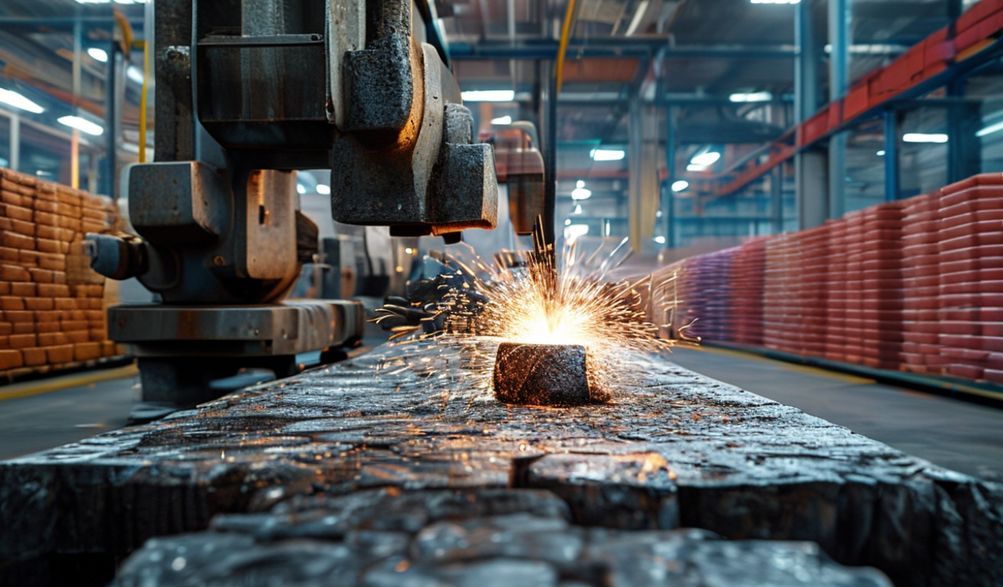
Inzira yo gukora Amatafari y'ibuye: Mu ruganda rwa FUDA rwo gukora Amatafari
Intangamarara
Ukwakira ibikoresho byubatsi bihoraho kandi bishimishije ni ibisanzwe mu isi. Kuva mu mihanda y'imijyi kugeza mu masaka y'imigongo, agaciro k'ibyatsi by'ibuye ntibushobwa guhakana. Gukosora uku kwakira mu rugero runini, ntabwo bikwiye ubukorikori bwa kera gusa; bisaba ubunyangamugongo n'ingufu z'ubukanishi bwa gikondo. Aha ni ho mashini yubaka ibyatsi by'ibuye ihindura ikintu cya kera kikaba igikoresho cy'iki gihe.
Mashini yo gukora amatafari y’amabuye ni igikoresho cy’ubucuruzi cyihariye cyateguwe kugira ngo ikore amatafari ya sima n’ibyashushanyije bifite isura, imiterere, n’ubukana bwa mabuye y’ikirenga. Ku bucuruzi bwa gucukura, abashinzwe imiterere y’ubutaka, n’abakora ibikoresho, izi mashini ntabwo ari ibikoresho gusa; ahubwo ari ingingo shingiro y’inyungu, igenzura ry’ubwiza, no kongera ubucuruzi.
Ufite uburambe bw’imyaka irenga makumyabiri mu bukungu, FUDA Brick Making Factory yishyize mu rwego rw’ikirenga mu bukungu bwo gukora amatafari. Urugendo rwacu kuva mu bucukuzi bw’umwete ufite ubushishozi kugera mu nzego z’ikoranabuhanga rwubatswe ku gusobanukirwa neza ibyo abakiriya bacu—kuva ku bafite ibikorwa by’ubucuruzi bifite intego n’iz’amasezerano kugera ku masosiyete ashyizweho—bakeneye mu bikoresho byabo.
Iyi gihe cyo nyuma ishusho ishingiye ku bumenyi bw’insider biva mu buhanga buhanitse bwa FUDA. Tuzasobanura neza ubu tekinoroji, tuzasobanura neza inyungu zihariye, kandi tuzaha umushinga w’imiterere ugaragara wo kugufasha guhitamo ibikoresho by’ukuri. Niba uri umuyobozi w’ubucuruzi mu gukora ibikorwa by’ubwubatsi mu kigo kinini, umunyamigabane w’ubucuruzi bw’ubwubatsi ushaka guhuza ibikorwa byose, cyangwa umuhanga mu bucuruzi winjiye mu isoko ry’ibikoresho by’ubwubatsi, iyi ngirakamaro yateguwe kugufasha.
Ni iki Gikora Amatafari y'Amabuye? Ubumenyi Nyamukuru Bwasobanuwe
Mu mizi wayo, umashini wubaka amatafari y'amabuye urushanwa kandi ukongerera ubwiza imikorere yo gukora amatafari ya sima. Usimbuza umurimo w'abantu utari ukwiye ukomeza gukorwa n'ingendo zisubiramo kandi zishobora gucungwa, bigatuma buri tafari yose ihura n'ibisabwa by'ukuri.
Inshingiro ry'ingenzi: Kuva ku by'ingenzi by'ibanze kugeza mu mabuye y'ubutaka yarakozwe
Uhindurwa rukurikira umuyoboro uzamurika, ukora neza:
1. Gukomatanya:Ibintu byumye (nkwa sima, umusenyi, umukungugu wamabuye, n'ibara) bihuza n'amazi mu gipimo cyagenwe kugirango bikore imisanganire ya beto yumye-buri, iteye.
2. Gukora ibikoreshoIyi mivange ihanwa mu mwobo w’ibumoso ku mashini. Ibumoso bigena imiterere y’igiti, ubunini, n’imiterere y’uruhande (urugero: urutare rw’inkombe, urutare rw’amabuye, ibyatsi).
3. Gukanya no Gutinya:Iyi ni urwego rw'ingenzi. Binyuze mu guhuza umuvuduko ukomeye w'umuvuduko hamwe n'umuvuduko munini w'amazi, umuvange urakandamizwa. Ibi bisubiza mu gusohora amapfuka y'umwuka, bigera ku mwanya ukomeye, kandi bigaragaza neza ubufatanye bw'umubare.
4.Gukora:Amatafari mashya, "y'icyatsi" akomoka ku mabati. Nyuma yo gukururwa, ayajyanwa mu karere ko kuyatunganya (akenshi ari mu cyumba cyo gutunganya umwotsi) aho ubushyuhe n'ubunyobwa bwigenga byemerera sima kugira uruhare rwuzuye, bigatanga imbaraga zashyizweho.
Ingingo Z’ingenzi z’Imashini ya Kigezo Gishya
Gusobanukirwa imiterere y’imashini bigaragaza impamvu zishobora kwizerwa:
* Sisitemu ya Mould:Umushinga w'ingirakamaro. Imyubako y'ibyuma by'amashanyarazi y'imbaraga zihambaye ishobora guhinduranya, bishobozamo umushini umwe gukora amabuye y'ububiko binyuranye.
* Prisi ya Hydrauliki: The source of power. It delivers the precise pressure (measured in tons) needed to create dense, non-friable bricks.
* Kontoro y'ibikorwa (PLC): The brain. In semi and fully automatic models, a Programmable Logic Controller allows operators to set parameters for pressure, cycle time, and vibration, ensuring consistency.
* Imbaho yo Gukubita: Works in tandem with the press. High-frequency vibration helps the concrete mix flow evenly into every corner of the mold before compression.
* Sisitemu yo Gutwara Ibintu n’Amapalet The logistics network. It automatically feeds raw material, moves molds, and transfers finished bricks for curing, drastically reducing manual handling.
Types of Stone Brick Making Machines
Choosing the right type is the first major decision. The market offers solutions for every scale of operation.
Imashini z'Abantu n'iz'Imashini z'Abantu n'iz'Imashini z'Abantu n'iz'Imashini z'Abantu
- Imashini z'ibikorwa by'amaboko: Operated primarily by hand levers for filling and pressing. Lowest upfront cost but also the lowest output (e.g., 300-500 bricks per 8-hour shift). Ideal for very small startups or niche, artisanal production.
- Imitungo Imigendeshwa n'ikiremwamuntu: A balance of automation and control. The pressing cycle is automated (PLC-controlled), but pallet feeding and brick removal may be manual. Offers a significant boost in output (e.g., 1,500-3,000 bricks per hour) with moderate investment. This is where most small to medium businesses find their ideal fit.
- Imashini Zikora Byikoresho Zishobora Kwikorera Ubwabyo. The pinnacle of efficiency. The entire process—from raw material feeding to molding, pressing, stacking, and pallet return—is automated. Requires minimal human intervention and delivers maximum output (e.g., 5,000+ bricks per hour). Designed for large-scale, continuous production plants.
Stationary Plants vs. Mobile Block Making Machines
- Ibimera bidasanzwe: These are fixed installations, typically the semi and fully automatic models. They are the standard for dedicated brick manufacturing facilities, offering the highest stability, precision, and integration with batching and curing systems.
- Imashini z'ibikoresho bya Mobile Block: Built on a trailer chassis, these can be towed to a construction site. They are excellent for producing bricks directly where they will be used, eliminating transport costs for large projects. They are generally simpler in design and capacity compared to stationary plants.
Advantages of Using a Professional Stone Brick Making Machine
Investing in professional-grade machinery is a strategic business decision with measurable returns across multiple fronts.
Unmatched Product Quality and Consistency
Manual production is vulnerable to human error, leading to variations in water content, mixing time, and compression. A professional machine eliminates this.
* Precise Dimensions: Every brick is identical, ensuring perfect alignment and simpler, faster installation.
* High Density & Strength: Controlled hydraulic pressure produces bricks with superior compressive strength, reducing breakage during transport and handling.
* Uniform Color & Texture: Automated mixing and consistent material distribution mean the color and surface finish are the same from the first brick to the ten-thousandth.
Remarkable Production Efficiency and Output
Scale is where the investment truly pays off. While a skilled artisan might produce a few hundred bricks a day, a machine works tirelessly.
* Quantifiable Output: A mid-range semi-automatic machine can easily produce 2,000-4,000 bricks in an 8-hour shiftUmurongo wikora utabangamiwe urashobora kurenga40,000 bricks per day.
* Kwanduza Umushinga ku Muvuduko: For construction firms, on-site production means never waiting for delivered materials, keeping projects on schedule.
Significant Cost Reduction in the Long Run
The initial investment is offset by ongoing operational savings:
* Labor Cost Savings: One machine operated by 2-3 workers can replace a team of 10-15 manual laborers.
* Kugabanya Ububi bw'Imikoresherezwe y'ibikoresho: Precise mixing and molding minimize spillage and reject bricks.
* Ubwinshi bw'ibicuruzwa: The cost per brick drops dramatically as daily output increases, improving your profit margins on every sale.
Design Versatility for Market Appeal
In today’s market, aesthetic variety is a competitive advantage. With a single machine and a library of molds, a producer can cater to diverse projects:
* Sizes: Standard blocks, pavers, retaining wall units, and thin veneers.
* Textures: Split-face, tumbled, flamed, smooth, or rock-faced.
* Colors: By integrating color feeders or using colored cement, you can produce a spectrum from natural grey to terracotta reds and charcoal blacks.
Inside the FUDA Brick Making Factory: A Commitment to Excellence
Our factory is more than a production floor; it is a system built on principles of precision, durability, and partnership.
Our Manufacturing Philosophy: Quality as a Standard
For us, quality is not an inspection step; it is integrated into every process. We begin with certified raw materials—high-grade steel plates, internationally sourced hydraulic components, and precision-machined parts. Each sub-assembly undergoes rigorous testing before integration. The final machine is subjected to a 48-hour continuous production test run, where we verify output, stability, and noise levels against our strict standards.
Engineering and R&D: Innovating for Durability
Our engineering team focuses on three pillars:
1. Robust Design: We use finite element analysis to stress-test frames and components, ensuring they withstand years of high-pressure cycles without deformation.
2. Ubushobozi bwo Gukoresha Ingufu: Our hydraulic systems are designed for optimal power use, reducing electricity costs—a critical factor for high-volume producers.
3. Gukoresha Byoroheje: We design control panels and maintenance points with the operator in mind. Clear diagnostics and easy access to common parts reduce downtime.
The FUDA Product Spectrum: Matching Machine to Need
We offer a range that scales with your ambition. This overview focuses on capability, not promotion:
* Small-Scale & Manual/Semi-Auto Models (e.g., QT Series): Ideal for new entrants or businesses focusing on niche, custom orders. Output ranges from 1,000 to 3,000 bricks per hour.
* Medium-Scale Semi-Automatic Plants: The workhorse for growing businesses. Often feature automatic pallet feeders and brick stackers. Output ranges from 3,000 to 6,000 bricks per hour.
* Large-Scale Fully Automatic Production Lines: Engineered for 24/7 industrial production. These are complete systems with automatic batching plants, multi-layer brick stackers, and central control rooms.
Beyond the Machine: Comprehensive Support
We sell a production solution, not just hardware. Our support includes:
* Detailed Operational Training at your site for your team.
* A readily available inventory of commonly needed spare parts.
* Remote and On-Site Technical Support provided by engineers who understand the machines inside and out.
* Assistance with factory layout and foundation drawings to ensure a smooth installation.
Critical Factors When Choosing Your Stone Brick Making Machine
This decision requires careful self-assessment and supplier evaluation. Based on countless client consultations, we advise focusing on these areas.
Gusuzuma Ibisabwa bya Serivisi zawe
Be realistic about your current needs and future growth.
* Ibikorwa by'umunsi/Umwaka: Calculate based on your existing orders or market demand. It’s often wiser to choose a machine with 20-30% more capacity than you currently need to accommodate growth.
* Brick Type Variety: Will you specialize in one popular style, or do you need the flexibility to switch between pavers, hollow blocks, and curbstones? This determines the complexity of the mold system you’ll need.
* Umushinga wo Kubarurira For a fixed factory, a stationary plant is best. For a civil contractor moving between sites, a mobile machine may be indispensable.
Understanding Raw Material Compatibility
Not all machines handle all mixes equally well. Be clear about your primary materials:
* Cement & Sand: The standard base for most concrete bricks.
* Fly Ash or Slag: Eco-friendly alternatives that can reduce cement content and cost; some machines are optimized for these.
* Crushed Stone/Aggregate: For producing stronger, more rustic-looking bricks.
* Ibiranga: Ensure the machine’s mixing system can distribute color evenly.
Automation Level: Balancing Investment and Labor
This is a fundamental cost-benefit analysis.
* High Labor Cost/Low Volume Regions: A manual or semi-automatic machine may be the most cost-effective entry point.
* High Volume/Scaling Businesses: The higher upfront cost of a fully automatic machine is quickly justified by dramatic labor savings and output consistency. The ROI period is often shorter than anticipated.
The Importance of Supplier Credentials (E-E-A-T Focus)
Your machine supplier is a long-term partner. Vet them thoroughly:
* Manufacturing History & Experience: How long have they been building these specific machines? A long track record suggests resolved teething issues.
* Client Testimonials & Case Studies: Ask for references from businesses similar to yours.
* Factory Audit Possibility: Can you visit the factory to see the production and quality control processes firsthand? A confident manufacturer will welcome this.
* Urukurikirane rwa Serivisi: Do they have technicians or partners in your region? What is their guaranteed response time for critical support?
Frequently Asked Questions (FAQ) About Stone Brick Making Machines
Q1: What is the average production capacity of a mid-range stone brick making machine?
A mid-range semi-automatic machine typically produces between 2,000 to 4,000 standard bricks per hour, depending on the brick size and model. In an 8-hour shift, that translates to 16,000 – 32,000 bricks.
Q2: What raw materials are needed to start production?
The core materials are Portland cement, sand (or stone dust), and crushed stone (aggregate) of a specific grade. Water is, of course, essential. You may also add pigments for colored bricks and reinforcing fibers for special applications.
Q3: How much space is required to set up a small brick making plant?
A small semi-automatic operation needs approximately 500 to 1,000 square meters. This must accommodate the machine itself, a raw material storage area, a mixing station, a curing area (where bricks gain strength for 7-14 days), and finished product storage.
Q4: What is the typical lead time for machine delivery and installation?
For standard models, lead time after order confirmation is typically 30-45 days for manufacturing, plus shipping time. Installation and commissioning by factory engineers usually take 5-10 days, depending on the complexity.
Q5: Can the machine produce different brick styles, and how is the mold changed?
Yes, versatility is a key feature. Machines are designed with quick-change mold systems. Changing to a different brick style involves swapping the mold box, which a trained operator can often do in under 30 minutes.
Q6: What kind of after-sales service and warranty should I expect from a reputable manufacturer?
Expect a comprehensive warranty on the main frame and critical components (often 1-2 years). Reputable manufacturers provide detailed installation guidance, operator training, and a clear channel for technical support (phone, email, remote access). Availability of spare parts is crucial.
Q7: What is the approximate return on investment (ROI) period for such equipment?
The ROI period varies widely based on local market prices for bricks, labor costs, and production volume. For a well-utilized semi-automatic machine in a decent market, many businesses see a full return on investment within 12 to 24 months. Fully automatic lines in high-volume operations can achieve ROI even faster.
Ibyo byose
Selecting a stone brick making machine is a pivotal decision that impacts product quality, operational efficiency, and ultimately, the growth trajectory of your business. It is an investment in precision, scale, and competitive advantage.
Throughout this guide, we’ve aimed to demonstrate that the FUDA Brick Making Factory operates not just as a manufacturer, but as an expert partner grounded in experience, engineering authority, and a trustworthy commitment to client success. Our philosophy is built on the understanding that your productivity is our reputation.
If you are evaluating options for your project or business, the most important step is a conversation based on your specific requirements. For a detailed analysis of your production goals and to receive technical specifications tailored to your needs, we encourage you to contact our engineering team for a professional consultation.
In a world that demands both beauty and resilience in its infrastructure, the right machinery is the foundation upon which durable legacies are built.
<