1. Intangamarara
Umuryango mpuzamahanga w’ibikoresho by’ubwubatsi uri mu mibereho y’ikirenga, bikunzwe no kwaguka kw’imidugudu, iterambere ry’imishinga y’inganda, no kwiyubakira mu bihugu biri mu nzira y’amajyambere ndetse n’ibyo mu nzira y’iterambere. Muri ibi bikoresho by’ingenzi mu rwego rw’ubwubatsi, amatafari n’amabuye y’ubwubatsi birakomeje kuba ingirakamaro—bikoreshwa mu byinshi birimo kugira ngo bikureho imirimo yo gufata ibintu, gushyigikira imishinga, gutaka imidago, no gutunganya uburanga bw’ibyubaka. Nk’uko ibyo bikoresho by’ingenzi bigenda byiyongera, ibibazo by’uburyo bwa kera bwo gukora cyangwa ubwo gukora ku giti cyabo bigenda biba ari ibigaragara cyane: ubwiza budahwitse, umusaruro muke, ibiciro by’umwenda by’abakozi bihendutse, no kurimbura ibikoresho byinshi. Ku banyamurongo, abatanga serivisi, n’abagura bashaka kugira uruhare mu isoko mu gihe bakomeje kugira amahirwe yo kwishyira hamwe, imashini z’ubwubatsi z’amatafari n’amabuye ziraba impinduka zihambaye.
2. Umubiri
2.1 Ukumenya Imiterere y’Imashini Z’ububiko n’Amabuye
Imashini zikora amatafari n’amabuye y’ubatswe ni ibikoresho byihariye byateguwe kugirango zikore mu buryo bwikora ubwihindagurika bw’ibikoresho by’ububaji, harimo amabuye ya sima, amatafari y’ibumba, amatafari y’ivu ry’amakara, amabuye ahurije hamwe, n’amabuye afite imyobo. Byitandukanye n’ibisubizo byo gukoresha uburyo bumwe, izi mashini zishushanyijwe kugirango zishobore gukora ku buryo butandukanye bw’imikorere, kuboneka kw’ibikoresho by’ibanze, n’ibisabwa by’ibicuruzwa byanyuma. Kugirango umenye neza ibyemezo byo kugura, ni ngombwa gusobanukirwa ibyiciro by’ishingiro n’imikorere y’izi mashini.
2.1.1 Ubwoko Bw'ibikoresho By'ingenzi Bikorerwa mu Buryo Bw'ubukorikori
Ubusobanuro, umusaruro, n'ubushobozi bw'umashini wubaka amatafari n'ibyatsi bikomeye bishingiye cyane ku bumenyi bukoreshwa mu gukora. Ubu buryo butatu bukoreshwa cyane mu isoko ni:
- Imashini z'Ubwubatsi bwa VibrationIyi mashini zikoresha umuvuduko ukomeye (usuka ku 2,800 kugeza ku 5,000 umuvuduko buri miniti) kugirango zishwanye ibikoresho by'inganda mu bikoresho. Uburyo bwo kuvugisha bukura umwuka, bukora neza ubunini bungana n'ubwiyubakire. Mashini z'uburyo bwo kuvugisha zikunze gukoreshwa mu gukora amabuye ya sima, amabuye y'umwobo, n'amabuye ashobora kwinjizamo amazi. Zikunzwe n'ibiciro byazo byo hasi, gukoresha ingufu neza, no gushobora gukoresha ibikoresho by'inganda byinshi—harimo n'ibikoresho byasubiwemo n'ibisigazwa by'inganda nka fly ash. Abasiga abato n'abakuru benshi bahitamo iyi teknoloji kubera uburyo zishobora guhindurwa no kuba ifite agaciro.
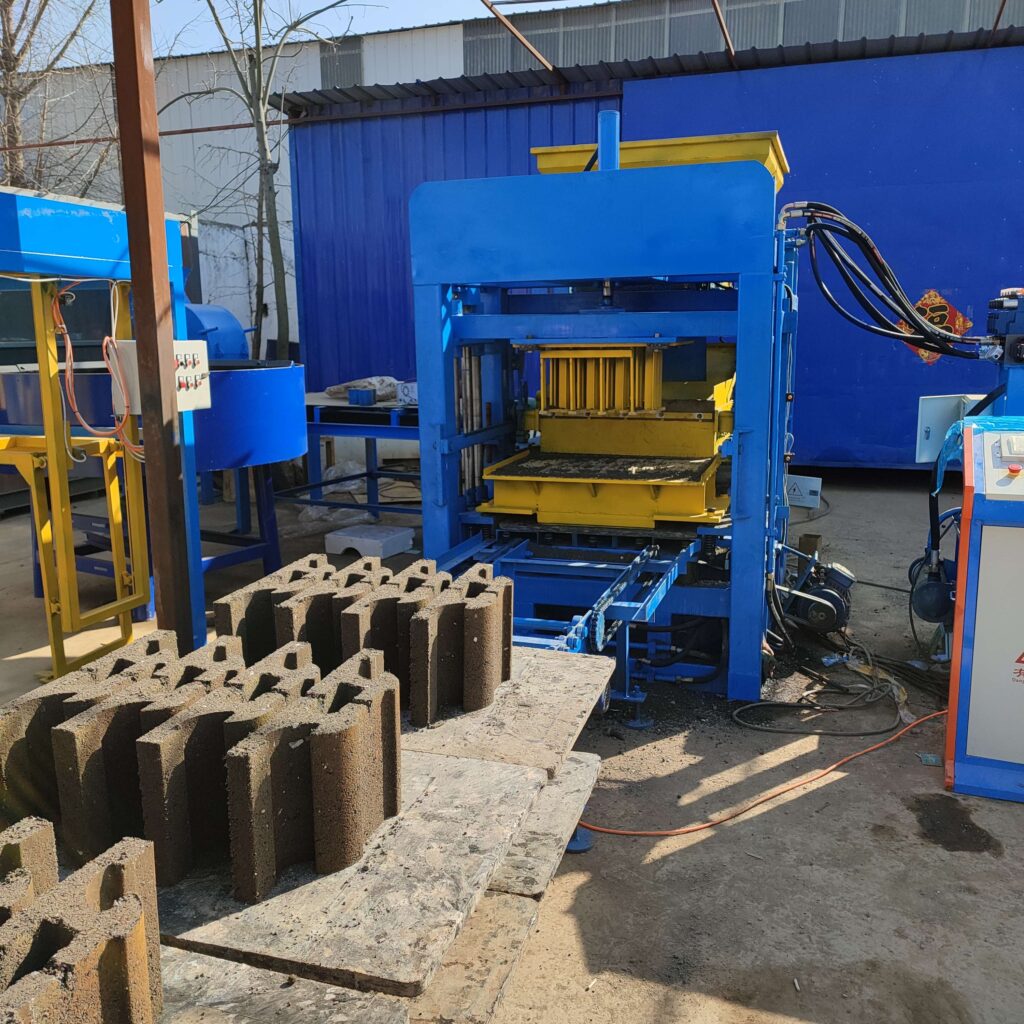
- Imashini za Hydraulic PressTekinoloji ya mashini z’ibyuma bikoresha amashanyarazi (hydraulic press) ishingiye ku gushishikariza ibintu ku ngufu nyinshi (mu gihe gisanzwe hagati ya toni 100 na 300) kugirango ihindure ibikoresho by’inganda ibikoresho nk’amatafari n’amabuye y’ubatswe ahamye kandi afite ingufu. Sisitemu ya hydraulic iha umusaruro umushishikarizo utandukanye mu mwobo, ibitera kubaho ibipimo by’umwobo, uburanga bworoshye, n’ingufu ikomeye cyane (mu gihe gisanzwe ishuka kuri 25 MPa). Izi mashini zikunze gukoreshwa mu gukora amabuye y’ubatswe ashobora gukorerwamo ibintu, amabuye y’uburyo bwo gushyira hamwe, n’amatafari y’ubwiza bifunze ibisabwa ku buryo bukomeye. Nubwo mashini za hydraulic press zigurwa ku giciro gito, ubuzima bwazo bw’igihe kirekire, kubura ibibazo byinshi, n’umusaruro mwiza bigira uruhare mu guhitamo abacuruzi bakomeye n’abaguzi bategamiye kuri porogaramu z’ubwubatsi bwa hano.
- Imashini z'ubucukuziTekinorojiyo yo gusohora ibintu mu mashi (Extrusion) ikunze gukoreshwa mu gukora amatafari y’ibumba n’ay’ivu ry’umuriro. Umushini urusha umuvange w’ibintu byose bisanzwe (ibumba, ivu ry’umuriro, amazi) mu mashi, ukora urusika rukomeje, hanyuma rukatanyagurwa mu matafari y’imwe na imwe ukoresheje imyenda y’urutsinga. Imashini zisohora mu mashi zifite ubushobozi bwo gukora byinshi (zigera kuri amatafari 15,000 mu isaha kuri izi nini), kandi zirakwiye mu gukora amatafari menshi y’ingano zisanzwe. Zikunze kwakira neza cyane mu turere dufite ibumba ryinshi cyangwa ivu ry’umuriro, kuko zitondeka ibyangijwe n’ingaruka n’amashanyarazi. Abasiga imashini mu masoko asaba amatafari y’ibumba gakondo bakunze gukoresha imashini zisohora mu mashi kugira ngo basohore amapaki menshi byihuse.
2.1.2 Ibitekerezo ku Bwinshi bw’Ibikorwa n’Ubushobozi
Imashini zikora amatafari n’amabuye y’ubatswe zikategorizwa nanone bitewe n’ubushobozi bwayo bwo gukora, ibyo bigana neza n’ubunini bw’inganda z’abatanga kandi n’abagura:
- Ibigikoresho BitoIbyo bishini byateguwe kugirango bikore mu masoko yo mu gihugu, mu masosiyete mato yo kubaka, cyangwa mu bucuruzi bwa mbere, bifite ubushobozi bwo gukora ibiranga 500 kugeza 3,000 mu isaha. Ni ibyiza (bikeneye metero kare 50 kugeza 100), bikoresha amashanyarazi make (10 kugeza 20 kW), kandi biroroshye gukoresha. Ibishini bike bikunze kuba ibikoresho bya semi-omatike, bikeneye abakoresha 2 kugeza 3 kugirango batange ibyifashishwa, gukora imiterere, no gusakara. Ni inzira nziza yo gutangira ku bucuruzi bwo gutanga serivisi kugirango bagere isoko cyangwa gukora mu byiciro bito (urugero: kubaka mu cyaro, gushyira mu bikorwa byubatswe bito).
- Imashini z'Ingano y'UbutumburukeZikorera abasabiriza bo mu karere hamwe n’amasosiyete y’ubwubatsi y’ingana hagati, imashini z’ingana hagati zikora ibihumbi 3 kugeza kuri 8 by’ibicuruzwa mu isaha. Zikora mu buryo bwikora, zishyira hamwe ububiko bw’ibikoresho by’ibanze, gukora umuvange, gukora ibishushanyo, gukora neza ibikozwe, no gusoroma ibikozwe mu nzira imwe y’umurongo. Izi mashini zisaba ibiro 100 kugeza 300 by’ubuso hamwe na 20 kugeza 50 kW z’ingufu. Imashini z’ingana hagati zishyira ku gipimo amafaranga n’ibikorwa, zikaba ari izo zishobora gukoreshwa mu buryo bwinshi kubasabiriza bakorera imiryango y’ubwubatsi y’amazu n’iy’ubucuruzi. Zishobora gukora ibicuruzwa by’ubwoko bwinshi (urugero: amabuye y’amashanyarazi, amabuye y’inzira, amatafari y’imishatsi) hakoreshejwe ibishushanyo byinyuranye, bigatuma abasabiriza bashobora kwegura ibicuruzwa byabo batarenzeje gushora imari mu mashini nyinshi.
- Imashini ZikomeyeZikorerwa abasabiriza mu gihugu, amatsinda makuru y'ubwubatsi, n'ibigo by'ubucuruzi bikuru, ibikoresho bikuru bifite ubushobozi bwo gukora ibihumbi 8 kugeza kuri 20 by'ibice mu isaha. Bikoresha imikoreshereze ya moderne (sisitemu zo gukoresha PLC, ibikoresho by'amahitamo), ibice by'ingirakamaro bikuru, n'ibyumba byo gusukura. Ibikoresho bikuru bisaba ubutaka bungana na metero kare 300 kugeza kuri 1,000 hamwe n'amashanyarazi angana na 50 kugeza kuri 100 kW. Byakozwe kugirango bikore amasaha 24 mu munsi, bikoresha igihe gito mu kubisubiza no kubikorera. Abasabiriza bashora imari mu bikoresho bikuru bashobora gufata amasezerano y'igihe kirekire n'amaprojeko ya leta, abashinzwe gushyiraho amazu, n'abashinzwe gushyiraho ibigo by'ubucuruzi, bakoresheje ubushobozi bwo gukora ibintu byinshi kugirango bongere inyungu.
2.2 Ubuhanga Bw’Intambwe Ikomeye ku Banyamurongo n’Abaguzi
Imashini zikora amatafari n’amabuye y’ubatswe zitanga inyungu nyinshi z’irushanwa zihindura neza ubwiza bw’amafaranga no gushyira mu bikorwa abatanga serivisi n’abagura. Izi nyungu zikemura ibibazo by’ingenzi by’uburyo bwa kera bwo gukora, mu gihe zanafungura amahirwe mashya yo gukora ubucuruzi.
2.2.1 Kubungabunga Ibiciro no Kongera Inyungu
Kugabanya ibiciro ni impamvu nyamukuru yo gutanga amafaranga mu mashini zikora amatafari n’amabuye. Iyo bigereranywa n’ubukorikori bwa maboko, mashini zikora mu buryo bwikora zifasha mu kugabanya ibiciro mu buryo butandukanye:
- Labor Cost Reduction: Manual brick-making requires 8 to 12 workers to produce 1,000 units per hour, while a fully automatic machine can achieve the same output with 1 to 2 operators. For a medium-scale distributor producing 5,000 units per hour, this translates to annual labor cost savings of $50,000 to $100,000 (depending on regional labor rates). These savings directly boost profit margins or allow distributors to offer competitive pricing to capture market share.
- Material Waste Minimization: Automated machines use precision dosing systems to measure raw materials (cement, sand, aggregates, water) with an accuracy of ±1%. This reduces material waste from 15-20% (in manual production) to 3-5%, lowering raw material costs by 10-15%. For distributors using expensive raw materials (e.g., high-grade cement, colored pigments), this waste reduction is particularly impactful.
- Energy Efficiency: Modern brick and block maker machines are equipped with energy-saving technologies such as variable frequency drives (VFDs), efficient motors, and heat recovery systems. These features reduce energy consumption by 20-30% compared to older models. For example, a medium-scale hydraulic press machine with a VFD can save up to $10,000 per year in electricity costs, further enhancing profitability.
2.2.2 Product Quality Consistency and Market Differentiation
In the construction materials market, product quality is a key differentiator. Inconsistent dimensions, low compressive strength, and poor finish are common issues with manually produced bricks and blocks, leading to customer complaints, rejected orders, and damaged reputations. Brick and block maker machines address these issues by delivering:
- Uniformity: Automated molding and pressing ensure that every brick or block has the same dimensions (tolerance ±2mm), weight, and density. This consistency is critical for construction projects, as it reduces mortar usage, improves structural stability, and speeds up installation. Distributors offering consistent, high-quality products are more likely to secure repeat orders and long-term partnerships with construction companies.
- High Strength and Durability: Hydraulic press and vibration molding machines produce bricks and blocks with compressive strength ranging from 15 MPa to 40 MPa, meeting or exceeding international standards (e.g., ASTM C90 for concrete blocks). These high-strength products are suitable for load-bearing walls, retaining structures, and high-traffic areas, opening up opportunities in the commercial and infrastructure segments.
- Customization Capabilities: Advanced machines support mold interchangeability, allowing distributors to produce bricks and blocks in various sizes (e.g., 200x100x60mm, 250x125x80mm), shapes (rectangular, interlocking, hexagonal), and finishes (smooth, textured, colored). This customization enables distributors to cater to niche markets such as decorative landscaping, heritage restoration, and modern architectural projects. For example, interlocking paving stones produced by hydraulic press machines are in high demand for shopping malls, parks, and residential complexes, commanding a 20-30% price premium over standard bricks.
2.2.3 Scalability and Market Adaptability
The construction industry is dynamic, with demand fluctuating based on economic conditions, government policies, and consumer preferences. Brick and block maker machines offer the scalability and adaptability needed to respond to these changes:
- Production Scalability: Most machines are modular, allowing distributors to expand production capacity by adding components such as additional molds, mixers, or curing chambers. For example, a small-scale vibration molding machine can be upgraded to a medium-scale production line by adding an automatic stacking system and a larger mixer. This scalability eliminates the need for full equipment replacement when expanding business, reducing capital expenditure.
- Raw Material Flexibility: Brick and block maker machines can process a wide range of raw materials, including concrete, clay, fly ash, slag, recycled aggregates, and even industrial waste (e.g., rice husk ash, coal ash). This flexibility allows distributors to adapt to local raw material availability and cost fluctuations. For instance, in regions with abundant fly ash (a byproduct of coal-fired power plants), distributors can produce low-cost fly ash bricks, targeting price-sensitive markets. In areas with limited natural resources, recycled aggregates can be used to produce eco-friendly blocks, appealing to environmentally conscious customers.
- Compliance with Regulatory Standards: Governments worldwide are implementing stricter environmental and safety regulations for construction materials. Brick and block maker machines help distributors comply with these standards by reducing emissions (e.g., dust, CO2), minimizing waste, and using eco-friendly raw materials. For example, machines that use recycled aggregates help distributors meet sustainable construction requirements (e.g., LEED certification), making their products eligible for government projects and green building initiatives.
2.3 Market Demand Analysis and Target Segments
To maximize the return on investment in brick and block maker machines, distributors and purchasers must understand the current market demand trends and identify high-potential target segments. The global market for bricks and blocks is projected to grow at a CAGR of 5.2% from 2023 to 2028, reaching a value of $320 billion by 2028. This growth is driven by several key factors:
2.3.1 Infrastructure Development and Urbanization
Urbanization is a major driver of demand for bricks and blocks. According to the United Nations, 68% of the world’s population will live in urban areas by 2050, up from 55% in 2022. This rapid urbanization is fueling the construction of roads, bridges, airports, railways, and public utilities—all of which require large quantities of load-bearing blocks, paving stones, and retaining wall blocks. Governments in emerging economies (e.g., India, China, Brazil, Nigeria) are investing heavily in infrastructure projects, creating a massive market for brick and block maker machines. Distributors targeting these markets should prioritize medium to large-scale machines with high production capacity and the ability to produce load-bearing blocks.
2.3.2 Residential Construction Boom
The global residential construction sector is experiencing strong growth, driven by population growth, rising disposable incomes, and government housing initiatives. In developing countries, the demand for affordable housing is particularly high, creating opportunities for distributors producing low-cost concrete blocks and fly ash bricks. In developed countries, there is a growing trend toward sustainable and energy-efficient homes, increasing demand for eco-friendly blocks (e.g., insulated concrete blocks, recycled aggregate blocks) and decorative bricks. Distributors serving the residential segment should offer a diverse product range, from budget-friendly standard blocks to premium decorative bricks, and invest in machines that support customization.
2.3.3 Commercial and Industrial Construction
Commercial construction (shopping malls, office buildings, hotels) and industrial construction (factories, warehouses, logistics parks) require high-quality, durable bricks and blocks that can withstand heavy loads and harsh environments. For example, industrial warehouses need load-bearing blocks with compressive strength exceeding 30 MPa, while shopping malls require decorative paving stones and facade bricks. Distributors targeting this segment should focus on hydraulic press machines that produce high-strength, precision-engineered blocks. Additionally, the rise of green building certifications (e.g., LEED, BREEAM) is driving demand for eco-friendly blocks, making machines that use recycled materials or low-carbon production processes particularly valuable.
2.3.4 Renovation and Restoration Projects
Renovation and restoration of old buildings, heritage sites, and infrastructure are emerging market segments. These projects often require specialized bricks and blocks that match the original design (e.g., traditional clay bricks, textured blocks). Brick and block maker machines with customization capabilities (e.g., mold interchangeability, color mixing) are well-suited for this segment. Distributors can partner with restoration companies and government heritage departments to supply specialized products, commanding higher profit margins due to the niche nature of the market.
2.4 ROI Analysis and Profitability Projection
For distributors and purchasers, the primary consideration when investing in brick and block maker machines is the return on investment (ROI). To accurately assess ROI, it is essential to analyze the initial investment, operational costs, and revenue potential:
2.4.1 Initial Investment Breakdown
The initial cost of a brick and block maker machine varies based on technology, production capacity, and features. Below is a breakdown of typical costs for different machine types:
- Ibigikoresho Bito: $15,000 to $40,000. This includes the machine, basic molds (2-3 sets), a small mixer, and manual stacking equipment. Additional costs (factory space rental, raw material storage, utility connections) range from $5,000 to $15,000, bringing the total initial investment to $20,000 to $55,000.
- Imashini z'Ingano y'Ubutumburuke: $40,000 to $120,000. This includes a fully automatic production line, multiple molds (5-10 sets), an automatic mixer, curing chamber, and stacking system. Additional costs (factory space, raw material silos, quality control equipment) range from $20,000 to $50,000, totaling $60,000 to $170,000.
- Imashini Zikomeye: $120,000 to $300,000+. This includes a high-capacity production line, advanced PLC control system, multiple curing chambers, automated material handling, and quality inspection equipment. Additional costs (factory space, raw material storage, logistics infrastructure) range from $50,000 to $150,000, totaling $170,000 to $450,000+.
2.4.2 Operational Costs
Operational costs include raw materials, labor, energy, maintenance, and overheads:
- Raw Materials: Account for 50-70% of operational costs. The cost of raw materials varies by region, but typically ranges from $0.05 to $0.20 per unit (brick/block). For example, a medium-scale machine producing 5,000 units per hour with a raw material cost of $0.10 per unit incurs a daily raw material cost of $4,000 (8-hour shift).
- Labor: For fully automatic machines, labor costs are minimal (1-2 operators per shift). Assuming an hourly wage of $15 per operator, the daily labor cost for a medium-scale machine is $240 (8-hour shift).
- Energy: Medium-scale machines consume 20-50 kW of electricity per hour. At a rate of $0.15 per kWh, the daily energy cost is $24 to $60 (8-hour shift).
- Maintenance: Annual maintenance costs are 3-5% of the machine’s initial cost. For a $100,000 medium-scale machine, annual maintenance costs are $3,000 to $5,000.
- Overheads: Include factory rent, insurance, marketing, and administrative costs. These vary based on business size but typically add 10-15% to total operational costs.
2.4.3 Revenue and Profit Margin Projection
Revenue depends on production capacity, product price, and sales volume. Below is a profitability projection for a medium-scale hydraulic press machine (production capacity: 5,000 units per hour, 8-hour shift, 25 working days per month):
- Monthly Production: 5,000 units/hour × 8 hours/day × 25 days/month = 1,000,000 units.
- Average Selling Price: $0.50 to $1.50 per unit (varies by product type: standard blocks = $0.50, decorative bricks = $1.50). Assuming an average price of $0.80 per unit, monthly revenue is $800,000.
- Monthly Operational Costs: Raw materials ($0.10/unit × 1,000,000 units = $100,000) + Labor ($240/day × 25 days = $6,000) + Energy ($40/day × 25 days = $1,000) + Maintenance ($4,000/year ÷ 12 = $333) + Overheads ($80,000) = $187,333.
- Monthly Profit: $800,000 – $187,333 = $612,667.
- ROI Calculation: Total initial investment ($150,000) ÷ Monthly Profit ($612,667) × 12 months = 0.245 years (≈3 months).
This projection demonstrates the high profitability of medium-scale brick and block maker machines. Even with conservative estimates (e.g., lower selling price, higher operational costs), the ROI is typically 6-12 months for medium-scale machines and 12-18 months for small-scale machines. Large-scale machines, while requiring a higher initial investment, generate higher monthly profits, resulting in an ROI of 3-6 months for distributors with access to large-volume orders.
2.5 Procurement Guidelines and Risk Mitigation Strategies
Procuring a brick and block maker machine is a significant investment, and distributors must adopt a strategic approach to minimize risks and maximize value. Below are key guidelines and strategies to ensure a successful procurement process:
2.5.1 Define Clear Requirements and Objectives
Before initiating the procurement process, distributors should define their specific requirements and objectives:
- Ubushobozi bwo Gukora: Align the machine’s capacity with market demand and sales targets. Overinvesting in a large-scale machine for a small market will lead to underutilization, while underinvesting in a small-scale machine for a high-demand market will result in lost opportunities.
- Product Portfolio: Determine the types of bricks/blocks to produce (e.g., standard blocks, decorative bricks, eco-friendly blocks) and ensure the machine supports the required production technology (e.g., hydraulic press for high-strength blocks, extrusion for clay bricks).
- Budget Constraints: Set a realistic budget that includes not only the machine cost but also additional expenses (installation, training, maintenance, raw materials). Consider financing options (e.g., loans, leases) to spread the investment over time.
- Market Requirements: Research local regulations, quality standards, and customer preferences to ensure the machine produces compliant products. For example, if the target market requires bricks with a specific compressive strength or eco-friendly certification, the machine must meet these criteria.
2.5.2 Evaluate Suppliers and Machine Quality
Selecting a reliable supplier is critical to the success of the investment. Distributors should evaluate suppliers based on the following criteria:
- Experience and Reputation: Choose suppliers with 5+ years of experience in manufacturing brick and block maker machines. Check customer reviews, testimonials, and case studies to assess the supplier’s reputation for quality and after-sales service.
- Technical Expertise: Evaluate the supplier’s engineering capabilities, R&D investment, and compliance with international standards (e.g., ISO, CE). Suppliers with in-house R&D teams are more likely to offer advanced, energy-efficient machines that meet evolving market needs.
- Machine Testing and Certification: Request to inspect the machine in person or via video call, and ask for sample products to test quality (compressive strength, dimensions, finish). Ensure the machine has relevant certifications (e.g., safety certifications, environmental certifications) to comply with local regulations.
- After-Sales Service: Inquire about the supplier’s after-sales support, including installation, training, warranty, and spare parts availability. A reliable supplier should offer a 1-2 year warranty, on-site installation and training, and 24/7 technical support. Spare parts should be readily available to minimize downtime.
2.5.3 Negotiate Favorable Terms and Conditions
Distributors should negotiate with suppliers to secure favorable terms and conditions:
- Price Negotiation: Compare quotes from multiple suppliers to leverage competitive pricing. Ask for discounts for bulk purchases, long-term contracts, or upfront payments.
- Payment Terms: Negotiate flexible payment terms (e.g., 30% advance, 50% upon delivery, 20% after installation) to reduce financial risk.
- Delivery Time: Ensure the supplier commits to a clear delivery timeline, with penalties for delays. This is critical to avoid missing market opportunities or incurring additional costs (e.g., factory rent).
- Customization Options: If specific customization is required (e.g., unique molds, color mixing systems), negotiate the cost and timeline for customization upfront to avoid misunderstandings.
2.5.4 Plan for Installation, Training, and Operation
Successful operation of the machine requires careful planning:
- Factory Preparation: Ensure the factory space meets the machine’s requirements (size, power supply, ventilation, raw material storage). Hire qualified electricians and technicians to install the machine and connect utilities.
- Operator Training: Invest in comprehensive training for operators to ensure they can operate the machine safely and efficiently. Training should cover machine operation, maintenance, troubleshooting, and quality control.
- Quality Control System: Implement a quality control system to inspect raw materials, in-process products, and finished products. This includes testing compressive strength, dimensions, and finish to ensure compliance with standards.
- Maintenance Plan: Develop a regular maintenance plan based on the supplier’s recommendations. This includes daily inspections, weekly cleaning, monthly lubrication, and annual overhauls. Keeping detailed maintenance records will help identify potential issues early and extend the machine’s service life.
3. Conclusion
Brick and block maker machines are a strategic investment for distributors, distributors, and purchasers looking to capitalize on the growing global demand for construction materials. By automating production processes, these machines deliver cost savings, quality consistency, customization capabilities, and scalability—key advantages that drive profitability and market competitiveness. Whether targeting infrastructure projects, residential construction, commercial developments, or niche segments like renovation and restoration, brick and block maker machines offer versatile solutions to meet diverse market needs.
This guide has provided a comprehensive framework for understanding brick and block maker machines, from their technical classifications and competitive advantages to market demand analysis, ROI projection, and procurement strategies. By aligning machine selection with business objectives, evaluating suppliers rigorously, and implementing effective operational and maintenance plans, distributors can maximize the return on their investment and establish a strong presence in the construction materials market.
As the construction industry continues to evolve—with a growing focus on sustainability, efficiency, and customization—brick and block maker machines will remain at the forefront of innovation. Distributors who embrace these technologies, adapt to market trends, and prioritize quality and customer satisfaction will be well-positioned to thrive in the dynamic and lucrative construction materials sector.
4. FAQ
4.1 What is the difference between vibration molding and hydraulic press machines?
Vibration molding machines use high-frequency vibration to compact raw materials, offering lower initial cost, energy efficiency, and flexibility for diverse raw materials. They are ideal for standard concrete blocks and small to medium-scale production. Hydraulic press machines use high-pressure compression to produce high-strength, precise bricks/blocks with smooth finishes. They have a higher upfront cost but deliver premium output suitable for load-bearing structures and decorative applications.
4.2 Can brick and block maker machines use recycled materials?
Yes, most modern machines can process recycled materials such as crushed concrete, asphalt, construction waste, and industrial byproducts (fly ash, slag). Using recycled materials reduces raw material costs, minimizes environmental impact, and complies with sustainable construction regulations. It is important to confirm with the supplier that the machine is compatible with specific recycled materials.
4.3 How long does it take to install and commission a brick and block maker machine?
Installation and commissioning time varies by machine size: small-scale machines take 1-3 days, medium-scale machines take 3-7 days, and large-scale machines take 7-14 days. This includes machine assembly, utility connection, test runs, and operator training. Suppliers typically provide on-site installation and commissioning services as part of the purchase package.
4.4 What is the typical service life of a brick and block maker machine?
With proper maintenance, brick and block maker machines have a service life of 10-15 years. Hydraulic press machines often have a longer service life (12-15 years) due to their durable components, while vibration molding machines typically last 10-12 years. Regular maintenance, including lubrication, part replacement, and cleaning, is critical to extending the machine’s lifespan.
4.5 What is the minimum factory space required for a medium-scale machine?
A medium-scale brick and block maker machine requires 100-300 square meters of factory space. This includes space for the machine, raw material storage, mixing area, curing chamber, finished product storage, and operator workspace. Additional space may be needed for logistics (loading/unloading) and maintenance.
4.6 Can the machine produce multiple product types simultaneously?
No, most machines produce one product type at a time, but they support quick mold changes (15-30 minutes) to switch between product types. For example, a hydraulic press machine can produce standard blocks in the morning and decorative paving stones in the afternoon by changing the mold. This allows distributors to diversify their product offerings without investing in multiple machines.
4.7 What quality standards should the produced bricks/blocks meet?
The quality standards vary by region and application. Common international standards include ASTM C90 (concrete blocks), EN 771-3 (clay bricks), and ISO 679 (cement). For load-bearing applications, bricks/blocks typically require a compressive strength of 15-40 MPa, while decorative applications may focus on finish and dimensional accuracy. Distributors should research local standards and ensure the machine produces compliant products.
4.8 How can I finance the purchase of a brick and block maker machine?
Financing options include bank loans, equipment leases, supplier financing, and government grants (for eco-friendly machines). Many suppliers offer flexible financing plans with low interest rates and extended repayment terms (1-5 years). Distributors can also explore partnerships with investors or joint ventures to share the investment cost.